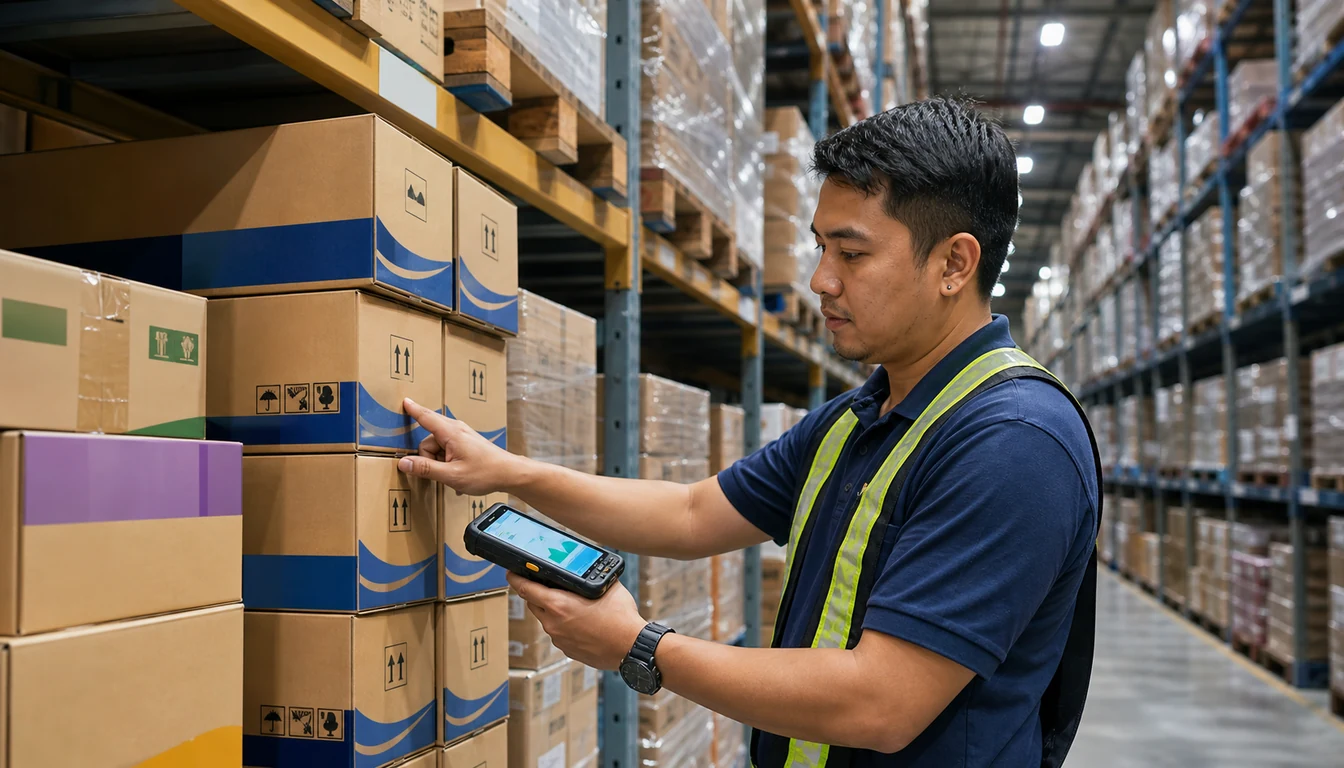
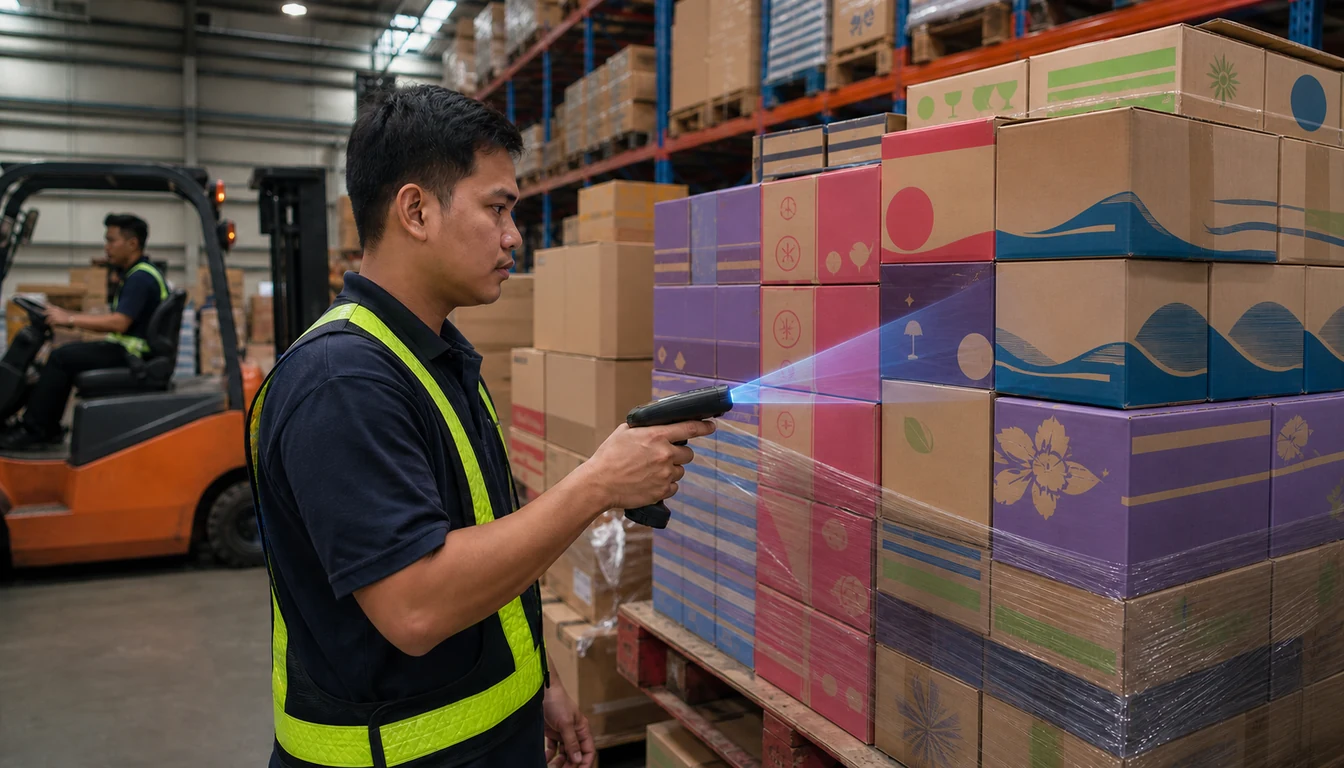
A distributor's own warehouse and its primary sales force are usually the best-documented part of the business. Stock counts are reconciled, invoices are logged, and a sales manager can pull up the day's numbers in minutes. The tier below that, the network of sub-distributors and wholesalers who take stock on from the main warehouse and push it out to sari-sari stores and smaller outlets across a province or an island group, is a different story. For most FMCG and pharma distributors operating in the Philippines, this is the layer where reliable data quietly runs out.
It is not that sub-distributors and wholesalers are informal or careless. It is that the tools available to them rarely go beyond what has always worked: a paper order book, a spreadsheet updated at the end of the week, a Viber or Messenger group where a sub-distributor's staff photograph a stock count and send it to the principal distributor's office. Orders get phoned in. Stock levels are estimated rather than counted. None of this is unreasonable given the distances involved, particularly once a sub-distributor is serving barangays across Visayas or Mindanao rather than a cluster of streets in Metro Manila, but none of it produces data a distributor can plan against either.
The practical effect is that visibility ends roughly where the main distributor's four walls end. Once stock is invoiced out to a sub-distributor or wholesaler, the distributor knows what left the warehouse and, in general terms, when. What it usually cannot say with confidence is how quickly that stock is actually reaching sari-sari shelves, whether agreed pricing is being honoured once the sub-distributor sets their own terms downstream, how much credit is genuinely outstanding and collectible, or which batches are ageing on a shelf somewhere in a secondary town. Digitising this layer is less about adding another app to the stack and more about closing a gap that has quietly shaped how distributors plan, price and collect for years.
Why the Chain Goes Dark Past the First Warehouse
The distributor to sub-distributor or wholesaler to sari-sari store pattern is not a workaround; it is the dominant route to market for FMCG in the Philippines, and for good structural reasons. A single distributor warehouse in Metro Manila, Cebu or Davao cannot economically reach every barangay across an archipelago of roughly 7,641 islands, so sub-distributors and wholesalers exist precisely to extend reach into secondary towns, outer provinces and other islands that a central warehouse cannot serve directly. Rural sari-sari stores in particular lean more heavily on wholesalers and market stalls for supply than on direct calls from a principal distributor, which makes this tier structurally important rather than a minor add-on to the main channel.
That same structure is what makes visibility so hard to hold onto. Every additional handover between the distributor's warehouse and the final sari-sari shelf is a point where the record can diverge from reality: an order placed by phone and mistyped, a stock count that has not been updated since the last delivery, a credit balance nobody has reconciled in weeks. Typhoon season adds a further complication, since storms that disrupt ports, ground flights or knock out mobile signal for days at a time do not just delay a delivery, they also delay the paperwork or the messaging-app update that was meant to follow it. A distributor relying on manual reporting from this tier is, in effect, planning around information that is already out of date by the time it arrives.
Giving Sub-Distributors a Portal of Their Own
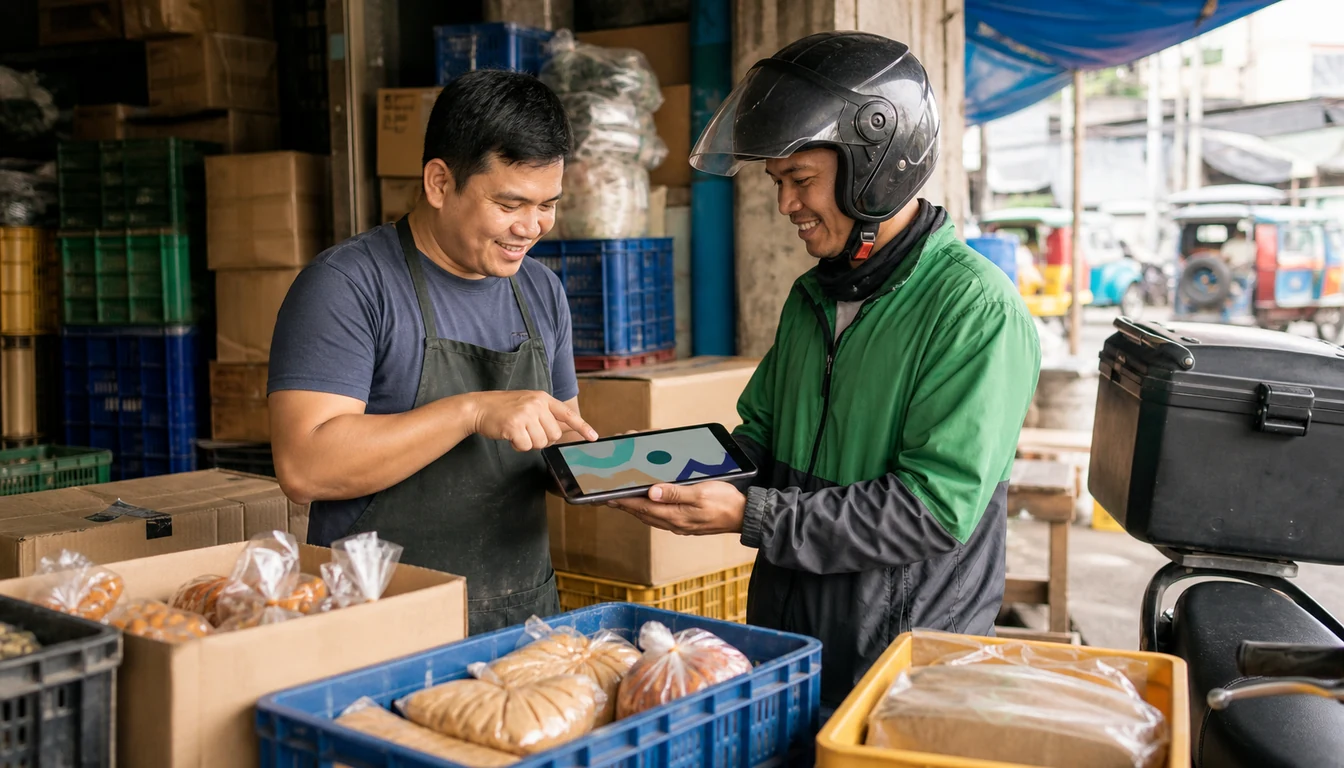
The most direct fix is to stop routing every order and every stock query through a phone call to the distributor's office, and instead give each sub-distributor and wholesaler a self-service view of their own account. A distributor portal built for this layer lets a sub-distributor log in, see their current catalogue, place an order against real stock availability, and check the status of a previous order without waiting for someone at the principal distributor's office to pick up the phone.
Ordering Without a Phone Call or a Field Visit
For sub-distributors based outside the main commercial hubs, a portal removes a genuine friction point: waiting for a field visit or a call-back before an order can even be placed. Catalogue browsing, order placement and basic stock checks can happen whenever the sub-distributor's staff have a connection, rather than only when a rep is physically present or the distributor's office is open. Paired with a proper distributor order management system on the principal's side, every order raised through the portal lands directly in the same workflow as orders from any other channel, instead of being re-keyed from a notebook later.
A Live View of Stock, Orders and Credit
The same portal gives the sub-distributor visibility they did not have before either: their own order history, what is currently in transit, and where their credit account stands. That matters because a sub-distributor chasing their own numbers by phone is exactly the kind of call that used to land on the principal distributor's sales desk. Removing that back-and-forth frees that desk to spend time on accounts that actually need attention, rather than answering the same status question several times a week.
Pricing and Credit, Set Tier by Tier
Sub-distributors and wholesalers are rarely a single, uniform group. A large wholesaler supplying dozens of sari-sari stores across a province operates on a different volume and a different risk profile from a smaller sub-distributor covering a handful of barangays, and pricing and credit terms need to reflect that without turning into a set of manual exceptions nobody can audit.
Tiered Pricing That Actually Holds
A pricing management system that understands sub-distributor tiers lets a distributor set different price bands, promotional terms or minimum order quantities by account, and have those terms apply consistently at the point an order is placed rather than depending on whoever happens to be taking the call that day. This matters more than it might sound: when pricing lives in someone's memory or in a spreadsheet that is updated inconsistently, sub-distributors in the same tier end up paying different effective prices for the same stock, which erodes trust in the arrangement over time.
Credit Limits and Digital Collections
Credit control benefits from the same discipline. A sub-distributor's outstanding balance, payment history and credit limit should be visible before a new order is approved, not discovered after the fact when a payment fails to arrive. Collections themselves are also shifting away from cash and cheques picked up on the road. GCash and Maya between them already reach the large majority of digitally active Filipinos, and settlement increasingly runs through InstaPay, which clears in real time for transfers up to ₱50,000, or PESONet for larger, scheduled settlements. A distributor that can reconcile e-wallet and bank-rail payments automatically against a sub-distributor's account closes the gap between a payment being made and a distributor actually knowing about it. For larger distributors already preparing for the BIR's phased Electronic Invoicing System rollout, invoicing that stays structured and traceable down to the sub-distributor level is also a smaller step to take later rather than a retrofit.
What Happens After the Invoice Is Cut?
Most distributor systems record a sale the moment stock is invoiced out to a sub-distributor. That is primary sales, and it is the number that shows up on a monthly report. It is not, however, the number that tells a distributor or a brand principal what is actually happening in the market, because stock invoiced to a sub-distributor can sit in a back room for weeks before it reaches a single sari-sari shelf.
Secondary sales, the point at which stock actually moves from the sub-distributor to the retail outlet, is the figure that matters for real demand planning, and it is the one that manual reporting almost never captures reliably. Without it, a distributor can end up mistaking a strong invoicing month for strong sell-through, when in fact a sub-distributor is simply sitting on excess stock they took on to hit a volume target. Distributor analytics that separates primary from secondary sales, and that pulls secondary data from the sub-distributor's own order and delivery activity rather than from a manual return call, gives a much more honest read on where stock is genuinely selling and where it is quietly building up.
Onboarding New Sub-Distributors Across the Archipelago
Bringing a new sub-distributor or wholesaler onto a digital system is a different exercise in the Philippines than it would be in a single, contiguous market, because the archipelago itself sets the terms.
Capturing Orders Where Signal Is Unreliable
A sub-distributor operating out of a secondary town in Visayas or Mindanao may have perfectly good connectivity most of the year and none at all for several days when a typhoon takes down mobile towers or disrupts inter-island freight. Onboarding this tier successfully means choosing tools that are offline-capable from day one, so a sub-distributor's staff can keep logging orders, deliveries and stock counts on a device even when there is no signal, with everything syncing automatically once connectivity returns. Systems that assume constant connectivity simply do not hold up here, and a rollout built on that assumption will stall the first time a storm passes through.
Training a Multilingual, Multi-Island Field Force
The field staff doing this onboarding are themselves working across a genuinely multilingual country. A team member comfortable training Tagalog-speaking sub-distributor staff in Luzon may need a different approach entirely when onboarding a Cebuano-speaking team in the Visayas or Mindanao. Structured, repeatable training delivered through a sales team LMS makes it far easier to onboard sub-distributor staff consistently across regions, rather than relying on whichever field rep happens to be available and however they choose to explain the system that week.
Keeping Batch and Expiry Traceable Past the Handover
For FMCG and pharma distributors in particular, the sub-distributor tier is also where batch and expiry visibility tends to disappear first. A distributor's own warehouse can usually say exactly which batch is on which shelf and when it expires. Once that stock is handed to a sub-distributor serving a secondary town or another island, that same level of detail is rarely maintained on paper, and a batch quietly approaching its expiry date can sit unnoticed until it becomes a write-off or, worse, ends up on a sari-sari shelf past its date.
Batch management that follows stock through to the sub-distributor level, rather than stopping at the point of invoicing, gives a distributor a way to flag ageing batches before they become a problem and to prioritise which stock should move first. It is also a sensible habit to build now for distributors and larger sub-distributors preparing to align with the Food and Drug Administration Philippines' expectations around traceable stock, and with the Bureau of Internal Revenue's broader push toward structured, auditable records as e-invoicing coverage expands.
How 1Channel Closes the Sub-Distributor Gap
Every issue covered here, order flow that runs on phone calls, pricing that varies depending on who takes the call, secondary sales nobody is actually measuring, onboarding that has to survive a typhoon and a language change in the same rollout, comes back to the same root cause: the sub-distributor and wholesaler tier has been running on manual coordination rather than shared data. 1Channel brings that tier onto the same platform used by FMCG, pharma and distribution businesses across 40-plus countries and by more than 200,000 end users, built to handle exactly this kind of multi-tier, high-outlet-count trade.
In practice, that means sub-distributors ordering through their own portal instead of a phone call, pricing and credit terms that apply consistently by tier, secondary sales visibility that shows what is actually reaching sari-sari shelves rather than what was simply invoiced out, and field and onboarding tools built offline-first so a typhoon-related signal outage does not stall a rollout in Visayas or Mindanao. Batch and expiry data follows stock all the way to the sub-distributor level instead of stopping at the warehouse door, and collections reconcile GCash, Maya, InstaPay and PESONet payments against each sub-distributor's account automatically.
Bring the Sub-Distributor Tier Into View
Give every sub-distributor and wholesaler in your network a self-service portal for ordering, stock and credit, so the picture stays current from your warehouse to the last sari-sari shelf.
Explore Distributor Portal →Key Takeaways
Digitising the sub-distributor and wholesaler tier is less about adding new software and more about extending visibility past the point where most distributors' data currently stops. A few points worth carrying forward:
- The sub-distributor tier is structural, not incidental. Distributors rely on sub-distributors and wholesalers to reach an archipelago a single warehouse cannot cover directly, which makes visibility into this layer a core planning need rather than a nice-to-have.
- A self-service portal removes the phone-call bottleneck. Letting sub-distributors browse the catalogue, place orders and check their own status frees the principal distributor's office from answering the same questions on repeat.
- Pricing and credit need to be tiered, not memorised. Consistent price bands and visible credit limits by sub-distributor tier prevent the quiet drift that erodes trust in the arrangement over time.
- Secondary sales, not invoicing, is the real demand signal. Stock invoiced to a sub-distributor is not stock sold to a retailer; tracking the difference is what separates genuine sell-through from stock quietly sitting in a back room.
- Onboarding across islands needs offline-first tools and regional training. Connectivity gaps, typhoon disruption and a multilingual field force all shape how a rollout should be built, not just where it starts.
- Batch and expiry visibility should not stop at the warehouse door. Following stock through to the sub-distributor level catches ageing batches before they become write-offs, and builds good habits ahead of expanding e-invoicing and traceability expectations.