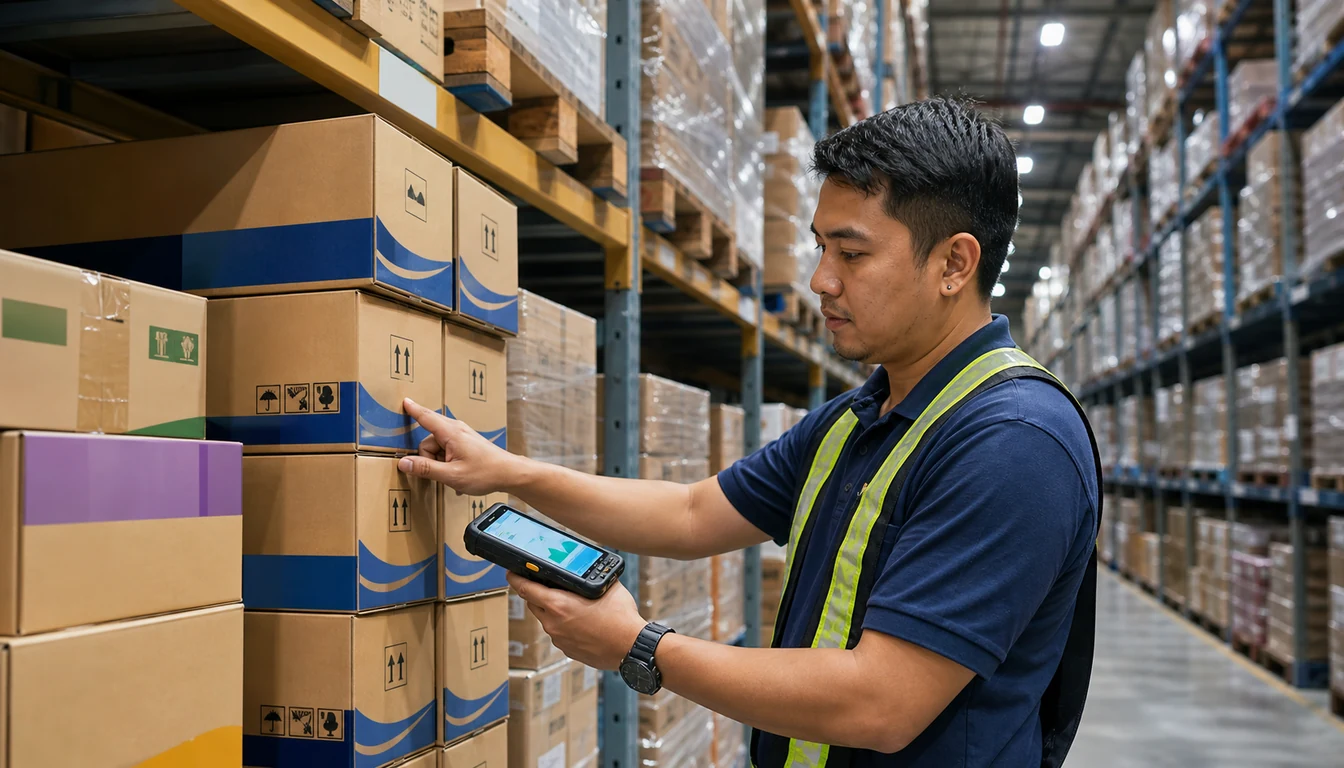
For FMCG and pharma distributors operating in the Philippines, batch and expiry tracking is not a back-office housekeeping task. It sits directly under the remit of the Food and Drug Administration Philippines (FDA), the body responsible for the safety of food, drugs, cosmetics and related consumer products sold in the country. A distributor that cannot say, on demand, which batch of a product is sitting in which warehouse bay, on which delivery van, or on which sari-sari store shelf has a visibility gap that the regulator, and increasingly the brand principal whose stock it carries, expects closed.
The risk is sharper here than in markets built around large, infrequent restocks. Filipino consumers overwhelmingly buy in tingi, small, single-use quantities of shampoo, coffee, seasoning and detergent, rather than in bulk. That habit underpins an estimated 1.1 million sari-sari stores nationwide, together driving roughly 60% of FMCG sales, and it means those stores restock in small quantities very frequently rather than large quantities occasionally. Each of those frequent, small restocks is another chance for an older batch to sit unmoved while a newer one is picked ahead of it, or for stock that should have been pulled and rotated to stay on a shelf past its date instead. At sari-sari scale, expiry risk is not an occasional event. It is a constant, high-frequency exposure spread across a very large number of very small transactions, repeated across roughly 200 SKUs in a single small store and multiplied across more than a million such stores nationwide.
Most distributors start batch and expiry tracking in a spreadsheet, and for a single warehouse carrying a handful of SKUs that can hold up for a while. It stops holding up once a distributor is running multiple warehouses across Luzon, the Visayas and Mindanao, carrying hundreds of SKUs in tingi pack sizes alongside standard case packs, and pushing stock through several layers of sub-distributors and wholesalers before it reaches a sari-sari counter. A spreadsheet has no way to enforce that the oldest batch is picked first, no way to trace a batch once it leaves the warehouse gate, and no way to tell a warehouse supervisor, in real time, that a specific carton is a fortnight from expiry and needs to move into a promotion rather than a standard delivery run. The gap between what the spreadsheet says and what is actually on the shelf widens every week the business grows, and it widens fastest in exactly the high-volume, high-SKU-count operations where the FDA's expectations, and a brand principal's patience, are least forgiving.
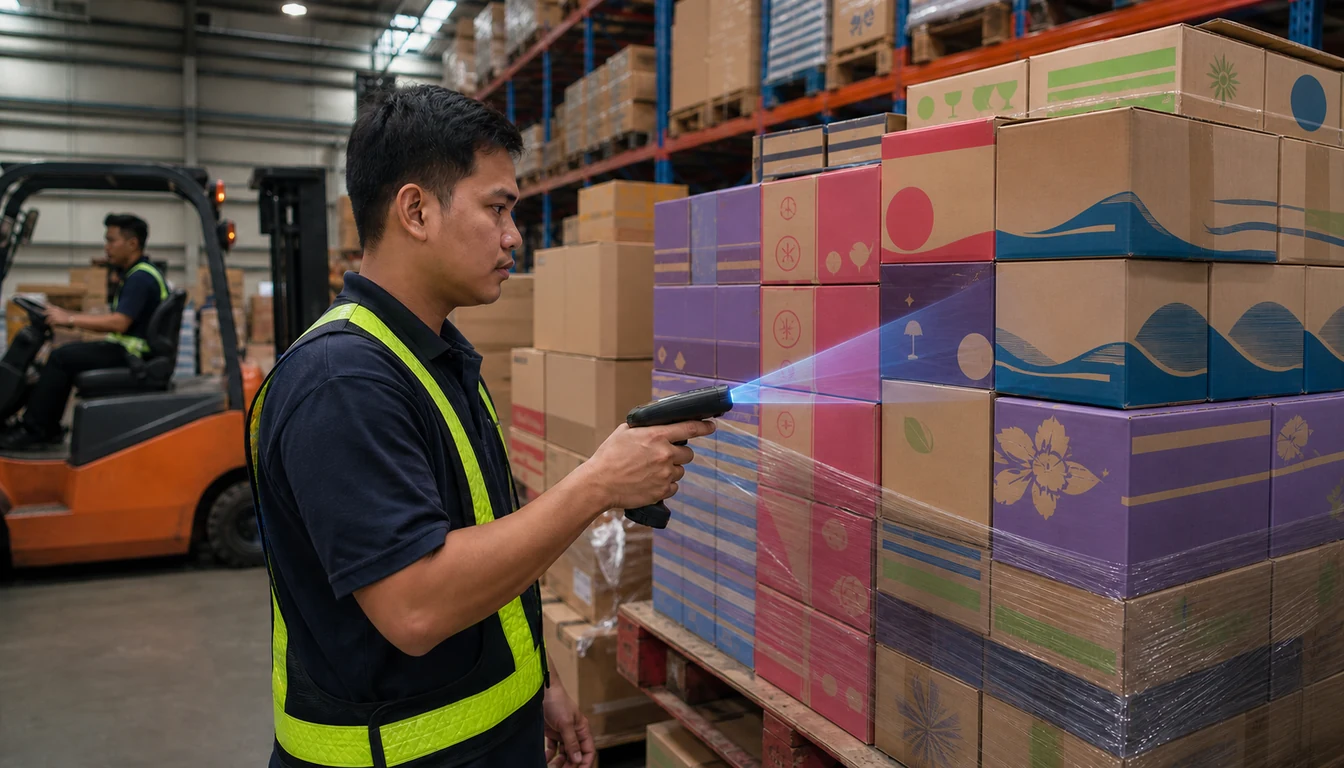
Batch and expiry accountability under FDA oversight
The Food and Drug Administration Philippines (FDA) is the regulator with authority over the safety of food, drugs, cosmetics, medical devices and related consumer products in the country. For a pharma distributor, batch and expiry discipline sits close to the centre of that oversight: every unit of stock needs to be traceable back to a specific manufacturing batch, with an expiry date tracked and enforced from the moment it lands in the warehouse to the moment it reaches a pharmacy or drugstore counter. For an FMCG distributor carrying packaged food, beverages and personal care products, the same discipline applies, even where the day-to-day pressure feels more commercial than regulatory.
A batch and expiry system built to support FDA-aligned practice does not claim to be a compliance certification. No software product can honestly make that claim on a distributor's behalf. What it can do is maintain the underlying record: which batch, which quantity, which location, which date, updated continuously rather than reconstructed from paper delivery notes after the fact. That record is what turns a regulatory query, or a brand principal's audit, from a scramble through filing cabinets into a report that already exists and can be pulled in minutes.
Why tingi retail multiplies the expiry risk
Sari-sari stores typically stock up to around 200 SKUs inside a tiny footprint, restocking small quantities very frequently, sometimes daily. Handling that many SKUs across that many small, frequent orders is fundamentally a SKU management problem as much as a batch problem: the more granular the pack sizes and the more frequent the reorder cycle, the more batch handoffs occur between warehouse and shelf, and the more chances there are for sequence to break down.
Urban and rural restocking patterns differ
That pattern is not uniform across the country. Urban sari-sari stores tend to lean on supermarkets and company salespeople as a supply source, while rural stores lean more heavily on wholesalers and market stalls. Either route puts several intermediate stops between a manufacturing batch and the shelf it eventually reaches, and each stop is a point where the oldest stock should move first and often does not, simply because nobody downstream has visibility into which batch is which. A pharmacy chain such as Mercury Drug or Watsons manages this with centralised systems and trained pharmacy staff; a single-owner sari-sari store manages it, if it manages it at all, by eye.
Enforcing FEFO from warehouse to route
First-expiry-first-out, or FEFO, is the picking discipline that batch and expiry control depends on: whichever batch expires soonest should be the one that leaves the warehouse first, regardless of which batch arrived first or which one happens to sit closest to the loading bay. It sounds simple stated that way. In a manual warehouse it rarely happens by default, because pickers naturally default to whatever is nearest or easiest to reach, not whatever is closest to its expiry date.
First-expiry-first-out picking at the pick face
Enforcing FEFO in practice means the pick list itself has to carry batch and expiry information, not just SKU and quantity, so a picker is directed to a specific batch rather than a generic location. A warehouse management system that captures batch numbers at goods-in and generates batch-aware pick lists removes the guesswork: the system, not the picker's judgement on a busy morning, decides which carton moves.
Blocking non-conforming batches before dispatch
The second half of FEFO discipline is what happens when a batch fails a check, whether it is already past its expiry date, flagged for a quality hold, or subject to a recall notice. A batch-aware dispatch process should be able to block that specific batch from being picked or loaded automatically, rather than relying on a warehouse supervisor remembering a verbal instruction from three shifts earlier.
Warehouse-to-outlet batch traceability across the distribution chain
The dominant Philippine FMCG route to market runs from distributor to sub-distributor or wholesaler, and from there to the sari-sari counter, alongside direct van-selling and pre-selling models used by larger brands. Batch traceability that stops at the first handoff, once stock leaves the primary distributor's warehouse for a sub-distributor, is only half a traceability system. The other half is making sure batch identity carries through every layer that follows.
In practice that means sub-distributor and wholesaler orders raised through a distributor portal should carry the same batch-level detail as the primary distributor's own warehouse records, and outbound orders processed through distributor order management should record which batch fulfilled which order line, not just which SKU and quantity. Without that continuity, a distributor can answer "which batch is in my warehouse" but not "which batch did a specific sub-distributor receive last month," and the second question is usually the one a recall or a quality complaint actually asks.
Recall readiness: from batch number to outlet shelf in hours
A recall or quality hold is the scenario every batch and expiry system is ultimately built for, even though it is the scenario a distributor hopes never to face. When a brand principal or the FDA flags a specific batch, the operational question is immediate: how much of that batch is still in a warehouse, how much is on a delivery van right now, and how much has already reached an outlet shelf. A spreadsheet updated at the end of each day cannot answer that question with any confidence, because the true position has moved on since the last update.
A field team recording deliveries and outlet visits through a field activity app, with batch numbers captured at the point of delivery rather than reconstructed later, closes that gap. Combined with route history from route planning records, a distributor can narrow a recall from "somewhere across the territory" to a specific list of outlets, visited on specific dates, carrying specific batch numbers, in a matter of hours rather than days.
Turning near-expiry stock into managed promotions, not write-offs
Not every batch approaching its expiry date needs to become a loss. Stock with weeks of shelf life remaining is often still perfectly saleable, provided it is identified early enough and routed deliberately rather than left to compete on equal footing with fresher stock that will always be picked first given the choice. Rotating near-expiry batches into a bundled offer, a short discount window, or a targeted push into higher-turnover outlets is a legitimate way to recover value that a straight write-off simply forfeits.
Doing that well depends on the same batch-level visibility that FEFO picking and recall readiness depend on: a system that can flag, automatically, which batches are inside a defined expiry window, and hand that list to whoever manages trade promotions or sales schemes before the window closes rather than after. Left to a manual stock count, near-expiry batches are usually spotted too late to do anything but discount them heavily or discard them.
Archipelago logistics and the shelf-to-warehouse transit gap
The Philippines is an archipelago of roughly 7,641 islands across three island groups, Luzon, the Visayas and Mindanao, and that geography changes what batch and expiry management actually has to account for. Many distributors run combined road and inter-island freight routes to move stock from a primary warehouse, typically in or near Metro Manila, out to secondary hubs such as Cebu or Davao and onward into rural coverage areas. Each additional leg of that journey, whether by truck, inter-island vessel or short domestic flight, adds transit time between the warehouse and the shelf, and transit time is exactly what erodes remaining shelf life.
Typhoon season adds a further, genuinely local complication: an average of around 20 typhoons a year, several making landfall, routinely disrupts ports and grounds flights for days at a time, and can knock out mobile coverage in affected areas. That is a real, citable reason for offline-capable field and warehouse tools in this market: not unreliable grid power, but island and typhoon connectivity gaps that can leave a warehouse or a field rep unable to sync data for an extended stretch. An inventory management system that can capture batch movements offline and reconcile them once connectivity returns keeps the batch record intact through exactly the disruptions this geography makes routine.
How 1Channel supports FDA-ready batch and expiry tracking
1Channel's batch management software is built around the operational reality described above rather than a generic stock-keeping model. It captures batch and expiry detail at goods-in, generates FEFO-aware pick lists so the oldest expiring stock moves first by default, and carries batch identity through every downstream handoff, from primary warehouse to sub-distributor to the field rep recording a delivery at a sari-sari counter. Near-expiry batches are flagged automatically against a defined window, so they can be routed into a managed promotion instead of being discovered during a routine stock count. Field and warehouse capture both work offline, so a typhoon-disrupted connection in a rural barangay or an outer island does not leave a gap in the batch record. The result is a system built to support FDA-aligned batch and expiry practice, not a paper trail assembled after the fact when a recall notice or an audit arrives.
Get Batch and Expiry Control Across Every Warehouse
See how FEFO-aware picking, batch-level traceability and near-expiry alerts work together in 1Channel's batch management software, built for FMCG and pharma distribution across the Philippines.
Explore Batch Management →Key Takeaways
Batch and expiry control is an operational discipline that scales badly on spreadsheets and scales well on a system built for it. The points below summarise where the risk concentrates and what closes it.
- Tingi retail turns expiry risk into a high-frequency problem. Frequent small restocks across roughly 200 SKUs per sari-sari store, repeated across more than a million stores nationwide, mean expiry exposure is constant rather than occasional.
- Spreadsheets cannot enforce FEFO. Without batch-aware pick lists, warehouse pickers default to whatever is nearest, not whatever expires soonest, and the oldest stock quietly falls behind.
- Traceability has to survive the sub-distributor handoff. A batch record that stops at the first wholesaler cannot answer the question a recall actually asks: which outlets received this specific batch.
- Recall response time depends on when the batch record was captured. Delivery-level batch capture through field and route records narrows a recall from a whole territory to a specific outlet list in hours, not days.
- Near-expiry stock is recoverable value, not automatic loss. Batches flagged early enough can move into a managed promotion instead of a write-off.
- Archipelago geography extends transit time, and typhoons interrupt it further. Offline-capable batch capture keeps the record intact through island and connectivity gaps that this market experiences routinely.