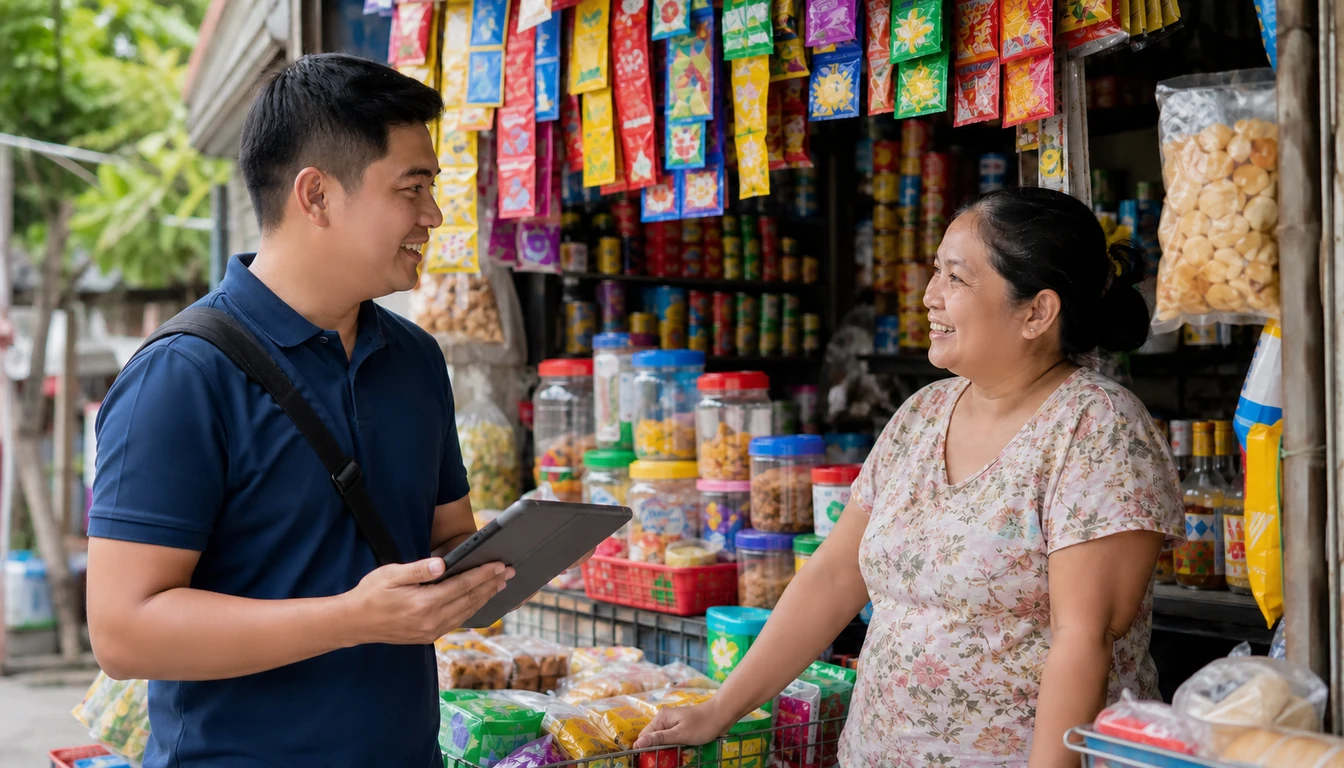
Walk into any barangay in the Philippines and the first retail outlet you will pass is almost certainly a sari-sari store. These small, often family-run neighbourhood shops number an estimated 1.1 million nationwide, and together they drive roughly 60% of the country's FMCG sales. Widen the lens to small local grocers as a category and the figure climbs further: they account for around 63% of grocery distribution nationally, against roughly 26% for supermarkets and hypermarkets combined. For any FMCG brand selling in the Philippines, the sari-sari channel is not a long tail to be tolerated. It is the market.
What makes this channel distinctive is not just its scale but the buying behaviour underneath it. Filipino consumers overwhelmingly purchase in small, single-use quantities, a habit known locally as tingi. Shampoo, coffee, seasoning, cooking oil and detergent are bought as individual sachets or single-serve sizes rather than family packs, because that is what a household budget and a tiny sari-sari shelf can actually absorb in one transaction. Tingi is not a niche preference confined to a handful of provinces. It is the default way most of the country buys everyday FMCG goods, and it shapes everything from how a store restocks to how a brand prices a product.
Winning this channel means designing for it deliberately rather than treating it as an afterthought to modern trade. That touches the route-to-market chain that gets a product onto a sari-sari shelf, the SKU and pricing decisions tingi culture forces on brand teams, the difference between urban and rural sourcing, the practical difficulty of covering an archipelago with a field force, and how distributors actually get paid. Each is a distinct operational problem with a distinct answer.
Why 1.1 Million Sari-Sari Stores Decide Who Wins
Sari-sari stores are small by design. Most operate from a window or a narrow front room, yet a typical store still manages to stock up to around 200 SKUs across food, personal care, household and beverage categories. That density, repeated across 1.1 million outlets, is what gives the channel its collective weight. No single sari-sari store moves meaningful volume on its own. The channel does, because of how many of these outlets exist and how frequently each one restocks.
Modern trade is real and growing in the Philippines, and it is worth naming to put the sari-sari channel in context rather than to diminish it. Supermarket and hypermarket groups such as SM, Robinsons and Puregold, convenience formats such as 7-Eleven and Alfamart, and health-and-beauty chains such as Mercury Drug and Watsons are all established players with wide footprints. But at roughly a quarter of grocery distribution against sari-sari and other small grocers' 63%, modern trade is the complement to the traditional channel here, not its replacement. A distribution strategy built only around the visible, air-conditioned end of the market misses the majority of where FMCG products actually change hands.
Mapping the Route From Distributor to Sari-Sari Shelf
The dominant route-to-market pattern for FMCG in the Philippines runs from brand or manufacturer to distributor, from distributor to sub-distributor or wholesaler, and from there into the sari-sari store itself. This multi-tier structure exists because no single distributor can economically call on a million-plus tiny outlets directly. Sub-distributors and wholesalers absorb the last mile of density, breaking bulk shipments down into the smaller, more frequent deliveries that sari-sari retailers actually need.
Van Selling and Pre-Selling in Practice
Alongside the tiered wholesale chain, larger FMCG brands commonly run their own van selling and pre-selling operations. Van selling puts stock and a sales rep on the same vehicle, so an order is placed and fulfilled in a single stop at the sari-sari counter. Pre-selling separates the two steps: a rep or a digital order-taking process captures the order on one visit, and a separate delivery run fulfils it later, which allows better route and load planning across a wider territory. Most brands of any scale run a blend of both models depending on the route density and the outlet's order size, and getting that blend right depends on having accurate, current data on which sub-distributor or wholesaler is actually reaching which sari-sari cluster.
How Tingi Culture Multiplies SKUs and Complicates Pricing
Tingi buying is an economic behaviour, not a cultural preference in isolation. Buying a single sachet of shampoo or a small pack of coffee rather than a full-size bottle or a large tin lets a household match its purchase to what it can spend that day, without the price commitment of a bigger pack. For a sari-sari store owner working from a tiny footprint, small packs also mean the shelf can carry more variety without carrying more inventory value at any one time.
Sachet Economics: Small Packs, Frequent Restocks
The practical effect on brands and distributors is a sharp multiplication of SKU count. A single product line can exist as a large format for modern trade and as two or three tingi-sized variants for the sari-sari channel, and each of those variants needs its own listing, its own stock count and its own restock cadence. Sari-sari stores restock small quantities very frequently rather than large quantities occasionally, which means the operational rhythm of the channel is closer to constant top-ups than to periodic bulk orders. A distributor or field team without a clear, current view of SKU-level stock and restock timing across thousands of small outlets is working blind on exactly the decisions that matter most in this channel. Purpose-built SKU management that can track sachet-level variants alongside full-size packs, rather than treating them as a single catalogue entry, is a genuine operational requirement here, not a nice-to-have.
Pricing and Promotions at Sachet Scale
Pricing and trade promotion design carry the same complexity. A promotional scheme built for a case-sized modern trade order does not translate cleanly to a channel where the typical transaction is a handful of sachets. Effective schemes for the sari-sari channel tend to work at the level of the individual outlet and the individual small pack, whether that is a bundled sachet offer, a volume step tied to a realistic sari-sari order size, or a margin structure that still makes sense to a sub-distributor moving product in small, frequent batches. Getting this wrong either erodes margin on high-volume tingi lines or makes a scheme too complicated for a wholesaler's sales team to execute consistently.
Urban Manila Versus Rural Visayas and Mindanao: Two Different Supply Chains
Sourcing patterns for sari-sari stores differ meaningfully between urban and rural settings, and treating the channel as one uniform block misses this. Urban sari-sari stores, concentrated in and around hubs like Metro Manila, tend to lean more on supermarkets and company salespeople as supply sources, topping up stock directly from a nearby modern trade outlet or a scheduled brand visit when a sub-distributor delivery is slow to arrive. Rural stores, further from Luzon's commercial centre and from secondary hubs such as Cebu and Davao, lean more heavily on wholesalers and market stalls, reflecting a supply chain with fewer direct brand touchpoints and a longer, thinner distribution tail.
The practical implication for a national FMCG brand is that a single route-to-market plan rarely fits both contexts equally well. Coverage models built around Metro Manila's density of company reps tend to under-serve rural Visayas and Mindanao stores that depend on wholesaler relationships instead. Recognising this split early is a more realistic starting point than assuming one national playbook holds everywhere.
Covering an Archipelago Without Losing a Beat
The Philippines is an archipelago of roughly 7,641 islands spread across three main island groups: Luzon, home to Metro Manila and the country's commercial and distribution hub; the Visayas, anchored commercially by Cebu; and Mindanao, anchored by Davao. That geography is not a footnote for field coverage planning. It is the central constraint. Reaching sari-sari stores beyond a single island frequently means combining road transport with inter-island sea or air freight, and a route plan that only accounts for road distance will simply be wrong for a meaningful share of the country's outlets.
Typhoon Season and Offline-First Field Apps
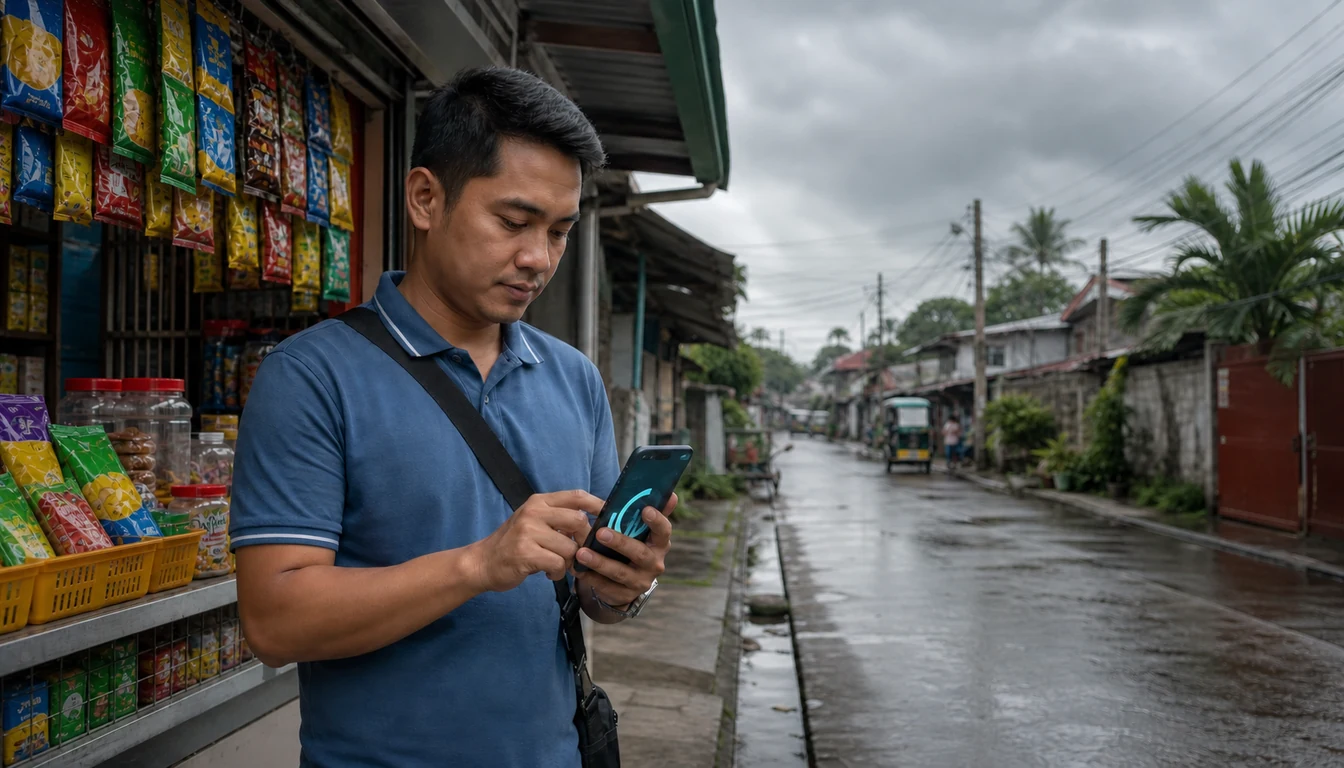
Typhoon season adds a second, recurring layer of disruption. The country experiences an average of around 20 typhoons a year, several of which make landfall, and these storms routinely knock out mobile network towers and disrupt ports for days at a time. A field sales or merchandising app that depends on a constant connection stops working at exactly the moment coverage matters most, when a rep is still working a beat despite a storm having taken out signal in the area. Offline-capable field tools that let reps keep capturing orders, visits and stock counts locally and sync once connectivity returns are a genuine operational necessity for this market, not a generic feature checkbox. Coverage and beat planning that account for this multi-modal, weather-resilient reality, rather than assuming an unbroken road network and constant signal, is what makes route planning actually usable across the islands.
A Multilingual Field Force
Language adds a further wrinkle to field coverage. Filipino and English are the official languages and English is in everyday commercial use, but the workforce moving between regions also works across regional languages, most notably Cebuano in the Visayas and parts of Mindanao alongside Tagalog-speaking Luzon, with Ilocano, Hiligaynon, Waray, Bikol and others spoken regionally too. Reps and merchandisers transferring between a Luzon territory and a Visayas or Mindanao one are effectively crossing a language boundary as well as a geographic one, which makes consistent, well-structured training and onboarding a genuine field-management challenge rather than a purely administrative one. A learning management system built for a distributed, regionally diverse field force helps keep standards consistent even as individual reps and territories change.
Getting Paid: Collections Move From Cash to GCash
Collections in the sari-sari channel are shifting away from cash and cheques and towards digital rails, and this shift is now well established rather than emerging. GCash and Maya, the country's two leading e-wallets, together reach more than 95% of digitally active Filipinos, which makes digital collection a realistic default for distributor and sub-distributor teams rather than an exception reserved for the biggest accounts. Underneath the wallets sit two interbank rails: InstaPay, which settles instantly for transactions up to ₱50,000, and PESONet, used for bulk or scheduled transfers. Together they give distributors a genuine alternative to chasing cash payments on the road, with the reconciliation and audit trail that cash collection struggles to match.
Invoicing is moving in a similar direction, though more gradually. The Bureau of Internal Revenue's Electronic Invoicing System, introduced under the EOPT Act, is being phased in for large taxpayers, e-commerce sellers and businesses using computerised accounting systems, with full coverage for VAT-registered taxpayers targeted from 2027. It is not yet a universal requirement, so distributors preparing for it now are getting ahead of a genuine, dated compliance shift rather than reacting to one already in force. Systems that support EIS-ready invoicing alongside e-wallet and InstaPay or PESONet reconciliation, tied into distributor order management and payment tracking, put a distributor in a stronger position as coverage expands, rather than leaving that work for a rushed catch-up later.
Keeping Sari-Sari Shelves Compliant and Visible
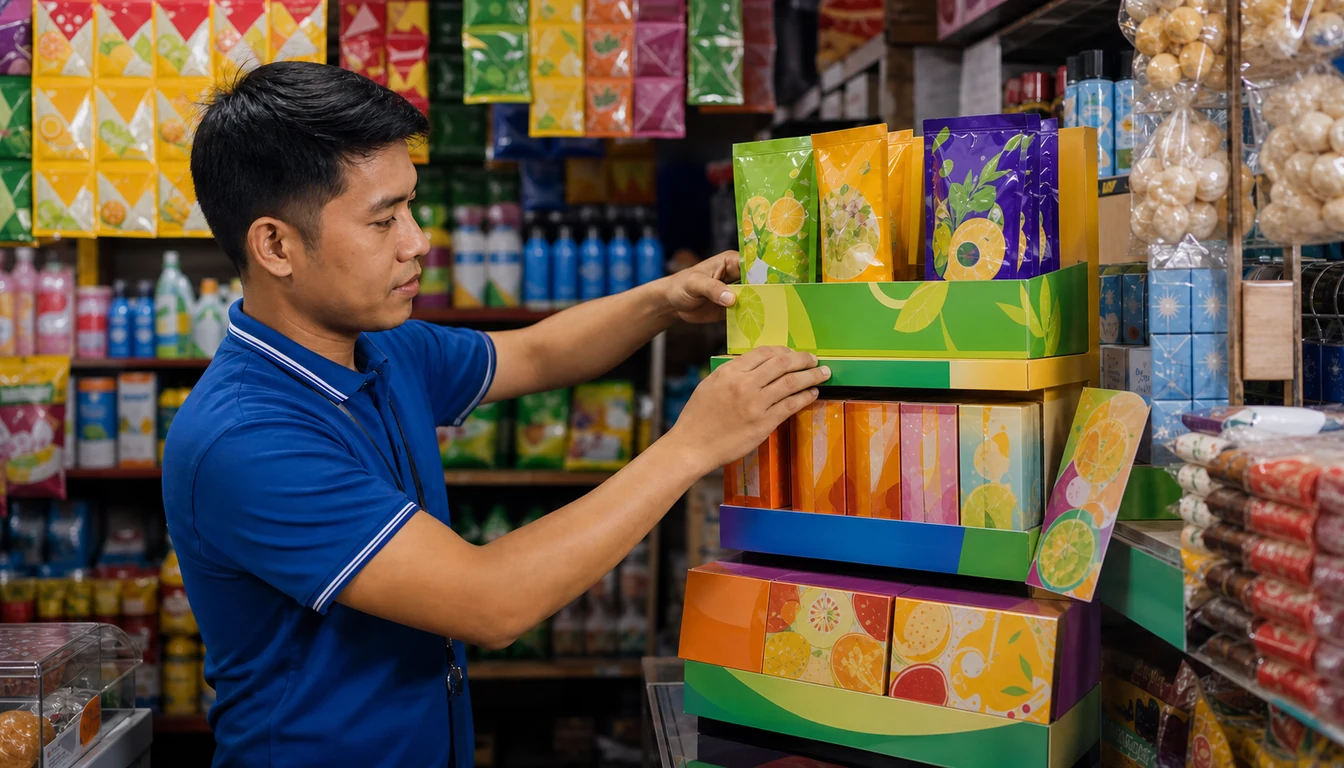
Winning shelf space in a sari-sari store is only half the job. Keeping it visible, correctly priced and properly stocked on every subsequent visit is the other half, and it is where many brands lose ground quietly over time. With up to 200 SKUs crowded into a tiny footprint, a brand's point-of-sale materials, correct facing and current pricing can be displaced within days by a competitor's merchandiser or simply by the physical churn of a small shop. Regular, structured store audits catch this before it compounds into lost visibility across an entire route.
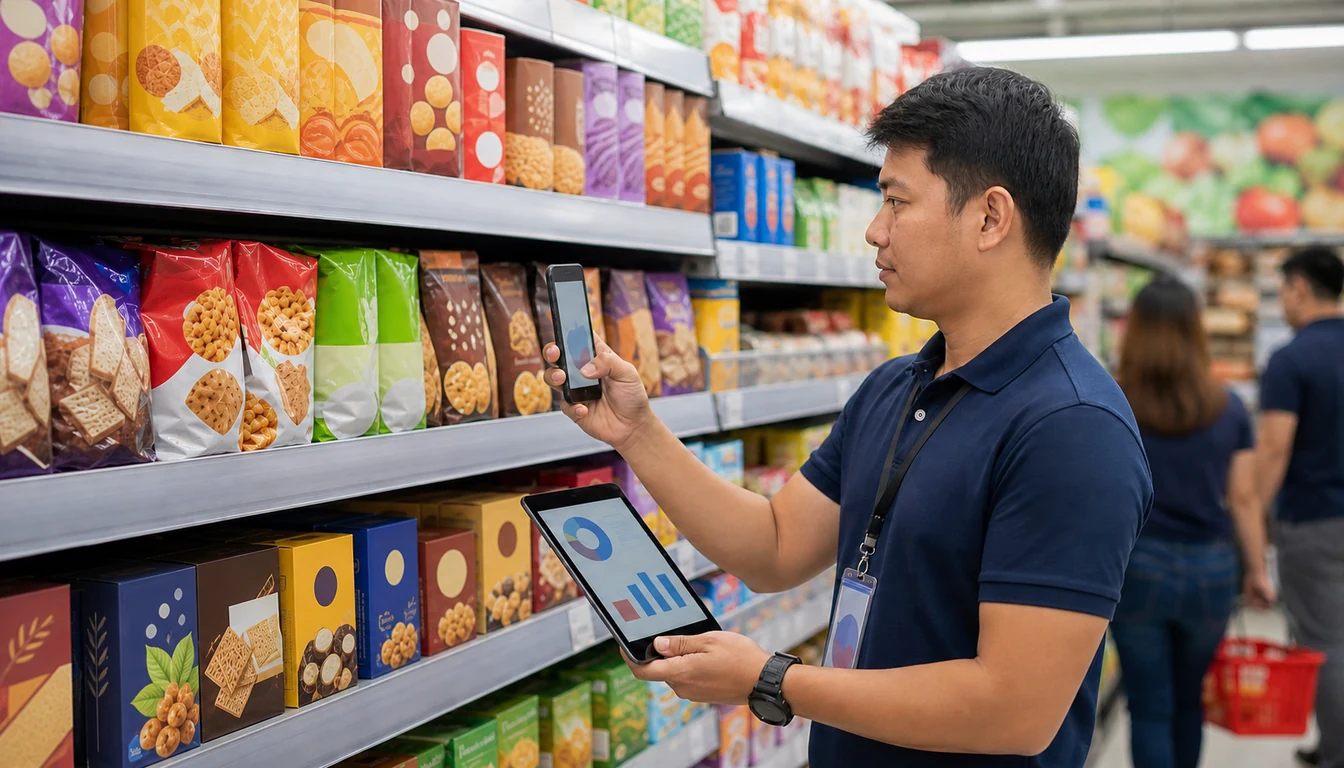
For pharma and other FDA-regulated categories sold through the same general trade network, the compliance bar is higher again, covering batch tracking, expiry management and correct labelling alongside standard merchandising checks. A consistent audit and merchandising programme, backed by store audit and compliance tools and point-of-sale material tracking, gives a brand a reliable, photo-verified record of what is actually happening on the shelf across thousands of small outlets, rather than a rep's word for it after the fact.
How 1Channel Helps FMCG Brands Win the Sari-Sari Channel
Every problem covered so far, the tiered route-to-market chain, tingi-driven SKU and pricing complexity, the urban-rural sourcing split, archipelago and typhoon-resilient coverage, e-wallet collections and shelf-level compliance, is ultimately a data and coordination problem. 1Channel brings these together in a single platform used by FMCG, pharma and distribution businesses across 40-plus countries and by more than 200,000 end users, built for exactly this kind of high-volume, high-outlet-count trade.
On the ground, that means field sales and merchandising teams working with an offline-capable app that keeps taking orders, visits and stock counts through a typhoon-related signal outage and syncs once connectivity returns. Distributor management gives sub-distributors and wholesalers a clear, current view of stock and orders across the tiered chain described earlier, while SKU and pricing tools handle sachet-level variants without collapsing them into a single, misleading catalogue line. Collections tracking reconciles GCash, Maya, InstaPay and PESONet payments against distributor accounts, and route and beat planning account for the mixed road and inter-island freight reality a straight-line map does not capture.
Built for the Sari-Sari Channel's Scale
See how 1Channel's sales force automation gives field teams offline-ready order capture, route planning and real-time visibility across the Philippines' sari-sari network, island by island.
Explore Sales Force Automation →Key Takeaways
The sari-sari channel is where most FMCG volume in the Philippines is actually decided, and it rewards brands that design for its specific structure rather than adapting a modern trade playbook. A few points are worth carrying forward:
- Sari-sari stores are the majority channel, not a side channel. An estimated 1.1 million outlets drive roughly 60% of FMCG sales, well ahead of supermarkets and hypermarkets combined.
- Tingi buying drives real SKU and pricing complexity. Sachet-sized, single-use packs multiply catalogue variants and demand promotion designs built for small, frequent baskets rather than case-sized modern trade orders.
- The route-to-market chain has real tiers. Distributor to sub-distributor or wholesaler to sari-sari store is the backbone, alongside direct van selling and pre-selling for larger brands.
- Urban and rural sourcing genuinely differ. Metro Manila stores lean on supermarkets and company reps; rural Visayas and Mindanao stores lean more on wholesalers and market stalls, and coverage plans should reflect that split.
- Archipelago geography and typhoon season demand offline-first, multi-modal field tools. Road and inter-island freight, regular storm disruption to towers and ports, and a regionally diverse workforce all shape what field software needs to survive contact with this market.
- Collections and compliance are moving digital, but on a phased timeline. GCash and Maya already reach the large majority of digitally active Filipinos, while BIR e-invoicing coverage is expanding gradually rather than applying to every business today.