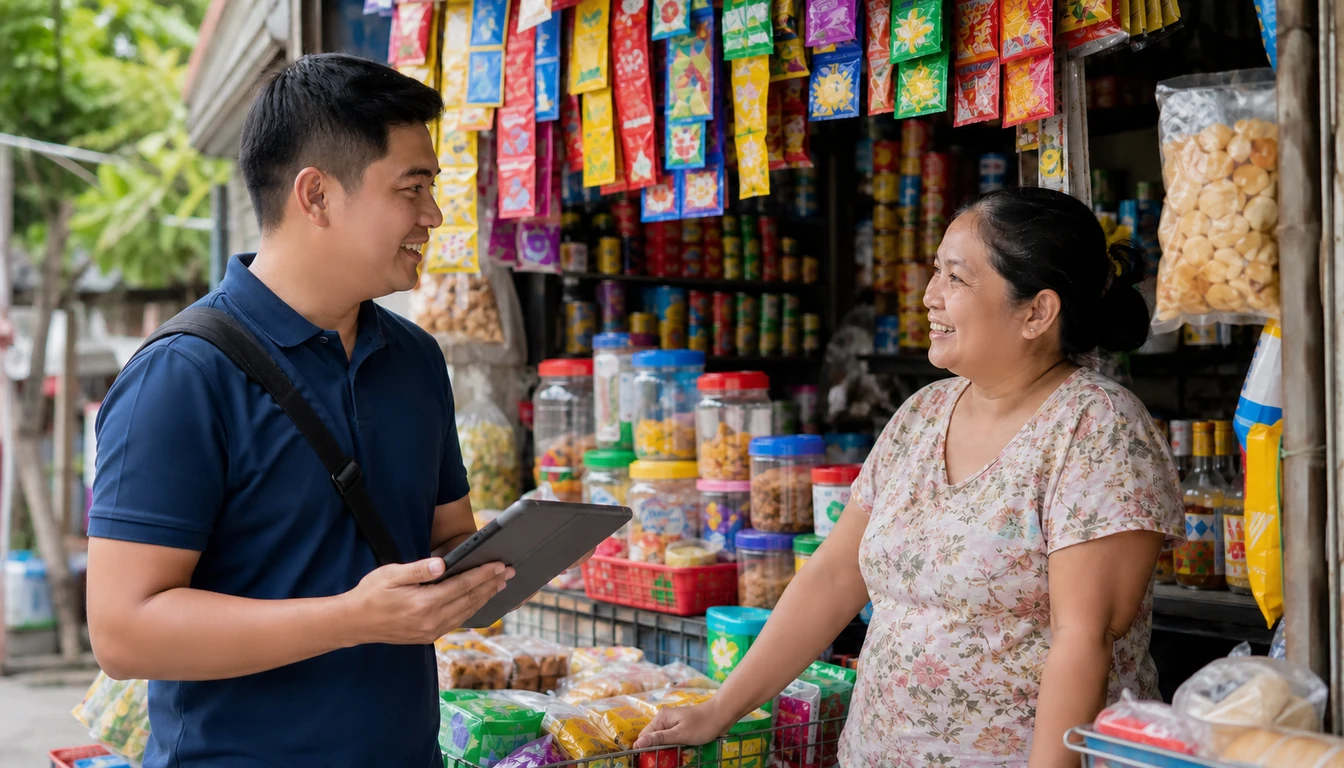
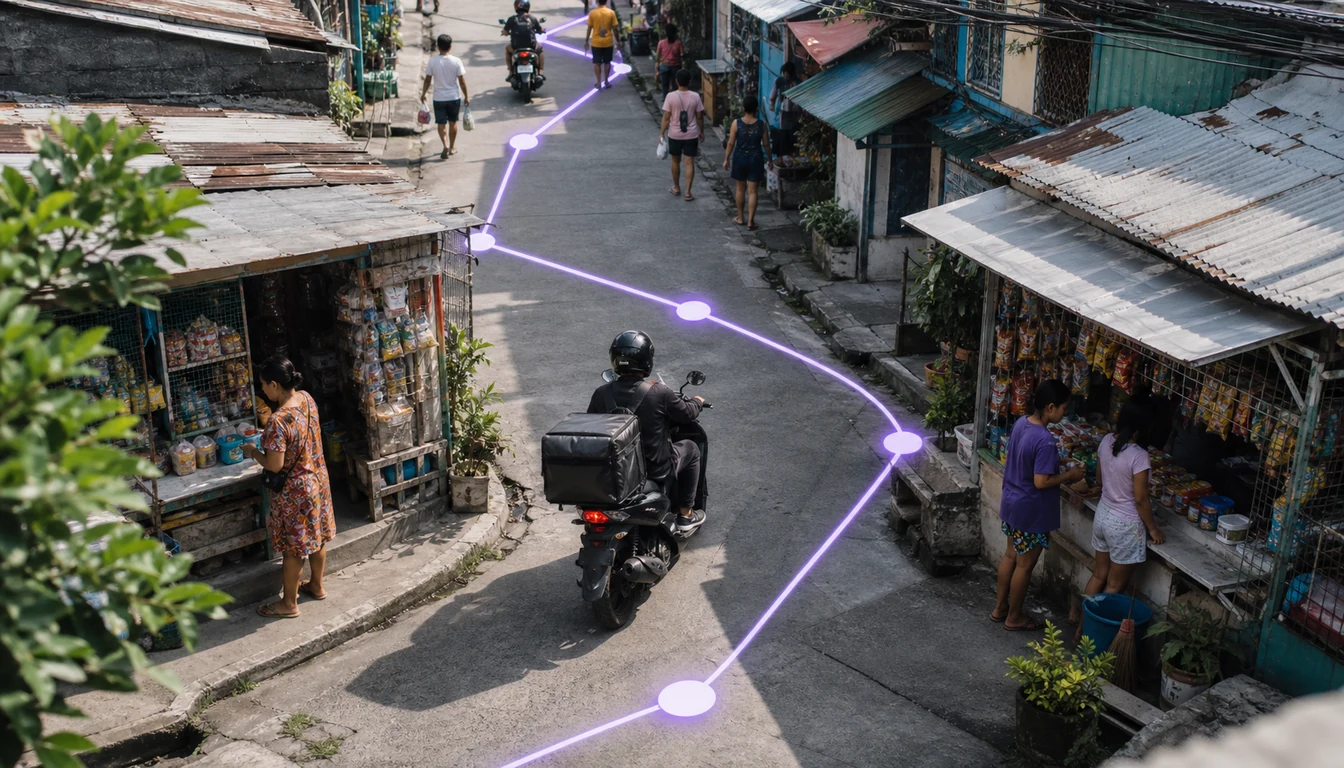
The Philippine retail landscape runs from air-conditioned supermarket aisles in Metro Manila to a single-counter sari-sari store on a barangay street in Mindanao, often within the same brand's distribution footprint. Modern trade chains such as SM, Robinsons and Puregold sit at one end of that spectrum, alongside 7-Eleven and Alfamart in convenience, and Mercury Drug and Watsons in health and beauty. At the other end sit an estimated 1.1 million sari-sari stores nationwide, together driving roughly 60% of FMCG sales and forming the backbone of everyday grocery distribution. No single audit method built for one end of that spectrum works cleanly at the other.
For brands and their distributors, that spread creates a genuine execution problem. A planogram agreed with a modern trade buyer, a shelf-strip or header card negotiated for a sari-sari counter, or a promotional bundle scheme rolled out nationwide all depend on someone actually seeing them in place on the shelf. Retail execution and merchandising audits exist to close that gap between what was planned in an office and what a shopper actually finds when they walk up to a shelf or counter, whether that shelf sits inside a Cebu hypermarket or behind a sari-sari owner's counter in a rural barangay. Without a reliable way to verify execution, a brand is effectively paying for shelf space, POSM and promotional support it cannot confirm is there.
Paper-based and manual audit processes were never designed to operate at this scale or across this much geographic variation. A field supervisor working from a printed checklist can cover a handful of outlets a day, has no reliable way to prove a visit happened beyond a signature, and produces data that takes days to consolidate into anything a brand manager can act on. Stretch that across an archipelago of roughly 7,641 islands, three island groups, and a field force that moves between Tagalog-speaking Luzon and Cebuano-speaking routes in the Visayas and Mindanao, and the gaps in paper-based auditing widen quickly. Photo-verified, structured, mobile-first audits are the only realistic way to keep pace with a trade structure this fragmented and this large.

What Counts as a Merchandising Audit in the Philippine Trade Structure
A merchandising audit is, at its simplest, a structured check of whether agreed shelf conditions are actually in place: correct facings, planogram compliance, POSM placement, pricing accuracy and stock availability. What changes across the Philippine trade structure is not the definition but the format of the outlet being audited, and the size of the population that needs auditing on any given cycle.
Auditing Modern Trade Shelf Compliance
In supermarkets and hypermarkets, an audit typically checks planogram adherence against a fixed layout agreed with category management, secondary display compliance during promotional periods, and correct pricing at shelf edge versus the agreed list. These outlets are fewer in number, better lit, and easier to schedule against a fixed calendar, which is part of why modern trade auditing tends to mature first inside most retail execution programmes.
Auditing Sari-Sari and General Trade Outlets
Sari-sari stores present a different shape of problem entirely. A typical outlet stocks up to roughly 200 SKUs in a tiny footprint, restocked in small, frequent quantities rather than large infrequent ones, which is the tingi buying pattern that defines much of Filipino FMCG consumption. An audit here is less about a fixed planogram and more about visibility: is the brand's product present at all, is it priced correctly, is POSM displayed where the store owner agreed to display it, and is stock rotating rather than sitting expired on a shelf. Structured store audit and compliance tools that adapt their checklist to outlet type, rather than forcing a modern trade template onto a sari-sari counter, are what make this workable at scale.
Planogram Compliance from Metro Manila to the Barangay Sari-Sari Counter
Planogram compliance is usually discussed as a modern trade concept, but the underlying question, whether the right products are in the right place in the right quantity, applies just as much to a sari-sari counter as it does to a Robinsons Supermarket aisle. The difference is the scale of the layout and how often it needs to be reset.
Because tingi culture drives such heavy SKU proliferation, a sari-sari counter can end up carrying dozens of sachet variants of a single category, shampoo, coffee, seasoning or detergent, in a space that would hold a handful of full-sized units elsewhere. Getting the right sachet sizes and flavours facing outward, in the right position relative to competitor products, matters more than it might appear from a modern trade lens, because shelf space in a sari-sari store is genuinely scarce and every centimetre is contested. A merchandising audit that captures planogram compliance photographically, rather than relying on a rep's written description, gives a brand manager sitting in Metro Manila an honest view of what is actually happening at a counter hundreds of kilometres away in Cebu or Davao.
Photo-Based Proof of Execution
The single biggest upgrade a brand can make to its retail execution programme is moving from a written or verbal audit report to photo-based proof of execution. A field rep or merchandiser captures a geotagged, timestamped photo of the shelf, display or POSM placement at the moment of the visit, and that photo becomes the record, not a checkbox that says "compliant" with no way to verify it.
This matters for three practical reasons. First, it removes the ambiguity between "the rep said it was done" and "it was actually done," which is where most disputes between brands and distributors, or between distributors and outlet owners, tend to originate. Second, it gives category and trade marketing teams a searchable visual record they can use to settle disagreements about a specific outlet or campaign without sending someone back out to check. Third, it creates an audit trail that supports scheme and rebate payouts tied to verified execution rather than self-reported compliance. A dedicated POSM tracking and proof of execution workflow, paired with a retail merchandising mobile app built for field use, turns this from a manual reporting exercise into something that happens automatically as part of every store visit.
Share-of-Shelf Tracking and Why It Matters for Sales Performance
Share of shelf, the proportion of facings a brand occupies relative to the category as a whole at a given outlet, is one of the more direct leading indicators available to a sales or trade marketing team. It moves faster than sell-out data and is easier to action at the outlet level than a monthly sales report.
Tracked consistently across a large outlet base, share-of-shelf data lets a brand see where competitor activity is eroding facings before it shows up in volume numbers, where a promotional push is actually converting into shelf space versus where it exists only on paper, and which outlets or territories need a merchandising intervention rather than a pricing one. Because this data is only useful in aggregate, and aggregate data only holds up if every audit was captured consistently, share-of-shelf tracking depends entirely on the same photo-based, structured audit process described above. Feeding that audit data into sales analytics that sits alongside order and distribution data gives a brand manager a single view of shelf presence and sell-through together, rather than two disconnected reports.
Audit Cadence Across Urban and Archipelago Routes
How often an outlet gets audited is as important as what the audit checks. A weekly or twice-monthly cadence might be realistic for a dense Metro Manila route with hundreds of outlets within a compact radius, but that same cadence is unrealistic for a rural route in Mindanao or the outer Visayas, where distance, ferry schedules and road conditions stretch a single loop across several days.
Why Archipelago Geography Changes the Planning
The Philippines is an archipelago of roughly 7,641 islands across the Luzon, Visayas and Mindanao island groups, and route planning for a field force has to account for combined road and inter-island freight in a way that a single continuous landmass never requires. Typhoon season adds a further layer of disruption, with an average of around twenty typhoons a year and several making landfall, routinely knocking out mobile coverage and delaying port and ferry schedules for days at a time. An audit cadence built around a fixed weekly visit schedule breaks down quickly under those conditions, which is why route planning for merchandising and audit visits needs to flex around seasonal disruption rather than assume a stable network year-round.
Offline-First Capture as the Practical Answer
Because signal dead zones and typhoon-related outages are a genuine, recurring feature of field operations rather than an edge case, an audit app that only works with a live connection is a liability. Offline-first capture, where photos, checklist responses and GPS stamps are recorded on the device and synced once connectivity returns, is the difference between a merchandiser who can keep working through a coverage gap and one who has to skip the visit or fall back on a paper form that never makes it into the system.
Coaching Field Reps and Merchandisers with Audit Data
Audit data is not just a compliance record, it is also the most direct coaching tool a field sales manager has. A supervisor reviewing a week's worth of photo-verified visits can see, outlet by outlet, where a rep is executing planograms correctly, where POSM keeps going missing, and where a particular merchandiser consistently under-performs against a target share of shelf.
This is especially valuable given how regionally distributed the Philippine field force typically is. Reps and merchandisers move between Tagalog-speaking territories in Luzon and Cebuano-speaking routes across the Visayas and Mindanao, alongside other regional languages depending on the territory, which makes standardised, structured coaching harder to deliver through informal, in-person feedback alone. Pairing audit data with a sales team learning management system lets a manager attach a specific coaching module to a specific gap, correcting a planogram misunderstanding for one merchandiser without retraining an entire regional team on something they already do well. Combined with field activity management that tracks visit frequency and duration alongside audit outcomes, a manager gets a genuinely complete picture of where coaching time will move the numbers fastest.
SKU Proliferation, Tingi Packs and Why Audits Must Track More Than Facings
Tingi buying behaviour, purchasing single-use, sachet-sized quantities rather than bulk packs, is the default consumption pattern across a large share of Filipino FMCG categories, not a niche exception. That single fact reshapes what a merchandising audit needs to capture. A sari-sari counter carrying a dozen sachet variants of one category needs its audit checklist to track pack size and variant, not just brand presence, because a facing count that treats a ₱10 sachet the same as a full-sized bottle tells a brand manager almost nothing useful about actual shelf performance or restock frequency.
This is also where merchandising audits and SKU-level pricing discipline intersect. A store carrying dozens of small-pack variants restocked frequently is far more exposed to pricing drift at the point of sale than one carrying a handful of large packs restocked monthly, simply because there are more price points to get wrong and more frequent restocking cycles for an error to repeat across. Linking audit checklists to SKU management and pricing management data means a rep capturing a shelf photo is also implicitly verifying that the SKU and price on the shelf match what head office actually approved, catching drift at the point it happens rather than weeks later in a reconciliation report.
How 1Channel Supports Retail Execution and Merchandising Audits Across the Philippines
1Channel's retail execution tools are built around the same photo-verified, structured audit approach described throughout this article, configured to handle the specific shape of Philippine retail rather than a generic template. Checklists can differ by outlet type, so a modern trade planogram audit and a sari-sari visibility check run through the same app without forcing one format onto the other. Every audit captures a geotagged, timestamped photo as the underlying proof of execution, feeding directly into share-of-shelf and compliance reporting that a brand or distributor team can act on the same day rather than the same month.
Because field conditions across the archipelago cannot be assumed to include reliable connectivity, the mobile app is built offline-first, so a merchandiser working a rural Mindanao route or caught in a typhoon-related network outage can keep capturing audits and let them sync automatically once signal returns. Route and beat plans can be structured around urban density in Metro Manila and Cebu on one hand and multi-modal, longer-cycle rural routes on the other, rather than a single fixed cadence applied everywhere.
Verify Every Shelf, From Metro Manila to the Farthest Sari-Sari Counter
1Channel's retail execution software turns planogram checks, POSM verification and share-of-shelf tracking into a single photo-verified workflow built for the Philippines' archipelago field reality, online or offline.
Explore Retail Execution →Key Takeaways
Retail execution and merchandising audits in the Philippines have to work across an unusually wide spread of outlet types and geography. A few principles carry across nearly every situation covered above:
- Design audits around outlet type, not one universal template. A modern trade planogram check and a sari-sari visibility check are different exercises and need different checklists inside the same programme.
- Photo-based proof of execution replaces guesswork with evidence. Geotagged, timestamped photos turn "the rep said it was done" into a verifiable record that supports scheme payouts and dispute resolution.
- Share of shelf is a leading indicator worth tracking consistently. Aggregated audit data can flag competitive pressure and promotional execution gaps well before they show up in sell-out numbers.
- Audit cadence must flex around archipelago geography and typhoon season. A fixed weekly schedule that works in Metro Manila will not survive a rural Mindanao route or a typhoon-disrupted week, and route planning needs to account for that from the start.
- Offline-first capture is a requirement, not a nice-to-have. Signal dead zones and storm-related outages are routine enough across the islands that any audit tool depending on constant connectivity will lose data.
- Audit data is a coaching tool as much as a compliance record. Paired with structured learning content, it lets managers target specific gaps across a regionally and linguistically diverse field force rather than retraining everyone the same way.