FMCG brands in Saudi Arabia don't sell into one market, they sell into two. Organised modern trade, the hypermarkets and supermarkets anchoring grocery shopping in Riyadh, Jeddah and Dammam, has become the fastest-growing channel in the Kingdom's major cities. The neighbourhood baqala and the newer mini-market format remain the backbone of coverage everywhere else: smaller cities, suburban districts and price-sensitive shoppers wanting a quick top-up close to home.
The two channels run on different economics. A hypermarket chain wants a negotiated listing, planogram-accurate shelf space and a predictable delivery schedule against a purchase order. A baqala owner wants a small, frequent drop, flexibility on how they pay, and a rep who shows up when promised. Treat both the same way and one of them loses: overbuild for modern trade and baqala coverage thins out, overbuild for baqala and chain buyers notice gaps on the shelf.
The brands that do well across both channels in Saudi Arabia build one coverage plan with two distinct playbooks inside it, not two separate businesses and not one flattened approach. That distinction sharpens further once Ramadan and Hajj-Umrah demand lands on both channels at once, in different ways. Here is what that requires on the ground.
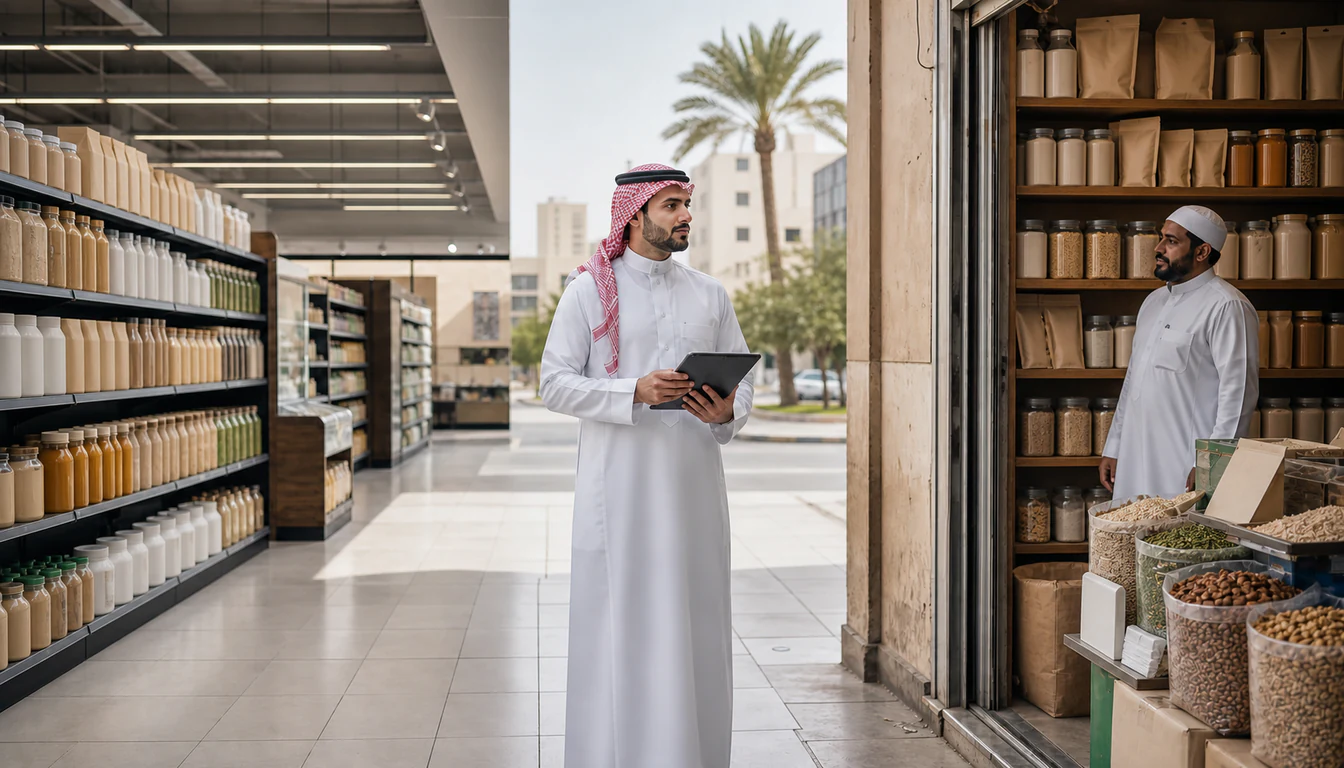
Why Saudi Arabia Is a Genuine Dual-Channel Market
Hypermarket and supermarket chains such as Panda, Othaim, Danube, BinDawood, Carrefour Saudi Arabia, Lulu Hypermarket, Tamimi Markets, Farm Superstores and Al Raya anchor grocery retail in Saudi Arabia's major cities, and organised modern trade is growing faster than any other format in the market. For a brand with national ambitions, a strong presence on those shelves is not optional.
At the same time, the baqala and the newer, often cashless mini-market format remain the default shopping stop for a large share of the country, particularly outside the biggest cities. Rural and suburban households and smaller towns rely on them for daily purchases, and price-sensitive shoppers everywhere still use them for the small, frequent basket a weekly hypermarket run doesn't cover.
Neither channel is fading in favour of the other: modern trade is where growth concentrates, baqala and mini-markets are where reach and frequency live, and a national strategy has to hold both at once.
What Modern Trade Buyers Actually Expect
Selling into a hypermarket or supermarket chain means selling into a formal buying process, and every part of it gets measured. A category buyer negotiates listing terms once, then expects the brand to hold up its end at every branch, every week, without a rep renegotiating shelf space store by store.
Planogram Compliance
Chains plan shelf layout centrally and expect brands to match it exactly: the right SKUs, in the agreed facings, in the agreed position, at every branch. A field team calling on modern trade needs a way to check the shelf against the agreed planogram and capture proof of it, not just take an order and leave.
Chain-Level Consignment
Large chains frequently buy on consignment or extended terms rather than settling per delivery, and they expect stock, invoices and returns to reconcile cleanly at chain level, not store by store. A brand still tracking this on spreadsheets loses visibility fast once it is supplying several branches of the same chain across different cities.
Negotiated Listings and Delisting Risk
A listing is a negotiated privilege, not a permanent right. Chains review performance regularly and will delist a slow-moving or poorly-executed SKU to free up space for a competitor. Store audits and compliance records become the evidence a brand needs to defend a listing at the next review, which is exactly what store audit and compliance tracking is built for.
What Baqala and Mini-Market Owners Actually Need
A baqala owner isn't negotiating a listing, they are deciding whether to reorder from whichever rep shows up with stock and a fair price this week. Winning that decision looks nothing like winning a chain buyer's approval.
Frequent, Smaller Deliveries
A baqala rarely has the storage or the cash flow to hold a hypermarket-sized order. It wants a smaller drop, more often, timed to when stock actually runs low rather than a fixed monthly cycle. Delivery schedules built around a Sunday-to-Thursday working week, with Friday-Saturday as the weekend, need to reflect how quickly a small store genuinely sells through, not a distributor's own convenience.
Cash and mada/Wallet Mixed Payments
Payment at baqala and mini-market level is genuinely mixed: cash still moves alongside mada card payments and mobile wallets such as STC Pay, sometimes within the same visit. A rep who cannot record a part-cash, part-card settlement against the right invoice on the spot ends up reconciling by memory at day's end, and that is where collections quietly go missing. Payment management built for that mix matters more here than in modern trade.
Route Density Over Chain Paperwork
There is no single buyer to negotiate with, only a beat of separate relationships across many outlets. Coverage depends on route density: how many outlets a rep can realistically visit and serve in a working day across the distances involved, and how well that beat is planned so smaller-city and suburban reach doesn't quietly erode. Route planning built around that reality does more for baqala coverage than any amount of trade spend.
One Pricing and Promotion Plan Rarely Works for Both Channels
It is tempting to run a single national price list and a single promotion calendar and apply both everywhere. In a dual-channel market like Saudi Arabia, that usually satisfies neither side.
A hypermarket buyer negotiates a listing price and a promotional slot well in advance, tied to a specific in-store activation and volume commitment. A baqala owner cares about a fair everyday price and a scheme simple enough to explain on the spot, a free unit on a case, a short-term discount, not a multi-week activation with no shelf space to display it.
Run the hypermarket-style scheme through a baqala and it is too complex to execute at the counter. Run the baqala-style scheme through a chain and it undercuts the negotiated listing price the buyer signed off on. Pricing and promotion plans that hold up in Saudi Arabia are built by channel first, then reconciled centrally so the two never contradict each other in the same city.
Ramadan and Hajj-Umrah Hit Both Channels, Differently
No other seasonal pattern in Saudi Arabia moves demand the way Ramadan and the Hajj and Umrah pilgrimage seasons do. Both are sharp, predictable, short-window demand spikes rather than a gradual seasonal climb, and both hit modern trade and baqala differently.
In modern trade, the pre-Ramadan buying surge shows up as a compressed replenishment cycle: chains want stock in place ahead of the holiday, negotiated promotional slots timed to it, and little tolerance for stock-outs during the peak shopping window. In baqala and mini-market channels, the same surge shows up as more frequent, smaller top-up purchases through the month, plus a genuinely concentrated demand pocket in and around Mecca and Medina during Hajj and Umrah that a national coverage plan cannot treat as an afterthought.
Getting this window right takes buffer stock positioned ahead of time and a route and delivery plan that can flex for a few compressed weeks without falling back to guesswork once the surge passes. Trade promotion planning that accounts for both channels' timing, not just one, is what keeps the season from becoming a scramble.
Building One Coverage Plan With Two Playbooks
The brands that handle this well don't run two separate teams, they run one coverage plan that branches by channel where it matters most: how a visit is planned, what a rep checks, and how a scheme is priced.
- Segment the territory by channel, not just geography. A beat that mixes a hypermarket call with a string of baqala visits needs different preparation, different collateral and a different length of visit for each stop.
- Separate the metrics. Planogram compliance and listing performance measure modern trade; outlet coverage, strike rate and route density measure baqala and mini-market reach. Judging both channels on the same number hides where the real gap is.
- Keep pricing and scheme rules channel-aware from the start. Treat the negotiated chain terms and the everyday baqala price as two linked rules, not two disconnected spreadsheets someone has to reconcile manually every month.
- Plan the Ramadan and Hajj-Umrah window separately from the rest of the year. Buffer stock, delivery frequency and scheme timing all need a seasonal setting, not a permanent one.
None of this holds up on paper and memory once a brand is supplying dozens of hypermarket branches and hundreds of baqalas and mini-markets at once. It needs one system that can carry both playbooks without forcing either to compromise.
How 1Channel Helps FMCG Brands in Saudi Arabia
1Channel gives FMCG brands one platform that runs a modern-trade playbook and a baqala playbook side by side, instead of forcing every outlet through the same process. Reps see the right checklist, pricing and scheme for the channel they are standing in.
For modern trade, that means planogram checks with photo proof, chain-level consignment tracking, and listing performance data ready for the next buyer review. For baqala and mini-market coverage, it means beat plans built around route density, smaller delivery cycles, and collections that record cash, mada and wallet payments against the right invoice on the spot.
Across both channels, including through the Ramadan and Hajj-Umrah season, the platform gives one view of coverage, pricing and stock instead of two disconnected pictures. On this topic, it helps brands:
- Run planogram compliance checks and chain-level consignment tracking for modern trade.
- Plan baqala and mini-market beats around route density and realistic delivery frequency.
- Record mixed cash, mada and wallet payments against the correct invoice in the field.
- Keep channel-specific pricing and promotion rules linked instead of managed on separate spreadsheets.
- Build seasonal buffer stock and delivery plans ahead of Ramadan and Hajj-Umrah demand.
One Platform for Modern Trade and Baqala Coverage
See how the platform's retail execution software handles planogram compliance, chain-level consignment, baqala route density and mixed-payment collections in one system built for Saudi Arabia's dual-channel market.
Explore Retail Execution Software →Key Takeaways
Saudi Arabia's dual-channel market rewards brands that plan for two different buying behaviours instead of one average approach. Keep these points in front of the team every cycle:
- Modern trade and baqala are different businesses. A hypermarket buyer and a baqala owner make very different purchase decisions, and the strategy for each has to match.
- Modern trade runs on planogram compliance and negotiated listings. Chain-level consignment tracking and audit-ready compliance records protect the listing at the next buyer review.
- Baqala and mini-markets run on frequency and route density. Smaller, more frequent deliveries and a well-planned beat matter more than a formal buying process.
- Payments are genuinely mixed at outlet level. Cash, mada and wallet payments all need to reconcile against the right invoice on the spot.
- Pricing and promotion plans need to be channel-aware. A single national scheme rarely satisfies both a chain buyer and a baqala owner.
- Ramadan and Hajj-Umrah demand a seasonal plan of their own. Buffer stock and delivery frequency both need to flex ahead of the surge, not react to it after it lands.
Get the channel split right and the rest of the coverage plan follows from it.