A loyalty redemption starts with a tap in the partner app and ends when the reward reaches the partner. For Indian brands rewarding retailers, electricians, plumbers and mechanics in building materials, automotive, consumer durables and FMCG, most redemption mistakes happen between those two points.
Mistakes 1 to 5 happen before the redemption goes through. Mistakes 6 to 8 happen after the reward order is placed.
1. Allowing Redemptions Below a Minimum
Without a floor, partners redeem a few points at a time. Each small redemption still has to be processed, paid or shipped.
The check: a minimum redemption threshold is enforced. Each voucher in the catalogue also carries its own minimum and maximum points range.
2. Approving a Redemption Without Checking the Balance
If the balance is checked late, a redemption can go through against points already spent on an earlier order.
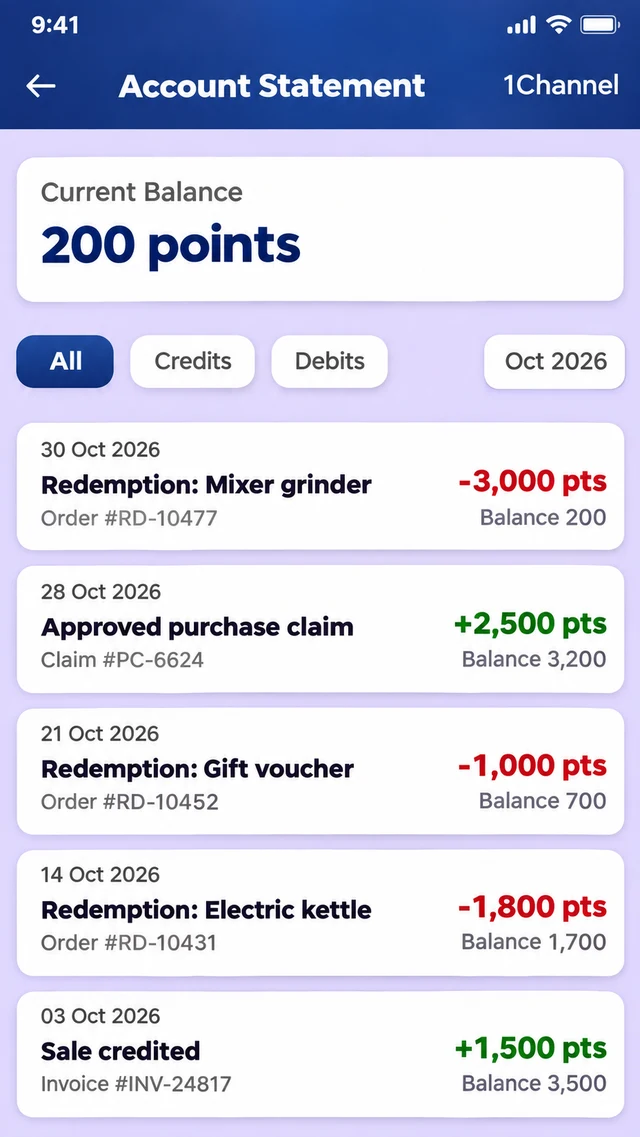
The check: the wallet balance is verified before the redemption is accepted. The Account Statement lists every credit and debit by date, with the sale or redemption behind it and the running balance.
3. Paying Out Before KYC Is Complete
A payout to a partner with no verified PAN or bank details can reach the wrong account, or leave the brand without the records tax rules need.
The check: completed KYC is required. PAN format and authenticity are validated, Aadhaar data is masked, and bank and UPI details are verified for payout accuracy. Partners with missing KYC see a "Complete your KYC" prompt after login.
4. Working Out TDS by Hand
Rewards to channel partners and influencers fall under Section 194R. Working out the deduction in a spreadsheet for each redemption invites the wrong rate.
The check: PAN/TDS rules apply where the redemption value crosses tax limits. PAN validity sets the rate, and the deduction is applied automatically, not as a manual finance step.
Illustrative example at 1 point = ₹1, for a 25,000-point UPI redemption:
| PAN status | TDS rate (illustrative) | TDS deducted | Partner receives |
|---|---|---|---|
| Valid | 10% | ₹2,500 | ₹22,500 |
| Invalid or missing | 20% | ₹5,000 | ₹20,000 |
5. Accepting Reward Orders for PIN Codes That Can't Be Served
If the delivery area is only checked after the order is placed, the order fails and the partner is left waiting.
The check: for physical rewards, PIN-code serviceability is part of the redemption checks, alongside the threshold, balance and KYC.
One Flow From Points Redeemed to Reward Delivered
1Channel's Loyalty Management Software checks the threshold, balance, KYC, TDS and PIN code before a redemption goes through, then tracks the order, reverses points on failed orders and captures proof of delivery.
Explore 1Channel's Loyalty Management Software →6. Leaving Partners to Ask Where Their Reward Is
Physical rewards move through procurement and shipping before they arrive. With no status in the app, delays turn into calls to the helpdesk.
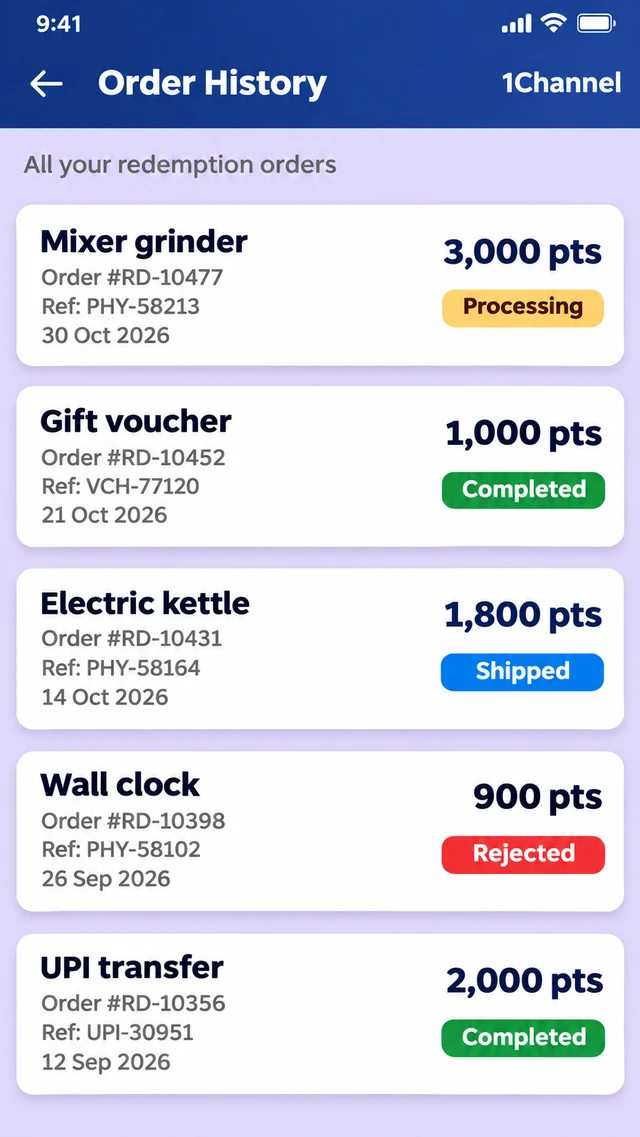
The check: every redemption, voucher or physical, appears in Order History with its own status. For physical rewards, the status is updated on the backend as the item moves through procurement and shipping, and the change shows in the app.
| Status | What it tells the partner |
|---|---|
| Processing | Order received, not yet shipped |
| Shipped | On its way to the partner |
| Completed / Fulfilled | Delivered or fulfilled |
| Rejected | Did not go through |
7. Keeping the Points When a Reward Order Fails
When an order fails but the points stay deducted, the partner has paid for a reward that never arrived.
The check: points are reversed on failed orders, so they return to the partner's wallet.
8. Closing Orders Without Proof of Delivery
Marking an order complete on the vendor's word leaves nothing to show when a partner says the reward never came.
The check: proof of delivery is captured. A configurable notice can also ask partners to report product issues to support within 24 hours of delivery.
Points to Remember
- A programme can offer UPI or bank transfers, vouchers and physical rewards, and often offers more than one.
- UPI and bank payouts can be instant through a payment partner, or batched by the back-office team.
- Vouchers are sent straight to the partner's registered mobile with a code, PIN and expiry date.
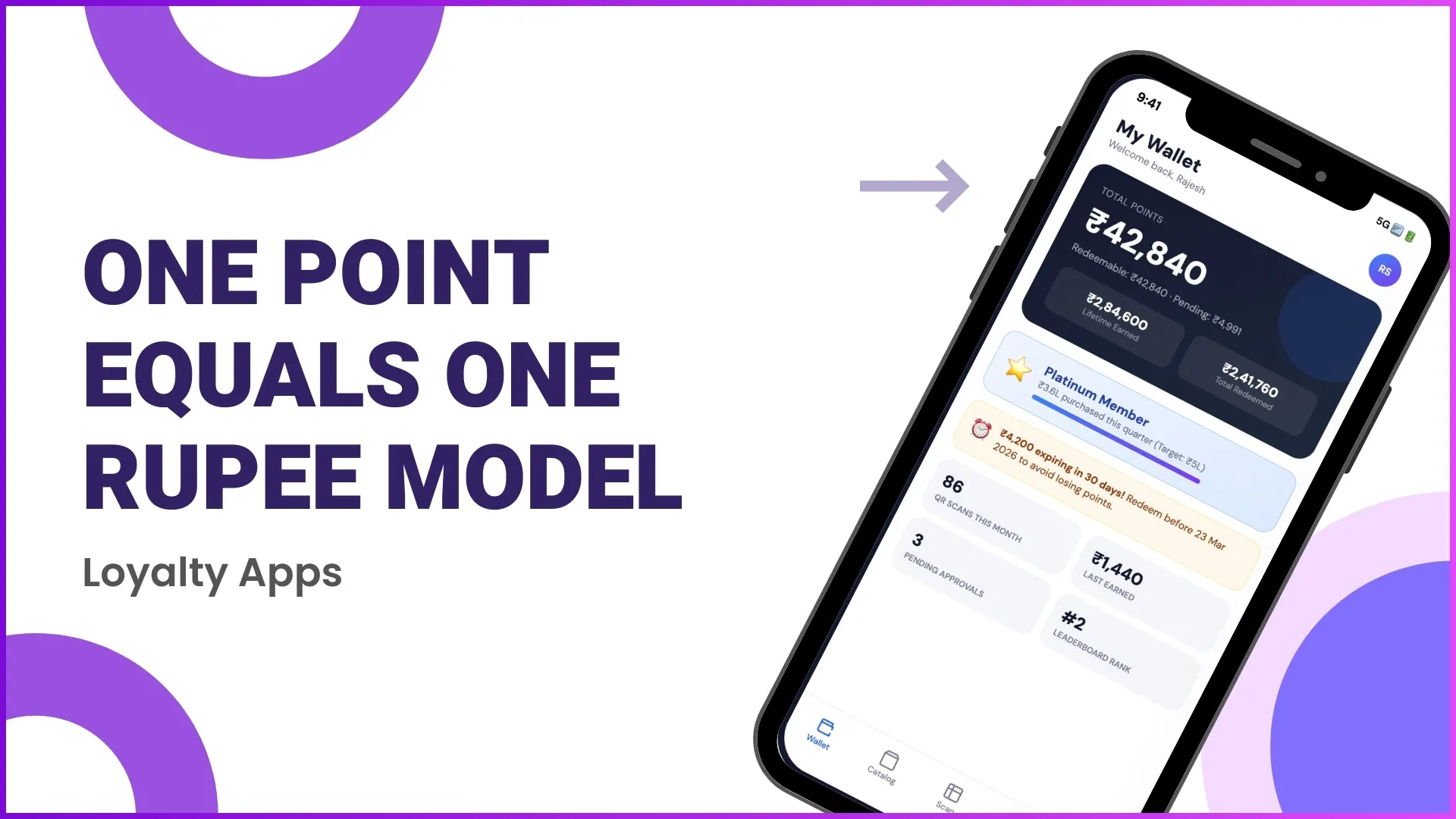
- Point-to-rupee conversion is set by each programme; 1 point = ₹1 is the common pattern.
Note: Software screens may vary based on your business structure and configured workflows.