A loyalty program is only as effective as the rules that govern it. Rule engines act as the backbone of modern loyalty software, defining how users earn points, when rewards are triggered, what approvals are required, and which communications are sent.
Configuring these rule engines correctly ensures fairness, scalability, fraud prevention, and alignment with business objectives.
This blog explains how rule engines are configured in loyalty software, using real operational examples drawn directly from the provided content document.
What Is a Rule Engine in Loyalty Software?
A rule engine is a configurable backend system that determines actions based on predefined conditions. In loyalty software, rule engines control:
- Eligibility and enrolment validation
- Point calculation logic
- Approval workflows
- Reward redemption conditions
- Notifications and automated actions
Example:
When a purchase is approved by the sales team, a rule triggers point allocation and sends a confirmation notification to the user.
Rule Configuration During Member Enrolment
Enrolment Rules and Eligibility Checks
Loyalty programs allow multiple enrolment methods, each governed by configurable rules:
- Self-registration through the mobile app
- Backend bulk upload by program administrators
- Nomination by existing members
- API-based enrolment from external systems
Rules decide:
- Which fields are mandatory (mobile number, partner type, name)
- Whether KYC is required at registration or later
- Whether enrolment requires approval or auto-activation
Example:
A partner can log in using OTP even if KYC is incomplete, but redemption rules later restrict payouts until PAN and bank details are validated.
Rule Engines for Point Accrual Mechanisms
1. Sales-Based Point Allocation Rules
Points can be calculated based on sales data received from external systems through integrations.
Rules define:
- Evaluation period (monthly, quarterly)
- Slab ranges and percentage values
- Tier classification (e.g., silver, gold)
- Maximum point caps per cycle
Example:
If quarterly sales fall within a defined slab range, the rule engine allocates a percentage of sales value as points, with an upper earning limit enforced automatically.
2. QR Code–Based Point Allocation Rules
For QR-based loyalty programs, rule engines manage:
- QR code generation at backend
- SKU-level point mapping
- One-time scan validation
- Duplicate scan prevention
Example:
A QR code linked to a specific SKU triggers a fixed point value only once. If scanned again, the rule engine blocks the transaction.
3. Invoice-Based Purchase Rules
Invoice submission workflows are also rule-driven.
Rules define:
- Allowed invoice date range (e.g., last 15 or 30 days)
- Mandatory invoice image upload
- Multi-level approvals
- Point allocation logic based on volume or value
Example:
Points are credited only after retailer approval followed by sales team approval, ensuring that unverified invoices never earn rewards.
Approval Workflow Rules and Automation
Rule engines manage multi-stage approval workflows without manual intervention.
Configurable rules include:
- Who approves which action
- Approval sequence
- Auto-rejection or escalation conditions
Example:
When a nominated member is approved, a rule triggers enrollment confirmation and activates login access automatically.
Reward Redemption Rules and Payout Logic
Redemption Eligibility Rules
Rule engines control:
- Minimum and maximum redemption thresholds
- Reward type eligibility (cash, vouchers, physical rewards)
- KYC and PAN validation checks
- TDS deduction rules
Example:
If PAN is invalid or missing, the rule engine applies higher TDS deduction during redemption.
Instant vs Manual Redemption Rules
Programs can configure:
- Instant payout via integrated payout partners
- Manual redemption cycles with backend approval
- Reward catalog-based voucher fulfillment
Example:
Once a reward order is placed, the rule engine triggers voucher dispatch and updates order status automatically in the app.
Rule Engines for Notifications and Communication
Communication rules determine when and how users are notified.
Rules can trigger:
- Push notifications
- WhatsApp messages
- SMS alerts
Example:
When points are about to expire, a rule sends automated reminders prompting the user to redeem before expiry.
Gamification Rules for Engagement
Rule engines also power gamification features such as:
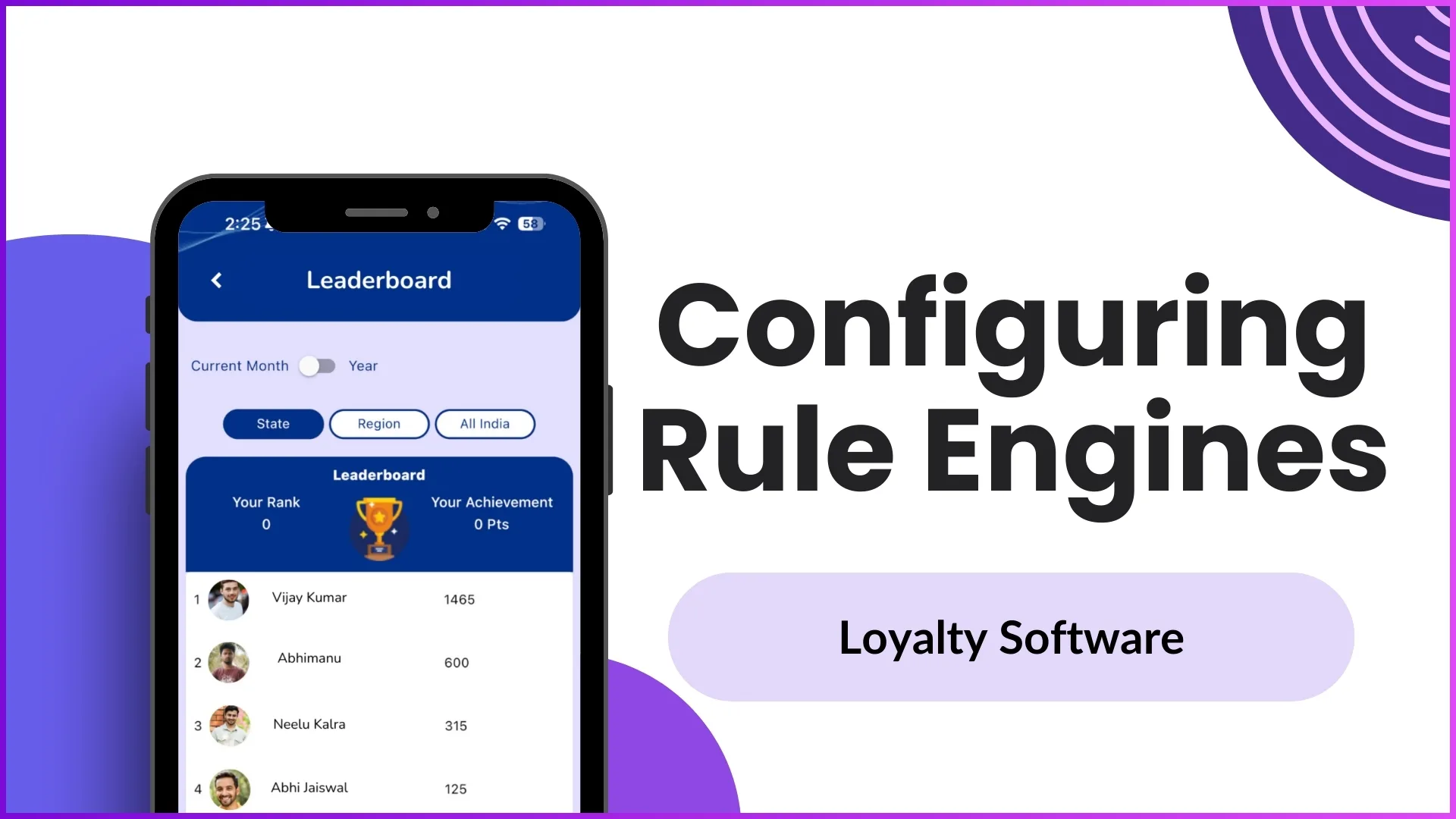
- Leaderboards (state, region, national)
- Tier progress tracking
- Scratch cards and spin-the-wheel mechanics
Example:
Leaderboard rankings refresh automatically based on total approved points earned within a defined time period.
Backend Rule Configuration and Workflows
Administrators configure rules through a backend portal that allows:
- Field-level validations (PAN format, Aadhaar length)
- Workflow creation using triggers and actions
- Webhooks for external integrations
- Bulk partner uploads and edits
Example:
A workflow rule triggers a webhook to send approved purchase data to an external CRM system.
Reporting and Analytics Rules
Rule engines also define how data is aggregated and displayed.
Configurable outputs include:
- Member growth trends
- Active vs inactive users
- Points liability reports
- Redemption summaries
Example:
A dashboard automatically categorizes members as active, inactive, or never active based on transaction rules.
Why Rule Engine Configuration Matters?
Well-configured rule engines ensure:
- Accuracy in point allocation
- Prevention of duplicate or fraudulent claims
- Faster program scaling
- Consistent user experience
Without strong rule definitions, loyalty programs become manual, error-prone, and difficult to manage.
How 1Channel Loyalty Enables Advanced Rule Configuration?
1Channel Loyalty provides a flexible backend framework where businesses can configure complex loyalty rules without rebuilding systems.
From multi-level approvals and automated workflows to real-time notifications and payout logic, rule engines are designed to adapt to varied program objectives while maintaining compliance and transparency.
Build Scalable Loyalty Programs with Smart Rules
1Channel's Loyalty Management Software enables you to configure rule engines for points, approvals, redemptions, and notifications. Automate workflows and scale your program with confidence.
Explore Loyalty Management Software →Conclusion
Rule engines are the core intelligence of loyalty software. By defining how users enrol, earn, redeem, and engage, they transform loyalty programs from static point systems into dynamic, automated ecosystems.
Proper configuration ensures that every action whether a purchase upload or a reward redemption follows clear, auditable, and scalable rules aligned with business goals.
When loyalty rule engines are configured thoughtfully, they don't just manage rewards they drive long-term engagement and measurable outcomes.