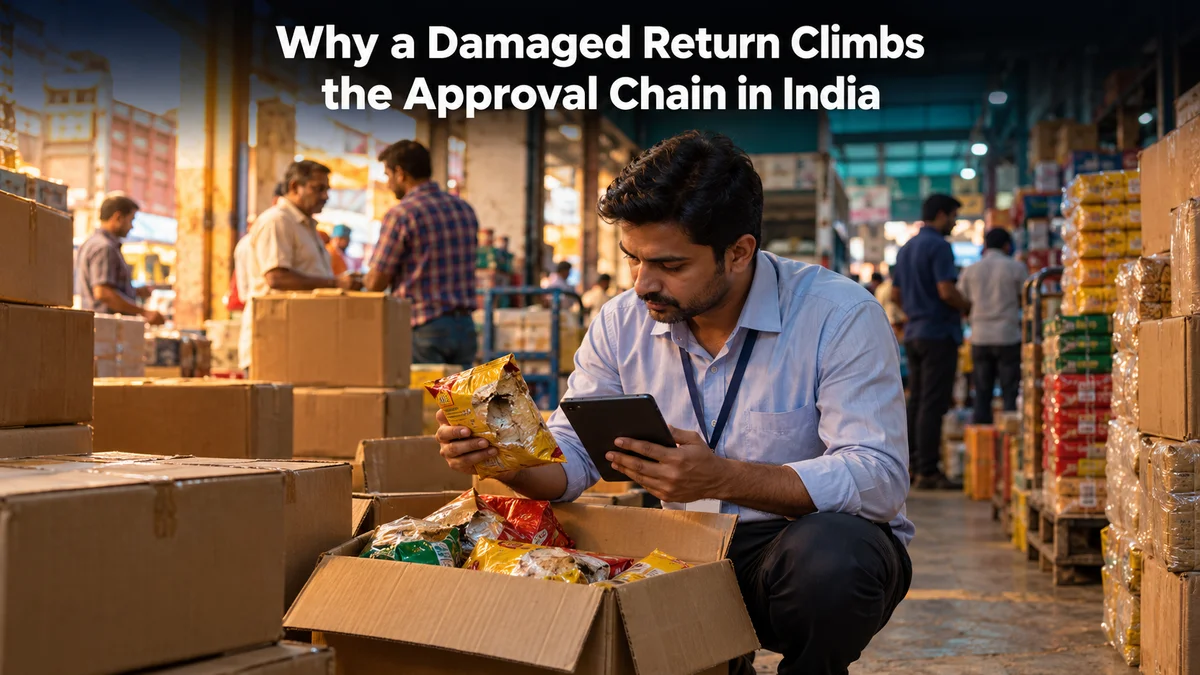
A retailer in an Indian FMCG market receives a carton of products, only to discover that several units are damaged. During the next outlet visit, the field sales representative is informed and asked to arrange a return.
The representative identifies the original order, selects the damaged products, and records the return request. But the retailer cannot receive a credit note immediately.
The request must first be approved by the appropriate party in the distribution network.
In India's multi-tier distribution system, a damaged return is more than a stock movement. It is also an approval and financial settlement decision. Understanding how that decision moves through the hierarchy helps brands manage returns without losing control over inventory and credit adjustments.
Why a Damaged Return Cannot Always Be Approved at the Outlet
Indian distribution networks commonly operate through multiple levels: manufacturers, super stockists, distributors, and retailers. When a product is returned, the party responsible for verifying it is often not the one who received it.
A field representative can record a damaged return, but approving the financial adjustment may fall to the distributor. When a distributor initiates a return, the super stockist may be responsible instead.
This separation matters because damaged returns affect:
- Stock accountability for the returned products and quantities.
- Financial adjustments for the credit to be issued.
- Distribution responsibility for which party accepts the return.
- Return visibility into SKUs or customers generating repeated damage-related returns.
Without a structured approval process, these decisions become difficult to track across distribution levels.
How a Damaged Return Moves Through the Distribution Chain
The distribution hierarchy determines which party is responsible for handling a return request.
Illustrative distribution hierarchy
- Company
- Super Stockist
- Distributor
- Retailer
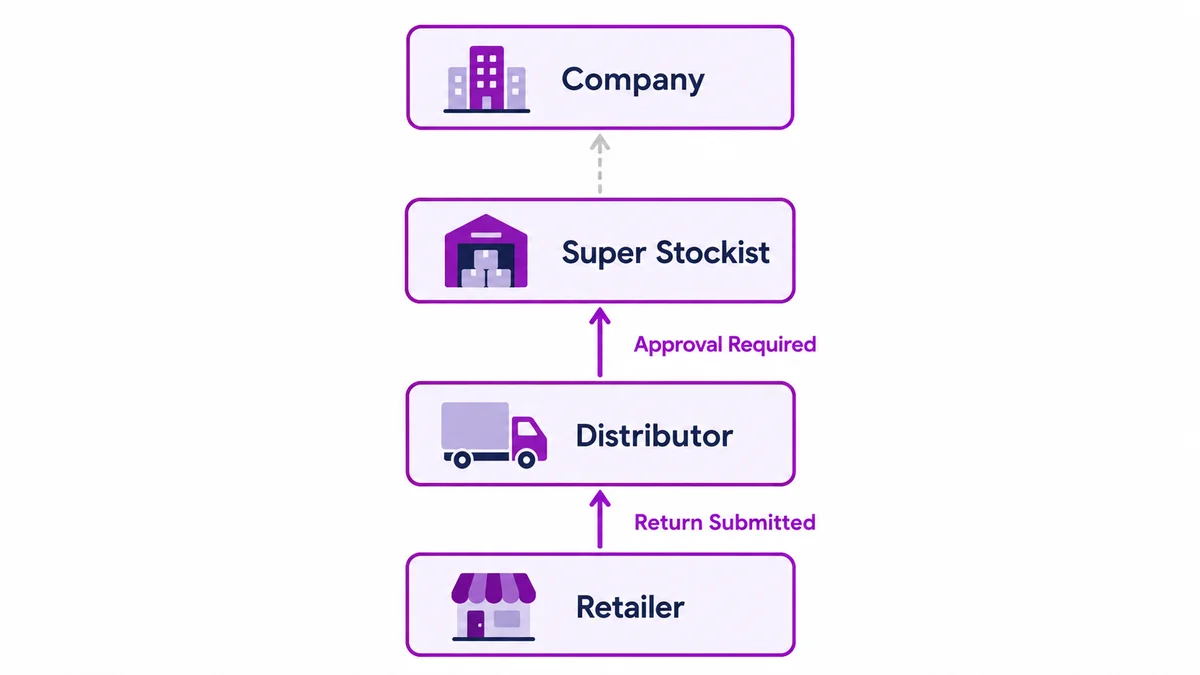
Approval moves to the responsible party directly above the return initiator, not necessarily all the way to the company. A distributor's return, for example, typically needs approval from the super stockist alone, so the appropriate authority reviews the request before the financial resolution is completed.
A Distribution Management System (DMS) helps maintain this process through role-based access and return approvals.
What Happens When a Damaged Return Is Raised in DMS?
Instead of managing returns through separate calls, spreadsheets, or informal messages, a DMS connects the request to its original transaction.
In 1Channel DMS, the return process follows these steps:
- Select the original order: the return stays connected to the original sale.
- Choose the products and quantity: select the SKUs and enter the return quantity, up to the delivered quantity.
- Record the return details: the reason can be marked as Damaged, with the product's condition recorded separately.
- Specify the resolution: choose an outcome such as issuing a credit note, with an optional description or notes.
- Save or process the return: the request can be saved as a draft or submitted for approval.
- Complete the required approval: the next responsible party reviews the return before its credit note is generated.
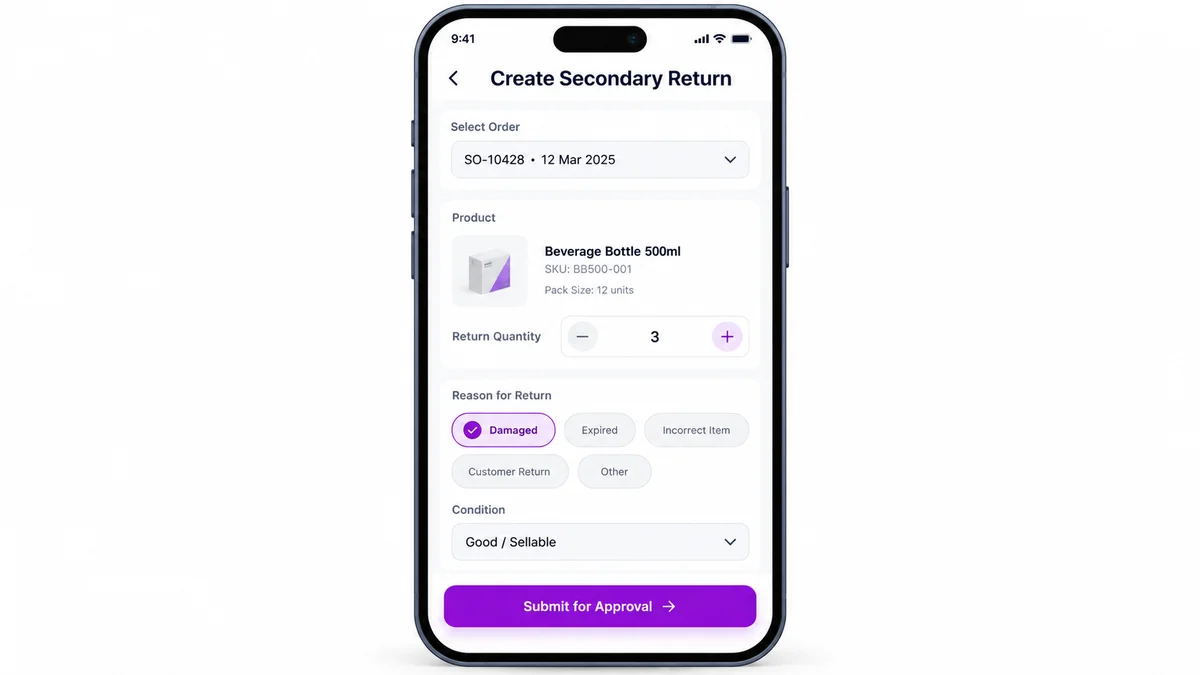
Retailers typically do not need to access the DMS directly. A field sales representative can initiate the return on their behalf, while distributors and super stockists can create returns within their authorized scope.
Where Return Approvals Become Complicated
A damaged return becomes harder to manage when the approval process is unclear: a request may lack sufficient detail, a distributor may have several returns awaiting review, or a super stockist may need to separate genuine damage claims from other return reasons.
When approvals depend entirely on manual follow-ups, requests can remain pending, delaying credit-note generation. Configurable workflow automation can help: 1Channel DMS supports approval levels, notifications, and automatic escalation, with approvers assigned by reporting hierarchy, role, or named user. This does not mean every damaged return must go through all seven possible levels; the approval structure should reflect the organization's actual distribution responsibilities.
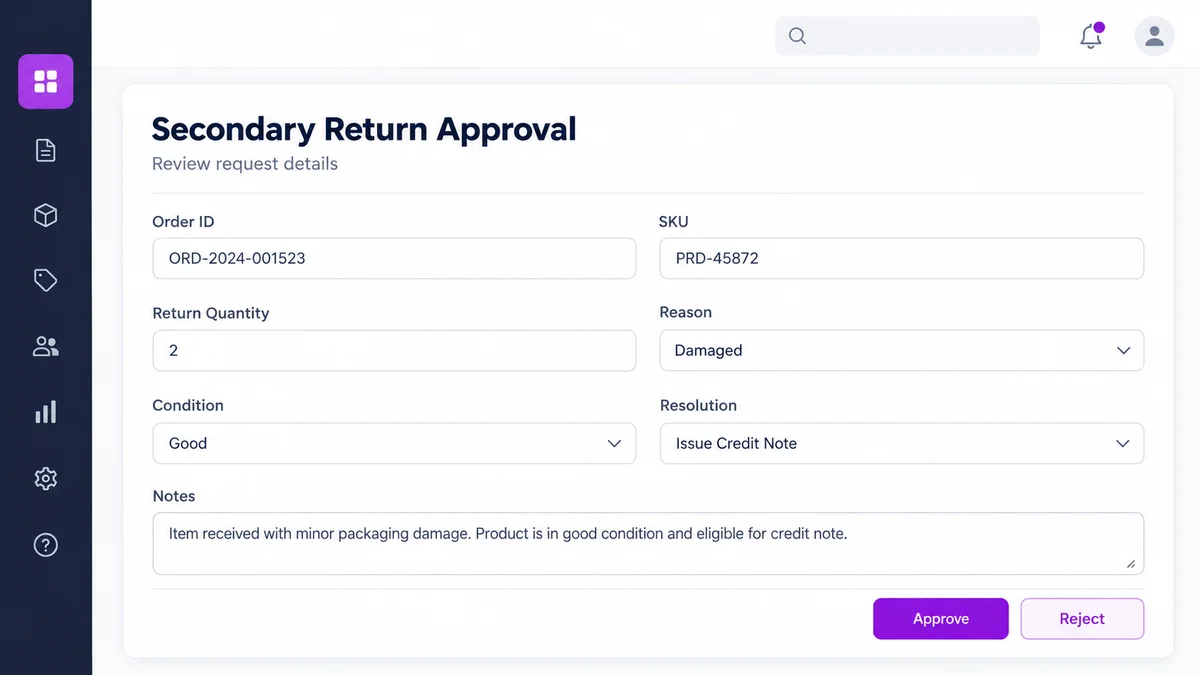
Keeping Damaged Returns, Approvals, and Credit Notes Connected
Recording a return is only part of the process. Distribution teams also need visibility into which requests are pending, which need action, and how returned goods affect financial records.
1Channel DMS provides connected operational capabilities:
- Returns Management: Records the order, returned SKUs, quantity, reason, condition, and proposed resolution.
- Approvals Queue: A central place for reviewing pending returns alongside other approval requests.
- Credit Management: Supports credit-note operations and visibility into customer credit records.
- Return Analysis Report: Examines returns by reason, customer, SKU, and trends.
For example, if the same SKU repeatedly appears in damaged-return records across multiple distributors, the Return Analysis Report can help identify the pattern for further investigation.
The objective is not merely to approve returns faster, but to make the request, approval decision, and financial resolution easier to trace.
Why Choose 1Channel DMS for Damaged Return Management?
1Channel DMS brings return creation, approval management, and credit-note handling into one connected distribution platform. Field reps, distributors, and super stockists can manage returns within their own scope, with the required approval completed before each credit note is generated.
Explore 1Channel AI-Powered DMS →Frequently Asked Questions
1. Who approves a damaged product return in a distribution network?
The responsible approver depends on the distribution hierarchy and return initiator. For example, a distributor's return may require approval from the super stockist before a credit note is generated.
2. Can a field sales representative initiate a damaged return?
Yes. In 1Channel DMS, field sales representatives can initiate returns on behalf of retailers against existing orders, subject to role-based access permissions.
3. Is a credit note generated before or after return approval?
In the documented 1Channel DMS return process, the credit note is generated after the required next-party approval. Recording or processing a return request does not itself complete the financial resolution.
4. Can DMS track damaged returns across distributors?
Yes. 1Channel DMS includes a Return Analysis Report that provides return information by reason, customer, SKU, and trends, supporting analysis across the distribution network.
5. What happens to a damaged return while approval is pending?
The return remains subject to the required approval before its credit note is generated. The DMS provides an Approvals queue for pending requests, allowing authorized users to review items requiring action.
Note: Software screens may vary based on your business structure and configured workflows.