When one of the world's largest digital ecosystems experiences disruption, businesses across industries feel the impact immediately. Recent reports of Google Search outages once again highlighted a critical reality for enterprises: modern operations have become deeply dependent on centralized digital platforms.
For retail and field execution teams, even temporary disruptions can affect visibility, coordination, reporting, campaign execution, and decision-making across thousands of outlets.
The bigger question is no longer whether outages will happen. The real question is:
Can enterprise operations continue efficiently when digital dependencies fail?
This is where AI-led retail execution platforms, automated workflows, and operational resilience become increasingly important.
Retail Execution Cannot Pause During Digital Disruptions
Enterprise retail operations run on constant execution.
Field teams visit outlets daily. Merchandising campaigns are launched across regions. Visibility audits are conducted continuously. Brand compliance is monitored outlet by outlet.
In large-scale retail environments, even a short disruption in workflows can create operational blind spots.
Modern retail execution platforms are now expected to support:
- campaign tracking
- merchandising audits
- outlet-level execution
- visibility monitoring
- automated reporting
- exception handling
- supervisor validation
- performance analytics
all in near real time.
This becomes even more critical when operations are spread across thousands of retail locations and hundreds of field users.
From Manual Retail Audits to AI-Assisted Execution
Traditional merchandising execution relied heavily on manual tracking and delayed reporting. But enterprise retail teams are increasingly shifting toward AI-assisted workflows that reduce operational friction.
Modern execution systems now support:
- image-based audit workflows
- automated visibility scoring
- multi-level validation
- campaign compliance tracking
- intelligent exception handling
- audit quality monitoring
- automated campaign deployment
Instead of relying only on spreadsheets and delayed approvals, retail teams can now validate execution faster and at scale.
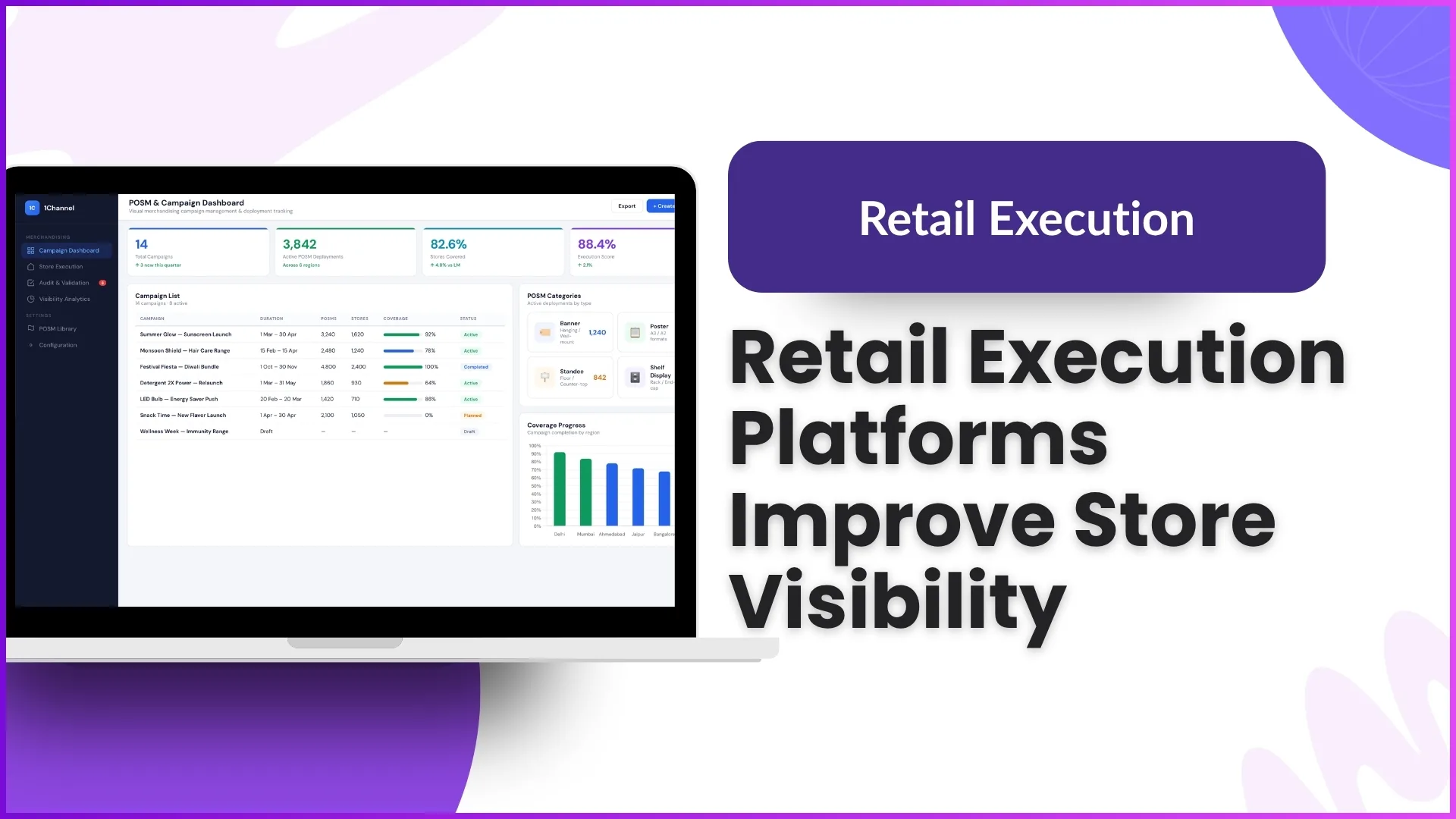
For example, visual merchandising workflows today can track:
- POSM deployment
- shelf visibility
- brand placements
- hot-zone positioning
- product togetherness
- campaign-specific execution standards
This creates a far more measurable and data-driven retail environment.
Why Offline Readiness Matters More Than Ever
One of the biggest lessons from large-scale digital outages is that enterprise workflows should not stop because a single ecosystem becomes unavailable.
Retail execution teams operate in:
- low-network zones
- crowded retail environments
- remote markets
- high-mobility field conditions
That means execution systems must be designed for operational continuity.
Field representatives still need to:
- complete store visits
- capture merchandising images
- conduct audits
- track campaign execution
- record visibility compliance
- submit outlet activities
without operational bottlenecks.
As enterprises scale, resilience becomes just as important as automation.
AI Is Changing How Retail Visibility Is Measured
Retail execution is no longer limited to simple store visit reporting.
Modern merchandising programs increasingly focus on:
- visibility indexing
- execution scoring
- compliance benchmarking
- coverage analytics
- productivity measurement
- audit accuracy tracking
Large-scale retail operations can now measure:
- outlet-level execution quality
- planned vs unplanned visits
- campaign-wise visibility
- merchandising compliance percentages
- field productivity
- audit quality scores
This shift is transforming merchandising from a manual operational activity into a measurable performance system.
The Rise of Self-Service Campaign Execution
Another major operational shift is the movement toward self-service campaign management.
Instead of depending entirely on centralized operational teams, enterprises are enabling marketing and retail teams to:
- create campaigns faster
- deploy initiatives across outlet networks
- assign merchandising guidelines
- automate notifications
- track campaign execution in real time
This reduces manual dependencies and accelerates market execution.
In fast-moving retail environments, the ability to launch, monitor, and optimize campaigns quickly can directly influence visibility and sales performance.
Operational Resilience Is Becoming a Competitive Advantage
The recent Google disruption is a reminder that digital infrastructure failures can happen unexpectedly.
For enterprise retail brands, the focus is now shifting toward:
- distributed execution systems
- AI-assisted workflows
- intelligent automation
- multi-level audit systems
- scalable campaign management
- resilient field operations
The brands that adapt fastest will not just improve execution efficiency.
They will build operational continuity even during disruption.
Explore Retail Execution Platform
The Future of Retail Execution Is AI-Led
Retail execution is evolving from manual supervision to intelligent operational ecosystems.
The future belongs to platforms that can combine:
- AI-driven audits
- automated campaign execution
- visibility analytics
- field force productivity tracking
- merchandising intelligence
- operational scalability
- resilient execution workflows
Because in modern retail, visibility is no longer enough.
Enterprises now need systems that can continue executing, tracking, and optimizing even when the broader digital ecosystem becomes unpredictable.