In modern retail, product visibility directly impacts sales performance. No matter how strong a brand is, poor in-store placement, missing promotional materials, or inconsistent shelf execution can reduce customer attention and lower conversions.
This is where retail execution platforms play a critical role.
These platforms help brands ensure that every outlet, shelf, display, and promotional activity is executed exactly as planned.
From campaign setup to in-store audits and visibility scoring, retail execution systems create a structured workflow that improves control and enhances store-level performance.
Why Store Visibility Matters in Retail
Store visibility is more than just placing products on shelves.
It includes:
- correct shelf placement
- eye-level product positioning
- POSM deployment
- promotional campaign execution
- display compliance
- branding consistency
- stock visibility
When these elements are aligned, brands gain stronger presence inside outlets and improve the chances of customer purchase decisions.
The discussion document clearly highlights that merchandising is fundamentally about ensuring visibility at the outlet level is fulfilled.
Centralized Campaign Management for Better Visibility
A retail execution platform improves store visibility by allowing brands to create and manage campaigns from a central system.
The workflow typically includes:
- defining POSM categories
- creating deployment types
- assigning campaign duration
- uploading outlet lists
- mapping POSM codes
- activating campaigns for specific stores
Once the campaign is live, it automatically reflects in the field app for store execution teams.
This ensures every outlet receives the correct branding assets and promotional instructions without manual coordination gaps.
POSM Tracking and Deployment Visibility
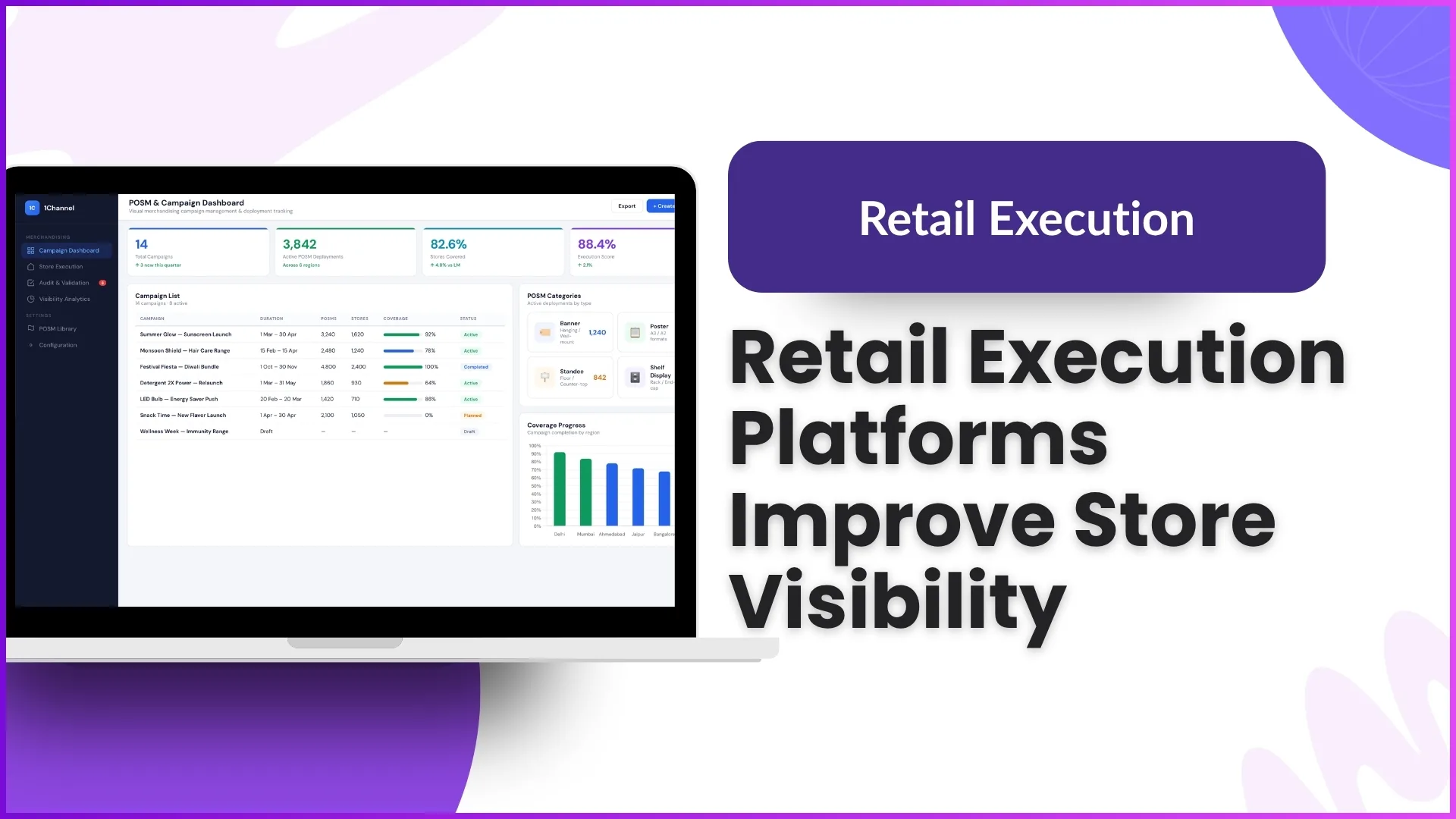
One of the strongest ways these platforms improve store visibility is through POSM tracking.
Brands can monitor deployment of materials such as:
- banners
- posters
- standees
- tent cards
- counter branding
- digital signage
- shelf branding
The system helps field teams capture proof images and confirm whether each POSM has been deployed correctly.
This creates visibility not only in stores but also for central teams monitoring execution performance.
Real-Time Photo-Based Store Audits
Retail execution platforms significantly improve visibility through image-based audits.
Field users can capture store photos during visits, upload images of displays, and submit execution proof directly through the app.
For example, the workflow includes:
- opening the assigned campaign
- viewing reference images
- capturing actual outlet photos
- submitting image evidence
- generating audit scores
This helps ensure that what was planned is actually visible inside the store.
Shelf Visibility Through Facings and Norms
A major part of store visibility is shelf presence.
The document explains how platforms use product-level norms and facings benchmarks.
This means brands can define:
- minimum shelf facings
- product quantity on shelf
- store-size-based benchmarks
- SKU-specific visibility rules
For example, high-movement products may require more shelf facings compared to premium slow-moving SKUs.
Field teams can then compare actual shelf placement against predefined norms.
This ensures stronger visual presence and consistent planogram execution.
Hot Zone Placement Improves Customer Attention
Retail execution platforms also improve visibility by tracking hot zone placement.
The document specifically explains hot zone as the 3 to 6 feet eye-level viewing space, which is considered the most visible area for customers.
Products placed in this zone naturally receive more attention.
By auditing hot zone compliance, brands can ensure their key SKUs are positioned where customers are most likely to notice them.
This directly improves brand recall and shelf performance.
Visibility Compliance Through Multi-Level Audits
Visibility is not just about field execution — it also requires validation.
Retail execution systems support multi-level audit workflows, including:
- Level 1 audit
- Level 2 supervisor audit
- compliance scoring
- exception validation
This reduces execution errors and improves visibility accuracy across multiple outlets.
Such structured auditing ensures that visibility standards are consistently maintained.
Coverage Dashboards and Visibility Indexing
Dashboards are one of the biggest advantages of retail execution platforms.
The document specifically mentions dashboards for:
- campaign coverage
- outlet compliance
- visibility indexing
- merchandising performance
- audit status
These dashboards help brands answer key questions like:
- How many stores were covered?
- What percentage of outlets are compliant?
- Which campaign has highest visibility?
- Where is shelf visibility dropping?
This level of insight helps improve decision-making faster.
Faster Execution with Automated Workflows
Automation improves store visibility by reducing delays.
The document notes that once campaigns and outlet assignments are completed, the entire campaign automatically goes live for field users.
This eliminates:
- manual communication delays
- Excel-based tracking
- missed campaign rollouts
- outlet confusion
As a result, campaigns reach stores faster and visibility execution starts on time.
How 1Channel Retail Merchandising Helps Improve Store Visibility
1Channel Retail Merchandising helps brands improve store visibility through a structured retail execution workflow that combines campaign management, POSM tracking, field audits, shelf visibility checks, and advanced dashboards.
With capabilities such as:
- visual merchandising workflows
- outlet-level campaign execution
- image-based proof capture
- compliance scoring
- visibility dashboards
- multi-level audits
1Channel enables brands to gain complete control over in-store visibility and execution performance.
This helps businesses improve shelf presence, campaign compliance, and overall retail visibility across distributed markets.
Ready to Improve Your Store Visibility?
See how 1Channel's retail execution platform helps brands track compliance, manage promotions, and drive better store performance.
Explore Retail Execution Platform →FAQs
What is a retail execution platform?
A retail execution platform is a software solution that helps brands manage store visits, merchandising activities, POSM deployment, shelf audits, and campaign visibility across retail outlets.
How does it improve store visibility?
It improves visibility through campaign workflows, image audits, shelf compliance tracking, and visibility dashboards that ensure products and branding assets are properly displayed.
What is POSM tracking?
POSM tracking refers to monitoring the deployment and visibility of promotional materials like posters, banners, standees, and shelf branding inside stores.
What is shelf facings in retail execution?
Shelf facings refer to the number of visible product units displayed on the shelf. More facings generally improve product visibility and customer attention.
Why are audits important for store visibility?
Audits validate whether planned visibility guidelines are actually executed in stores, helping brands maintain consistency and compliance.