In retail execution, maintaining the correct product placement is critical for brand visibility and sales performance. A planogram defines how products should be displayed in a store, ensuring consistency across outlets. However, ensuring compliance across multiple stores and field teams is a major challenge.
With the integration of image recognition and intelligent reporting within retail merchandising software, businesses can now detect planogram violations more efficiently and accurately.
What Are Planogram Violations?
Planogram violations occur when the actual in-store product placement deviates from the predefined layout. These deviations can include:
- Incorrect product positioning
- Missing or misplaced SKUs
- Improper use of POSM (Point of Sale Materials)
- Non-compliance with facing norms or display standards
Such inconsistencies directly impact brand visibility, promotional effectiveness, and ultimately sales performance.
Role of Image Recognition in Detecting Violations
Modern retail merchandising platforms incorporate image-based validation mechanisms to ensure accuracy in field operations. These systems enable:
1. Image Capture During Store Visits
Field users capture images of store shelves and displays during their visits. These images act as proof of execution and are stored within the system for further validation.
2. AI-Based Image Validation
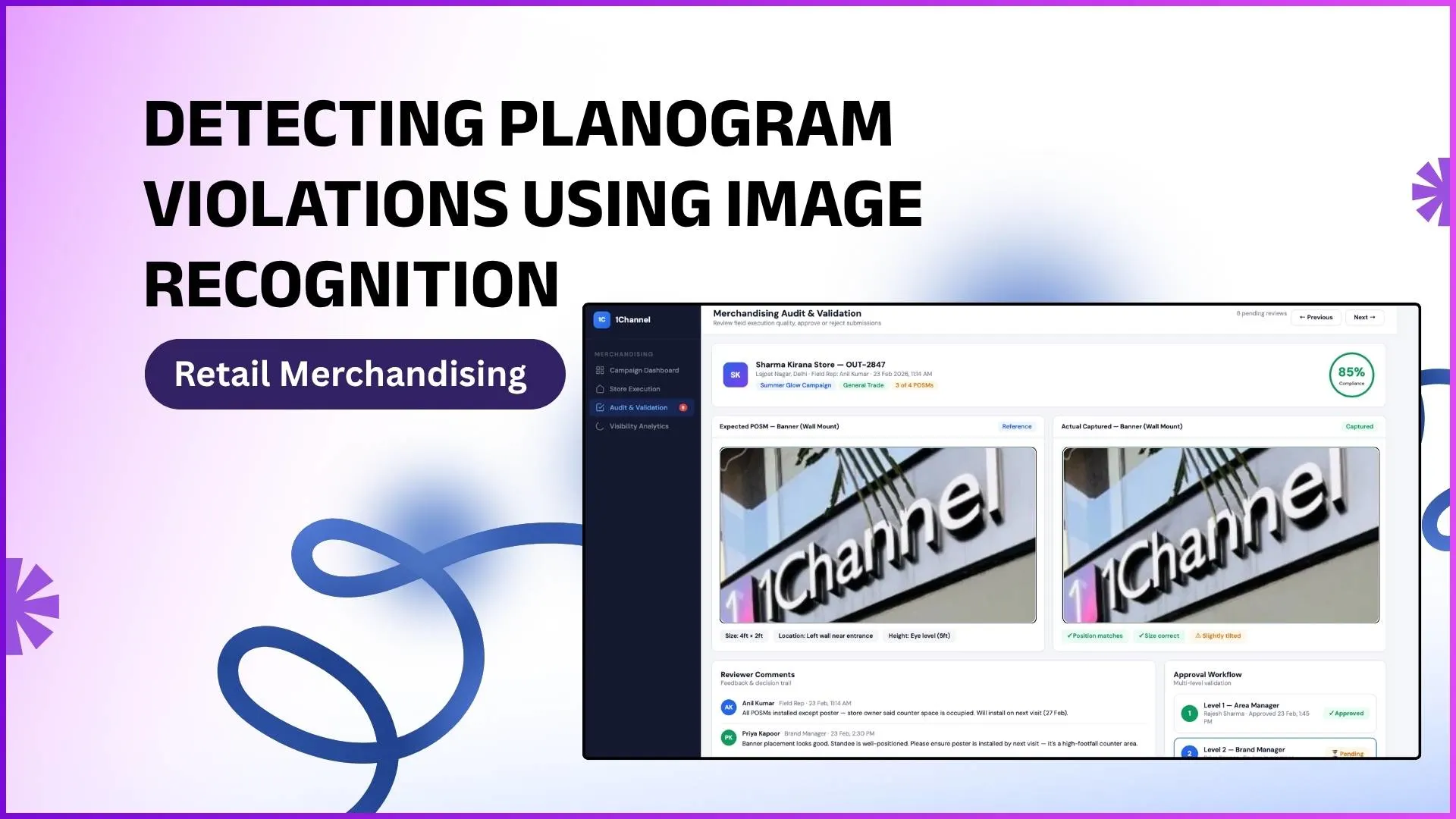
The system uses AI validation techniques to compare captured images with predefined standards. Similar to how attendance images are validated against a reference image, merchandising images can also be assessed for correctness.
3. Activity Quality Checks
Once images are submitted, they go through an approval workflow. Reporting managers or system validators review these images under the activity quality check process, ensuring compliance before final approval.
How Retail Merchandising Software Enables Planogram Monitoring
A robust retail merchandising software solution provides multiple modules and reports that contribute to detecting and managing planogram violations.
Merchandising Visit Tracking
The system tracks whether merchandising activities were completed during store visits. It also records reasons if merchandising was not done and stores the associated storefront images.
Merchandising Photo Reports
Detailed reports include:
- POSM materials deployed
- Quantity of materials used
- Visual proof through images
These reports help identify whether displays match the expected planogram.
Planogram Audit Data
The platform allows downloading of planogram audit data, which provides insights into compliance levels across stores and regions.
Store Image Reports
Store-level images along with GPS data ensure authenticity and help validate whether the field team actually visited and executed tasks correctly.
Integration with Field Activities
Planogram compliance is not a standalone activity—it is embedded within daily field operations.
Market Visit Planning
Admins define store visits through structured plans. Field teams follow these plans and perform merchandising activities accordingly.
Questionnaire-Based Audits
Custom questionnaires can be created to collect structured data during store visits. These may include:
- Availability checks
- Display compliance questions
- POSM usage validation
The responses, along with images, provide a comprehensive view of execution quality.
Activity Assignment and Monitoring
Admins assign specific activities to user roles such as promoters or team leaders. These activities include planogram checks, ensuring accountability at every level.
Ensuring Accuracy with Geo-Validation
To maintain data integrity, the system enforces:
- Geo-fencing: Activities can only be performed within a defined store location
- GPS tagging: Every image and activity is location-verified
- Time tracking: Ensures activities are performed during actual store visits
This eliminates false reporting and ensures that planogram validation is based on real-time, on-ground data.
Benefits of Detecting Planogram Violations
Implementing image recognition for planogram compliance through retail merchandising software offers several advantages:
- Improved in-store execution consistency
- Real-time visibility into merchandising performance
- Faster identification of compliance gaps
- Better accountability of field teams
- Data-driven decision-making through reports and analytics
Leveraging Analytics for Continuous Improvement
The analytics capabilities within retail merchandising systems play a crucial role by offering:
- Detailed merchandising reports
- Visit productivity insights
- Store-level performance tracking
- Downloadable reports for audit and review
These insights help businesses continuously refine their retail execution strategies.
Improve Planogram Compliance
1Channel Retail Merchandising Software provides image-based validation, planogram audit data, merchandising photo reports, GPS-verified store visits, and real-time compliance dashboards across all retail outlets.
Explore Retail Merchandising Software →FAQs
1. How does image recognition help in planogram compliance?
Image recognition allows the system to validate store images against predefined standards, helping identify deviations in product placement and display execution.
2. What kind of data is used for detecting violations?
The system uses store images, merchandising reports, questionnaire responses, and audit data to detect planogram violations.
3. Can planogram compliance be tracked across multiple locations?
Yes, the system provides centralized reporting and analytics, allowing businesses to monitor compliance across all stores and regions.
4. How are field teams monitored for execution accuracy?
Field teams are monitored through geo-fencing, GPS tagging, activity tracking, and image validation processes.
5. What reports are available for planogram monitoring?
Reports such as merchandising visit tracker, merchandising photo reports, store image reports, and planogram audit data provide detailed insights into compliance.