A new promoter walks into a multi-brand electronics store in Delhi. They introduce themselves as a representative of a leading appliance brand and ask to begin work at the sales counter.
The store manager has not seen them before.
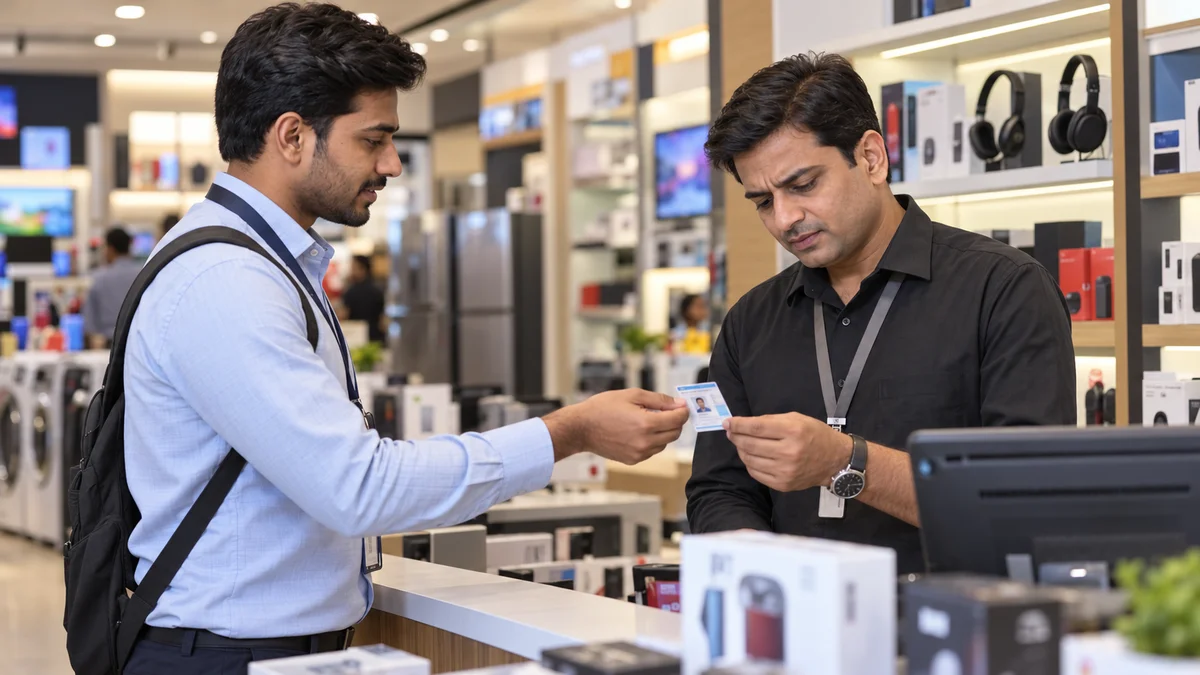
The promoter shows an employee ID card. The card has a photograph, a name and a company logo. They also show a WhatsApp message from someone claiming to be their supervisor.
But the manager still has questions. Is this person associated with the brand? Is the identification genuine? Who can confirm their details?
The manager could call the brand's area supervisor, contact the staffing agency or ask the promoter to wait while someone checks.
None of these options is particularly convenient during a busy retail shift.
This situation highlights an often-overlooked challenge in Indian retail: knowing who is representing a brand inside someone else's store.
Digital ID verification for retail promoters, built into the app a promoter already uses for work, can help make employee identification more consistent and easier to check.
Why a Physical ID Card May Not Be Enough
Physical ID cards are a familiar part of retail operations. Promoters, merchandisers and other field employees often carry them when visiting stores.
They provide basic identification, but a printed card has limitations.
An ID card might have been issued months earlier. The employee's role, reporting manager or organisation details may have changed since then. A replacement promoter may arrive before the retailer has received an updated staffing list.
The card itself does not tell the store manager whether the information remains accurate.
Informal verification creates additional problems. When a retailer relies on phone calls or forwarded WhatsApp messages, the process depends on someone being available to respond.
For brands operating across hundreds of stores, these small uncertainties can become a recurring operational challenge.
The problem is not necessarily that someone is misrepresenting themselves. In most cases, the retailer simply lacks a convenient, dependable process for checking employee identity.
The retailer needs a better way to establish who the person is, without depending entirely on an old card or a supervisor's response.
What Should a Retailer Be Able to Check?
When an unfamiliar promoter arrives, the store manager needs sufficient information to establish their identity and understand whom they represent.
A useful employee identification process should help establish:
- Employee identity: Whether the person presenting the ID matches the employee information associated with it.
- Organisation: Which brand, company or workforce programme the employee represents.
- Employee details: Relevant information that helps distinguish the individual from others with similar names.
- Supporting confirmation: A clear route for checking any additional permission or store-assignment requirements.
There is an important distinction here.
Verifying someone's identity is not the same as confirming that they are currently authorised to work at a particular store.
A digital identity record can support identification, but any additional permission checks depend on the information and verification processes available.
Retailers should therefore treat identity verification as an important part of their store-entry procedure, not necessarily a replacement for every authorisation check.
How QR-Verifiable Digital IDs Help
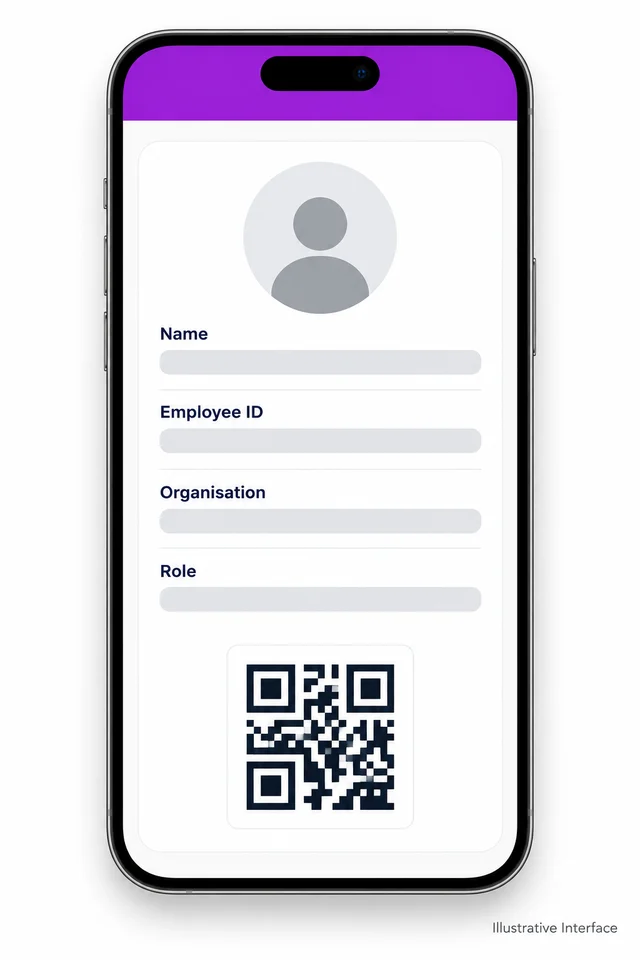
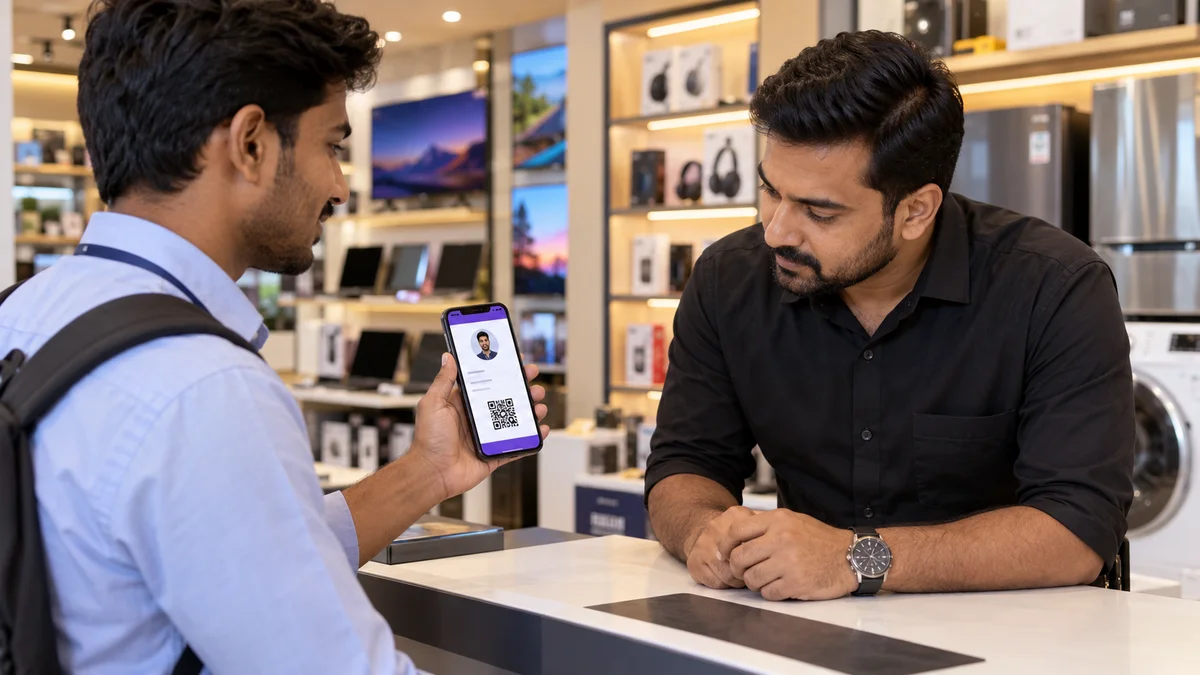
A digital employee ID brings identification into the mobile application that an employee already uses for work. Instead of carrying a physical card, a 1View promoter can open the app and show a digital identity card from their phone.
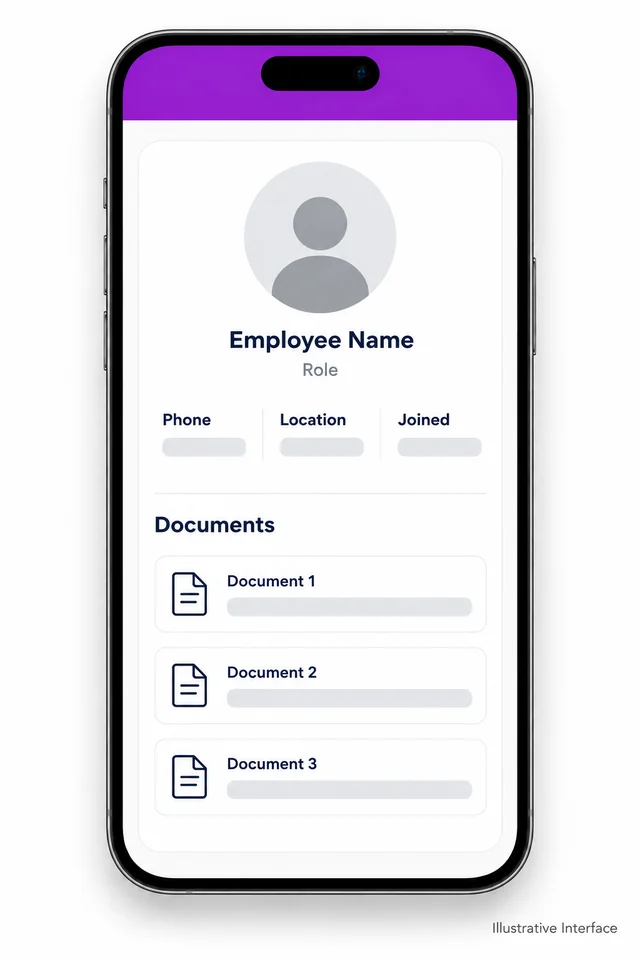
1View includes a Digital ID & Profile capability with a QR-verifiable ID card for each employee. The same capability also carries the employee's profile, documents and notifications.
For the retailer, the immediate benefit is the card itself. Unlike a printed ID, it is generated and maintained inside the employee's workforce platform, so it reflects what the company currently has on record rather than details printed on a card issued months earlier.
The QR code is there for the brand's own team, such as an area supervisor or manager who already uses 1View, to check during a store visit or alongside a call with the retailer. This keeps verification inside the brand's own workforce system, rather than asking a retailer with no account or relationship to that company's software to interpret a scan result on their own.
A retailer who wants confirmation beyond the card itself should still go through the brand's own point of contact. The exact information available during that verification depends on the configured process. A QR code should not be assumed to automatically confirm live employment status, store assignment or authorisation expiry.
What Verification Could Look Like in an Indian Store
Consider a hypothetical situation at a multi-brand electronics showroom in Bengaluru.
A regular promoter is unavailable, and another representative arrives to cover the counter.
The retailer has not met the replacement employee.
Rather than relying only on a forwarded message, the store manager asks the promoter for their digital identification.
The process could work as follows:
- The promoter presents their digital ID
The employee opens the 1View app and displays their identification card, with photograph, name and organisation. - The retailer reviews the card
The manager compares the photograph and details against the person standing in front of them. A system-issued card is harder to alter than a printed one. - The retailer raises any remaining question with the brand
If something still needs confirming, the manager contacts the brand's usual point of contact, such as a supervisor or office number, rather than a one-off forwarded message. - The brand's own team verifies through 1View
Because the promoter's record lives in 1View, the brand's supervisor or manager can check the same QR-verifiable ID and confirm the relevant details back to the retailer.
This is an illustrative workflow, not a depiction of a confirmed 1View verification-screen sequence.
This approach makes the identification step clearer and more repeatable.
It also helps store managers distinguish between confirming a person's identity from the card itself and checking whether that individual has permission to undertake a particular assignment, which still runs through the brand.
For retailers working with multiple brands and staffing agencies, that distinction matters.
Why Keeping Employee Profiles Digital Matters
Retail workforce identification involves more than an ID card.
Employee information also needs to be organised and accessible to the people responsible for managing the workforce.
In many retail programmes, employee details may be spread across spreadsheets, email attachments, staffing records and printed documents.
This makes routine information management unnecessarily complicated.
1View's Digital ID & Profile capability brings employee identification together with profile information, documents and notifications within the workforce platform.
For an organisation managing promoters across several cities, digitally maintained employee profiles can provide a more structured alternative to disconnected paperwork.
This matters when employees join programmes, change responsibilities or require updated records.
It can also help teams establish a more consistent approach to the employee information they maintain.
However, maintaining a digital profile should not be confused with guaranteeing that every change is immediately reflected in a QR verification result. That depends on the platform's implemented data and verification processes.
What This Means for Retail Operations
For brands and retailers, better employee identification is not simply an administrative improvement. It can make everyday store coordination more dependable.
Less uncertainty at the store: Managers have a structured identification method to reference when an unfamiliar promoter arrives.
Reduced dependence on printed records: A digital employee ID provides an alternative to relying exclusively on physical cards that may contain outdated information.
More consistent identification practices: Brands can encourage a standard verification approach across stores instead of relying on different informal methods at each location.
Better organised employee information: A workforce platform that includes employee profiles and documents helps teams manage identity-related information together.
Clearer accountability: When employee identity is easier to establish, managers have a better starting point for determining who represents a brand and who should be contacted about their work.
These advantages can be particularly relevant to consumer electronics, appliances, beauty and personal care, and other categories where several brands operate inside the same retail outlet.
The aim is not to create another complicated approval process.
It is to make basic employee identification easier to handle as part of normal retail operations.
Why Choose 1View for Retail Promoter Identification?
1View's Digital ID & Profile capability gives every promoter a QR-verifiable ID card on their phone, alongside employee profiles, documents and notifications, all inside the same app used to manage attendance, performance and learning.
Explore 1Channel's Sales Force Automation →Give Every Retail Promoter a Verifiable Digital Identity
An Indian store manager should not have to depend entirely on an old identity card, a forwarded message or repeated phone calls to establish who a visiting brand representative is.
As retail workforce programmes grow, brands need identification practices that can support employees across stores, cities and teams.
Digital employee identification offers a more structured starting point.
For brands managing large in-store teams, this can help bring identity information into the same digital environment already used to manage the workforce.
Frequently Asked Questions
1. How can an Indian retailer verify a brand promoter's identity?
Retailers can ask the promoter to present recognised employee identification and, if anything needs confirming, contact the brand's established point of contact. Where a brand uses a QR-verifiable digital employee ID such as 1View's Digital ID & Profile, the promoter's own system-issued card and the brand's ability to verify it internally offer a more structured alternative to relying solely on printed cards or informal messages.
2. What is a QR-verifiable digital employee ID?
A QR-verifiable digital employee ID is an electronic identification card, carried in an employee's workforce app, that includes a QR code the employer's own team can check as part of an identity-confirmation process. The information available through that check depends on how the system is configured.
3. Why are digital ID cards useful for retail promoters?
Digital ID cards allow promoters to carry identification on their phones. They can reduce dependence on printed cards and support more consistent employee identification across multiple retail locations.
4. Can digital employee IDs replace printed identification cards?
Digital employee IDs can serve as an alternative to printed cards where the retailer and brand accept them. Whether they fully replace physical cards depends on the organisation's policies and any applicable identification requirements.
5. Does a digital employee ID automatically confirm that someone is authorised to work at a store?
Not necessarily. The card and its QR code can support identity confirmation, typically through the brand's own team rather than the retailer directly. Current employment status, store assignments and specific work permissions depend on the brand's data and verification processes, so a retailer should still follow the brand's established authorisation procedure when additional confirmation is needed.
Note: Software screens may vary based on your business structure and configured workflows.