Sales teams today operate in highly distributed environments where field representatives, distributors, and managers need constant visibility into sales performance, attendance, market visits, and productivity. Managing these operations manually often leads to delays, inaccurate reporting, and lack of accountability.
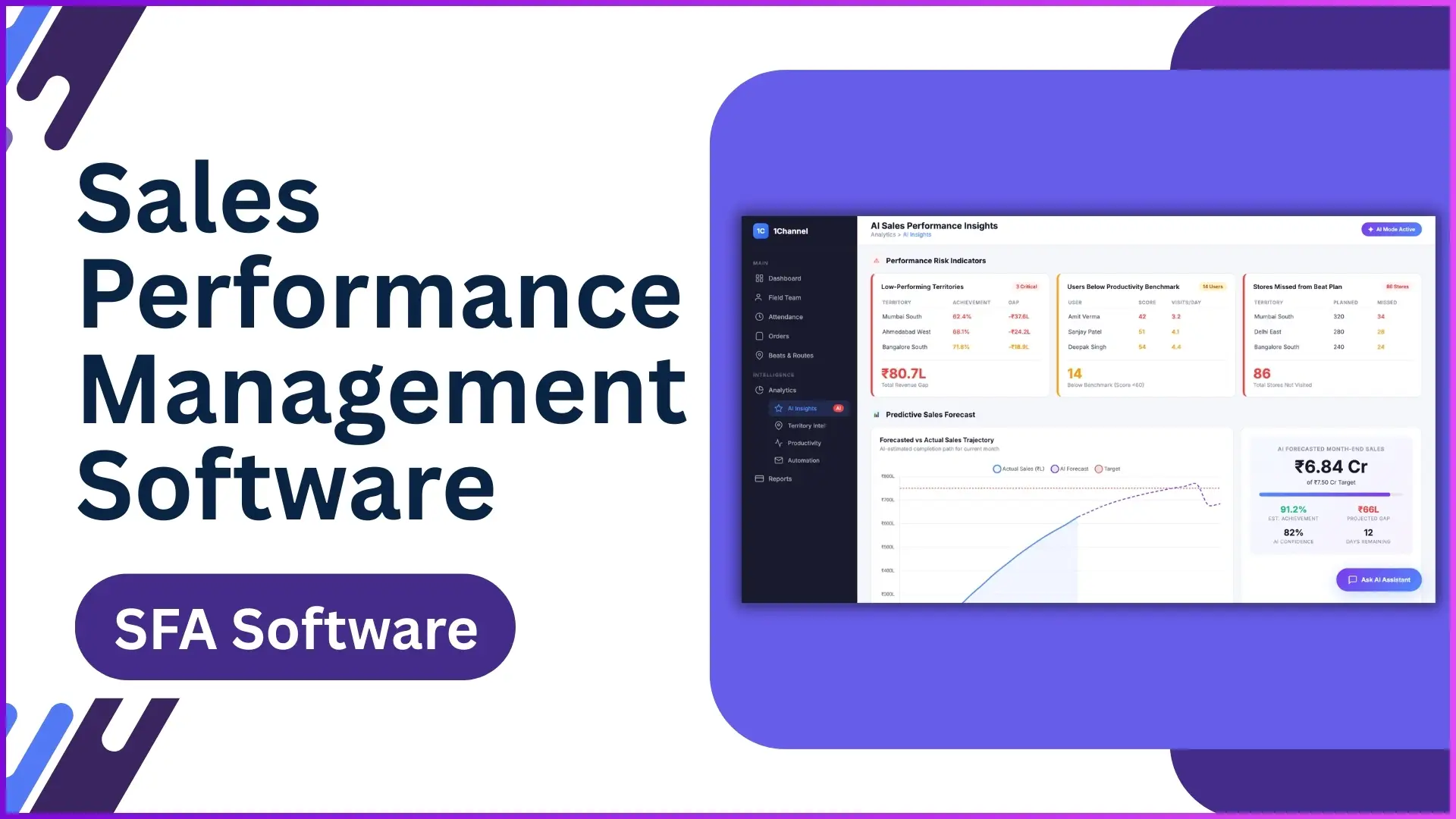
Sales performance management software provides businesses with a centralized system to monitor, analyse, and improve sales team performance. Through dashboards, analytics, reporting tools, and operational modules, the software enables organizations to track field activities, measure productivity, and make data-driven decisions.
This blog explains how this software works, the key capabilities it offers, and how different industries benefit from it.
Understanding Sales Performance Management Software
Sales performance management software helps organizations monitor the daily activities and outcomes of their sales teams. It collects data from multiple operational areas such as attendance tracking, market visits, sales activities, merchandising, and order fulfilment, and converts that information into structured reports and analytics.
The software typically provides:
- A centralized dashboard for monitoring performance
- Analytical reports to evaluate sales productivity
- Attendance and compliance tracking
- Field activity monitoring
- Merchandising and retail visibility
- Reporting tools for data analysis and downloads
By consolidating operational and performance data into one platform, businesses can track how efficiently their sales teams are performing and where improvements are needed.
Track Your Sales Team Performance
1Channel's Sales Analytics Software provides real-time dashboards, attendance tracking, field activity monitoring, and comprehensive reporting to help you improve sales productivity and market coverage.
Explore Sales Analytics Software →Key Components of Sales Performance Software
Advanced Dashboard for Performance Visibility
The Advanced Dashboard acts as the first screen after logging into the system. It provides an overview of multiple performance indicators and operational metrics in one place.
Key metrics visible on the dashboard include:
- Attendance reporting percentage
- Present reporting percentage
- Late attendance percentage
- Market visit percentage
- Not marked defaulter percentage
- Calendar vs attendance percentage days
- Detailed employee attendance compliance reports
Managers can filter and analyze information based on:
- Employee code
- Employee name
- Employee role
- City
- Attendance dates
- Present days
- Missed attendance days
- Late attendance records
Example
A regional sales manager overseeing a team of 40 field representatives can open the dashboard and immediately see:
- 92% attendance reporting rate for the week
- 85% market visit completion
- 6 employees marked as attendance defaulters
This enables the manager to quickly identify gaps in attendance compliance and take corrective action with specific employees.
Another important aspect of the dashboard is customization. Businesses can configure dashboard elements according to their operational requirements. Different companies may include different modules depending on how their sales operations are structured.
Analytics and Data-Driven Reporting
The Analytics module allows businesses to convert raw operational data into meaningful insights. It includes several components that support report generation and performance evaluation.
Main sections within analytics include:
- Contact Repository
- Report Catalog
- Report Builder
- Reports
- My Contracts
- Approved Contracts
- Order Fulfilment
- Catalog Reports
These tools allow administrators and managers to generate reports across multiple aspects of sales operations.
Report Catalog for Performance Monitoring
The Report Catalog contains predefined reports that help managers evaluate the performance and activities of their sales teams.
These reports can typically be generated for any date range and downloaded in Excel format.
Attendance Summary Report
This report provides detailed attendance data for the entire sales team.
Information included:
- Attendance reporting dates
- Present days
- Attendance percentage
- Missed attendance days
- Employee-wise compliance
Example
A company operating across multiple cities can generate an attendance summary for the last month to identify which regional teams are maintaining proper reporting discipline.
MTD Tertiary Sales Report
The Month-to-Date Tertiary Sales Report provides insights into the value of sales achieved at the retail level.
The report shows:
- Sales value
- Product SKU
- Date-wise breakdown
Example
A manager can analyse which products are performing well in the current month by reviewing tertiary sales data for specific SKUs.
MTD Secondary Sales Report
This report tracks secondary sales transactions and provides data on sales movement between distributors and retailers.
Example
If a distributor reports strong secondary sales but tertiary sales remain low, managers can identify a potential stock buildup in the retail channel.
Sales by Product Category
This report displays current month sales based on product categories.
It typically shows:
- Units sold
- Date-wise performance
- Category-wise sales data
Example
A consumer goods company may use this report to determine whether beverages, snacks, or packaged foods are driving higher sales in a particular region.
Attendance Photo Verification
Attendance reporting can include photo and location verification, providing transparency into field employee activity.
This report shows:
- Employee attendance photo
- Location from where attendance was marked
- Date and time of reporting
Example
If a sales representative marks attendance from a location far from their assigned territory, managers can identify inconsistencies and investigate further.
This ensures greater accountability and reduces false attendance reporting.
Merchandising Visit Tracking
This software also supports visual merchandising monitoring for businesses that rely on in-store product displays.
Merchandising Visit Tracker
This report tracks:
- Whether a merchandising visit was completed
- Reason for incomplete visits
- Store front images captured during the visit
Example
A merchandising executive visiting retail outlets can upload photos of shelf displays and product placements. Managers can then verify whether the merchandising guidelines were followed.
Merchandising Photo Reports
These reports provide deeper insights into merchandising activities.
Information included:
- POSM material deployed
- Photos of merchandising setup
- Quantity of materials placed in stores
Example
If a marketing campaign requires promotional standees in 500 stores, managers can track deployment through merchandising photo reports submitted by field representatives.
Beat Compliance Monitoring
Sales teams often operate based on beat plans, which define the list of stores a representative must visit each day.
The Beat Compliance Report evaluates how closely employees follow their planned routes.
Beat compliance is calculated as:
- Number of stores visited
- Divided by number of stores assigned in the beat plan
Example
If a representative is assigned 12 stores in a day but visits only 8, their beat compliance for the day will be lower than expected. Managers can identify such gaps and ensure better market coverage.
Visit Productivity Reports
Another important metric in sales performance management is visit productivity.
These reports track:
- Number of stores visited per day
- Employee-wise productivity
- Date-wise activity levels
Example
A manager comparing productivity reports might observe:
- Representative A visited 20 stores in a day
- Representative B visited 9 stores in the same territory
This data helps identify training needs or operational inefficiencies.
Industries Where Sales Performance Management Software Is Used Most
Sales performance management software is particularly valuable in industries that rely on large field sales teams and distributed retail networks.
Below are some industries where it plays a critical role.
FMCG / Consumer Goods
Fast-moving consumer goods companies depend on high-frequency store visits and strong distribution networks.
The software helps by:
- Tracking field attendance
- Monitoring beat coverage
- Evaluating merchandising execution
- Analyzing product-wise sales performance
Example
A beverage company can track whether field representatives visited assigned retail outlets and placed promotional displays during seasonal campaigns.
Manufacturing
Manufacturing companies often manage dealer networks and regional sales teams.
The software helps manufacturers by:
- Monitoring distributor performance
- Tracking sales activity across territories
- Generating product category sales reports
Example
A manufacturing firm can analyze which product categories are performing best across different regions through monthly sales reports.
Retail Distribution
Distributors operate between manufacturers and retailers and require clear visibility into order fulfilment and sales movement.
Sales Performance Software enables them to:
- Track secondary and tertiary sales
- Monitor store coverage
- evaluate sales productivity
Example
A distributor managing thousands of retail outlets can use visit productivity reports to ensure their sales representatives are covering the assigned market.
Pharmaceutical Industry
Pharmaceutical companies rely on medical representatives who visit doctors, pharmacies, and hospitals regularly.
The software helps by:
- Monitoring daily field activity
- Tracking visit productivity
- Maintaining compliance reporting
Example
A pharmaceutical company can track whether representatives completed scheduled visits to healthcare providers within their assigned territories.
Telecom Industry
Telecom businesses manage extensive retail and partner networks.
Sales performance management software supports them by:
- Monitoring market visits
- Tracking sales activities at retail outlets
- Managing field workforce productivity
Example
A telecom operator launching a new prepaid plan can monitor which retail outlets have been visited and whether promotional material has been deployed.
How This Software Improves Business Efficiency?
By integrating dashboards, analytics, and field activity monitoring, sales performance management software provides several operational advantages.
Key benefits include:
- Improved visibility into sales team performance
- Better attendance and compliance tracking
- Real-time monitoring of field activities
- Data-driven decision making
- Increased accountability for sales representatives
These capabilities help businesses optimize their sales operations and achieve better market coverage.
1Channel SFA for Sales Performance Management
Modern businesses require a powerful platform that can monitor sales performance, track field activity, and generate meaningful analytics from operational data.
1Channel SFA for Sales Performance Management provides businesses with a structured system to manage field teams, track attendance and visits, analyse sales performance, and monitor merchandising activities through a centralized dashboard and reporting framework.
With customizable dashboards, advanced analytics modules, and detailed reporting capabilities, organizations can gain deeper visibility into their sales operations and improve productivity across distributed teams.
Optimize Your Sales Force Performance
1Channel's Sales Force Automation platform provides comprehensive performance dashboards, field activity tracking, attendance monitoring, merchandising analytics, and powerful reporting tools to help businesses improve sales productivity and market execution.
Explore Sales Force Automation →Conclusion
Sales performance management software has become an essential tool for businesses with large sales teams and complex distribution networks. By combining dashboards, analytics, reporting, and field activity tracking, the software helps organizations gain complete visibility into sales operations.
From attendance monitoring and beat compliance to merchandising tracking and productivity reports, businesses can measure performance more accurately and identify opportunities for improvement.
Industries such as FMCG, manufacturing, retail distribution, pharmaceuticals, and telecom rely heavily on these systems to ensure that their sales teams operate efficiently in the field while maintaining strong market coverage and sales growth.