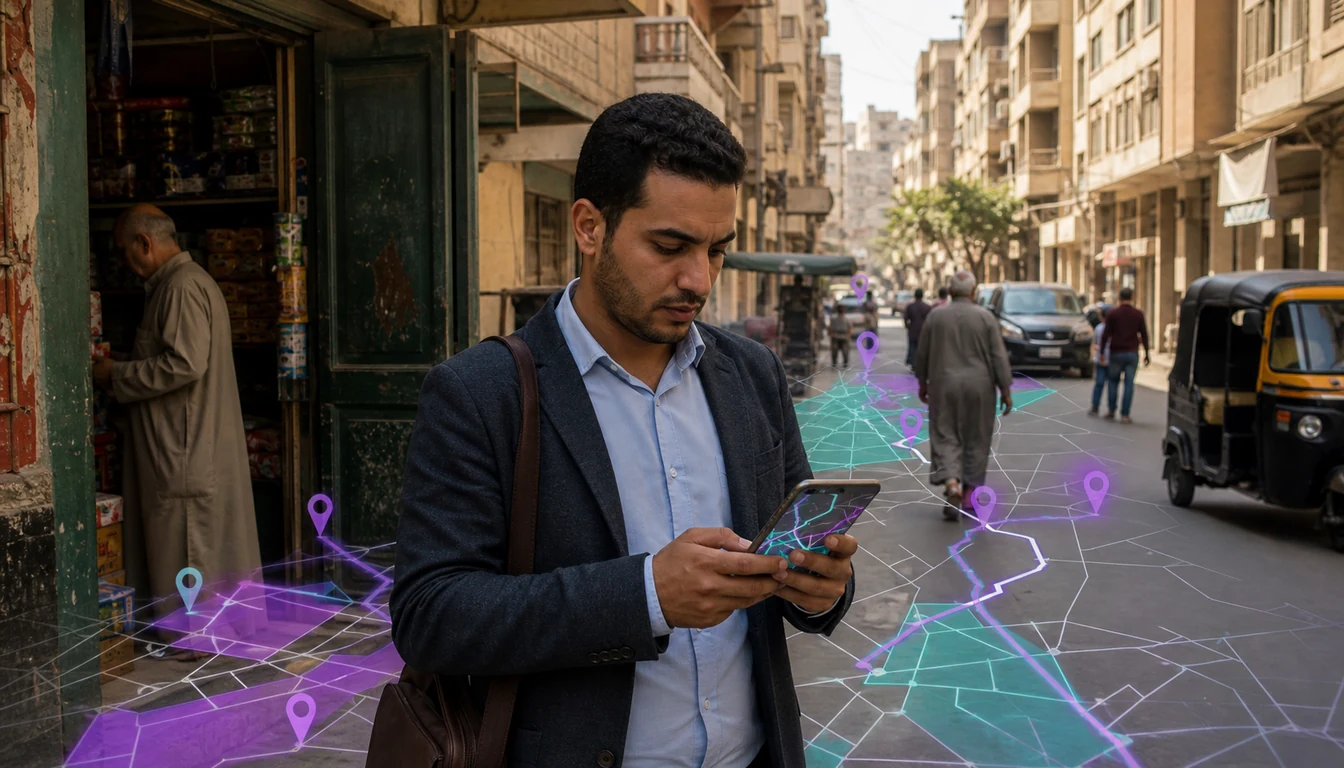
Drive past Cairo's ring road and the skyline is dotted with hypermarket signage, yet that view is misleading. Roughly 96.6% of Egypt's grocery outlets are baqalas and other traditional shops, and together they still account for something like 74-75% of grocery sales value. Chains such as Carrefour Egypt, Spinneys Egypt or Kazyon get the marketing attention, but the volume that actually keeps an FMCG brand's numbers healthy moves through a baqala on a side street in Alexandria or a stall near Souq El-Ataba, not a hypermarket aisle.
That changes what "winning" means for a brand or its distributors. It is not a listing agreement with one organised retailer or a striking end-cap. It is whether stock keeps moving through thousands of small, independently owned shops across Cairo, Giza, Alexandria and the governorates beyond them, cycle after cycle, without the brand losing sight of what is actually happening at the counter.
Getting that right takes more than trade spend. It takes an honest map of how product travels from factory to baqala, field habits that hold up in dense, cash-heavy markets, and a way of reading sales data that does not mistake a full warehouse for real demand. The sections below work through each piece in turn.
Map the Real Route to Market First
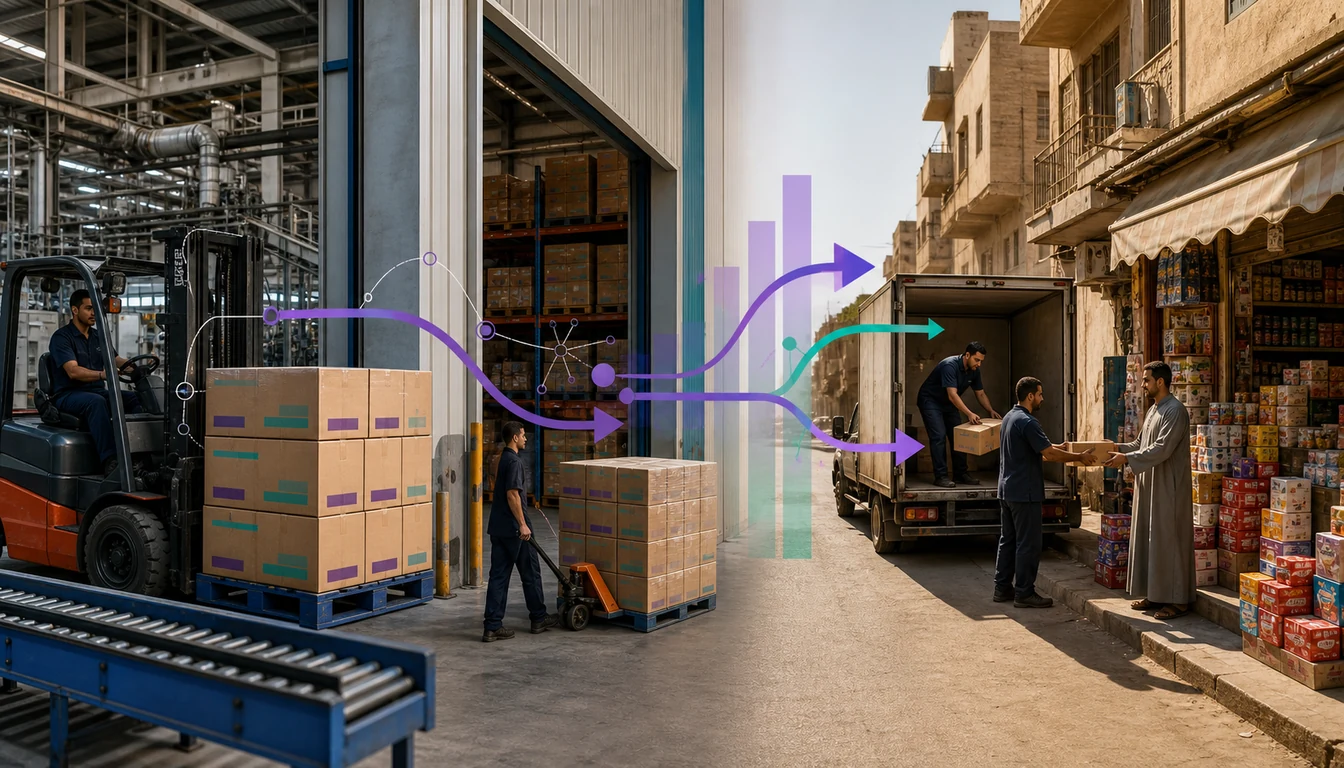
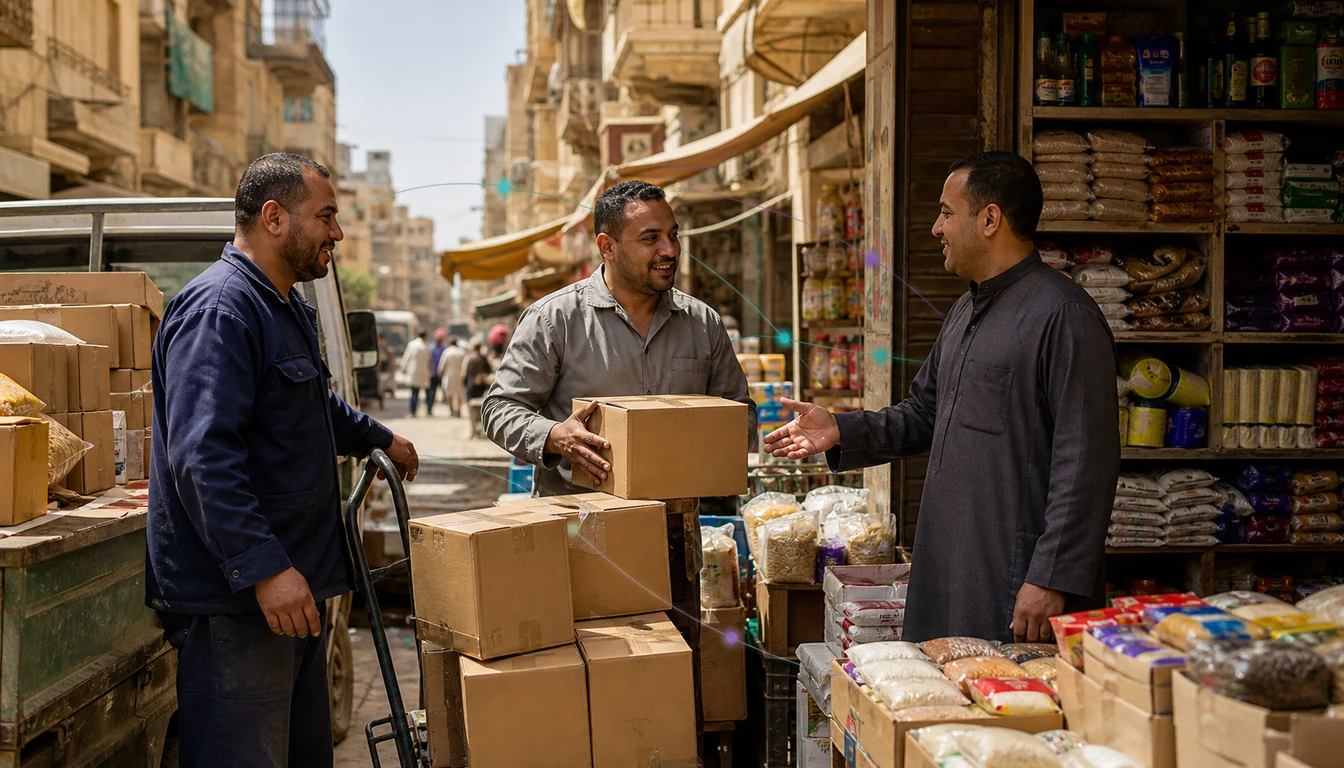
In Egypt, stock rarely travels in a straight line from brand to shopper. The common pattern runs from the brand or its distributor down to wholesalers operating out of trading hubs, then out to baqalas and smaller souq traders who make the final sale. A carton can change hands two or three times before it reaches a shelf, and each hand-off is a point where pricing, freshness and visibility can quietly slip.
Hubs such as Al Obour Wholesale Market on the Ismailia Desert Road sit at the centre of this chain for a wide catchment around Greater Cairo, while a redeveloped, modernised market like Souq El-Ataba still moves real volume of general goods through downtown Cairo. These are useful reference points for how the wholesale tier actually functions, not the whole picture on their own.
The route also changes by geography, and treating the country as one uniform market is the first mistake most brands make:
- Greater Cairo and Giza: extremely dense streets, a high count of baqalas per block, and wholesalers who can turn stock over quickly given the sheer number of outlets within a short radius.
- Alexandria and the Delta: a strong secondary hub with its own wholesale layer, port-linked distribution patterns, and a mix of urban density near the coast and thinner rural coverage inland.
- Upper Egypt (Sa'id): longer distances between towns, sparser outlet density, and materially weaker connectivity than the cities, which changes how often a rep can realistically reach an outlet.
Once a distributor can describe that route region by region, decisions about direct coverage versus relying on a wholesaler's own network stop being guesswork. That map is also the foundation for every beat plan that follows.
Build Field Discipline That Survives the Street
Egypt's connectivity gap is real, even if it is less dramatic than markets with frequent blackouts. Rural internet penetration sits meaningfully below urban penetration, and a rep working a baqala route in the Delta or Upper Egypt cannot assume the same signal quality as a colleague working Zamalek or downtown Alexandria. Any field process built only around the dense, well-connected city centre will quietly fail everywhere else.
Language matters just as much as connectivity. English fluency is far from universal outside white-collar, urban business circles, and a field force working baqalas in rural governorates needs an Arabic-first mobile experience, not an English app with a translated menu bolted on. Get both of those wrong and coverage data stops meaning anything.
A field process built for Egypt's actual conditions needs a few things to hold up:
- Visit capture that works without signal. A rep logs the call, the order and a shelf photo inside the baqala, and the record syncs once a connection is available, rather than depending on it in the moment.
- An Arabic-first interface. Menus, forms and order screens need to work naturally in Arabic for a rep on the street, with English as the layer management and head office use.
- Outlets mapped by GPS, not address. Many baqalas do not have a usable postal address, so a geo-tag captured on the first visit is what makes the outlet findable on every visit after.
Build this properly and coverage numbers become something you can act on. Skip it and you get reps marking visits from a café and managers arguing over whose spreadsheet is right. The underlying discipline here is what offline-first field sales actually means in practice, not a slogan on a sales deck.
Why Billing Alone Hides Weak Sell-Through
Primary sales, what a brand invoices to a distributor, is the easiest number to track and the easiest one to misread. A distributor can buy heavily to hit a target or lock in a scheme discount, then sit on that stock for weeks while it ages in a warehouse. Viewed from head office, the top-line number looks strong the entire time.
What actually tells you whether a brand is winning is secondary sales: stock leaving the wholesaler or distributor and genuinely reaching baqalas and souq traders. A handful of practical metrics carry most of the useful signal:
- Outlet coverage: how many mapped baqalas in a beat were actually visited this cycle, against how many were meant to be.
- Productive call rate: the share of visits that produced an order rather than a greeting and a walk-out.
- Range selling: how many SKUs the average baqala actually stocks, since small shops tend to keep only the one or two fastest-moving lines.
- Primary versus secondary gap: whether what was billed to the distributor is genuinely moving out to baqalas, or building up unsold.
A Simple Weekly Rhythm
Set a beat plan per rep, review coverage and productive call rate every week without exception, and act on whatever the numbers surface. Chase the routes with plenty of visits but few orders, the baqalas that quietly stopped ordering, and the distributors whose secondary sales are falling behind what they are buying.
Run consistently, this weekly loop does more for real growth than a quarterly trade promotion. To run it at all, field teams need a way to capture visits, orders and secondary sales data offline and turn them into a clean weekly picture, which is exactly the gap primary versus secondary sales visibility is meant to close.
Cash and Collections Realities at the Baqala Tier
Cash still dominates payment at the baqala tier, even as digital collections grow quickly across several competing rails rather than one dominant channel. InstaPay, Fawry and Meeza are all expanding alongside telco wallets such as Vodafone Cash and Orange Cash, and a distributor operating across Cairo, Alexandria and smaller towns is likely dealing with a genuine mix of cash, transfers and wallet payments in the same week, sometimes the same day.
Trade also runs heavily on credit. A distributor extends terms to a wholesaler, and the wholesaler in turn extends terms to the baqala owner. When a rep collects cash in a crowded souq or a busy street of baqalas, the risk of a mismatched receipt, a delayed deposit or a simple dispute over what was actually paid is real, and it compounds across hundreds of small accounts.
A few habits reduce that leakage without adding friction to the rep's day:
- Tie every collection to an invoice in the field. A rep records the payment, whether cash, transfer or wallet, against the specific outlet and invoice at the moment of collection, not from memory at the end of the day.
- Track outstanding balances by outlet and by distributor. Ageing that everyone can see is what stops small unpaid balances from quietly becoming bad debt.
- Reconcile digital payments the same day. With InstaPay and wallet transfers landing outside the rep's hands entirely, matching references quickly avoids the "I already paid" standoff.
The Egyptian Tax Authority's e-invoicing and e-receipt system is also in force and actively widening its scope, which makes clean, invoice-level records at every tier less of a nice-to-have and more of a standing requirement. A distributor whose billing already ties to individual outlets and invoices is simply better placed to keep pace with that as it continues to broaden.
Win the Counter and Lead the Field Force
In a baqala, the "shelf" is often a crowded counter, a hanging strip of single-serve packs and whatever catches the shopper's eye first. Availability and visibility at that counter tend to decide the sale more than any advertising the brand runs elsewhere. That makes disciplined execution a daily habit rather than a campaign that runs for a few weeks and fades.
Making that habit stick across a wide, uneven route covering dense city blocks and sparser rural stretches takes a plan, not improvisation:
- Photo proof of execution. A quick in-store photo confirms stock is actually on display and priced correctly, which matters when there is no formal planogram to enforce.
- A realistic must-stock list per outlet type. A baqala on a busy Cairo street and a smaller shop in a Delta town carry genuinely different ranges, so the target should reflect that rather than a single national list.
- Visible pricing discipline down the chain. If one wholesaler undercuts the agreed price, it can damage baqala margins across a whole area, so street-level pricing needs to be visible to the brand, not just assumed.
An incentive layer helps here too. Baqala owners who see a consistent, transparent benefit for stocking and displaying a brand tend to give it more counter space without being asked twice, which is where a structured loyalty programme earns its place rather than sitting as an afterthought.
People Are the Real Distribution Asset
A field force covering Egypt's baqala network works largely in Arabic, moves between dense city routes and quieter rural ones, and, like any front-line sales team, will leave for a better offer if the job feels harder than it needs to be. Winning brands invest in clear beat plans for dense streets, fair and achievable targets, and tools that visibly make a rep's day easier.
When an app helps a rep take an order and get paid faster, adoption tends to look after itself. When it exists mainly to check up on reps, the data it produces quietly stops being trustworthy.
A Cairo-Alexandria Distributor Scenario
Picture a packaged food distributor supplying baqalas across a Greater Cairo district and a second team covering Alexandria's denser neighbourhoods. On paper, both territories are buying steadily every month, so head office reasonably assumes coverage is healthy across the board.
In practice, the Cairo team is thinly stretched across far more baqalas than it can realistically visit every cycle, while the Alexandria team has strong relationships with a smaller, well-covered set of shops but weaker reach into newer streets on the edge of the city. Neither gap shows up in billing. A simple weekly cadence starts to close it:
- Map every baqala once, with a geo-tag and a landmark note, since many shops have no address a rep can rely on twice.
- Assign a fixed beat per rep, so the same outlets are visited on the same days each week rather than whichever ones are convenient.
- Capture each visit offline, with the order, a shelf photo and whatever cash, transfer or wallet payment was collected.
- Review coverage and productive call rate every Monday, and reassign whichever outlets were missed the previous week.
Within a few cycles, the gap between what each territory buys on paper and what actually reaches baqala shelves becomes visible, and the distributor can act on real numbers instead of a monthly purchase order that told a comfortable but incomplete story.
Common Pitfalls to Avoid
- Managing by primary sales alone. Loading a distributor or wholesaler to hit a monthly target without watching secondary sales just pushes the same problem further down the chain.
- Assuming city-centre connectivity everywhere. A process that only works with strong signal will quietly break down across Upper Egypt and rural Delta routes, exactly where oversight matters most.
- Chasing outlet count over outlet quality. A thousand baqalas visited once each are worth less than a smaller beat covered reliably, cycle after cycle.
- Ignoring pricing discipline down the chain. Uncontrolled wholesaler pricing quietly erodes baqala margins, and with them, the brand's own distribution.
- Treating the field app as surveillance. Reps who see no personal benefit will find ways to game the data, leaving managers to plan on fiction.
How 1Channel Helps FMCG Brands in Egypt's Informal Trade
Winning across Egypt's baqala and souq network needs one connected view of what happens between the factory gate and the counter, not separate spreadsheets for orders, coverage and collections. 1Channel brings outlet mapping, field visits, secondary sales and collections together in a single platform designed to work offline and in Arabic, the two things a Cairo-built, English-only tool tends to get wrong.
Reps capture visits and orders on ordinary Android phones even where signal is patchy, and the data syncs the moment a connection is available. Managers see genuine coverage and secondary-sales numbers instead of visits that were logged from somewhere other than the baqala itself.
On the specific problems covered in this piece, the platform helps a distributor or brand:
- Map baqalas and souq traders by GPS and landmark, then build beat plans by region and rep.
- Capture geotagged visits, orders and secondary sales fully offline, in an Arabic-first interface.
- Tie cash, transfer and wallet collections to the correct outlet and invoice at the point of collection.
- Run photo-based retail execution and surface street-level pricing back up the chain.
- Track coverage, productive call rate and the primary-versus-secondary gap on a weekly rhythm.
Run Field Sales the Way Egyptian Trade Actually Works
See how 1Channel's offline-first, Arabic-ready sales force automation handles baqala visits, orders, secondary sales and collections in one platform built for Cairo, Alexandria and everywhere between.
Explore Sales Force Automation →Key Takeaways
Winning in Egypt's informal trade comes down to a handful of unglamorous habits, repeated every cycle without exception:
- Map the real route to market. Know how stock actually moves from distributor to wholesaler to baqala, region by region, before spending on teams or tools.
- Build for offline and Arabic-first. Coverage data is only trustworthy if the field process survives patchy signal and works naturally in the language reps actually use.
- Manage by secondary sales, not billing. A strong primary sales number can hide stock that never actually reached a baqala shelf.
- Keep collections disciplined. Tie every cash, transfer or wallet payment to an outlet and invoice, and reconcile digital payments the same day.
- Protect pricing and margins down the chain. Uncontrolled wholesaler pricing quietly damages the baqala relationships a brand depends on.
- Treat the field force as an asset, not a suspect. Fair targets and genuinely useful tools beat anything built purely to police reps.