Every FMCG distributor working Egypt's traditional trade eventually has to answer one structural question: does the field rep who visits an outlet also carry the stock on the vehicle, or does someone else deliver it later against an order already booked? That single choice, van sales against pre-sales, is not a matter of style. It sets your route economics, your credit exposure and how quickly a baqala actually gets restocked.
Egypt's retail landscape makes the choice sharper than in most markets. The great majority of outlets are still baqalas and small independent shops, and this informal layer carries most of the grocery sales value even as modern trade chains such as Carrefour Egypt, Kazyon and Spinneys Egypt keep expanding. A route-to-market model built for a single, uniform channel will underperform the moment it meets both a tightly packed Cairo side street and a scattered Delta village on the same distribution map.
This guide sets out what van sales and pre-sales actually mean, where each one earns its place across Cairo, Alexandria and Giza against Upper Egypt and the Delta, and why most Egyptian territories end up running a hybrid rather than picking one model for the whole business.
What Van Sales and Pre-Sales Actually Mean
Both models describe how the same secondary sale happens between a distributor and a retailer. The difference is whether selling and delivery are the same event or two separate ones, and that difference changes almost everything downstream.
Van sales: load, drive, sell on the spot
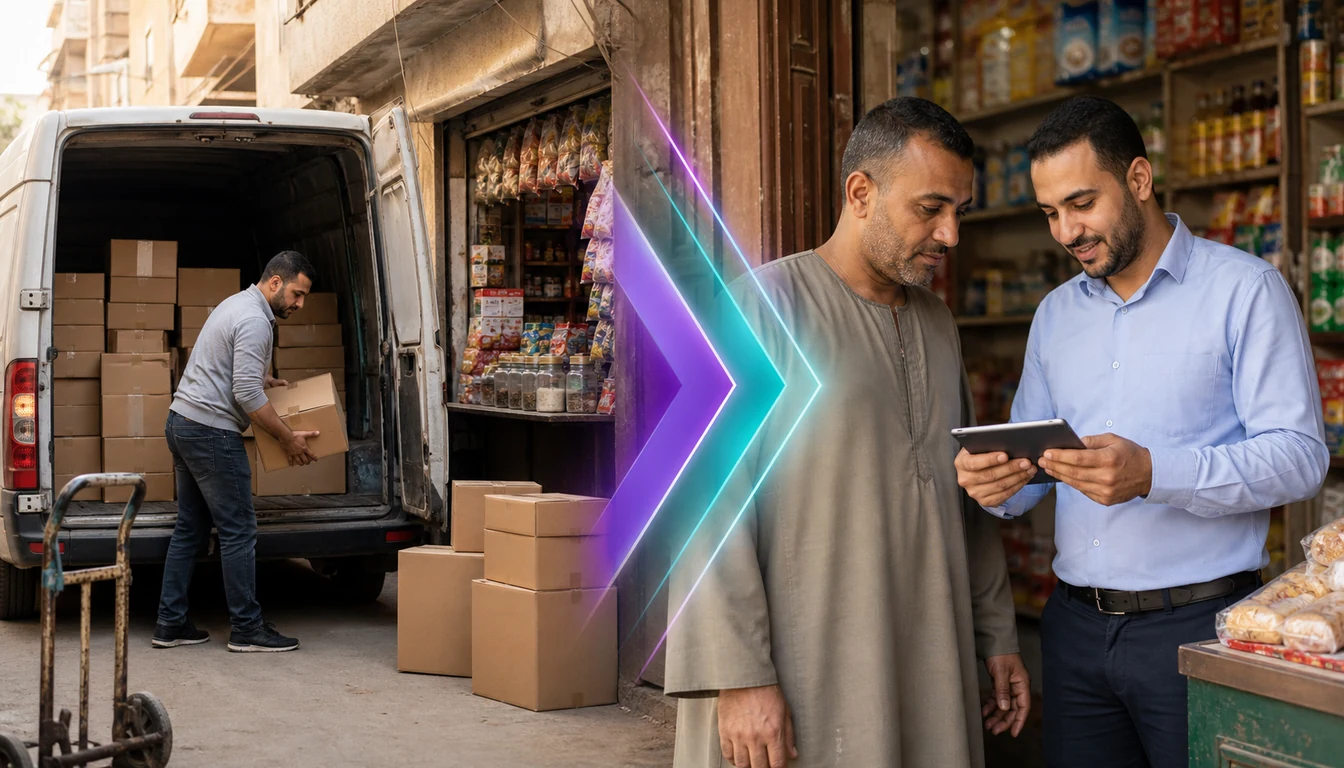
A van sales rep starts the day at the distributor's warehouse with a vehicle already loaded against a standard range. The rep drives a fixed route, stops at each baqala or forecourt shop, and the retailer buys directly off the van. Payment, usually cash, changes hands there and then, and the goods leave the vehicle in the same moment.
There is no separate delivery step. Order and fulfilment happen together, which is exactly why van sales suits outlets that expect to restock the instant they run short of a fast-moving line.
Pre-sales: order today, deliver later
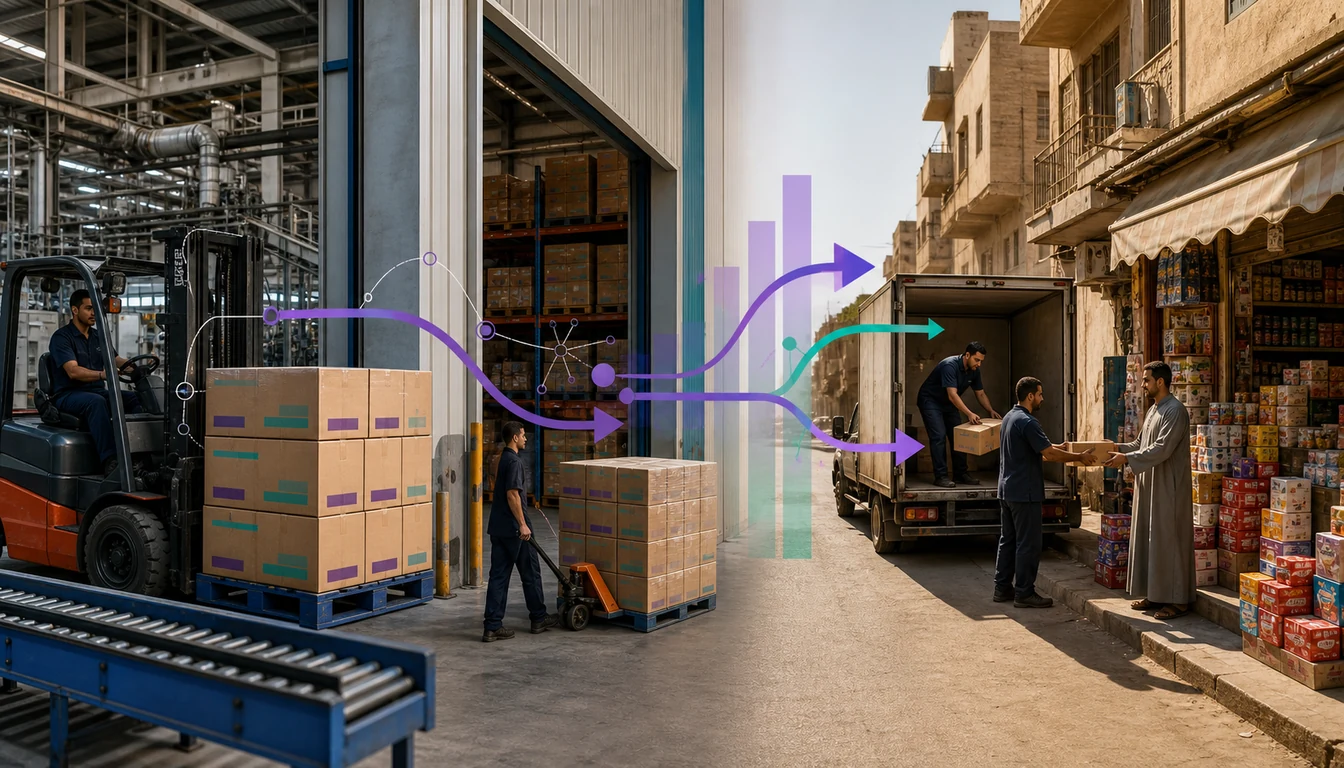
A pre-sales rep carries no stock at all. They visit the outlet, check what is on the shelf, take the order on a phone or handheld, and move straight on to the next stop. The distributor consolidates everyone's orders back at the warehouse, and a separate delivery vehicle fulfils them, often the following day.
Because the rep is not weighed down by a loaded vehicle, one person can call on far more outlets in a shift. The distributor also gets to plan the delivery load against confirmed demand rather than guessing what a route might sell.
Van Sales and Pre-Sales Side by Side
Before weighing the trade-offs, it helps to see how the two models stack up on the factors that decide most Egyptian route-to-market decisions.
| Factor | Van Sales | Pre-Sales |
|---|---|---|
| Payment | Mostly cash or instant payment at the counter | Frequently short credit ahead of delivery |
| Best route type | Dense baqala clusters needing instant stock | Wider, further-out routes with planned drops |
| Outlets per rep per day | Fewer, limited by the loaded vehicle | More, since the rep travels light |
| Drop size | Small, top-up quantities | Larger, planned quantities per visit |
| Main risk | Unsold stock returning to the warehouse | Receivables ageing and delivery misses |
Where Van Sales Wins in Egypt
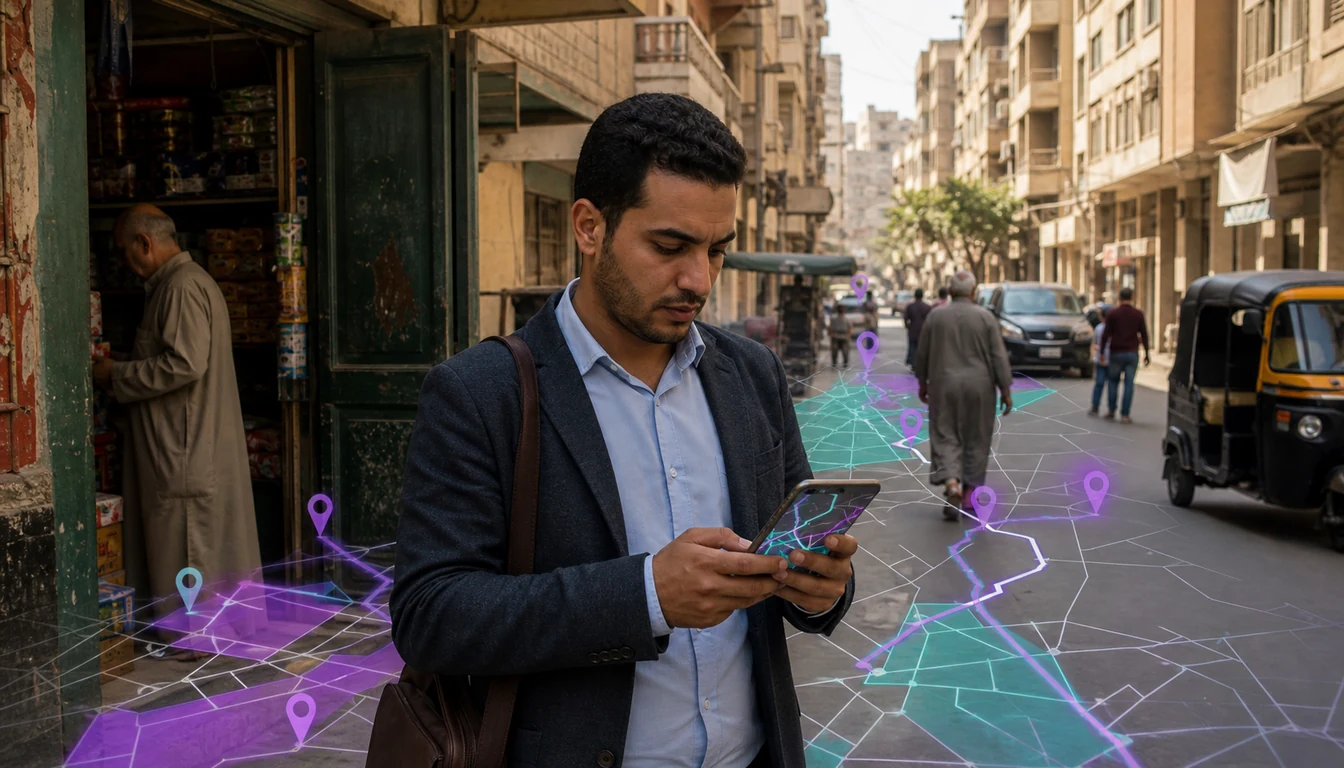
Van sales earns its place in exactly the setting Egypt has in abundance: dense clusters of baqalas packed into the side streets of Cairo, Alexandria and Giza, where a shop's entire storage might be a single shelf and a corner of the counter.
In that setting, a shopkeeper does not want to place an order and wait. Fast-moving lines such as bottled drinks, snacks and everyday household items get bought on impulse or as a same-day top-up, and the retailer expects the rep to hand over stock the moment it is asked for. A van parked at the mouth of a crowded street, working outlet after outlet within a few hundred metres, fits that rhythm far better than a two-step order-and-deliver cycle ever could.
Cash collection is the other reason van sales suits this layer of trade. Money and goods move at the same moment, so there is no receivable to chase and no delivery promise to keep. For a distributor managing dozens of small baqala accounts across a single street, closing the loop on the spot is often worth more than the wider assortment a pre-sales model could offer. Digitising that street-level network, covered in more detail in this look at digitising Egypt's baqala network, still starts with getting the van route itself right.
The trade-off is coverage. A loaded vehicle moves slowly through narrow, congested streets, and the rep cannot call on nearly as many outlets in a day as a pre-sales rep travelling on foot or by motorbike. That is exactly why beat quality matters so much in this model, a subject explored further in planning beats for Egypt's dense streets.
Where Pre-Sales Earns Its Place
Pre-sales flips the priority from immediate stock to planned coverage, and that trade-off pays off in a different part of the map. Routes running out from Cairo into the Delta, or further south into Upper Egypt, are naturally more spread out, and connectivity in these areas is generally weaker than in the big cities. A rep who can book an order today and let a dedicated vehicle deliver it once loads are consolidated covers far more distance productively than one carrying stock the whole way.
Drop size is the second reason pre-sales suits these routes. Rather than a shopkeeper buying a top-up quantity off a passing van, an outlet on a planned delivery cycle tends to order in bulk for the week, since the distributor is not passing that way again for several days. Larger, planned drops make far better use of a delivery vehicle than a string of small van sales ever could.
The catch is credit. Pre-sales generally means the retailer commits to an order before goods or cash change hands, and with the EGP's well-documented volatility putting pressure on margins, that exposure has to be managed deliberately rather than left to habit. Per-outlet credit limits, enforced at the point the order is taken and reviewed on a regular cycle, are what keep pre-sales from quietly turning into a working-capital problem. The mechanics of doing that well are covered in managing distributor credit and collections in Egypt.
Why Most Egyptian Territories End Up Hybrid
Very few real territories are purely dense or purely spread out. A single distributor might run a compact, baqala-heavy patch of central Alexandria alongside a route that trails off into quieter Delta towns, and forcing one model across both rarely serves either well.
The more workable answer is usually a hybrid: van sales for the fast-moving lines and the tightly packed streets where instant stock genuinely matters, and pre-sales for the wider assortment, the larger planned drops and the outlets too far apart to justify carrying a full load past each one. Some operators split it by geography, running van sales inside the dense urban core and pre-sales on the outer edges of the same territory. Others split it by product, keeping the handful of highest-velocity lines on the van and moving everything else to order-and-deliver.
Getting this balance right depends on having a system that can actually tell the two apart in the data, not just on paper. That is one of the questions worth asking when evaluating a distributor management platform, a subject covered in a buyer's guide to choosing a DMS for Egyptian FMCG distribution.
How to Decide Which Model Fits a Territory
Rather than defaulting to whichever model the business has always run, it is worth testing each territory against a short set of questions before committing:
- How dense is the outlet cluster? Tightly packed baqala streets in Cairo, Alexandria or Giza favour van sales; scattered routes into the Delta or Upper Egypt favour pre-sales.
- How do retailers actually pay? Cash-heavy, pay-on-the-spot outlets suit van sales; outlets used to ordering ahead can carry short, well-managed credit under pre-sales.
- What does the average drop look like? Small, frequent top-ups point to van sales; larger, planned orders point to pre-sales.
- How reliable is connectivity on the route? Either model needs to capture orders and visits offline where the network is weak, then sync once signal returns.
Once a model is chosen for a territory, the numbers worth tracking are the same regardless of which one it is: how many planned outlets a rep genuinely visits, how much stock a van brings back unsold, how quickly pre-sales credit gets collected, and whether what the distributor books as primary sales matches what is actually selling through to the shelf. That last point matters more than it sounds, since primary loading and real secondary sell-through can tell very different stories, a gap examined in primary versus secondary sales visibility in Egypt. Loyalty behaviour at the baqala counter, particularly for van sales routes built around frequent small purchases, is also worth tracking through a proper retailer loyalty programme rather than left to informal habit.
How 1Channel Helps Egyptian FMCG Teams Run Both Models
Whichever split a territory ends up with, van sales and pre-sales both depend on the same thing underneath: clean, timely field data that the office can actually trust. The platform is built to run both side by side rather than forcing a single workflow onto every route.
It works offline-first, so a rep deep inside a crowded Cairo side street or out on a Delta route with patchy signal can still capture orders, stock and payment, with everything syncing the moment connectivity returns. On one system, the platform helps teams:
- Run van sales and pre-sales on the same platform, mapped to each territory rather than forced into one workflow.
- Capture orders, stock and cash offline on low-connectivity Delta and Upper Egypt routes, syncing automatically once signal returns.
- Set and enforce per-outlet credit limits at the point an order is taken, with balances aged automatically.
- Record secondary sales at the point of the retailer visit, not just primary dispatch from the warehouse.
- Plan beats for dense baqala clusters and read coverage, drop-size and van-return analytics from a single dashboard.
Run Van Sales and Pre-Sales From One Platform
See how offline-first order capture, per-outlet credit control and beat planning help Egyptian FMCG distributors run the right route-to-market model for every territory.
Explore Sales Force Automation →Key Takeaways
- Van sales fits dense baqala clusters in Cairo, Alexandria and Giza, where retailers buy on impulse or as a same-day top-up and pay cash on the spot.
- Pre-sales fits further-out routes into the Delta and Upper Egypt, where planned, larger drops and disciplined credit control matter more than instant restock.
- Most territories work best as a hybrid, splitting by geography or by product rather than forcing one model across the whole business.
- Credit discipline decides whether pre-sales pays off, since orders are booked before goods or cash change hands.
- Offline-first capture is non-negotiable for either model wherever connectivity is uneven, from crowded Cairo streets to quieter Delta towns.
- Let outlet density, payment behaviour and drop size decide the model for each territory, then track coverage, credit ageing and sell-through to confirm the choice.