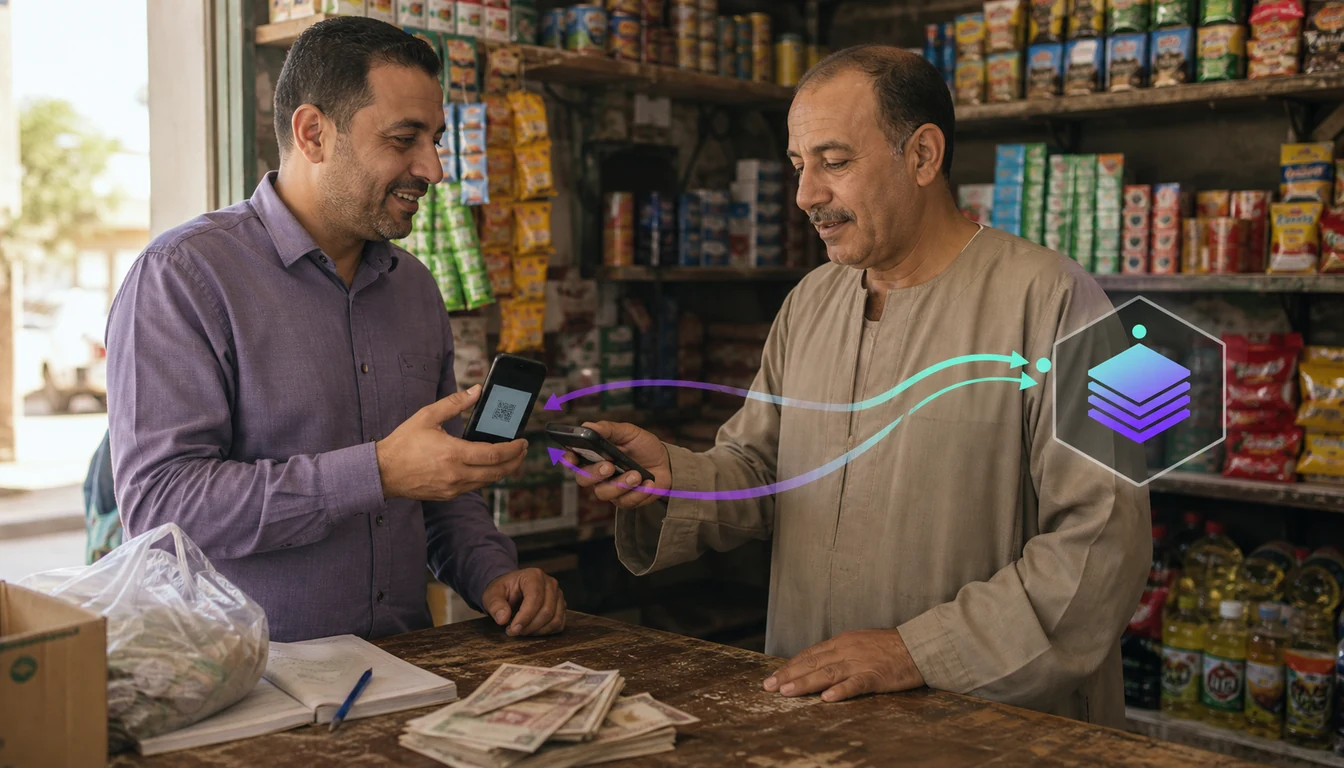
Most cash-flow trouble in Egyptian distribution does not start with a bad debtor. It starts with a price list that quietly stopped matching reality weeks ago, and a credit limit that was set against a pound that no longer buys what it used to.
In stable-currency markets, a distributor can set terms once a year and mostly forget about them. Egypt does not offer that luxury. The EGP has moved significantly since 2022, and under the current managed-float regime it keeps moving. A credit limit or a price list that was sound at the start of a quarter can be quietly wrong by the end of it, and nobody notices until the margin has leaked away.
This is really an operations story, not a currency one. The businesses that stay liquid are not the ones that predict where the pound is heading. They are the ones that build a rhythm for revisiting terms and prices often enough that nobody is ever working from stale numbers, and that keep every collection tied to the exact outlet and invoice it belongs to, down to the smallest baqala account.

Why Credit Terms and Price Lists Cannot Stay Fixed
A distributor moving into Egypt from a calmer market usually brings that market's habits along: set a price list, set a credit limit per outlet, review both once or twice a year. Under normal conditions that is sensible governance. Under Egypt's currency conditions it becomes a slow leak.
Three problems show up quickly once terms stay fixed for too long.
- Price lists undercharge without anyone deciding to. Landed cost moves with the currency long before a sales team updates the sheet a rep quotes from, and the gap compounds across every order.
- Credit limits set in absolute EGP terms lose their meaning. A limit that represented sensible turnover when set can represent something quite different a few months later. The number on the account stays the same; what it protects does not.
- Terms and prices drift apart. If the price list is revised but the credit policy is not, outlets carry exposure nobody consciously approved, surfacing only once the outstanding balance looks too large.
None of this requires predicting the currency. It requires accepting that, in Egypt, revisiting price lists and credit terms is an operational cadence, not an annual chore, and building the discipline to run that cadence without the field losing confidence in what a price sheet or a limit actually means on a given day.
Building the Discipline to Reprice Without Chaos
The distributors who handle this well are not the ones who reprice constantly. They reprice on a deliberate, known schedule, and make every price change traceable, so nobody downstream is guessing which list was in force on a given day.
A working repricing discipline generally has three parts.
- A fixed review cadence, not an ad hoc one. Deciding in advance how often terms get reviewed means it happens on schedule, not only after someone notices the margin has slipped.
- Versioned price lists with an effective date. Every list carries a version and a date it took effect, with every invoice recording which version priced it, so a rep quoting from an unmarked printed sheet in a baqala in Giza is never a silent risk.
- A clean cut-over, not a blended one. Orders before a price change settle at the old price; orders after settle at the new one. Mixing the two on a single invoice is how disputes start at collection, not ordering.
This is where a distribution management system earns its keep. When price lists live in a shared system rather than on printed sheets carried around Cairo and Alexandria, a repricing decision made centrally reaches every route the same day, and every invoice it produces traces back to the exact list that generated it. Distributors weighing up how to get there often start with a buyer's guide to choosing a DMS.
Tying Every Collection to the Right Outlet and Invoice
Frequent repricing turns a habit that is merely untidy in a stable market into a genuine risk in Egypt: collecting against a vague "outstanding balance" instead of a specific, dated invoice.
When prices only change once a year, a loose balance is a minor inconvenience. When they change several times a quarter, an outlet's account can hold invoices priced under two or three different lists at once. Applying a payment to "the balance" rather than the oldest open invoice, at the rate in force the day it was written, is how a distributor loses track of how much margin was actually collected versus offset on paper.
Two habits keep this clean. First, record the payment reference against the specific invoice, not the account, whether a baqala owner pays in cash, through InstaPay, via Fawry, through Meeza, or from a telco wallet such as Vodafone Cash or Orange Cash. An invoice a customer can scan and verify makes this matching far less prone to argument.
Second, allocate part-payments oldest invoice first. Traders who pay in instalments, common at the informal-trade tier, should have each part-payment applied against the oldest open invoice before anything newer, with anything unmatched parked in a flagged tray rather than spread across the account by guesswork.
Get this right and repricing stops being frightening: every invoice settles at a known amount, priced at a known rate.
Managing Credit Exposure at the Baqala Tier
Traditional trade, led by the baqala, is where most of Egypt's grocery volume actually moves, even as modern retail chains expand. That makes baqala-tier credit exposure a core operating concern, not a footnote.
The risk here is rarely one catastrophic default. It accumulates quietly, one small extension at a time, until it is larger than anyone intended.
- Exposure hides in people's memory. When a rep tracks a baqala's balance mentally or in a personal notebook, the distributor has no consolidated view of what that outlet owes across every visit and product line.
- The same outlet can carry credit from more than one source. A baqala buying from a distributor's own reps and, separately, through a wholesaler can end up more exposed than either party realises, because neither side sees the other's ledger.
- Limits set once rarely fit a baqala's real turnover for long. A neighbourhood shop in a dense Cairo district and a smaller outlet in a rural Delta governorate do not carry the same credit capacity, and that capacity shifts as prices move.
Setting a limit per baqala, reviewing it on the same cadence as price lists, and enforcing it when the order is placed, not after the goods have left, turns quiet leakage into a managed position. Distributors extending further into wholesalers and sub-distributors face the same problem at scale, which is why digitising the wholesaler and baqala network tends to be the next step.
Collecting Firmly Without Losing the Relationship
Cash still dominates collections at the informal-trade tier, but it is no longer the only option, and increasingly not the fastest. InstaPay, Fawry, Meeza and telco wallets such as Vodafone Cash and Orange Cash are all growing, without any single one acting as the default the way one rail does elsewhere. Field teams need to be comfortable taking whichever method a trader prefers, and recording it consistently.
Three habits keep collection firm without souring the account.
- Take payment at the shop front whenever possible. A rep who can accept and post a payment on the spot, against the correct invoice, converts money that might otherwise drift into "next visit" territory.
- Lead with a specific figure, not a general reminder. A trader responds far more readily to a named invoice and an exact amount than to a vague note that the account is overdue.
- Turn returns into proper credit notes. Damaged stock or short-dated returns should reduce the outstanding formally, not get waved off verbally, so the balance owed is always the genuine one.
Reconciling every posted receipt against the bank or wallet statement, and keeping a record of any manual balance adjustment, protects the relationship as much as the cash. A trader who sees a fair, accurate account is more likely to keep paying on time than one who suspects the numbers are being managed against them.
Putting It Together on the Route
Consider how these pieces interact across one working day for a distributor covering both dense Cairo streets and a quieter stretch toward the Delta.
- A rep reaches a baqala in a crowded Giza side street. The account shows a limit set two weeks ago, under the current price list, with one invoice already fifteen days old.
- The owner wants an order that would breach the limit, so the system holds it for a supervisor's sign-off rather than letting the rep decide alone.
- The owner clears part of the balance through Fawry. The rep records the reference and applies it to the oldest open invoice, not the account total.
- Signal drops further along the route. The next two visits are recorded offline and sync once the connection returns.
- Finance later reviews the day's receipts against the bank and wallet statements, with any outlet that crossed its limit already flagged for a call.
None of this depends on guessing where the currency goes next. It depends on treating price lists, credit limits and collections as things revisited on a schedule, tracked centrally, and tied to specific invoices rather than memory or a running total. Distributors covering the denser parts of Greater Cairo need a genuinely different route plan, and the same beat-planning discipline that sequences a dense day's stops applies just as well to how credit gets reviewed outlet by outlet. Where connectivity is patchy, an offline-first approach keeps both orders and collections from stalling.
How 1Channel Helps With Distributor Credit and Collections in Egypt
1Channel brings price lists, credit limits and collections into a single versioned, dated view, so the field and the office always work from the same current numbers rather than whatever sheet is in a rep's bag.
Every price change carries an effective date, every invoice records which version priced it, and every receipt is captured against a specific invoice rather than a running balance, even when connectivity drops mid-route. The platform helps you:
- Version price lists with effective dates, so every invoice is traceable to the exact rate that priced it.
- Set and review per-outlet credit limits on a defined cadence, with block, first-order or approval rules at the point of order.
- Book cash, InstaPay, Fawry, Meeza and wallet receipts against a specific invoice, with the reference captured at the point of collection.
- Allocate part-payments oldest-invoice-first and hold anything unmatched in a flagged tray instead of the account total.
- Capture orders, receipts and balance checks offline in low-connectivity areas, syncing automatically once signal returns.
Keep Credit and Collections Accurate as Prices Move
See how 1Channel's Payment & Credit Management software versions price lists, sets per-outlet credit limits, and ties every receipt to a specific invoice across cash, InstaPay, Fawry, Meeza and wallet payments.
Explore Payment & Credit Management →Key Takeaways
- Treat repricing as a schedule, not an emergency. Review price lists and credit terms on a fixed cadence so neither drifts silently away from the other.
- Version every price list with an effective date and tie every invoice to the exact version that priced it, so no rep is quoting from a stale sheet.
- Collect against invoices, not balances. Match every payment reference to a specific dated invoice and allocate part-payments oldest first.
- Manage baqala exposure deliberately. Set a per-outlet limit, review it on the same cadence as pricing, and enforce it before the order leaves, not after.
- Meet traders on whichever rail they use. Cash, InstaPay, Fawry, Meeza and telco wallets all need to post cleanly against the right invoice.
- Keep one shared view so no exposure hides in a rep's memory and no receipt goes unmatched between the outlet and the bank.