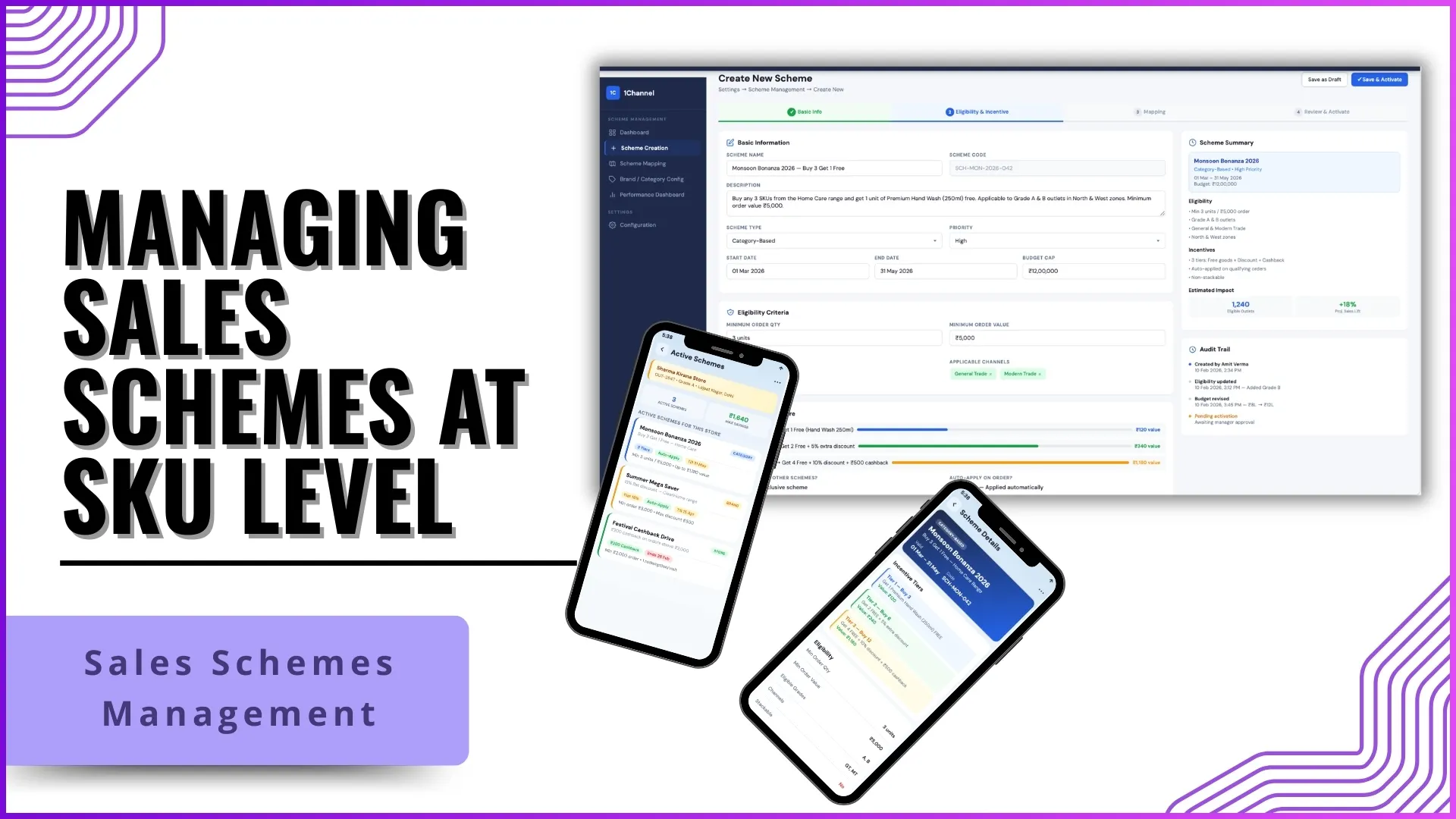
A SKU-level scheme is a discount, slab, combo offer, or free-goods rule that applies to one specific stock-keeping unit rather than the full brand portfolio. Where a brand-wide scheme treats the entire range the same way, a SKU-level scheme can promote one variant aggressively while leaving the rest at standard pricing. The cloud SFA holds the scheme definitions, applies them at the moment the rep books an order, and reports their performance per SKU rather than rolling everything up to the brand. The control is granular by design.
Table of Contents
What SKU-Level Scheme Management Actually Controls
A SKU-level scheme covers four operational levers at once. First, eligibility, which SKUs the scheme applies to, which channel or store tier it runs in, and which date range it stays active for. Second, the math, the slab, percentage, or free-goods rule that converts SKU quantity into a discount or bonus. Third, mapping, the territories, distributors, and store types where the scheme is live. Fourth, reporting, the SKU-level uplift, conversion rate, and incremental revenue attributable to the scheme. The cloud SFA holds all four as part of the same scheme record, so the operator does not have to reconcile pieces across systems.
SKU-Level Schemes vs Brand-Wide Schemes at a Glance
Both formats have their place. The table compares them on the dimensions that typically decide which one to run.
| Dimension | Brand-Wide Scheme | SKU-Level Scheme |
|---|---|---|
| Granularity | Whole brand at once | One SKU or curated subset |
| Setup effort | Faster; single rule | Higher; per-SKU rules |
| Targeting | Broad reach | Precise, surgical targeting |
| Best for | Launches, seasonal pushes | Slow movers, new variants, premium SKUs |
| Reporting | Aggregated revenue lift | SKU-by-SKU uplift and conversion |
| Cannibalization risk | Higher; all SKUs discounted | Lower; isolated to chosen SKUs |
How 1Channel Runs SKU-Level Schemes on the Cloud SFA
1Channel runs SKU-level scheme management on its cloud Sales Scheme Management module. Every scheme is defined by SKU, slab, channel, territory, and validity from the same admin console. The cloud SFA applies the scheme automatically at order entry, so the rep does not have to remember or calculate it at the counter. 1Channel's AI engine ranks SKU-level scheme performance across territories, flags schemes that are not converting against forecast, and surfaces SKUs where a small tweak in the slab would lift conversion materially. The reporting layer rolls up by SKU, distributor, and territory, and the audit log preserves every change to the scheme rule for compliance review.
Explore Sales Scheme Management Software
1Channel's cloud scheme platform runs SKU-level slabs, AI-ranked performance, and order-time application for Malaysian brands.
Explore Sales Scheme Management Software →Outcomes Sales Operations Can Expect
Switching from blanket brand schemes to SKU-level schemes changes the shape of the field outcomes. A few of the operational changes worth measuring once the model is live:
- Premium SKUs stay protected from blanket discounting while slow movers receive the targeted push, so margin and inventory turn improve in the same cycle.
- Reps make fewer calculation errors at the counter because the platform's automation applies the slab correctly per SKU rather than asking the rep to compute a brand rate.
- Scheme performance reporting shifts from aggregated revenue lift to SKU-by-SKU conversion, which makes the next round of planning more informed.
- The marketing team can A/B test different slabs on the same SKU across territories and use the cloud platform's AI-ranked results to decide the rollout slab.
- Audit and compliance become easier because every scheme change is captured per SKU in the audit log rather than buried inside a brand-wide policy shift.