LMS Reading List for Retail & Modern Trade Teams
Short reads on sales training LMS, gamification, level-based progression, and quiz design for retail field teams.
Retail teams turn over fast. Promoters move between brands every few months. Merchandisers rotate across chains. New product launches arrive every quarter and need everyone trained the same week the SKU lands at the chain DC. A retail LMS handles all of it: rapid onboarding paths for new promoters, chain-specific procedure modules for merchandisers, conversation training for counter sales, and quiz-backed certification before the rep ever talks to a buyer.
Promoter turnover, NPI launch cadence, and chain-specific procedures need a structured training engine, not a WhatsApp group. The LMS sets up categories, deploys modules, runs quizzes, and tracks who is actually ready to be at the shelf or in front of a buyer.
Promoters get a fast onboarding path: brand basics, top SKUs, conversation openers, demo handling, returns flow. Merchandisers get planogram basics, audit checklist training, and chain-specific procedures. KAMs get JBP preparation, listing negotiation playbooks, and buyer relationship management. Each role only sees what they need.
Classroom for big NPI launch briefings before product hits the chain. Virtual for monthly chain reviews and process updates. In-store with trainer geo-tagged visits to coach promoters at hypermarket counters. E-learning with short bite-sized videos and PDFs that a promoter can complete in a break between shifts.
Promoters and merchandisers must clear product quizzes before they are cleared for the shop floor. Gamified image-based quizzes test SKU identification and placement logic. Conversation roleplay videos check selling pitch. Certification status feeds the SFA app so the brand knows who is allowed to work which chain on which category.
Short reads on sales training LMS, gamification, level-based progression, and quiz design for retail field teams.
A retail LMS structured around the realities of fast turnover, frequent product launches, and the chain-specific procedures that vary between hypermarkets and supermarkets.
Promoter turnover at modern trade is high. A new joiner can run through a structured onboarding path in their first shift gap: brand basics, top SKUs, demo flow, returns workflow. Quizzes confirm comprehension. Certification clears them for the next shift. No more learning on the job at the shelf.
New product launches arrive every quarter. Each NPI gets a launch module with positioning, target shopper, SKU specs, planogram placement, demo script, and conversation openers. The module rolls out to all relevant promoters and merchandisers across chains. Quiz completion is the gate before product hits the chain DC.
Each chain has its own POSM cabinet protocol, refund workflow, planogram reset frequency, and audit handover. Procedure modules per chain hold the standard operating procedure with photos, walkthroughs, and chain-specific quizzes. Merchandisers can only work a chain after passing that chain's procedure quiz.
The LMS shares certification status with the SFA app in real time. A promoter who has not passed the NPI quiz cannot run the demo. A merchandiser who has not cleared the chain procedure cannot work that chain. Brand teams see who is certified for what, with expiry rules so refresh training stays current.
Two flagship 1Channel apps run the entire field-to-channel workflow. Both are available on Google Play and Apple App Store, and both work with the same cloud backend used by the admin portal.
Google Play

Apple App Store

Google Play
Apple App Store
The full cloud LMS with categories, modules, four session types, gamified quizzes, level-based progression, certificates, and trainer analytics.
Explore LMS Platform →Workforce management with attendance compliance, beat adherence, productivity tracking, and performance analytics that feed LMS promotion criteria.
Explore Workforce →HR records, designation hierarchies, role-based access, and joining-date tracking that feed LMS tenure criteria for level-based promotion.
Explore HR →GPS attendance with selfie AI validation. Trainer attendance at sessions and trainee attendance at venue or virtual events flow through the same engine.
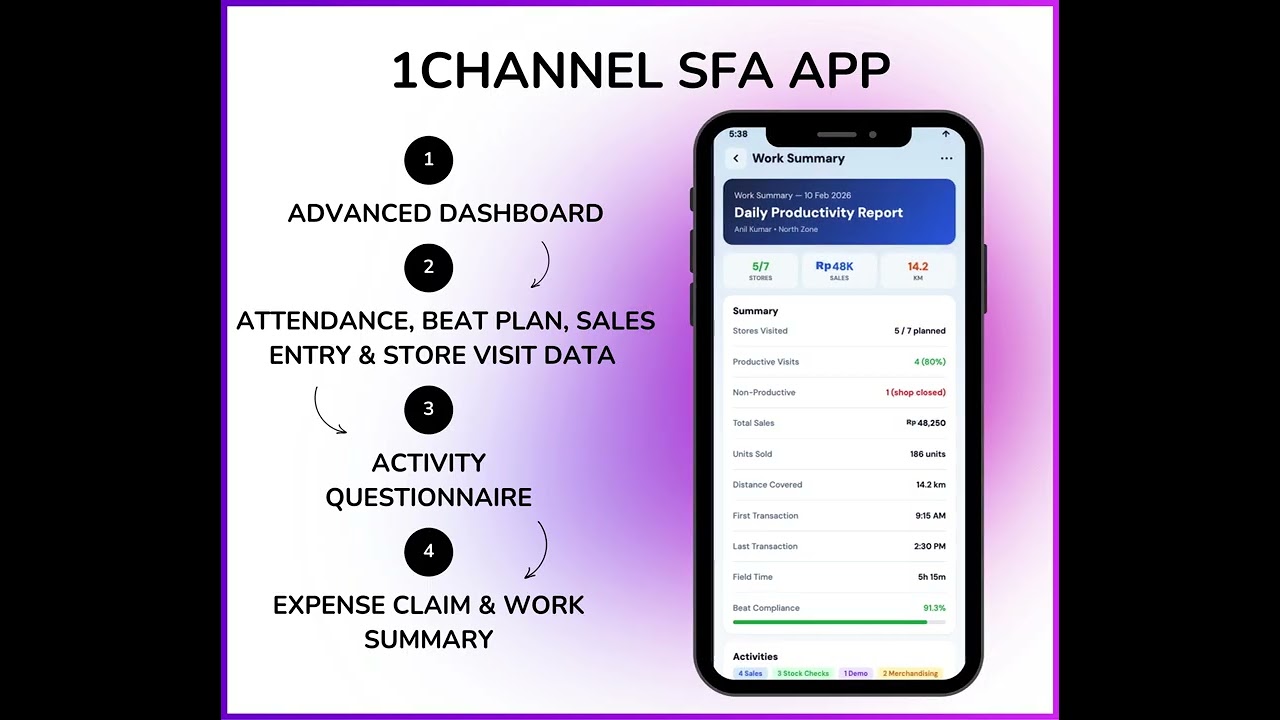
Explore Attendance →The SFA module gives the productivity metric that feeds LMS promotion criteria. Trained reps apply learning directly in real beat plans and store visits.
Explore SFA →Channel partners can be trained on the same LMS and rewarded through the loyalty platform when they complete modules, driving engagement and retention.
Explore Loyalty →Trained reps work CRM pipelines with confidence. LMS, CRM, and SFA share the same employee record so the journey from learning to selling is connected.
Explore CRM →Merchandisers apply retail playbooks on the shelf after completing LMS modules on planogram, POSM deployment, and category mix essentials.
Explore Retail Execution →See how the cloud LMS rolls out for field teams and how training ties into broader sales operations.