A Workforce Genuinely Built From Both Sides
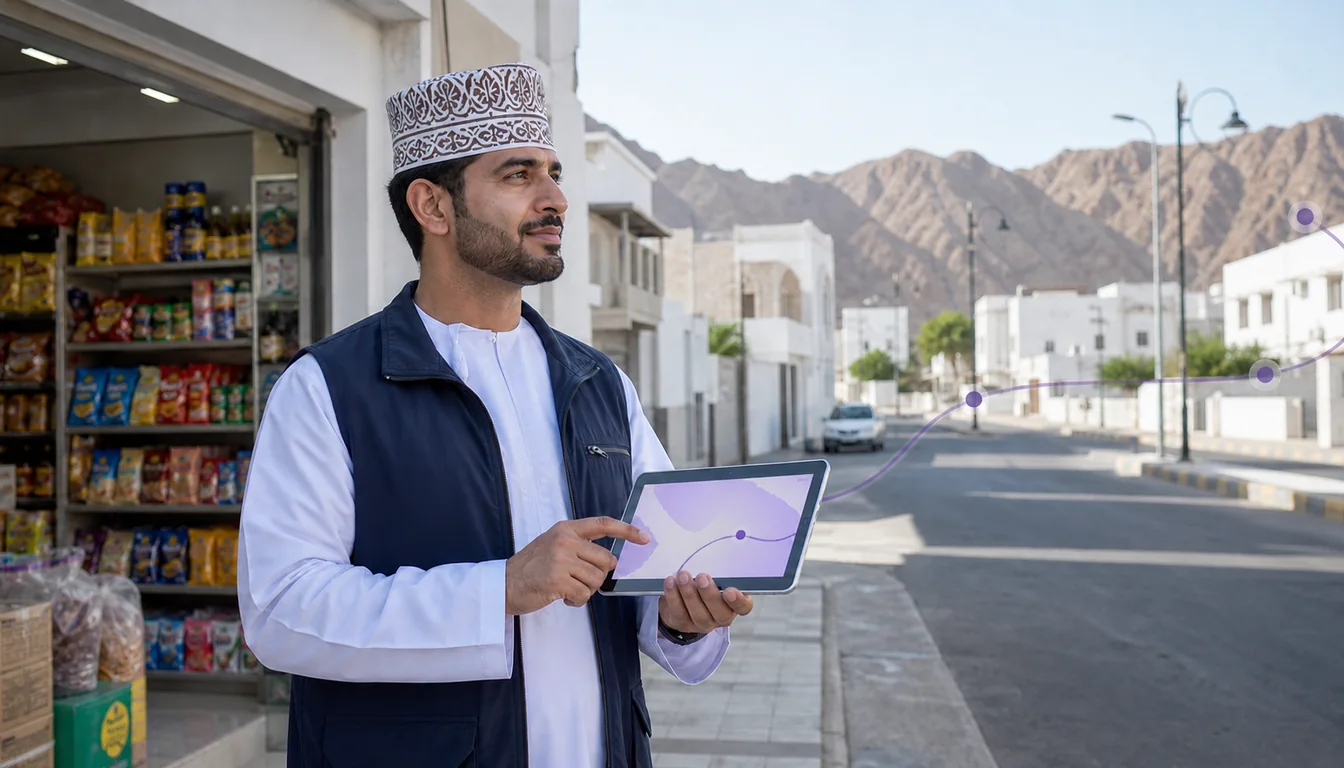
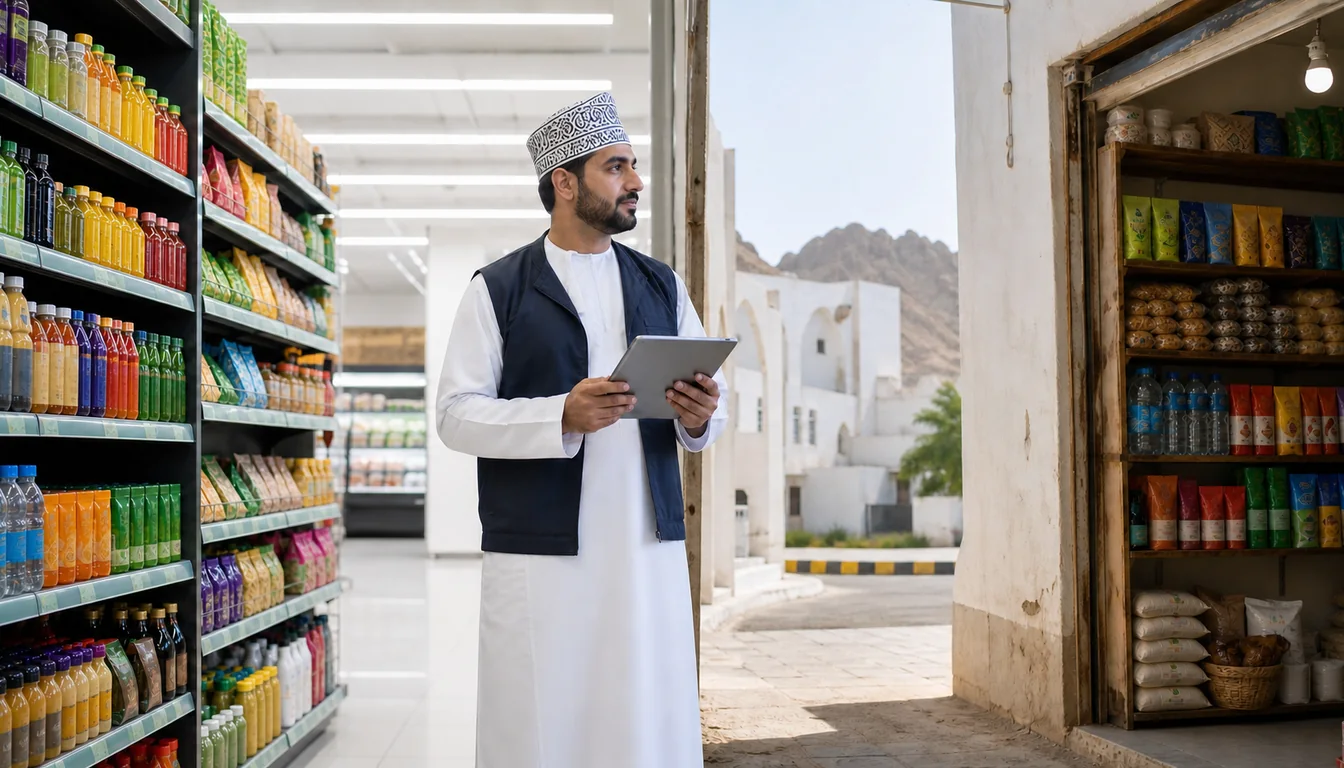
Oman's population splits roughly 57% Omani nationals to 43% expatriate, with the largest expatriate communities drawn from Bangladesh, India and Pakistan. That is a materially different shape from some of its Gulf neighbours, where the workforce is overwhelmingly expatriate. In Oman, a field sales team is more likely to be a genuine mix: Omani supervisors and reps working alongside long-established expatriate colleagues, often on the same route, in the same van, calling on the same baqala or hypermarket the same afternoon.
Arabic is Oman's official language and English is the working language of commercial and business life, but neither sits alone inside a mixed field team. A Field Sales Representative might open a conversation with a shopkeeper in Arabic, then hand a delivery note to a colleague who reads it more comfortably in English, Hindi, Urdu or Bengali. Training material built around a single assumed language, whatever that language is, will always underserve part of a team built this way. That is not a diversity footnote. It is an operational fact that shapes how quickly a new joiner becomes reliable and how consistently an instruction lands the same way across every route.
Why a Balanced Team Changes the Training Problem
A nationally balanced workforce changes what "good training" actually has to solve for. It is not one dominant language with a translated afterthought. It is several languages genuinely in active use across the same team, on the same day, often within the same store visit.
On the Sales Floor
A merchandiser who is not fully sure whether a promotion covers this pack size or the one beside it will often guess rather than stop to ask, particularly if asking means explaining the confusion in a second language to a supervisor. A Van Sales Representative who half-followed a pricing update is more likely to apply the old price than risk a visible mistake in front of a customer. Neither error is really about ability. Both come down to whether the instruction was understood properly the first time, in a language the rep is genuinely comfortable in rather than one they can just about follow.
In HR and Attendance Records
The same friction shows up off the shop floor. Attendance records, leave requests, incident reports and onboarding paperwork all depend on information captured accurately from a genuinely mixed-language team, and mistakes here are harder to spot than a pricing error, because nobody notices until a record fails to reconcile weeks later. Clean HR record-keeping that works equally well for every employee, not just the portion most comfortable with whichever language the paperwork happens to be written in, is the quieter half of this problem.
Certifying Product Knowledge, Not Just Delivering It
Certification is the practical answer to the guesswork above. Instead of assuming a rep absorbed a briefing because they sat through it, a structured certification step checks understanding directly. Can this merchandiser correctly name which SKUs a current promotion actually covers? Can this Van Sales Representative recall the updated price list without checking? Does this new joiner know the basic call-cycle and outlet visit standard expected of them? Run consistently across a mixed-language team, certification stops being a formality and becomes the mechanism that closes the gap between training delivered and training understood.
This matters more in Oman than it might in a linguistically uniform market, precisely because the person delivering the training and the person receiving it are not guaranteed to share one working language throughout. A learning management system purpose-built for field teams, the kind covered on this site's sales team LMS page, lets a distributor or brand track who has completed which module and who has actually passed the knowledge check behind it, module by module and rep by rep, rather than relying on a supervisor's memory of who attended which session.
App-Language Support Across English, Arabic, Hindi, Urdu and Bengali
Certification only works if the material behind it is genuinely usable by the person taking it. A training module or a daily task list delivered in only one language is not automatically legible to every rep on a team built the way Oman's is built. App-language support, meaning the ability for a field rep to switch the interface and training content into a language they actually work in comfortably, whether that is Arabic, English, Hindi, Urdu or Bengali, is a practical rollout decision rather than a nice-to-have feature. It shortens the time a new joiner needs to become confident using the tools their role depends on, and it reduces the chance that a rep quietly avoids a feature because they never fully understood how to use it in the first place.
Oman's commercial corridor, from Muscat down to Salalah, has reliable mobile connectivity, so a cloud-hosted training module or a language-switched app interface loads consistently in the field, whether that is a hypermarket aisle or a baqala counter. The one exception worth planning for is a rep covering genuinely remote interior or desert territory, where a short signal gap is a real but narrow possibility, not a reason to redesign the whole rollout around it.
Training at Speed for Khareef and Ramadan
Demand across Oman is not flat through the year. Ramadan shifts buying patterns nationwide, and Khareef, the Dhofar monsoon running from roughly mid-June to mid-September, drives a sharp, geographically concentrated spike in and around Salalah. Some distributors and brands bring on temporary merchandisers or Van Sales staff to cover these windows, and training a batch of seasonal joiners at short notice is a different problem to onboarding one new rep a month. It is exactly the scenario in which a process built around a single trainer explaining everything verbally, in one language, to whoever is in the room, breaks down fastest.
A structured, repeatable onboarding and certification process, one that does not assume a shared first language and can reach a batch of new joiners at once, scales better into these seasonal surges. So does having accurate, current workforce data to plan around: who is trained, who is certified on the current promotion, and who is actually rostered onto which route during the surge window.
Omanisation and Clean Workforce Records
Under Royal Decree No. 53/2023, the Ministry of Labour expects employers to maintain accurate workforce records and file an annual national-workforce plan, with larger employers also expected to plan Omani-national progression into leadership roles. None of this changes because a field team happens to be multilingual, but accurate reporting becomes noticeably harder when onboarding paperwork and attendance data were captured inconsistently across a team that does not share one working language.
A clean, consistent employee record for every field worker, regardless of which language they are most comfortable in, is the foundation Omanisation workforce-mix reporting genuinely depends on. That is less about any single feature and more about treating attendance, leave and workforce management as something that has to work for the whole team, not just the part of it fluent in whichever language the system was originally set up in.
How 1Channel Helps Coordinate Multilingual Field Training
1Channel's field-force platform is built to support exactly this kind of nationally balanced, seasonally variable team, rather than treating a mixed-language workforce as an edge case bolted onto a single-language product.
- Training modules and certification checks that can be assigned, tracked and reported on centrally, so a distributor or brand can see which reps across which routes have passed the knowledge check behind each module.
- A mobile app interface available in Arabic, English, Hindi, Urdu and Bengali, so a Field Sales Representative, Van Sales Representative or Merchandiser can work in the language they are genuinely comfortable in.
- Certification workflows that scale to seasonal hiring surges around Khareef and Ramadan, without relying on one trainer explaining everything in one language to one room.
- Attendance and leave records captured consistently across a mixed-language team, feeding straight into Omanisation workforce reporting.
- A supervisor view that shows who is trained, who is certified and who is rostered where, across governorates, in near real time.
- Onboarding tools built for both modern trade and baqala outlet types, so a new joiner reaches a consistent standard on either channel from week one.
Train and Certify a Mixed-Language Team From One System
See how 1Channel's sales team LMS delivers multilingual training and certification to every route across Oman.
Explore Sales Team LMS →Key Takeaways
Oman's field workforce reflects the country's own balance, not a template borrowed from a more expatriate-heavy Gulf market.
- The workforce is nationally balanced, not expatriate-majority. Roughly 57% Omani nationals and 43% expatriate, with the largest expatriate communities from Bangladesh, India and Pakistan, working side by side on the same routes.
- Language gaps rarely look like an obvious training failure. They show up as guesswork on the sales floor and inconsistent records in HR and attendance data.
- Certification, not just delivery, closes the gap. Checking whether a rep actually understood a module matters more when the team does not share one default working language.
- App-language support across Arabic, English, Hindi, Urdu and Bengali shortens onboarding and reduces the chance a rep quietly avoids a feature they never fully understood.
- Khareef and Ramadan are the sharpest test of scale. Seasonal hiring surges need a repeatable, multilingual onboarding process, not a single trainer working through one language at a time.
- Clean, consistent employee records underpin Omanisation reporting. Accurate workforce data has to work equally well for every employee, whichever language they work in day to day.
Built around Oman's actual workforce balance rather than an imported assumption, multilingual training becomes a genuine operating advantage, not a translation exercise bolted on afterwards.