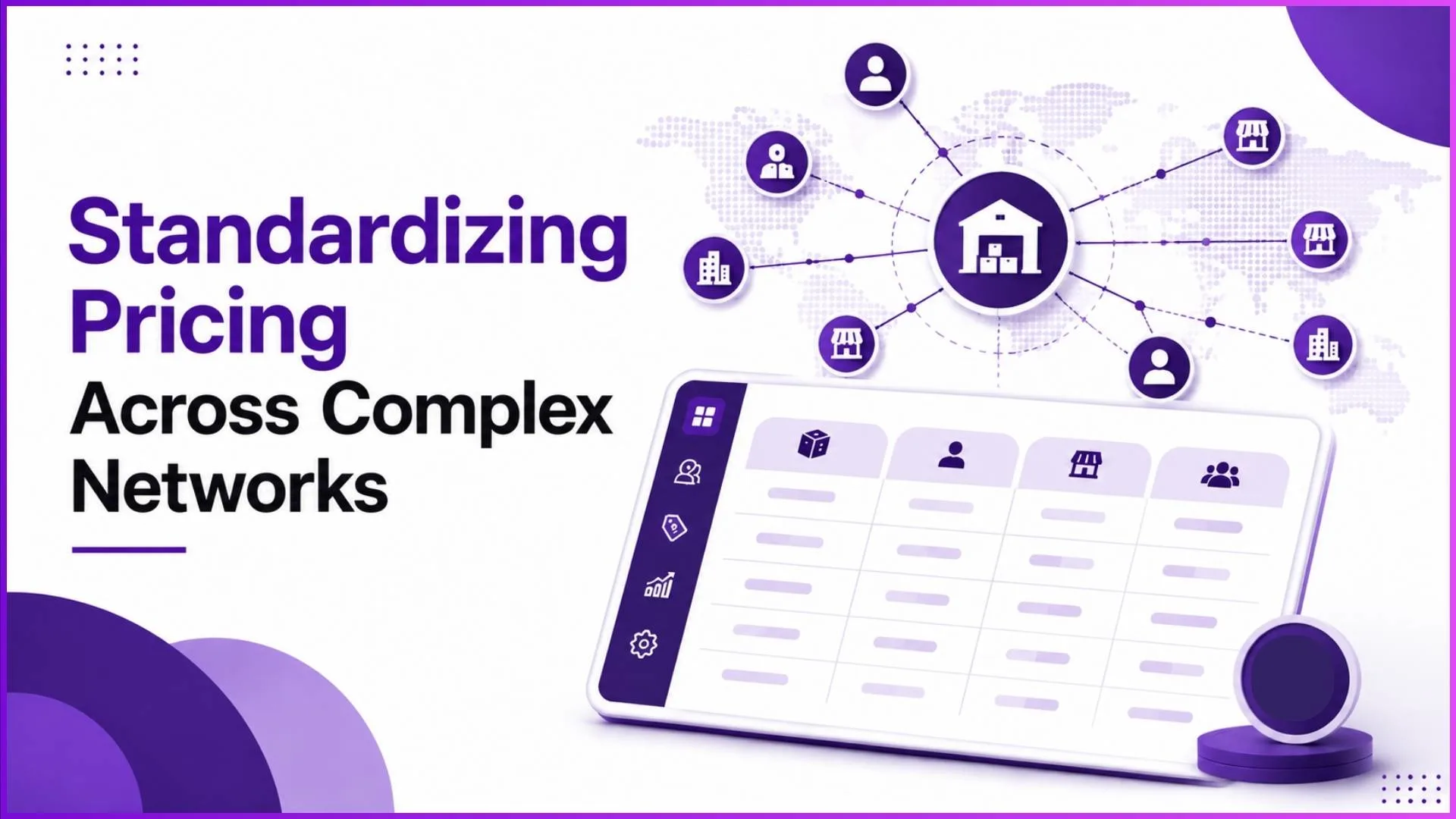
Managing a multi-tiered distribution network involves a persistent challenge: maintaining absolute pricing consistency across diverse channels. When your supply chain includes manufacturers, super stockists, distributors, and thousands of independent retailers spread across different regions, manual pricing management inevitably leads to errors, margin leakage, and channel conflict.
A robust Distributor Management System (DMS) solves this by replacing fragmented spreadsheets with a centralized, automated pricing architecture. Here is how modern systems standardize pricing across complex distribution networks.
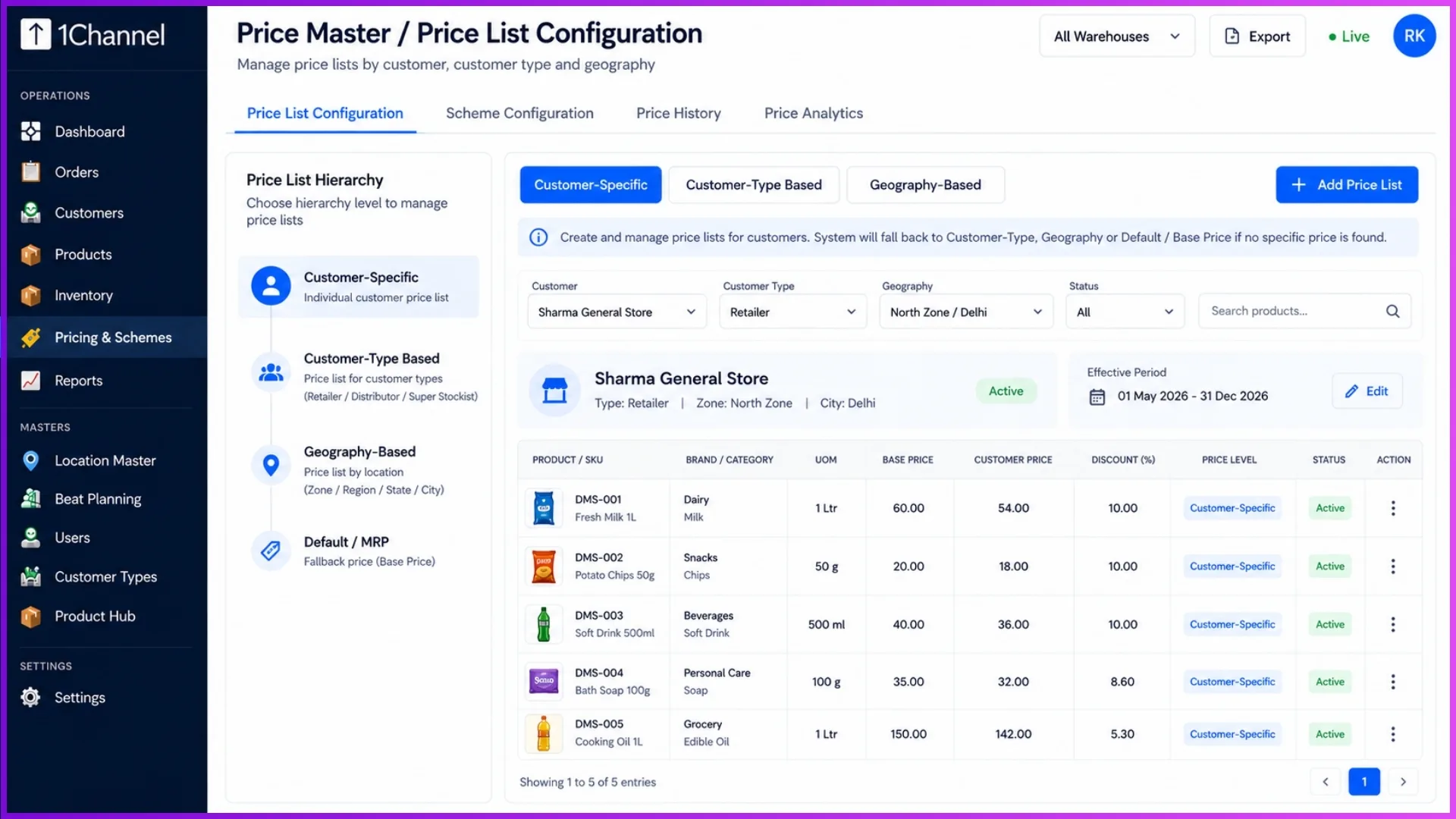
Multi-Tiered Price Resolution Order
A complex network cannot rely on a single, rigid price list. To maintain control while remaining flexible, businesses must establish a strict hierarchy for price resolution. The system automatically scans and applies the correct price based on a predefined order of operations:
- Customer-Specific Price Lists: Tailored for accounts with special agreement-based pricing.
- Customer-Type Price Lists: Segmented by the customer's role in the supply chain (e.g., separate rates for Super Stockists vs. Distributors).
- Geography-Based Price Lists: Adjusted for specific territories or regional tax structures.
- SKU Fallback Price: The baseline manufacturer pricing applied when no specialized rules exist.
Example
A premium product might be configured to retail at ₹100 in North India but ₹150 in South India due to regional logistics, with the DMS automatically executing the correct pricing at the point of order placement.
Granular Primary and Secondary Fallback Controls
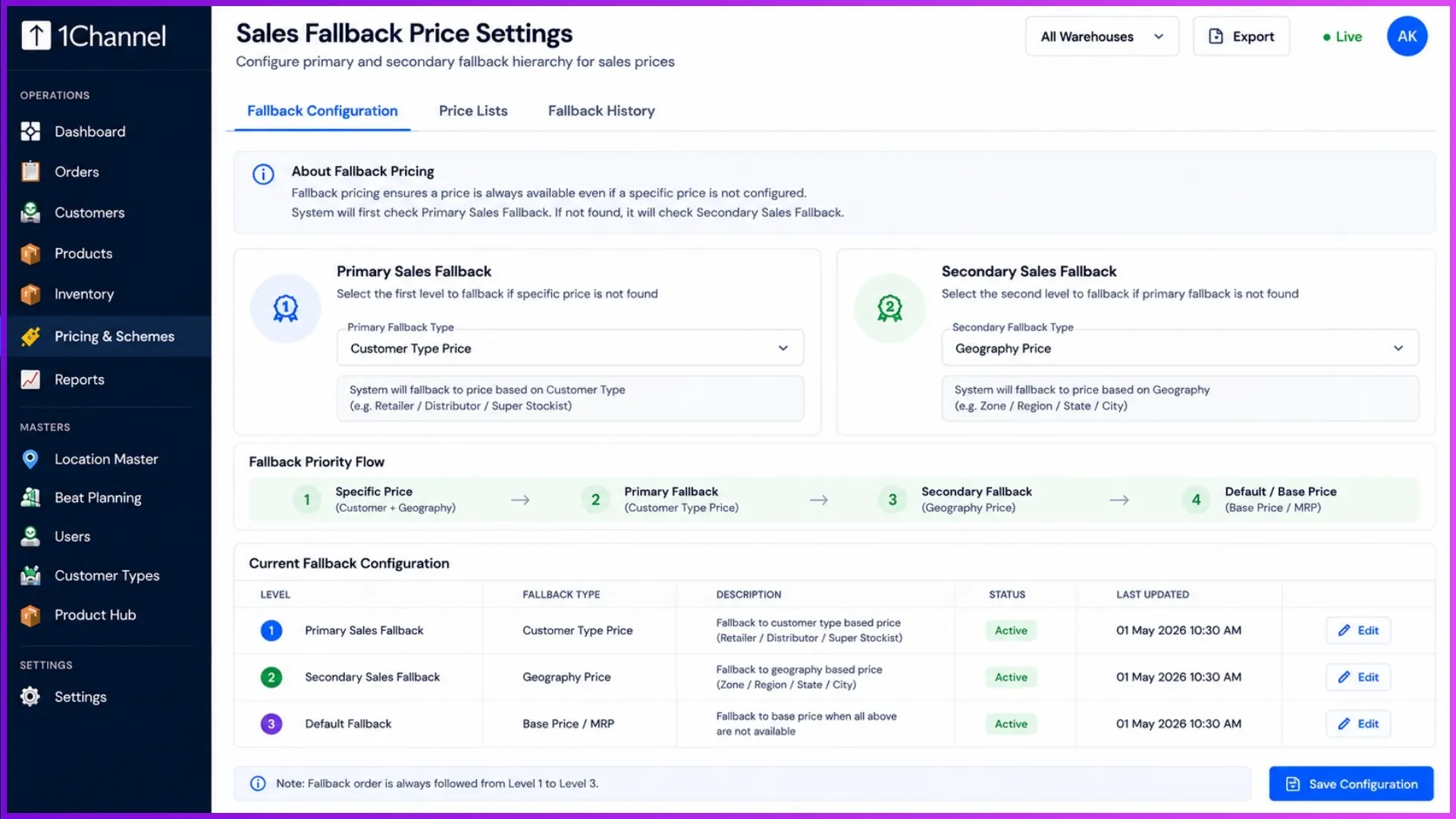
Pricing leaks often occur when a new SKU is launched or an atypical transaction bypasses standard price lists. Automated fallback price settings act as a safety net.
The system allows administrators to independently configure Primary Sales Fallbacks (transactions from manufacturer to distributor) and Secondary Sales Fallbacks (transactions from distributor to retailer) using core metrics like Max Retail Price (MRP), Cost Price, or Base Selling Price.
| Sales Type | Applicable Fallback Options | Purpose |
|---|---|---|
| Primary Sales | MRP / Selling Price / Cost Price | Protects manufacturer margins during bulk supply. |
| Secondary Sales | MRP / Selling Price / Cost Price | Safeguards distributor-to-retailer transaction standards. |
Dynamic Scheme and Promotional Integration
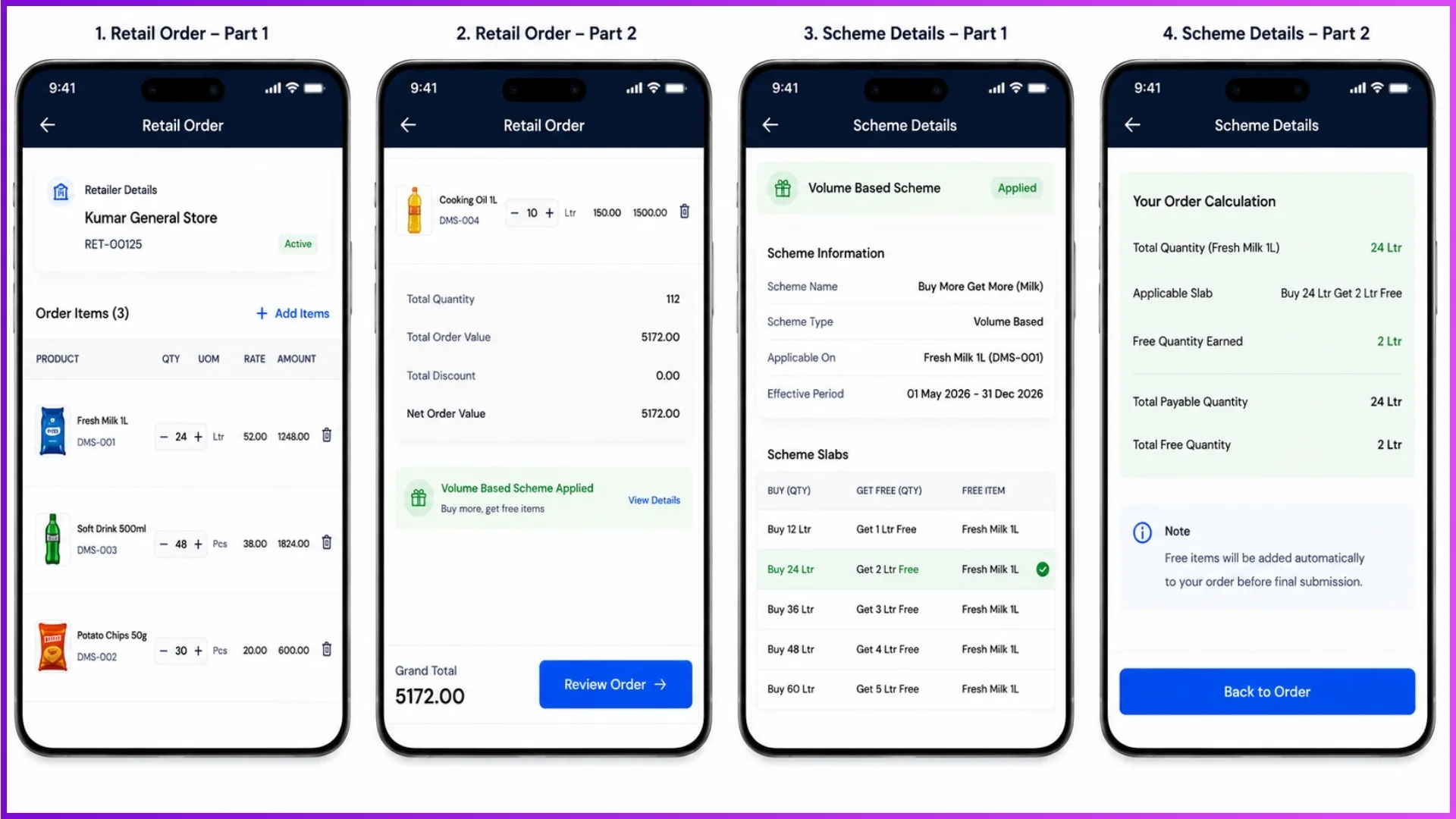
Standardizing pricing requires more than just locking down base rates; it requires standardizing how discounts and promotions alter those rates. An advanced DMS seamlessly integrates value-based, volume-based, and free goods schemes directly into the central pricing engine.
[Order Placed via App]
│
▼
[System Checks SKU Base Price]
│
▼
[Validates Customer Type/Location]
│
▼
[Automatically Applies Eligible Scheme Slabs]
By automating this sequence, field sales representatives or distributors cannot manually manipulate discount structures, ensuring absolute compliance with corporate promotional guidelines.
Example
A distributor ordering a specific SKU automatically receives 2 free pieces when buying a slab of 10–12 pieces, or 3 free pieces if they scale the order to 13–15 pieces, without requiring manual calculations by the sales rep.
End-to-End Operational Guardrails
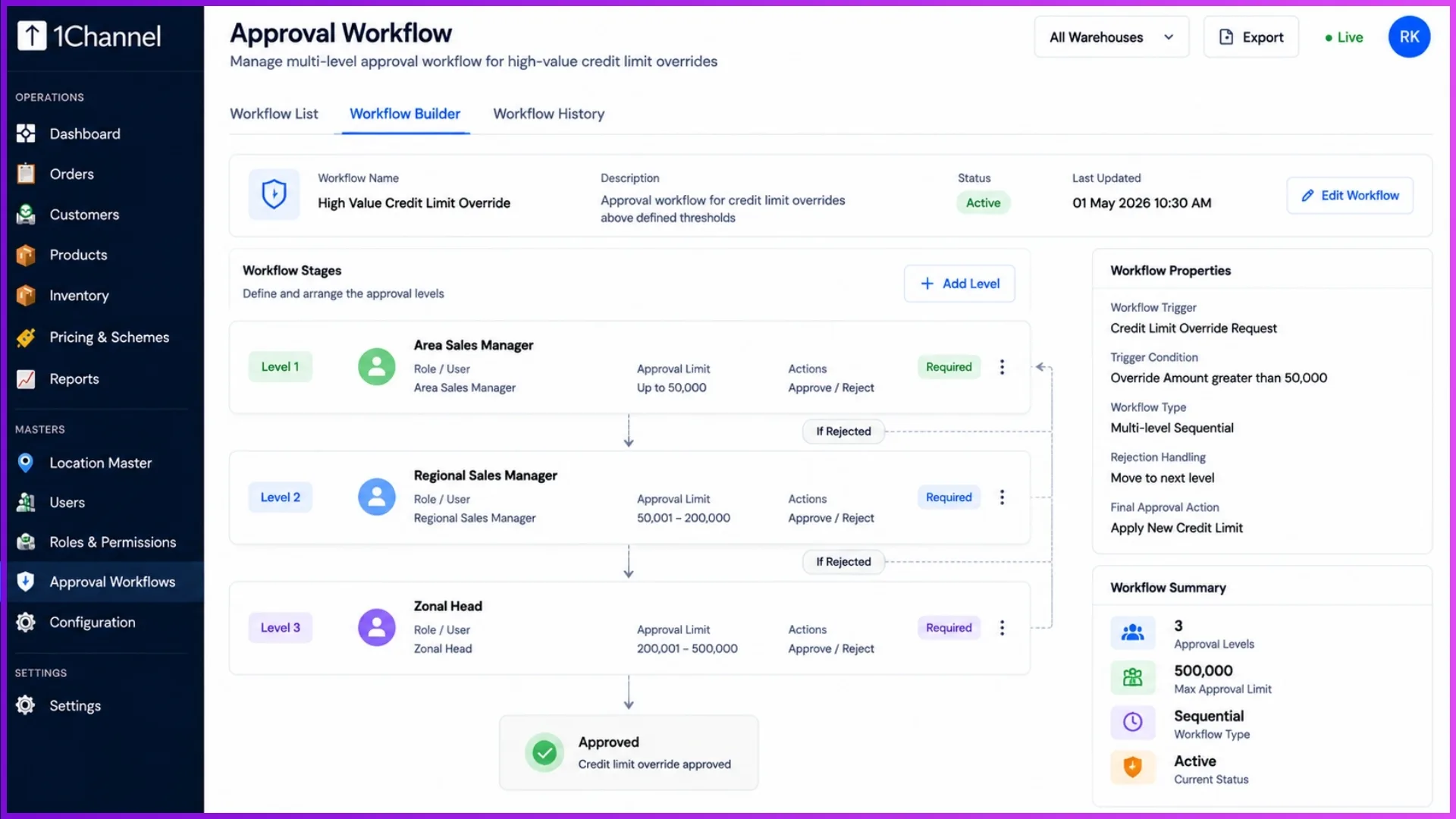
True pricing standardization must be backed by strict operational guardrails. When pricing structures interface with credit limits, the system provides automated blocks and approval workflows to prevent compliance breaches.
If an order violates a credit threshold or utilizes an exceptional pricing override, the system halts the transaction.
It routes the order through multi-level approval workflows (up to 7 levels deep) or logs it into specialized compliance audits, keeping the commercial process transparent and secure.
Streamline Your Network Pricing with 1Channel
Achieving flawless pricing execution across a vast supply chain demands an enterprise-grade solution. 1Channel provides a powerful Distributor Management System designed to handle these exact complexities.
With 1Channel, your organization gains a unified portal to configure dynamic price lists, execute automated batch selection tracking (such as FIFO and FEFO), govern strict credit limits, and empower field teams with an integrated AI chat assistant for real-time reporting.
Eliminate manual pricing vulnerabilities and secure your margins across every tier of your network with 1Channel.
Explore 1Channel Pricing Management Software
See how 1Channel's Pricing Management Software centralizes multi-tiered price lists, automated fallback rules, and scheme integration to protect your margins across every tier of the network.
Explore Pricing Management →Conclusion
Standardizing pricing across complex, multi-tiered distribution channels eliminates commercial inconsistencies and protects your bottom line.
By deploying a DMS that centralizes price resolution orders, automates fallback rules, and mathematically binds promotional schemes to localized transactions, brands can confidently scale their networks without sacrificing control over their margins.
Note: Software screens may vary based on your business structure and configured workflows.