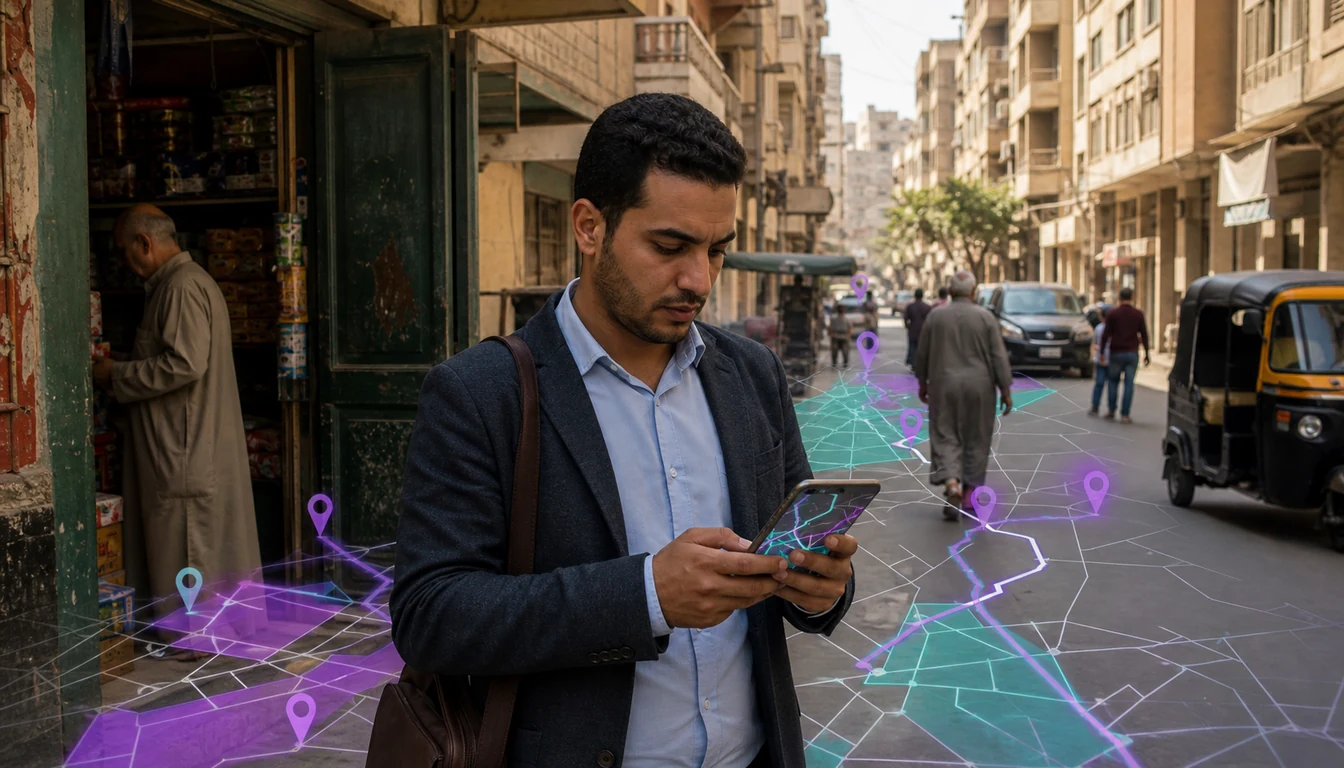
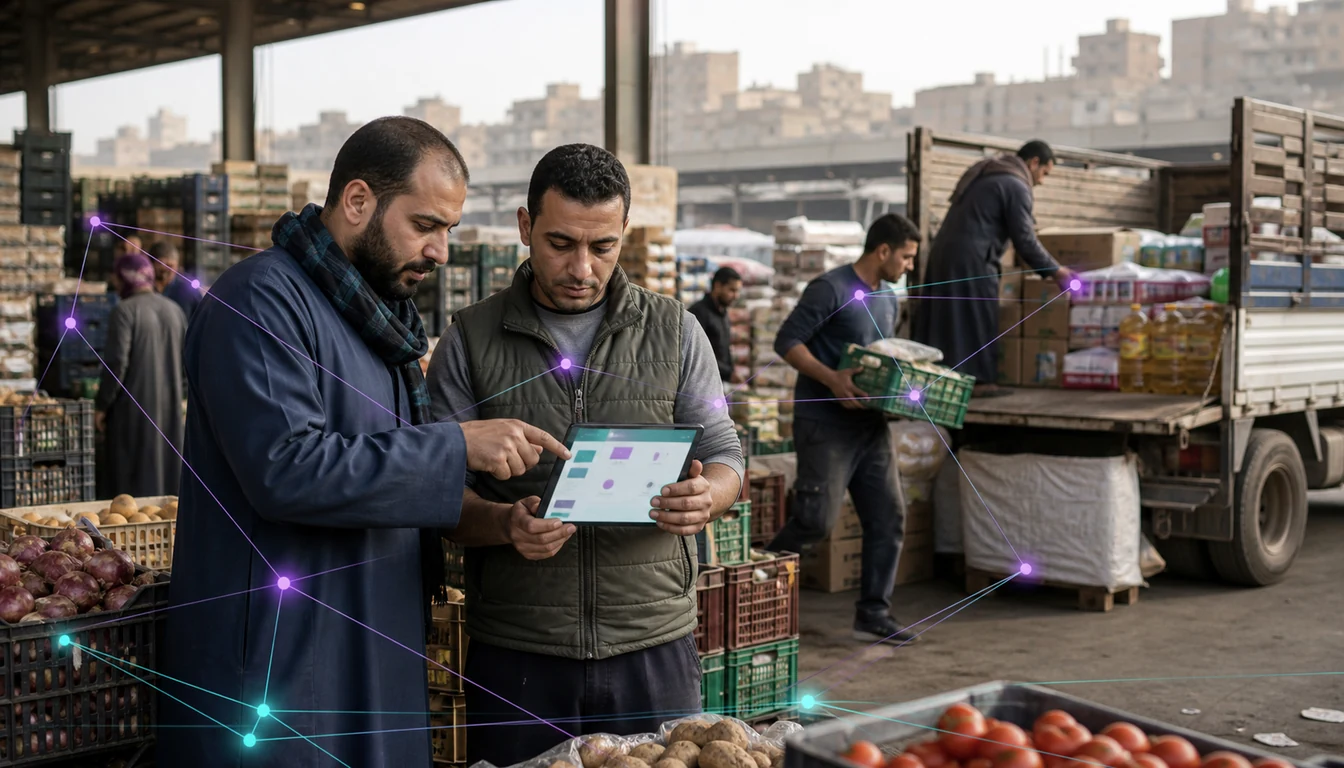
Most sales-force software sold into Egypt is built in English first and translated afterwards. The screens, the onboarding decks, the quiz questions all start life in English, then get an Arabic pass once the product is otherwise finished. That order feels efficient from a head-office desk, but it produces a mismatch the moment a new rep opens the app at a baqala counter in Giza or on a distributor's van outside Alexandria.
The mismatch is not really about vocabulary. It is about which language a rep's mind actually runs in while closing a sale, logging a return or hunting for the right screen under pressure. Arabic is that language for the large majority of a field force, while English remains, in many operations, the language the back office quietly assumes everyone shares. Outside white-collar and urban business circles, that assumption rarely holds.
Building Arabic-first, rather than translating into Arabic after the fact, changes how quickly a new hire becomes productive and how clean the data coming back from the field turns out to be. This piece works through what a translation-only layer gets wrong, what genuinely Arabic-first training and app design look like, and how the choice shows up months later in onboarding speed and data quality.
Why Training Programmes Still Default to English First
The pattern is understandable even when it is wrong. Most field-sales and distributor-management platforms sold in the region were built for an English-first market, then localised with a translation pass rather than a redesign. Head-office reporting, supplier contracts and management meetings tend to run in English, so it is easy to assume the same holds for a rep working a route through a crowded Cairo side street.
That assumption skips a step. Choosing the underlying distribution management system in English is a fair call for the people who will run reports from it. Handing that same English-first interface to a rep who trades almost entirely in spoken Arabic is a different decision, made by default rather than on purpose.
What a Translation Layer Alone Gets Wrong
Translating labels and lesson text into Arabic is not the same as designing for Arabic speakers. A translation layer keeps the original English structure, English reading order and English assumptions about how someone scans a screen, and simply swaps the words. Three problems follow, and they show up in roughly this order.
- Comprehension gaps. Literal, screen-by-screen translation loses register and idiom. A training line that reads clearly in English can turn stiff or ambiguous once translated word for word, and a rep skimming between customers has no patience to puzzle it out.
- Slower onboarding. A new hire reading translated menus alongside translated lesson text is doing two jobs at once, working out what a screen means and learning the actual sales process. Time to full productivity stretches out, and supervisors end up fielding the same "which button" questions for weeks.
- Data-entry errors from guessing. When a dropdown, a scheme name or a stock-adjustment reason code is still effectively in English under a thin translation, reps guess. A guessed selection on a SKU or a trade scheme does not look like an error in the system. It looks like a clean, wrong record.
None of this is a reflection on the reps. It is what happens whenever an interface asks someone to think in a second language while doing a job that depends on speed and confidence in their first.
What Genuinely Arabic-First Design Looks Like
Arabic-first means the training content and the app navigation were conceived in Arabic, for Arabic-speaking reps, rather than authored in English and pushed through a language switch. It touches layout, navigation and the source material itself, not only the words on the label.
Right-to-left is a layout decision, not a translation setting
Arabic reads right to left, and an interface that merely swaps English text for Arabic text inside a left-to-right layout fights the reader on every screen. Genuinely Arabic-first design mirrors the whole flow: navigation, forms, progress indicators and button order all run right to left, so the reading direction and the interaction direction agree with each other instead of working against one another.
Icon-led navigation carries the weight that long labels used to
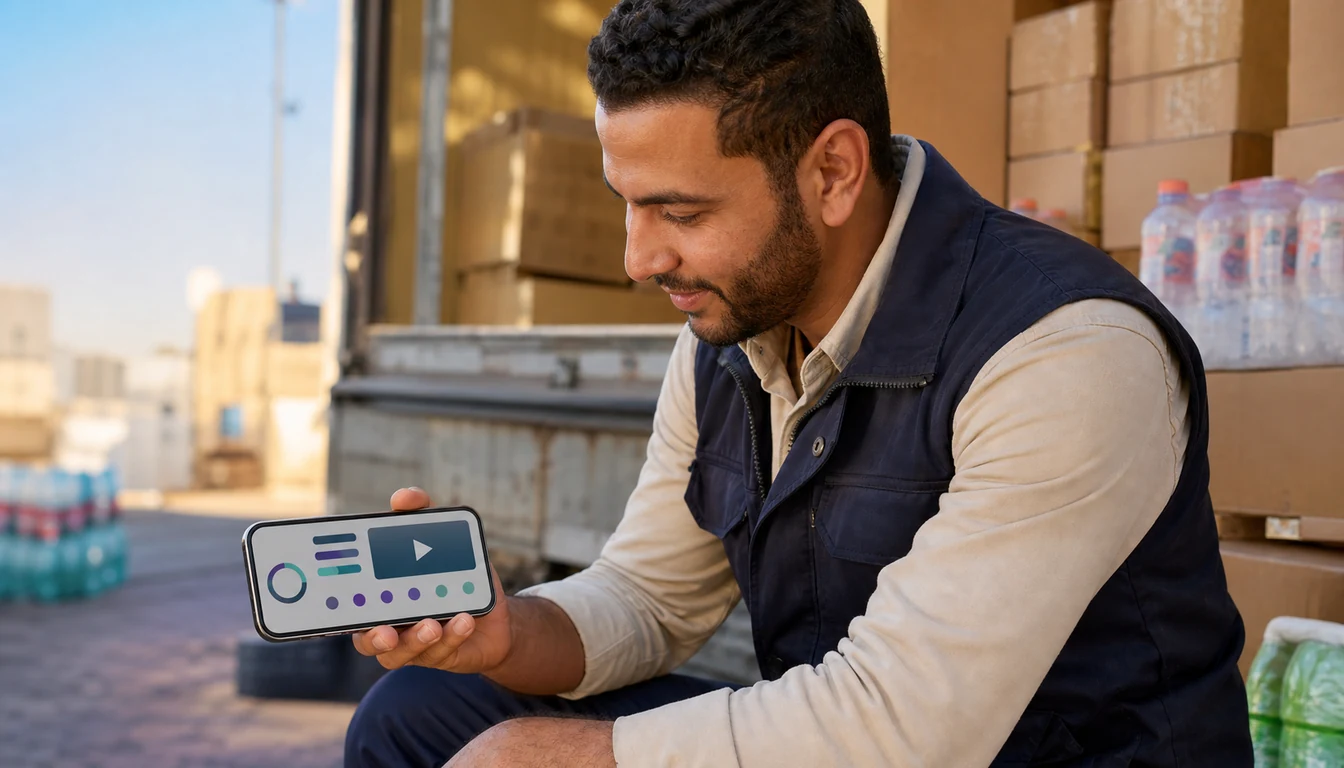
The second piece is reducing how much reading a rep has to do at all. Icon-led navigation, clear visual states and short Arabic labels let a rep recognise a screen at a glance rather than parsing a sentence, which matters as much for a rep with limited formal schooling as for one who simply wants to move fast between outlets. Onboarding materials built this way, video and voice-led modules recorded in spoken Egyptian Arabic rather than a script translated line by line, land closer to how a rep actually talks and sells on a route through dense city streets or a scattered rural governorate.
The Payoff: Faster Onboarding and Cleaner Data
The case for Arabic-first is not abstract. It shows up in two numbers any sales operation already tracks: how long a new rep takes to become fully productive, and how clean the data coming back from the field actually is.
Onboarding speed improves because a rep learning in their working language is doing one job, not two. They are absorbing the pitch, the scheme rules and the app flow directly, rather than first decoding an unfamiliar screen and only then working out what it is asking them to do. That gap widens further outside Cairo, Alexandria and Giza, where English fluency thins out and internet connectivity across parts of Upper Egypt and the Delta is noticeably patchier, making an offline-ready, icon-led experience less of a convenience and more of a requirement.
Data quality improves for a more direct reason: a rep who understands the screen makes fewer wrong selections. Correctly identifying a scheme, logging the right visit outcome or picking the right reason code stops being a guess, and the records a supervisor pulls at the end of the week start reflecting what actually happened on the route rather than what a confused rep clicked closest to what they meant.
A Practical Sequence for Moving to Arabic-First
Rebuilding a training programme and an app's navigation around Arabic does not need to happen in one sweep. A staged sequence keeps it manageable and lets each region prove the approach before the next one starts.
- Audit the current app and training library for screens and lessons that are English source content with a translation layer on top, rather than material built in Arabic from the start.
- Write new onboarding scripts and quiz questions natively in Arabic, using people who actually sell on the beat to review tone, not only formal translators.
- Rework navigation to run right to left, with icon-led wayfinding for the screens reps touch most often, such as visit logging, order capture and scheme selection.
- Pilot the rebuilt flow with one team of new hires and compare their time to full productivity against the previous cohort trained on the translated version.
- Roll out region by region, prioritising Upper Egypt and the rural Delta first, where English fluency is thinnest and the gap in comprehension is widest.
- Keep tracking pass rates and data-entry accuracy as the programme scales, and correct any lesson that keeps producing wrong answers.
What to Measure So the Investment Proves Itself
A handful of honest metrics will tell you whether the shift to Arabic-first is actually working, well before anyone needs to argue about it in a review meeting.
- Time to full productivity for new hires, measured from first day in the field to hitting a normal call and conversion rate.
- Data-entry error rate on SKU selection, scheme codes and visit outcomes, which usually falls sharply once a rep is no longer guessing at an unfamiliar menu.
- Quiz pass rates on the first attempt, comparing Arabic-first modules against any translated modules still running in parallel during a transition.
- Supervisor support requests tied to "which button" confusion, a rough but telling signal of where the interface is still fighting the rep.
How 1Channel Helps Deliver Arabic-First Field Training
Rebuilding navigation and training content around Arabic by hand, across a mixed urban and rural field force, is a heavy lift for an internal team to carry alone. A platform built to hold both language tracks and the underlying data together makes the transition far more manageable.
The system supports Arabic-first field operations end to end, from how a rep learns a new pitch to how their visit data lands back with a supervisor. For Egyptian field teams specifically, that means:
- Right-to-left, icon-led mobile navigation for order capture, visit logging and scheme selection.
- Training and onboarding content that can be authored and delivered natively in Arabic, not bolted on as a translation layer.
- Quizzes, certificates and level-based progression in the language a rep actually learns in.
- Offline-ready delivery so training and app data both survive patchy connectivity in Upper Egypt and rural Delta governorates.
- Centralised reporting that lets supervisors track onboarding speed and data accuracy by region as the rollout scales.
Train Your Field Force the Way They Actually Work
See how 1Channel's Sales Team LMS delivers Arabic-first, right-to-left, icon-led training and onboarding built for reps working baqalas, souqs and routes across Cairo, Alexandria, Upper Egypt and the Delta.
Explore the Sales Team LMS →FAQs
Is Arabic-first training just translation done properly?
No. Translation swaps the words inside an English-built structure, while Arabic-first means the layout runs right to left, navigation is icon-led rather than text-heavy, and the training content is authored in Arabic from the start rather than converted from an English script.
Do reps in Cairo and Alexandria need this as much as rural teams?
Yes, though the gap is widest outside the big cities. Even where English literacy is stronger, the working language on a baqala counter or a wholesale stall is Arabic, so a right-to-left, icon-led interface still speeds up onboarding and cuts errors for urban reps.
What is the clearest sign that a translated-only setup is causing problems?
Watch for a steady stream of supervisor calls asking which button does what, new hires taking longer than expected to hit normal targets, and a pattern of miskeyed SKUs or scheme selections that look like clean data but do not match what happened on the visit.
Should existing training content be rebuilt or just re-translated?
Rebuild the material reps actually use in the field, pitch scripts, app navigation and onboarding lessons, natively in Arabic. Back-office and management-facing content can often stay in English, since that audience is more consistently bilingual.
How long does moving a programme to Arabic-first usually take?
Most teams treat it as a staged rollout rather than a single switch, piloting with one cohort, measuring the change in onboarding speed and data accuracy, then extending region by region. Prioritising Upper Egypt and rural Delta routes first tends to show the clearest early gains.