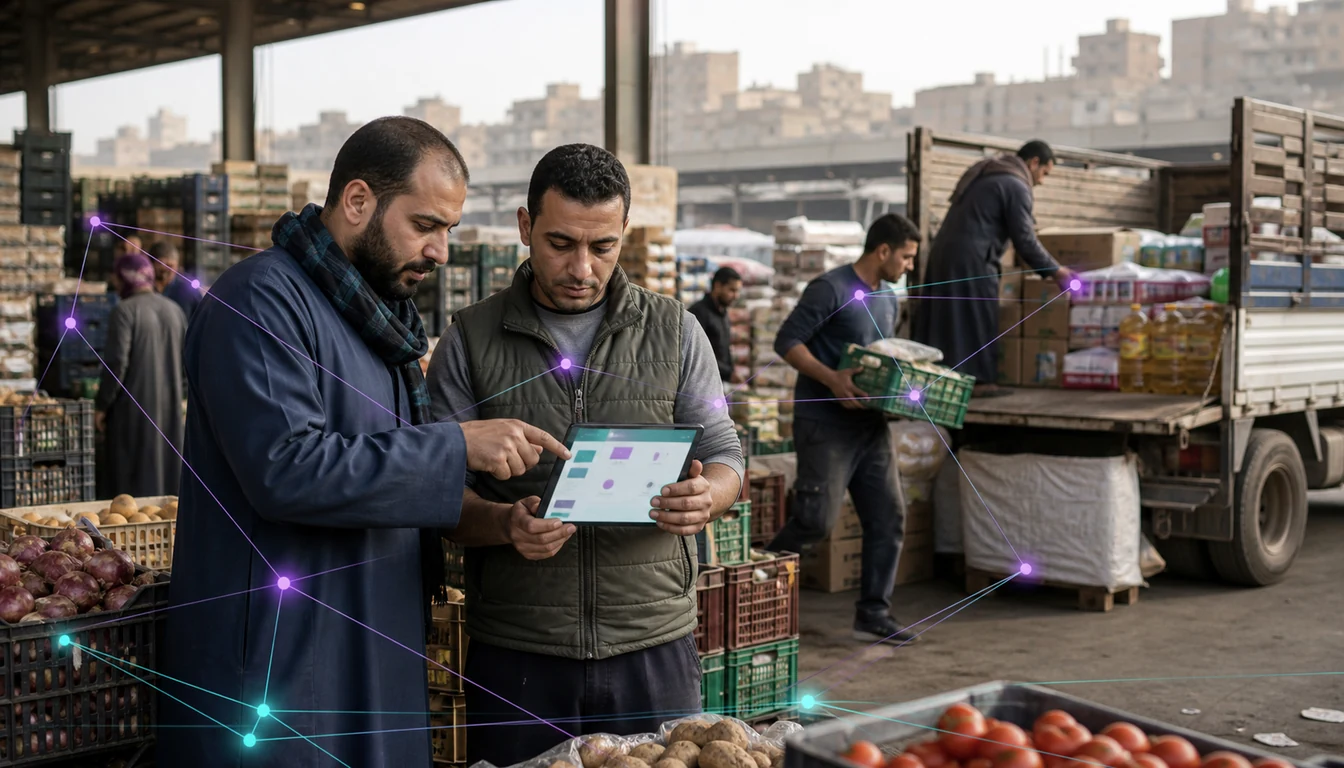
Execution means something different depending on which aisle a shopper is standing in. Inside a Carrefour Egypt hypermarket in Giza or a Kazyon branch in Alexandria, execution means a planogram followed to the shelf, a promotional end-cap built to brief, and a share-of-shelf figure a category manager can defend on a call with head office. A short drive away, at a baqala counter stocked with everything from soft drinks to phone credit, execution means something plainer: is the brand actually there, can a passer-by see it from the street, and is the shopkeeper selling it at the price the label promises.
Most FMCG, pharmaceutical and building-materials brands selling into Egypt build their retail execution programme around the first definition, then try to stretch it over the second. That approach tends to fail, because the baqala network is where the overwhelming majority of the country's grocery sales value still moves, spread across a vast number of small, independently run shops across Cairo, Alexandria, Giza and every governorate beyond them. Modern trade names such as Spinneys Egypt, Seoudi, Fathalla Market, Hyperone and Metro Markets are genuinely expanding, but they remain the smaller, faster-growing half of the picture.
The gap between those two definitions of execution is what most audit programmes get wrong, and it usually shows up the same way: a tidy compliance score from the organised chains sitting next to an unmeasured, unverified traditional channel that is actually carrying most of the volume. Closing that gap, with one consistent audit system rather than two incompatible ones, is what the rest of this article works through.
Two Tiers, Two Different Ideas of Execution
On a planning slide, "run a merchandising audit" looks like a single task. On the ground in Egypt it is two different jobs wearing the same name, and treating them identically is the fastest way to end up with an execution score that looks healthy while sell-through stays flat.
Modern Trade: Planogram Compliance and Share of Shelf
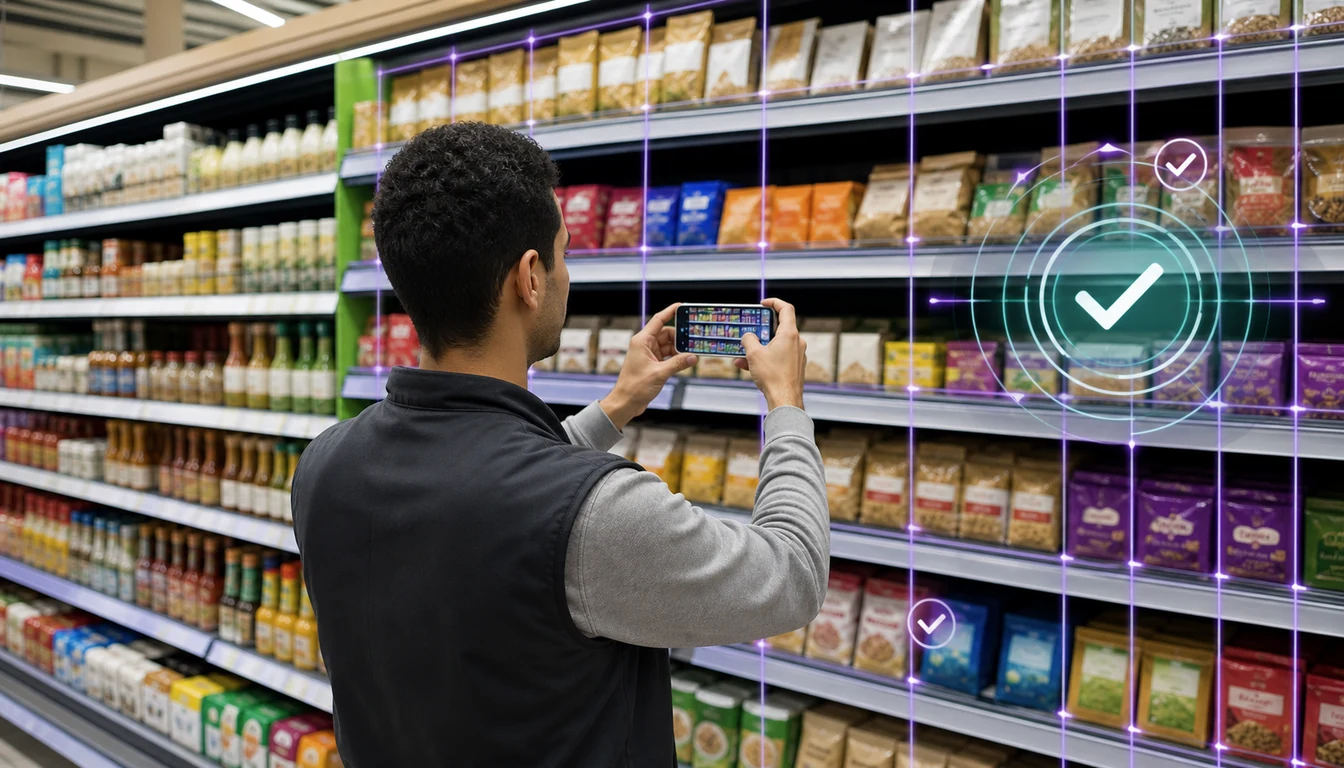
Inside a Carrefour Egypt, Spinneys Egypt or Kazyon branch, the audit question is compliance to an agreed layout. Reps check planogram adherence, facings and share of shelf, on-shelf availability against the agreed listing, and whether promotional pricing and secondary displays match what the category plan called for. These outlets are addressed, well lit and generally have power and connectivity, so the constraint is not signal or electricity. It is consistency: the same branch audited by two different reps, on two different weeks, should return the same score against the same rubric.
Traditional Trade: Presence, Visibility and Price at the Baqala Counter
At a baqala, there is usually no planogram to comply with, so the questions have to change shape. Is the brand physically present on the shelf or behind the counter. Is any point-of-sale material actually deployed, not just delivered. Is a branded fridge or cooler stocked with your product rather than a competitor's. Is the baqala owner selling at, above or below the price your team assumes.
The deeper risk at this tier is trust rather than layout. In a cash-heavy, low-documentation channel, a rep can report that a poster was hung or a cooler was branded when neither happened, and nothing in a tick-box form will catch it. An audit designed for the baqala tier has to assume that gap exists and build proof into the workflow from the start, not bolt it on afterwards.
What a Merchandising Audit Should Actually Capture
A useful audit measures a small number of things well, rather than a long checklist filled in half-heartedly at the end of a long day. Across both modern and traditional trade in Egypt, the core metrics narrow down to roughly five.
- Availability. Is the SKU physically on the shelf or behind the counter, and are the priority packs, often the smallest or lowest-priced format that drives volume at the baqala tier, actually in stock rather than merely listed.
- Visibility. Point-of-sale material deployed and intact, whether that is a branded cooler and poster at a baqala or a gondola-end display at a hypermarket, verified with a photo rather than a tick.
- Price compliance. The retailer's actual selling price against the recommended price, captured consistently in EGP so a distributor can spot under-cutting or margin erosion across a market cluster rather than outlet by outlet.
- Share of shelf and counter space. How much visible space the brand holds against competitors, which matters as much on a narrow baqala counter as it does on a supermarket gondola.
- Freshness and condition. Expiry dates, damaged packaging and dusty stock, which protects the shopper and protects the brand's standing with retailers who remember which supplier sends tidy stock.
Whatever gets measured needs to be defined once, centrally, and applied the same way whether the outlet is in New Cairo or a back street in Upper Egypt. A supervisor scoring visibility one way in Giza and another way in Alexandria produces data nobody can act on.
Photo-Based Proof and Consistent Audit Scoring
No audit programme survives Egyptian field conditions unless it can run offline. Connectivity is strong across Cairo, Alexandria and Giza, but it thins noticeably once a rep moves into rural Delta governorates or Upper Egypt, where a route may run for hours between reliable signal. An offline-first workflow that lets a rep open the outlet, complete the audit and capture geotagged photo proof entirely offline, then sync automatically once signal returns, is not a nice-to-have here. It is the difference between a real coverage number and a guess filled in from memory that evening.
Photos matter for a second reason beyond connectivity: they are what turns a self-reported tick into something a supervisor can actually verify. A single-layer, self-scored audit cannot catch a poster that was never hung or a cooler branded only on paper. A staged review does. In practice this works as a short chain rather than one person's word.
- Field capture. The rep or merchandiser completes the audit at the outlet and submits geotagged photos as first-line evidence, whether the outlet is a Metro Markets branch or a baqala on an unnamed side street.
- Supervisor review. A territory supervisor checks the submitted proof, rejecting blurred, reused or obviously staged images before they count towards a score.
- Brand or agency sign-off. A final reviewer confirms execution quality before any activation is marked complete and any incentive tied to it is released.
Outlets also open, close and relocate constantly at the baqala tier. The scoring model needs an honest way to flag a closed or relocated outlet with a documented reason, so it drops out of the coverage calculation instead of quietly dragging the whole territory's number down.
Why Brands Need One System Across Both Tiers, Not Two
It is tempting to run one lightweight process for organised retail and a separate, looser one for the baqala network, on the theory that the two channels are different enough to deserve different tools. In practice this is where most execution visibility quietly disappears. Two systems mean two data models, two scoring conventions and, usually, a head-office dashboard that only ever shows the tidier half of the picture.
A single system built around one outlet database, one scoring engine and channel-specific question sets solves this without pretending the two tiers are the same. It also connects execution to the rest of the field operation rather than leaving it as a standalone checklist. Coverage plans matter here: dense clusters around Cairo's older commercial streets need beat planning that reflects how a rep actually walks a block, not a straight line on a map, while sparser Upper Egypt routes need a plan built for distance rather than density.
The payout side matters just as much. Execution incentives only change behaviour if they reach the retailer cleanly and quickly. As collections shift toward InstaPay and Fawry alongside cash, a verified audit can trigger a reward the baqala owner actually trusts, rather than an incentive that gets diluted somewhere along the distributor chain. Tying any retailer loyalty reward to supervisor-approved proof, rather than a rep's own claim, also removes much of the incentive to fake execution in the first place.
Pitfalls That Undermine Audit Programmes
Most failing audit programmes trip over a small, repeatable set of mistakes. Watch for these before they quietly erode the quality of the data.
- Copying a modern-trade checklist onto the baqala tier. A planogram question means nothing at a counter with no planogram. Ask about presence, visibility and price instead.
- Trusting ticks over photos. In a cash-heavy, low-documentation channel, unverified self-reporting invites exactly the phantom execution it is meant to prevent.
- Assuming connectivity everywhere. If the app cannot capture a full audit offline, reps in Upper Egypt or the rural Delta will skip outlets or reconstruct visits from memory.
- Punishing honest reporting. If flagging a closed or relocated outlet damages a rep's score, they will stop flagging it, and coverage numbers stop meaning anything.
- Running an over-long checklist. A forty-question audit completed carelessly is worse than a six-question audit completed the same way, every time, everywhere.
How 1Channel Helps Egyptian Retail Teams Run Audits That Hold Up
Retail execution in Egypt is not a question of importing a shelf-compliance model built for supermarkets and hoping it stretches to cover a baqala counter. It is a question of designing one audit system that flexes by channel while still reporting into a single, comparable dashboard.
The platform behind 1Channel's Cloud AI Retail Execution offering is built around exactly that requirement: offline-capable, proof-driven, and able to score a Carrefour Egypt branch and a baqala on the same underlying model without forcing either one into the wrong questions.
- Offline audit capture with geotagged photo proof that syncs automatically once signal returns
- Channel-specific question sets, planogram-led for modern trade and presence-led for the baqala tier, scored on one shared framework
- Multi-level review workflow to catch staged photos and unverified claims before they count
- Merchandising drives with a defined outlet list, POSM brief and reference images, tracked to completion
- Price, availability and share-of-shelf tracking captured consistently in EGP across every outlet type
Run Retail Execution That Holds Up Across Egypt
See how the platform's retail execution software runs merchandising drives, photo-verified audits and consistent scoring across supermarkets, hypermarkets and the baqala network, all from one dashboard.
Explore Retail Execution Software →Key Takeaways
- Define execution per tier. Modern trade needs planogram and share-of-shelf discipline; the baqala tier needs presence, visibility and price checks instead.
- Make proof the default. Geotagged photos, not ticks, are what stop phantom POSM and staged compliance in a cash-heavy channel.
- Design for patchy connectivity. Offline-first capture with automatic sync is essential once routes move beyond Cairo, Alexandria and Giza.
- Score on one framework. Channel-specific questions are fine; a single scoring model and dashboard keep the numbers comparable.
- Build an honest bypass. Reps need a clean way to flag closed or relocated outlets without being penalised for accuracy.
- Tie payouts to verified execution. Rewards released against approved proof, not a rep's claim, keep both retailers and reps honest.