Egypt's digital infrastructure plans moved from ambition to instruction on 19 September.
President Abdel Fattah Al-Sisi directed a wider 5G rollout, larger data centres, and heavier investment in cloud computing and artificial intelligence.
The knock-on effects reach commercial teams in FMCG, Retail and Modern Trade, Pharma and Healthcare, and Logistics and Field Services.
This post covers what was directed, why local hosting changes the data question, and what better coverage means for reps on the street.
What Was Directed in Cairo
The directives came out of a meeting with Prime Minister Mostafa Madbouly, Communications and Information Technology Minister Raafat Hindi, and the Armed Forces Signals Department.
- A wider 5G rollout, with emphasis on network resilience and reduced concentration risk.
- Greater investment in cloud computing and artificial intelligence, alongside expansion of large-scale data centres.
- Progress reviewed on Karnak, the national AI programme covering digital sovereignty and Arabic-language generative models.
- Targets of $8bn in digital exports by 2028 and $12bn in digital outsourcing exports by 2029.
- A goal of 120 companies operating in electronics design by 2030.
A digital-skills initiative called Digilians and an expanded unified government services card were also reviewed.
Why In-Country Hosting Matters Commercially
Distributors here already push every B2B invoice through the Egyptian Tax Authority portal before it is legally valid.
Procurement teams increasingly ask a second question after that one: where the underlying records physically sit.
More domestic data centre capacity makes the local-hosting answer easier to give, and cheaper to arrange.
It does not change what a buyer's auditor eventually wants, which is a complete and attributable record of each transaction.
What Wider Coverage Changes for Field Teams
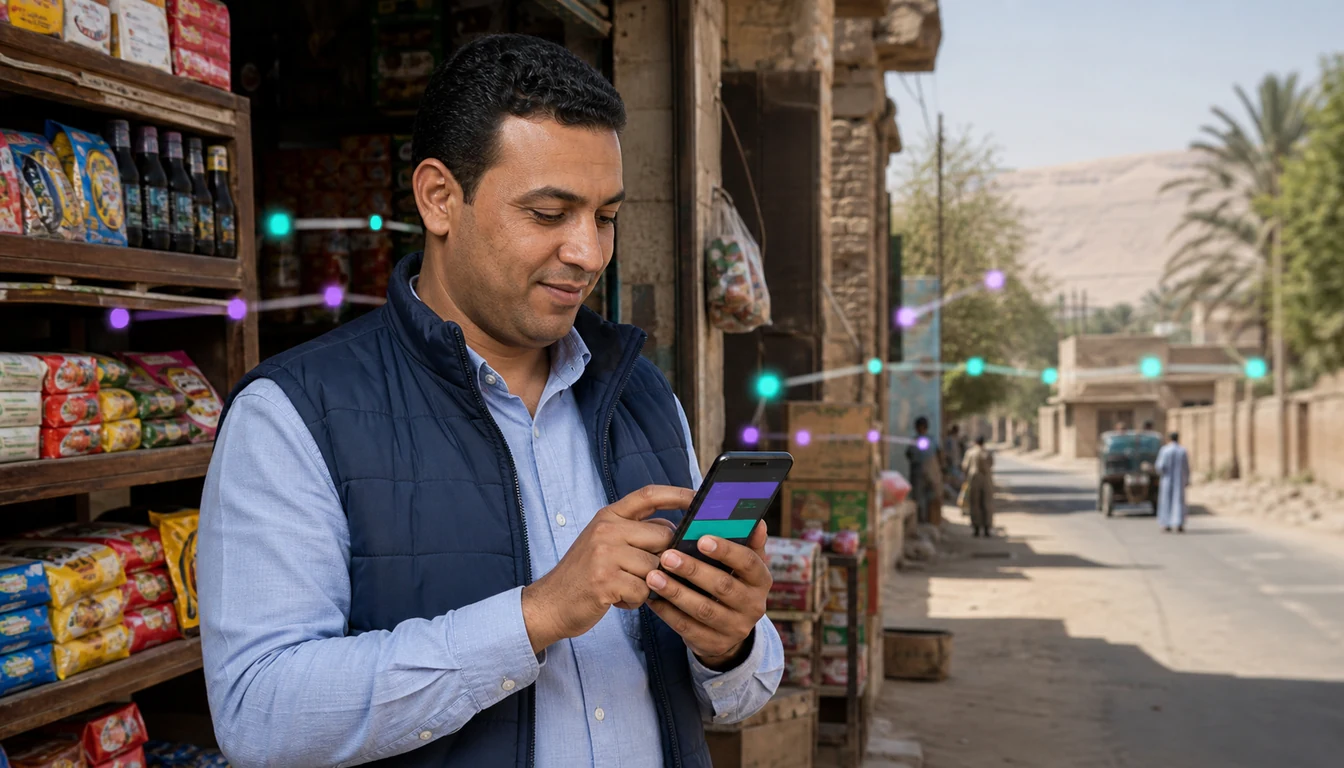
Reps working baqala routes through Greater Cairo and the Delta lose signal several times a day.
Better coverage shortens the gap between an order being taken and the back office seeing it.
It does not remove the need for software that keeps working when the signal bar drops to nothing.
The resilience emphasis in the directive is the more interesting half for anyone running daily field operations.
How 1Channel Keeps Field Work Running on Cloud Infrastructure
1Channel runs orders, visits, stock and claims on one cloud platform, with automation handling routine approvals and escalations.
The mobile app captures work offline and synchronises when a connection returns, so a coverage gap never costs a day of data.
See What Cloud-Based Distribution Looks Like
See how distributors in Egypt run planning, ordering and collections on infrastructure that scales with demand instead of sitting in a back room.
Explore AI-Powered DMS →Key Takeaways
- The state has directed wider 5G coverage, larger data centres, and more investment in cloud and AI.
- Local hosting capacity makes data residency questions easier to answer during B2B procurement.
- Better coverage shortens sync delays, but it does not replace offline-capable field software.
- The records that satisfy an auditor are the same ones that make AI-assisted planning reviewable.
Source: Daily News Egypt