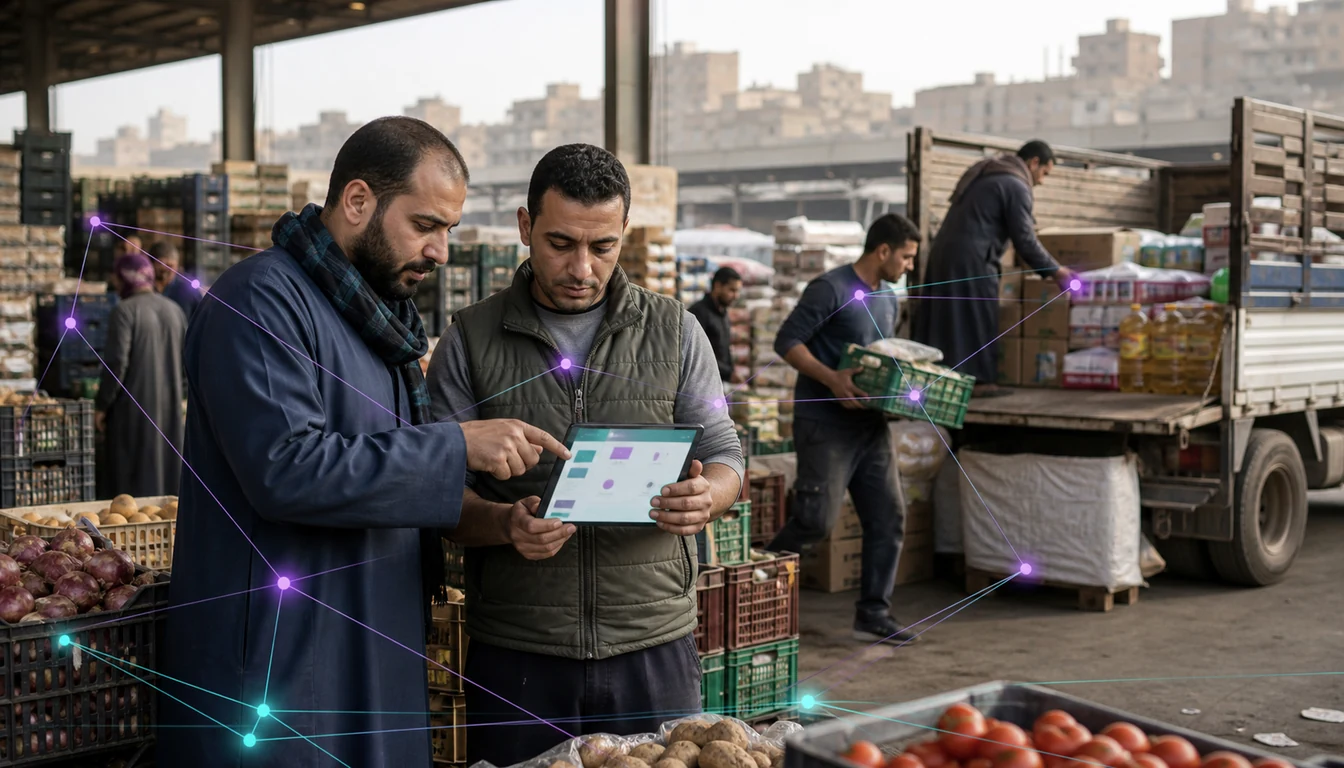
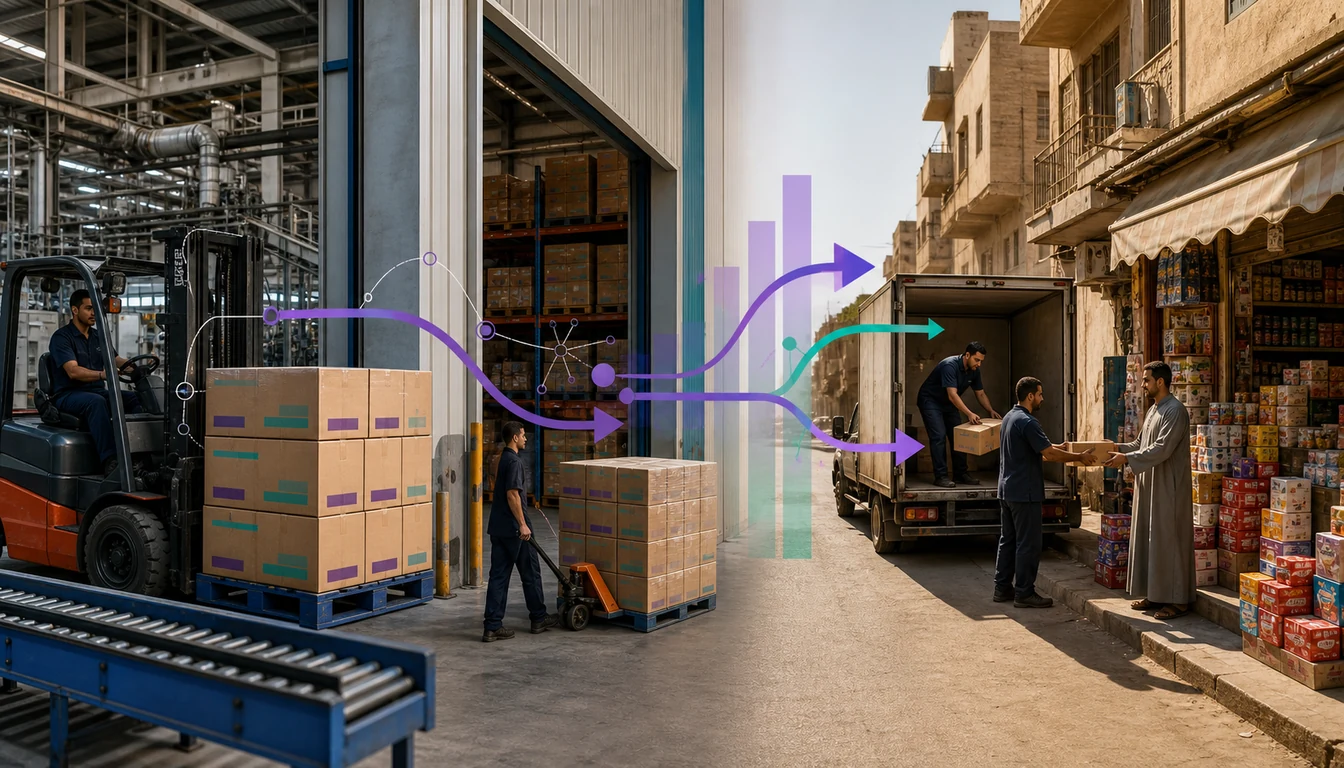
Batch and expiry tracking sits at the intersection of two disciplines Egyptian distributors have historically kept apart: warehouse operations and tax compliance. For FMCG and pharmaceutical companies moving stock through Cairo, Alexandria and Giza and out into the baqala network beyond, those disciplines are converging faster than most back-office systems were built to handle.
The Egyptian Tax Authority's e-invoicing and e-receipt system has been rolling out in stages since 2020, and it keeps widening the range of businesses required to issue invoices through it rather than on paper. That single fact changes what "batch tracking" means in Egypt. It is no longer only a warehouse discipline for avoiding write-offs and handling recalls cleanly; increasingly, it is a record that has to reconcile against the invoice line the tax authority already holds for that transaction.
This matters most in two sectors. Egypt manufactures most of the medicine it consumes domestically, and packaged food and drink is one of the country's biggest markets, both filled with batch-numbered, shelf-life-sensitive products. This piece covers why that visibility matters now, how it ties into e-invoicing records, what first-expiry-first-out discipline requires on the warehouse floor, and what goes wrong without it.

Why Batch and Expiry Visibility Matters More in Egypt Now
Egypt's pharmaceutical market is large and, unusually for the region, mostly homegrown: domestic manufacturers cover roughly nine in every ten units consumed in the country. That is good for supply security, but it also means a larger share of batch-level accountability sits with Egyptian distributors rather than an importer elsewhere. When a manufacturer in an industrial zone such as 6th of October City or 10th of Ramadan City releases a batch, what happens next is largely a distribution problem, not a manufacturing one.
FMCG carries a version of the same exposure without the same regulatory intensity. Dairy, juices, bakery items, personal care and packaged foods all move through the same route to market, and all have a shelf life ticking whether or not anyone is watching. Add a chain running from a central Greater Cairo warehouse out to baqalas and smaller wholesalers, sometimes via a souq, and a batch can sit far longer than planned before it reaches a shelf.
Poor visibility shows up as two related costs: a recall that cannot be scoped tightly, so it gets scoped too widely at real expense, and slow-moving stock that quietly crosses its shelf life before anyone notices. Both are what happens by default when batch data lives in a paper goods-received book or a spreadsheet nobody reconciles against the warehouse floor.
How Batch Data Ties Into Egypt's E-Invoicing Records
The Egyptian Tax Authority's e-invoicing and e-receipt system is in force, not upcoming, and it keeps widening the population of businesses required to issue invoices through it. The invoice line that used to sit in a paper ledger or a basic accounting package is now a structured, authority-facing record with its own reference and lifecycle.
Once invoicing is digital and mandatory, it becomes far more useful to link a batch number to the invoice it moved on. A distributor already capturing batch and expiry at goods receipt, and carrying it through dispatch, can attach the same reference to the ETA-facing invoice line without extra rekeying, giving finance an audit trail that matches what the tax authority already holds.
Distributors who treat batch capture and e-invoicing as disconnected systems tend to duplicate effort, entering the same product detail once for the warehouse and again for the invoice, with room for the records to drift apart. A distributor management system that keeps stock, orders and invoicing in one place removes that duplication, and building the alignment now costs far less than retrofitting it once every counterparty expects a digital invoice as standard.
Mapping the Batch Through the Distribution Chain
A batch does not get lost at one dramatic point. It leaks out of view gradually, one handoff at a time, unless something forces it to stay attached to the record at every step.
Capture the Batch at Goods Receipt
The discipline starts before a single unit is sold. Whether stock is manufactured domestically or brought in through the ports the Suez Canal corridor feeds, such as Alexandria, Damietta and Port Said, the batch number, manufacturing date and expiry date should be recorded per line on the goods received note before anything is put away.
Skip that step and every later record is a guess dressed up as data. Getting it right at inward ties every pallet to a real batch and expiry rather than just a SKU count, and starts the near-expiry countdown the moment stock lands.
Keep the Batch Attached Through Dispatch and Secondary Sales
Once stock is in, the batch has to travel with it. When a consignment leaves for a wholesaler in Alexandria or a sub-distributor in Upper Egypt, the invoice and delivery note should already carry the batch reference, not just the SKU and quantity.
When a field rep books an order at a baqala, the system should already know which batch is being allocated, rather than leaving it to whichever carton sits nearest the door. That is what makes it possible to trace a batch forward to the outlets that received it, and backward from a complaint to the consignment it came from, using the same outlet records the field team already updates on every visit.
FEFO Discipline and the Rules That Keep Stock Moving
Deciding which batch leaves the warehouse first is the most direct lever a distributor has against expiry loss, and it works best as a rule rather than a habit.
| Rule | Which batch leaves first | Best for |
|---|---|---|
| FEFO (First Expiry, First Out) | Batch closest to expiry | Pharma, dairy, juices, bakery and other perishables |
| FIFO (First In, First Out) | Oldest received batch | Stable, long-shelf-life lines where receipt order tracks age closely enough |
| LIFO (Last In, First Out) | Newest received batch | Rare; generally the wrong choice for anything shelf-life sensitive |
| Manual selection | Operator picks by hand | Targeted recalls, or clearing one near-expiry batch to a chosen outlet |
Most Egyptian FMCG and pharma distributors do best setting FEFO as the default for anything perishable and letting stable lines run on FIFO, with manual override kept for exceptions, so a warehouse team in Giza or Alexandria is never picking batches from memory under pressure. Batch management software that enforces the rule automatically, rather than trusting a picker to remember which carton arrived first, is what turns FEFO from policy into practice.
The Operational Risk of Getting This Wrong
Picture a distributor supplying pharmacies and baqalas across Cairo and Giza who is told that one batch of an over-the-counter product must be pulled from the market. With batch discipline in place, the trail is short: the batch was logged at goods receipt, dispatch records show exactly which wholesalers and outlets received it, and a targeted pull-back goes out within hours.
Without that discipline, the same distributor knows only a monthly sales total spread across dozens of customers, leaving a choice between recalling everything at real cost or hoping the affected units were never sold, which is not a plan worth putting in writing.
Expiry write-offs are the quieter version of the same failure. Stock that looked fresh at dispatch can be near the end of its shelf life by the time it clears a sub-distributor and reaches a baqala shelf, particularly on routes toward the Delta or Upper Egypt, where a single trip covers more ground and time. Combined with the credit already extended to baqala owners, an unplanned write-off is a hit to cash already tied up in outstanding baqala credit.
A few habits reliably produce this outcome:
- Tracking at SKU level only. Knowing you hold a certain number of cartons without knowing their batches means you cannot recall or run FEFO with confidence.
- Capturing the batch at sale instead of at goods receipt. By the time a batch reaches a sale, it is too late to plan around its expiry.
- No batch reference on the invoice or delivery note. The trail breaks at the first handoff to a wholesaler or sub-distributor.
- Near-expiry alerts that reach no one in particular. An alert nobody owns is functionally the same as no alert.
Making Batch Discipline Work on the Ground in Egypt
Built for a Baqala-Led Route to Market
Traditional, independent grocery outlets still carry the large majority of Egypt's grocery sales value, even as organised chains such as Carrefour Egypt, Kazyon and Seoudi keep expanding. Any batch or expiry process has to work at baqala scale: small, frequent orders across a dense network of shops, not a handful of large accounts. Digitising the wholesaler and baqala network so outlet-level orders carry a batch reference is what makes the whole chain traceable, not just the warehouse end of it.
Arabic-First, Not Just Arabic-Translated
Field reps working baqalas in Cairo's side streets or the rural governorates of the Delta and Upper Egypt are not reliably comfortable in English, so a workflow that only makes sense on a translated screen gets worked around. An Arabic-first field force experience, built for the language reps actually use, keeps batch capture accurate at the point where most of it happens.
Offline-First for the Connectivity Gap
Connectivity in Greater Cairo is materially better than in rural governorates, and a batch-capture process assuming a live connection everywhere will fail on the longer routes toward the Delta and Upper Egypt. Batch capture and order booking need to run offline on the mobile app and sync once a signal returns, so a rep well outside Cairo keeps recording accurately instead of reaching for a paper notebook. The same visibility into primary and secondary sales is what makes that batch data trustworthy enough to act on.
How 1Channel Helps Egyptian FMCG and Pharma Distributors Track Batches and Expiry
Batch discipline only holds together when capture, allocation, invoicing and alerts live in one connected system, rather than split across a paper goods-received book, a spreadsheet and a separate invoicing tool. 1Channel brings the batch-to-invoice trail into a single platform built for Egyptian FMCG and pharma distribution.
It captures batches at goods receipt, keeps the reference attached through dispatch and secondary sales, and keeps working offline in baqalas and rural governorates where the network is not guaranteed.
- Record batch number, manufacturing date and expiry at goods receipt, per line, before stock is put away.
- Run FEFO, FIFO or manual allocation, set per SKU or across the whole warehouse.
- Flag near-expiry stock by batch and warehouse, and route the alert to the person who can actually move it.
- Carry the batch reference through to the invoice line, supporting alignment with ETA e-invoicing records rather than duplicating data entry.
- Keep batch capture and order booking working offline, syncing automatically once a signal returns.
Track Every Batch From Goods Receipt to Invoice
See how the platform captures batch and expiry data at receipt, runs FEFO automatically, and keeps that reference consistent through to the invoice line, even when the warehouse team is working offline.
Explore Batch & Expiry Software →FAQs
What must batch tracking actually capture for it to be useful during a recall?
At minimum, a distributor needs to know which specific batch went to which customer. That means recording the batch number and expiry date at goods receipt and keeping that reference attached through dispatch and secondary sales, so a recall traces to named outlets rather than an entire month of sales.
Does Egypt's e-invoicing mandate require batch numbers on the invoice itself?
The core e-invoicing schema does not force every seller to enter a batch field by law. What it does is turn the invoice into a structured, authority-facing digital record, so a distributor already linking batch numbers to invoices gains an audit trail matching the product and timing detail the authority holds for that transaction.
Should a distributor use FEFO or FIFO for warehouse stock?
Use FEFO for anything perishable, including pharma, dairy, juices and bakery items, because it pushes the batch closest to expiry out first. FIFO suits stable, long-shelf-life lines where receipt order tracks age closely enough. Set the default per SKU and keep manual override for recalls or targeted clearance.
How should batch tracking work when a rep is outside Cairo with no signal?
Batch capture and order booking should run offline on the mobile app and sync automatically once a signal returns. That way a rep working a route through the Delta or Upper Egypt keeps recording accurately, and the batch-to-outlet trail stays intact even where connectivity is patchy.
How does batch discipline protect margins, not just compliance?
The same records that let a distributor answer a recall in hours rather than days also surface near-expiry stock early enough to move it, discount it deliberately, or raise a claim. Capturing the batch at goods receipt, keeping it attached through every handoff and running FEFO where it counts turns compliance into a genuine margin advantage.