Field sales tools shaped around how Ghanaian distribution actually runs: van rounds, beat plans, GPS-checked visits and offline-capable reporting from Greater Accra to Upper West
Run field teams with offline mobile attendance, beat plans, outlet visits and real-time reporting
Custom questionnaires, field task tracking, offline data collection, and audit management
Beat plan creation, territory allocation, GPS-validated route compliance, and visit scheduling
40+ pre-built reports, custom report builder, real-time dashboards, and MTD sales tracking
GPS attendance, AI face validation, photo capture, late alerts, and payroll-ready closure
Leave types, balance tracking, approval policies, auto-allocation, and holiday calendars
Employee data, role assignments, organisation hierarchy, attendance status, and regularisation
Claim submission, expense heads, policy-based rules, approval workflows, and reimbursements
Create trade schemes, map to outlets and product categories, and track promotional performance
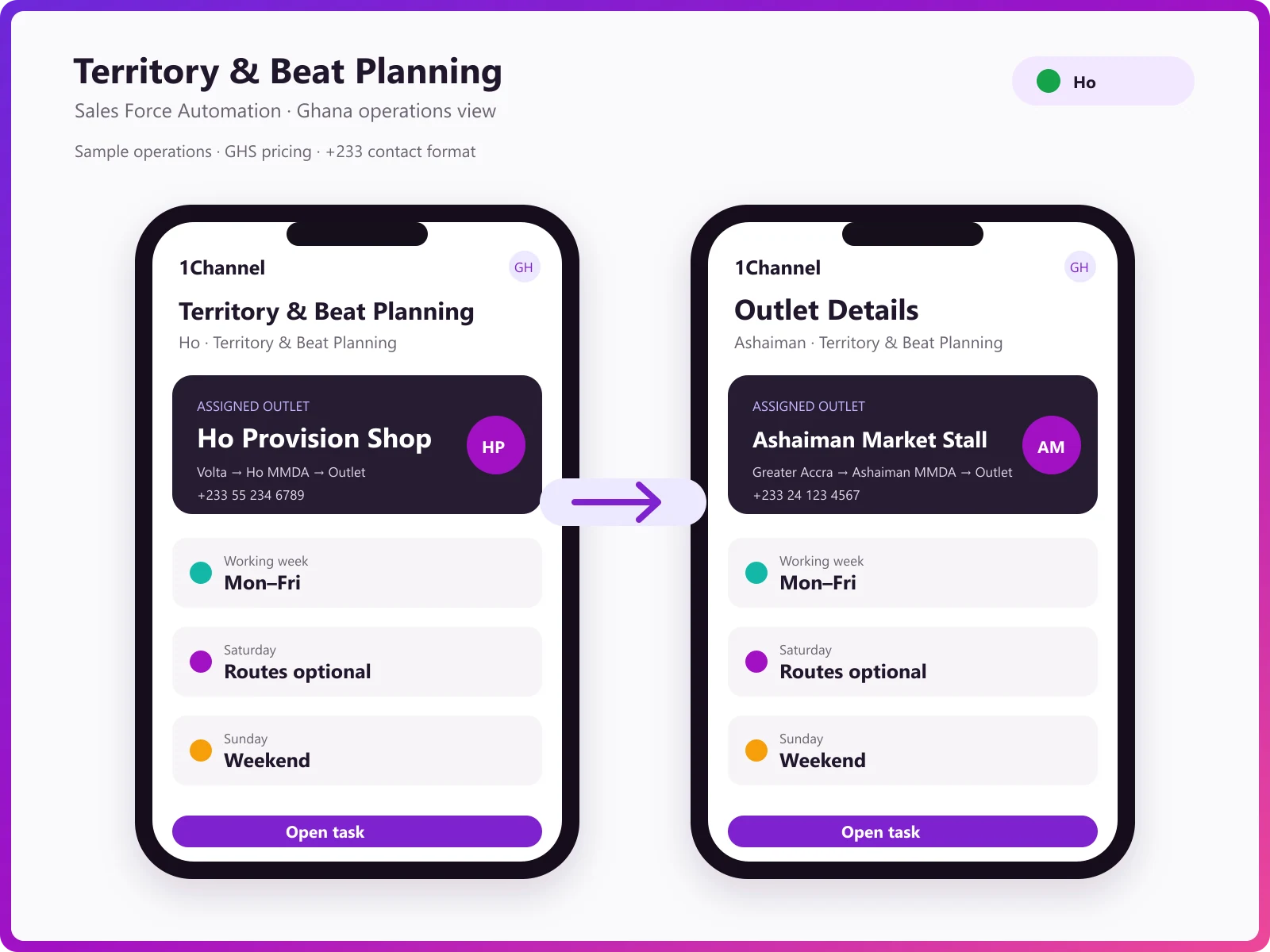
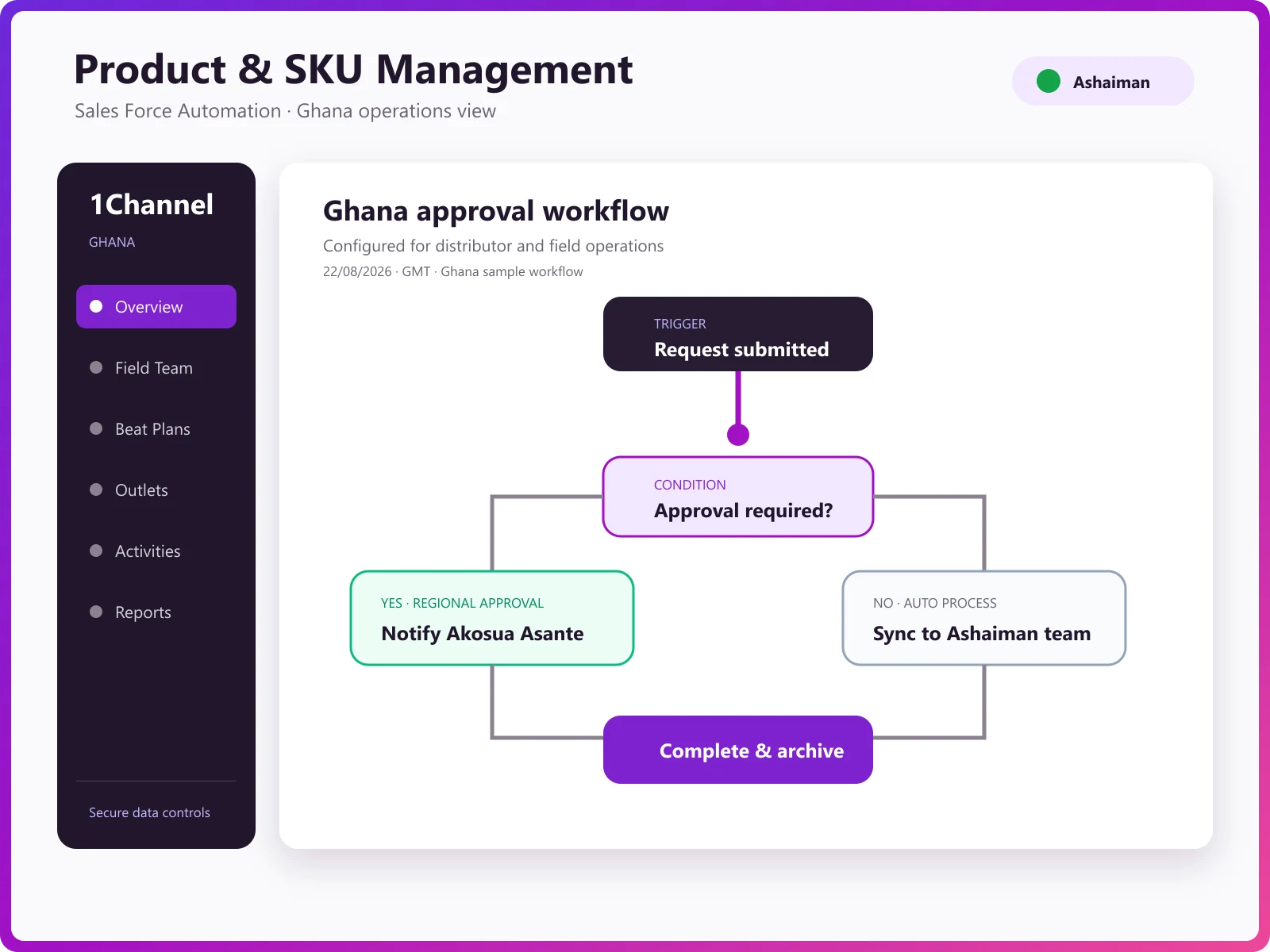
Setup begins in the portal: name your territory levels, decide which channels exist, and write the classifications that govern must-stock lists and call frequency. Outlets arrive either from a rep capturing one in the field or an admin importing a key distributor's file, each carrying a GPS pin and landmark note. Nothing reaches the live master until it clears approval. Approved outlets are geofenced and pushed to the rep, whose app holds the beat offline, and when a key distributor swaps a rep, the outlets transfer as a block with their history intact.
Our recognitions constantly motivate us to push the envelope of excellence and empower our customers with winning ideas each day.
Capture a shop on the spot while working a route, or load a key distributor's entire retailer file with every attribute already mapped.
Features:
Why It Matters:
A scattered traditional trade becomes a structured list you can plan against, in place of the notebook each representative keeps in their own shorthand.
Store a coordinate and a landmark note for every shop, then require the representative to be standing there before anything is recorded.
Features:
Why It Matters:
GhanaPostGPS is the official digital address standard, but adoption is patchy and directions are still given by landmark. A stored coordinate alongside a written landmark is what lets a replacement representative reach the same stall next week, and the geofence is what proves the visit happened there.
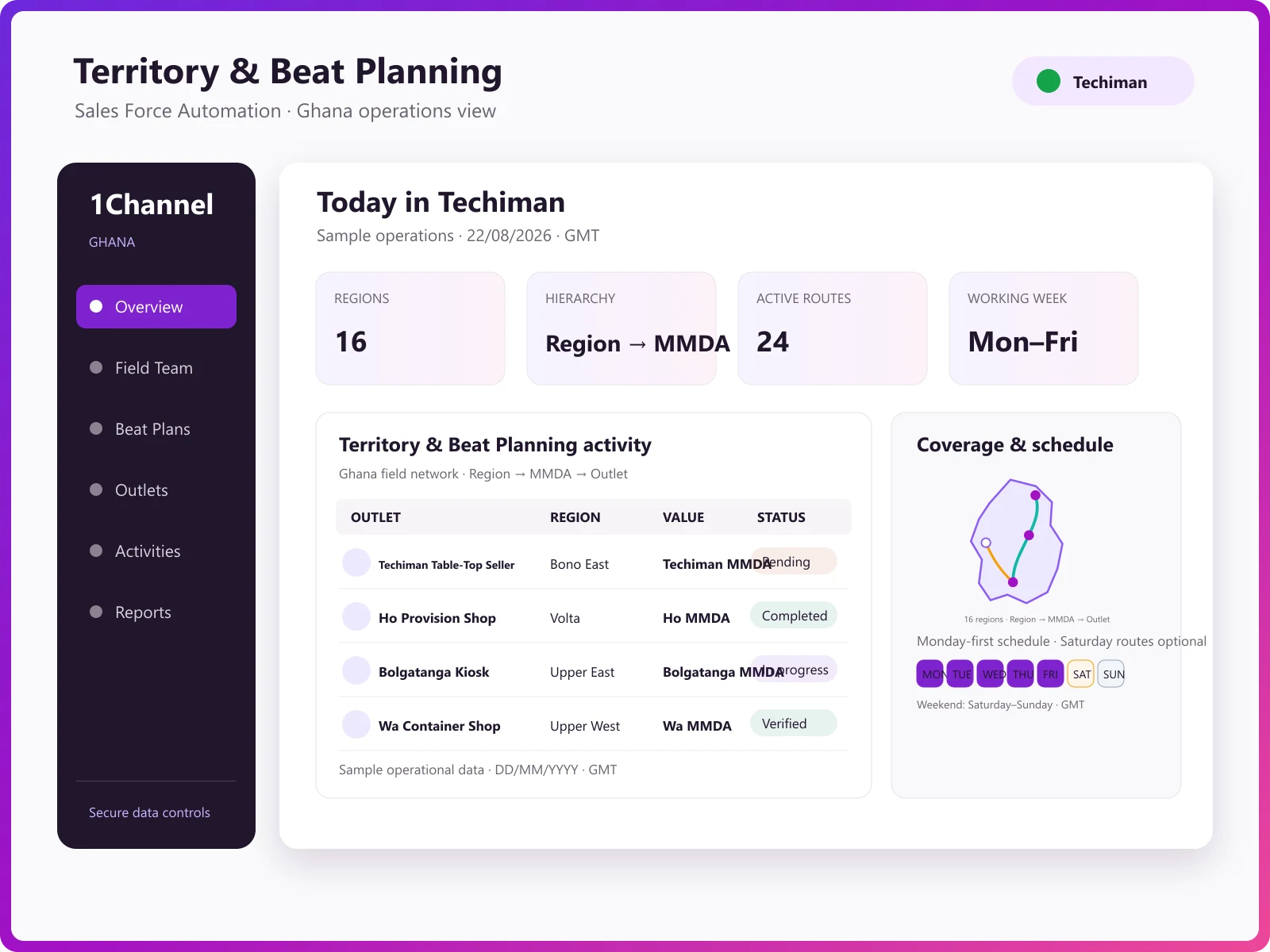
Group outlets by territory level, channel and category so coverage reads clearly at region, district and beat level.
Features:
Why It Matters:
Coverage economics are not uniform. A daily beat that pays for itself in Greater Accra or Ashanti will not pay in Upper West, and smaller towns trade on their own market-day cycle, so frequency belongs to the classification rather than to a national rule.
Give each outlet a single named owner, and screen new shops before they reach the live master.
Features:
Why It Matters:
Under the key distributor model the selling team belongs to the distributor, so faces change often. Ownership held at outlet level means the record, its history and its geofence pass to whoever takes the beat next.
Set operating rules on individual outlets and record why a call produced nothing.
Features:
Why It Matters:
A kiosk shut on a non-market day and a shop refusing to reorder are different problems. Reason codes separate the two while there is still time in the month to respond.
At 1Channel, we celebrate every step of our new customers journey, market of geography, or higher customer satisfaction score to become the preferred Field Sales CRM leader.