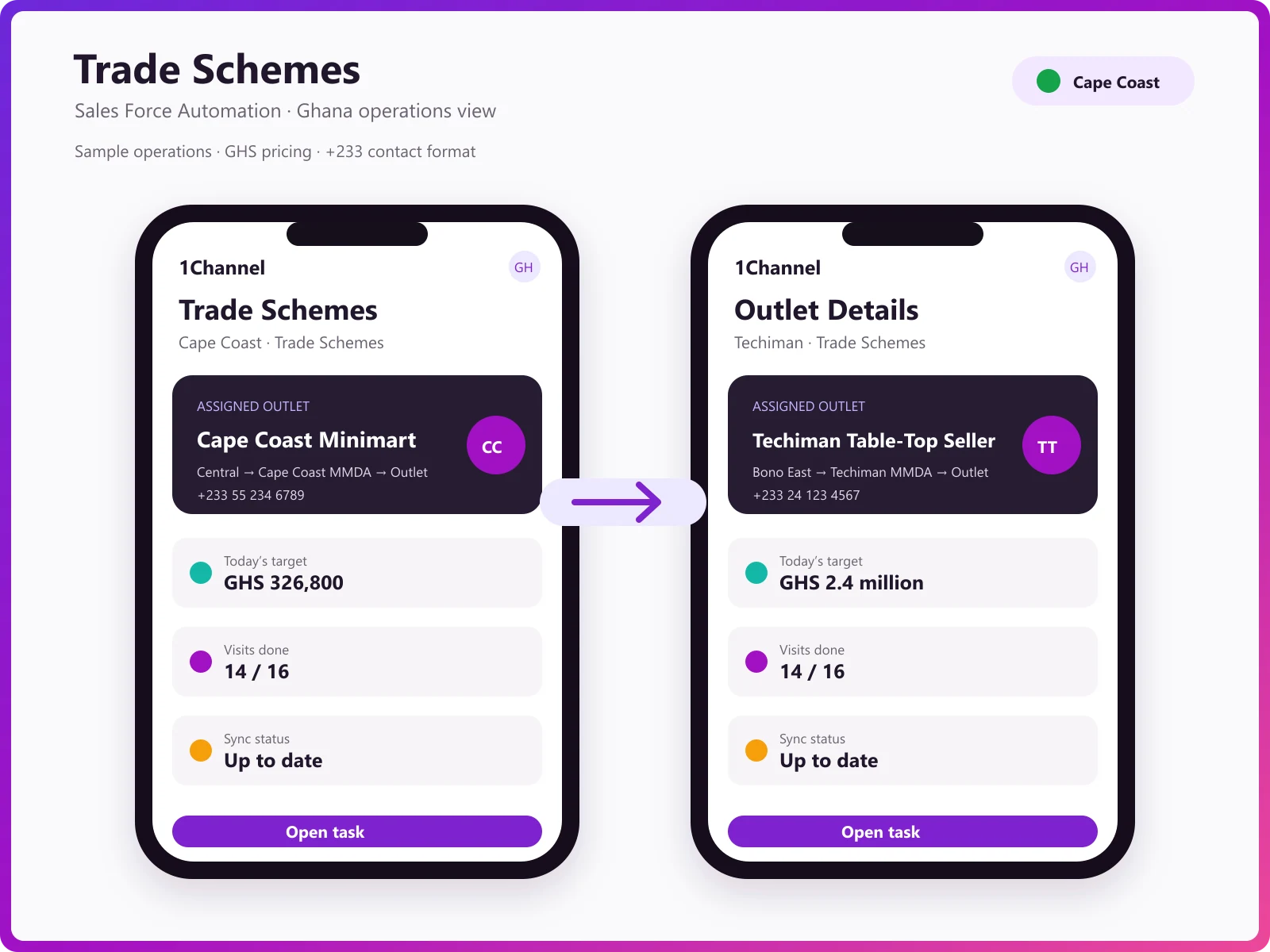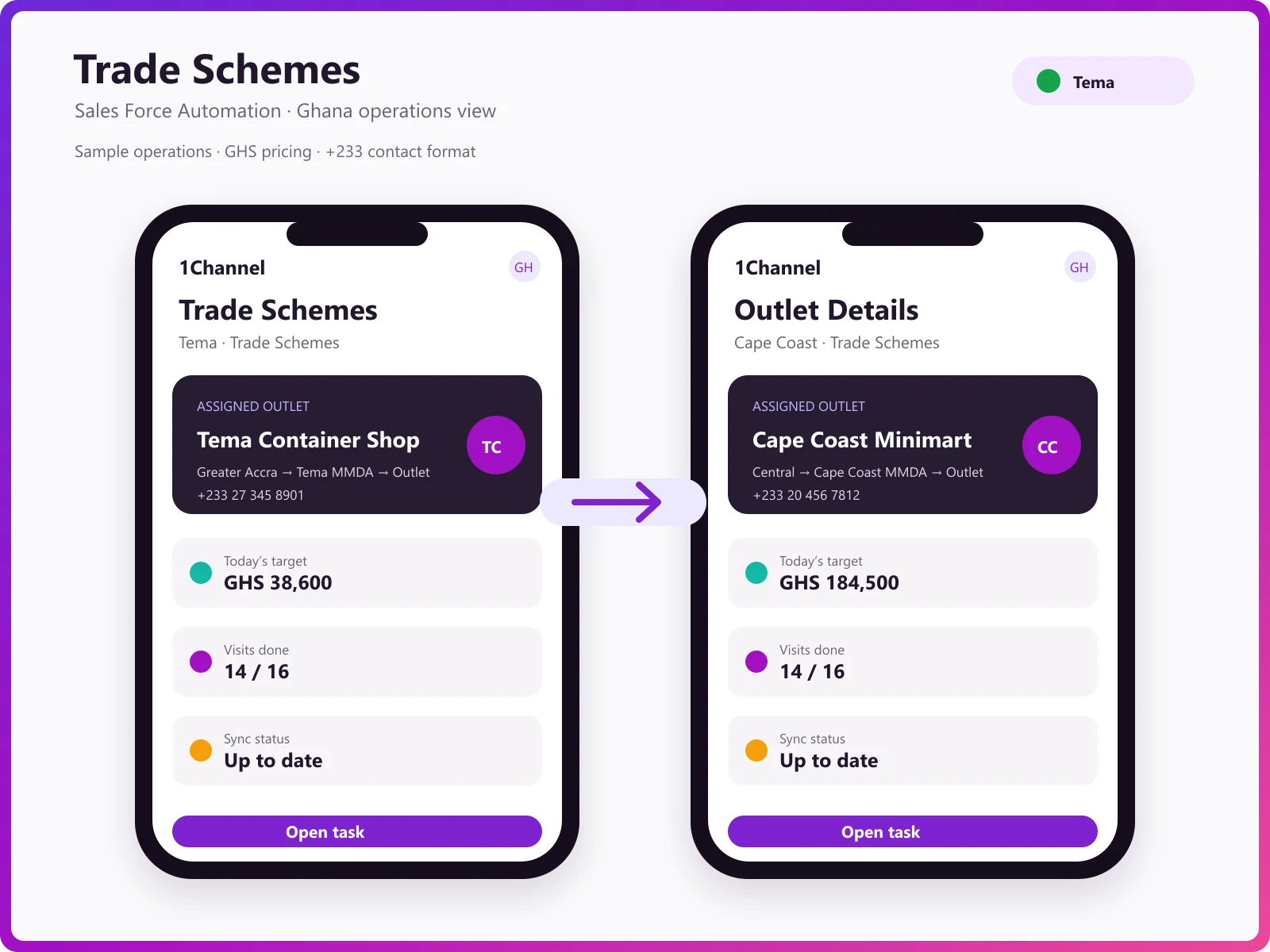
Field tools for a Ghanaian route-to-market: a beat that works in Kumasi and one that works out in the Upper West, orders captured whether or not the handset has coverage, every visit tied back to a geo-tagged outlet
Order capture, GPS-stamped visits and beat plans for field and van-sales teams, reporting through as soon as the handset finds a network
Audits, surveys and market checks that finish on a low-cost Android handset and queue on the device when the route runs past coverage
Beats built off a geo-tagged outlet master instead of street addresses, with GPS-validated visits inside markets as dense as Kejetia
40+ reports, dashboards by region and month-to-date GHS numbers that separate sell-in to the key distributor from what actually sold on
Clock-in stamped with location and time, AI face validation, late alerts and a monthly closure payroll can take straight in
Entitlement types, balances, auto-allocation, approval routing and Ghana's public-holiday calendar configured once
Employee records, reporting lines and role assignments held in a structure that follows the Labour Act, 2003 (Act 651)
Fuel, transport and field-cost claims in GHS, with policy limits, an approval chain and reimbursement tracked to settlement
Onboarding and geo-tagging of kiosks, container shops and market stalls, with channel, category and territory mapping on top
A scheme begins in the admin portal, where trade marketing fixes what qualifies, which slab applies at each tier, and how long the window runs. Mapping then decides who sees it, so a scheme for key distributors and another for small outlets can run in parallel without colliding. After that the arithmetic runs itself: each qualifying line lifts the earned balance, stays visible while the scheme is open, and converts at closure to a credit note, mobile transfer or free-goods issue depending on the tier.
Practical guides for selling and distributing across the Ghanaian market.
Our recognitions constantly motivate us to push the envelope of excellence and empower our customers with winning ideas each day.
Set the qualifying condition, the reward and the window once, then give each tier the version sized for it.
Features:
Why It Matters:
A ladder written for supermarket volumes never pays out in a kiosk, so the reward has to be pitched at the quantity each tier genuinely buys.
Decide which distributors, wholesalers and outlet formats a scheme reaches before a single order is booked.
Features:
Why It Matters:
Outlets here are found by geo-tag rather than by street address, and mapping is what stops a Greater Accra offer paying out on an Upper West beat.
Reps and distributor sales representatives see the live offer and the balance already earned, coverage or none.
Features:
Why It Matters:
Coverage genuinely thins on northern and agricultural routes, and a rep who cannot quote the offer sells that outlet nothing extra.
Balances build as orders are captured, credited to the tier and the outlet that actually earned them.
Features:
Why It Matters:
A claim nobody can trace back to the lines that produced it becomes a quarter-end argument that neither side can settle.
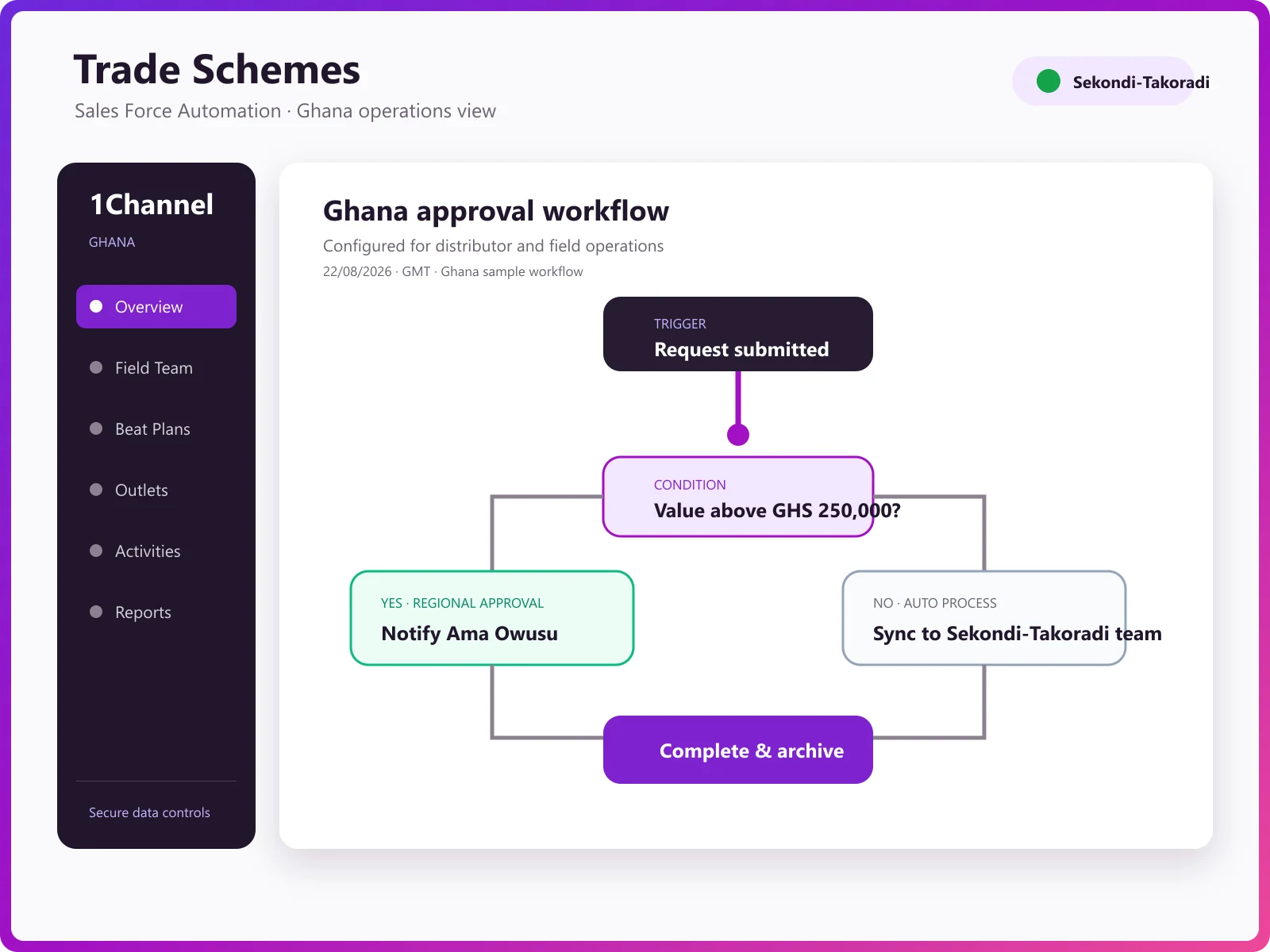
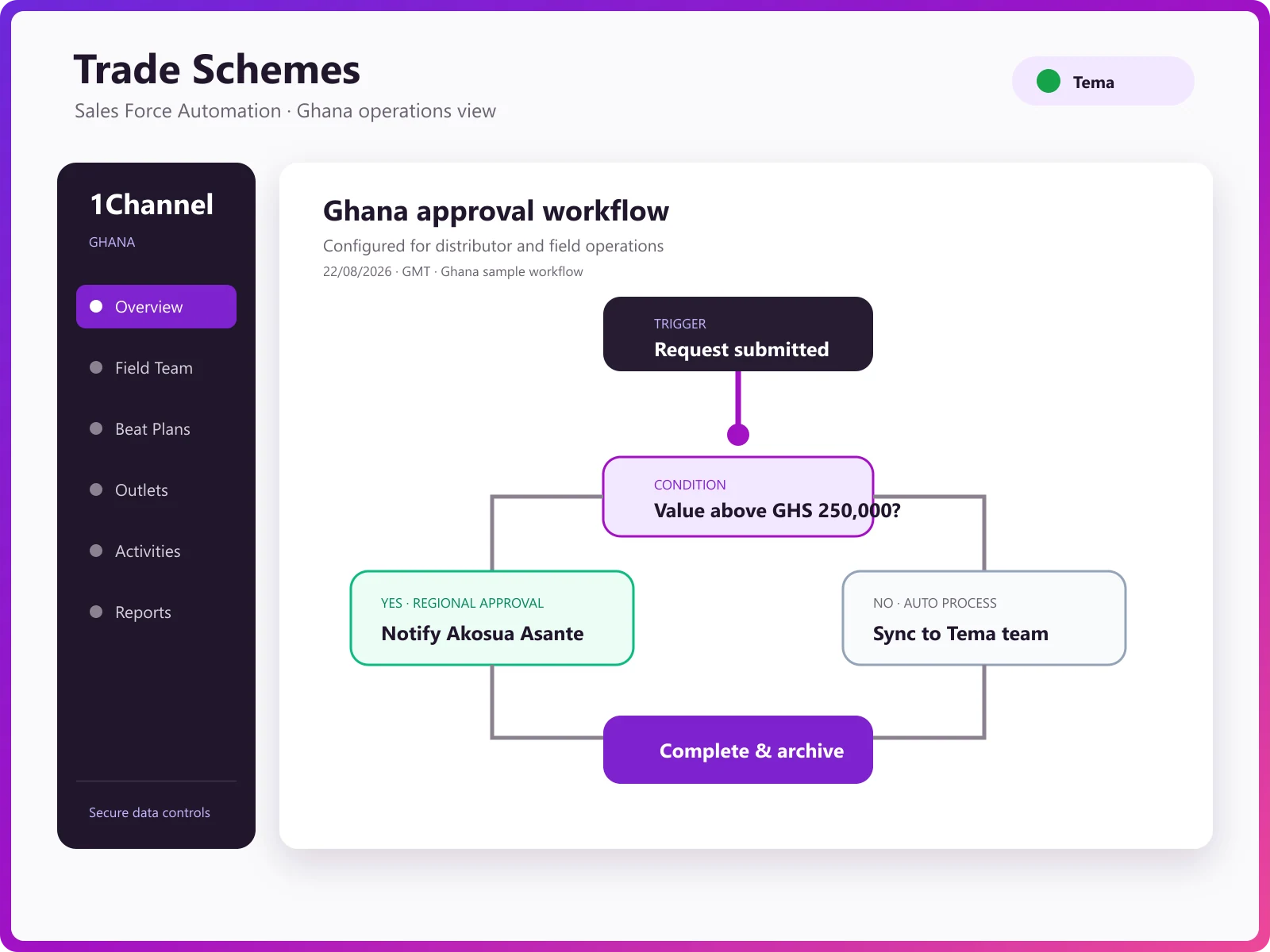
Close a scheme and pay it out the way each tier is really paid, under a single approval chain.
Features:
Why It Matters:
A key distributor settles on account while a table-top seller is paid in goods or a wallet transfer, and both still have to land on one ledger.
At 1Channel, we celebrate every step of our new customers journey, market of geography, or higher customer satisfaction score to become the preferred Field Sales CRM leader.