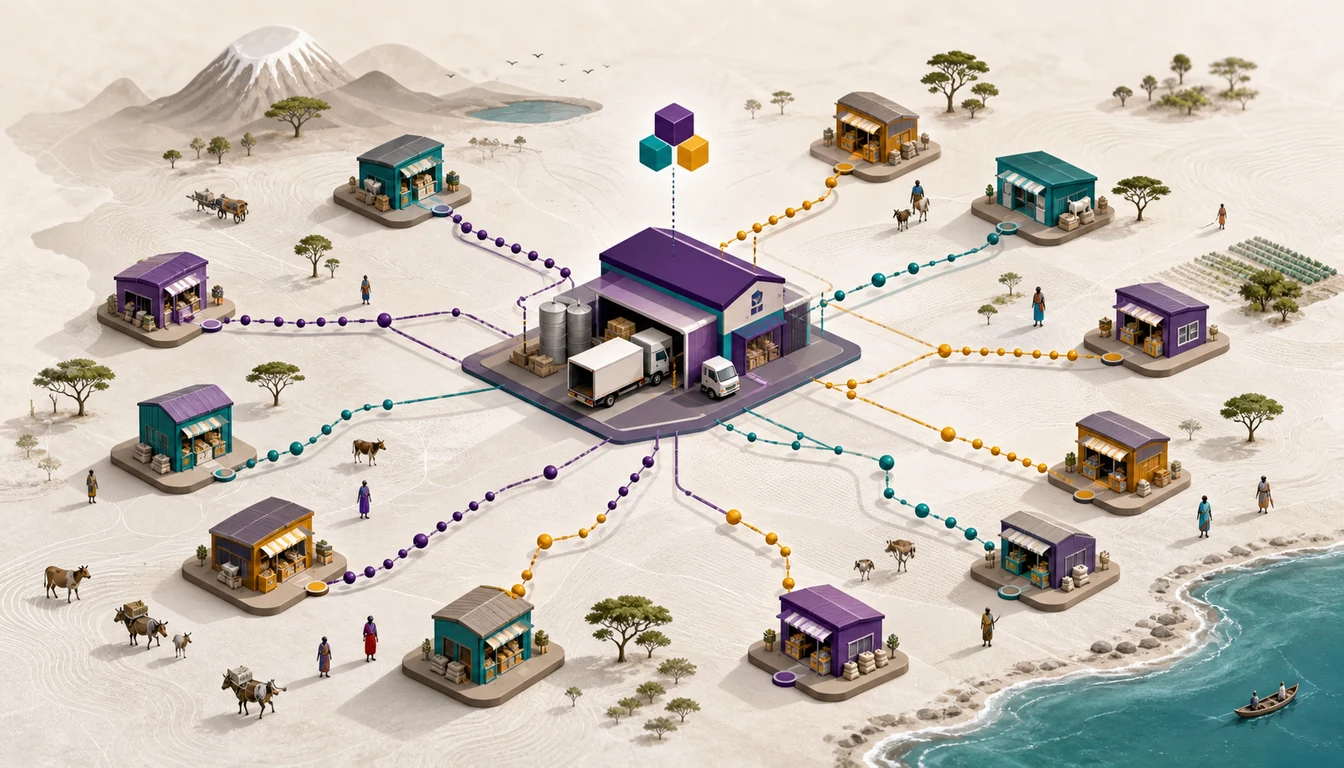
How much of what a distributor is currently owed will actually be collected?
Credit exposure is a live risk across Kenya's FMCG, building materials, and consumer durables distribution.
It's just as real in retail-modern-trade, wherever a distributor sells today and collects later.
This post looks at why credit limits slip when they're tracked manually, and how the order screen can enforce one automatically.
It also covers where an AI check catches a breach before the order ever reaches the warehouse.
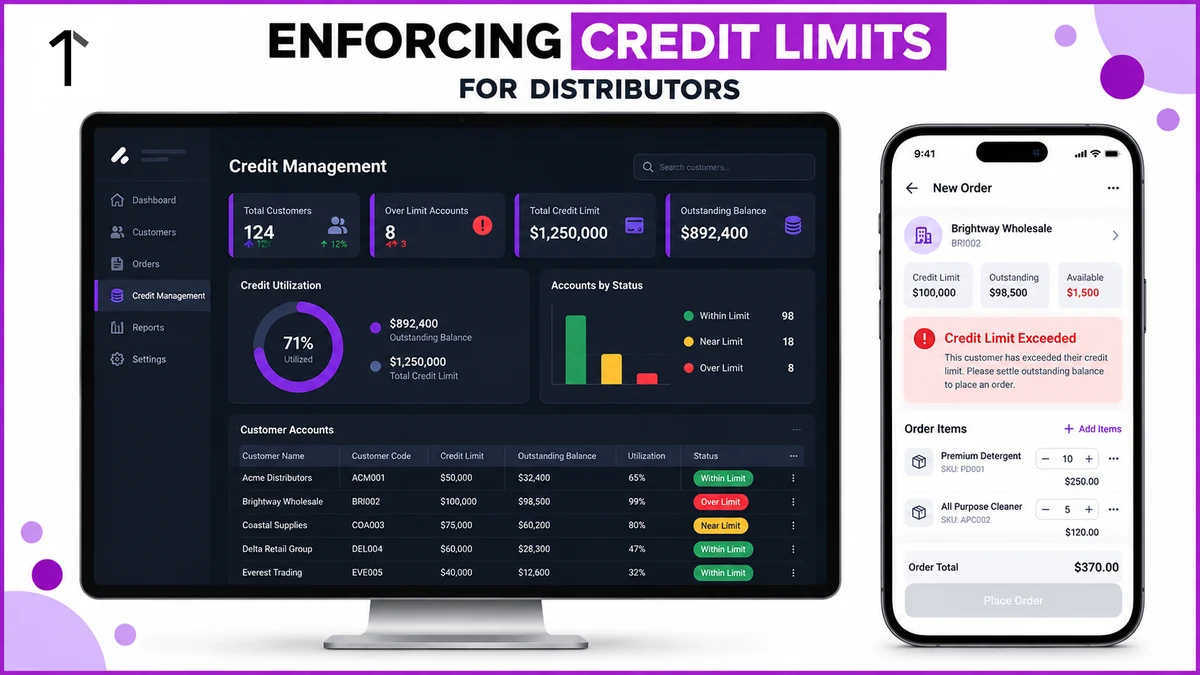
Why Credit Limits Slip in Everyday Distribution
A credit limit set once in a ledger or spreadsheet rarely gets checked again before the next order goes out.
A field rep standing in front of a duka or a modern-trade counter has no easy way to check this in the moment.
Whether that account is already over its limit is something nobody sees until later.
Take a distributor who has extended KES 150,000 in credit to a retailer.
Two orders later, the account is already carrying KES 162,000 in outstanding balance, KES 12,000 over its own limit.
Nobody catches it until the monthly statement run.
That gap is real, and it usually stays invisible until someone reconciles it by hand.
How the System Enforces the Limit at the Point of Order
In 1Channel's DMS, a customer's very first order is allowed even before a credit limit is set.
From the second order onward, no further order goes through until a limit is set and any existing overdue balance is cleared.
If a new order would push an account past its available credit, the field rep placing it is flagged immediately.
A manager can then review it and raise the limit on the spot if the sale is justified, rather than the order going through unnoticed.
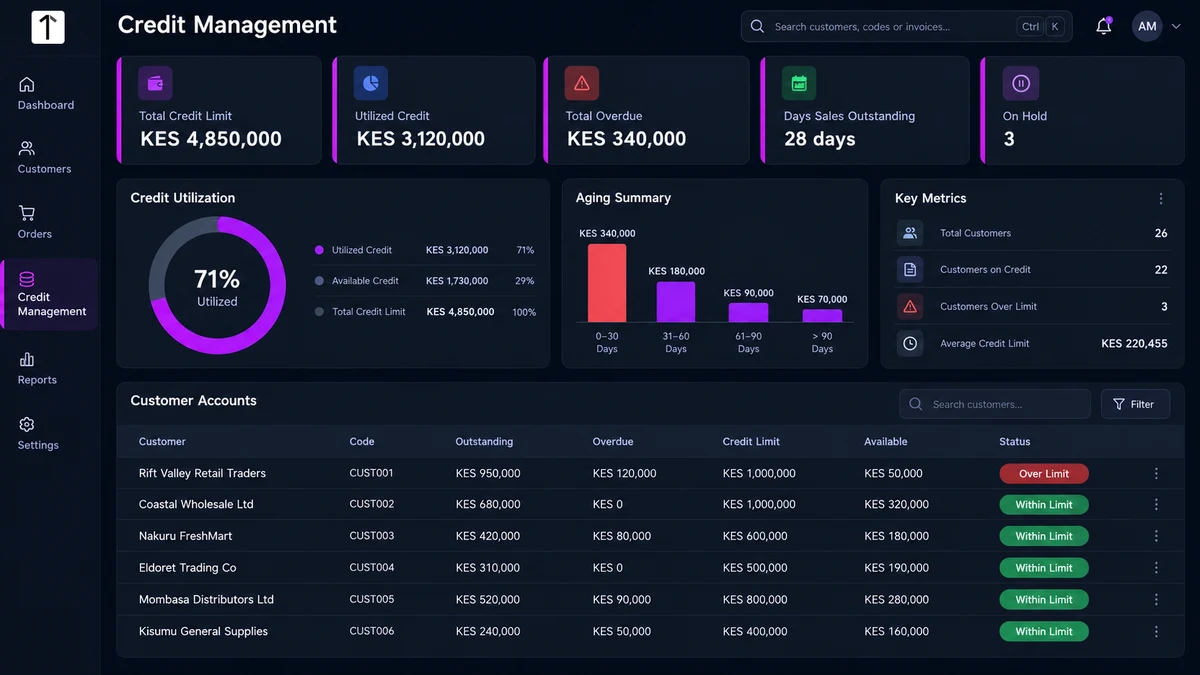
The Credit Management screen keeps this visible at all times: total credit extended, how much of it is actually utilised, and days sales outstanding.
It also shows which accounts are already over their limit, without waiting for someone to run a report.
AI Order Validation Catches What Manual Checks Miss
Before an order ever reaches the warehouse, 1Channel's AI order validation checks stock availability, the customer's KES credit limit, pricing rules, and scheme eligibility in one pass.
The same check runs whether the order comes from the portal or the mobile app.
That catches an over-limit order at the moment it's placed, not at month end.
It's the same logic that stops overselling stock that was never actually in the warehouse.
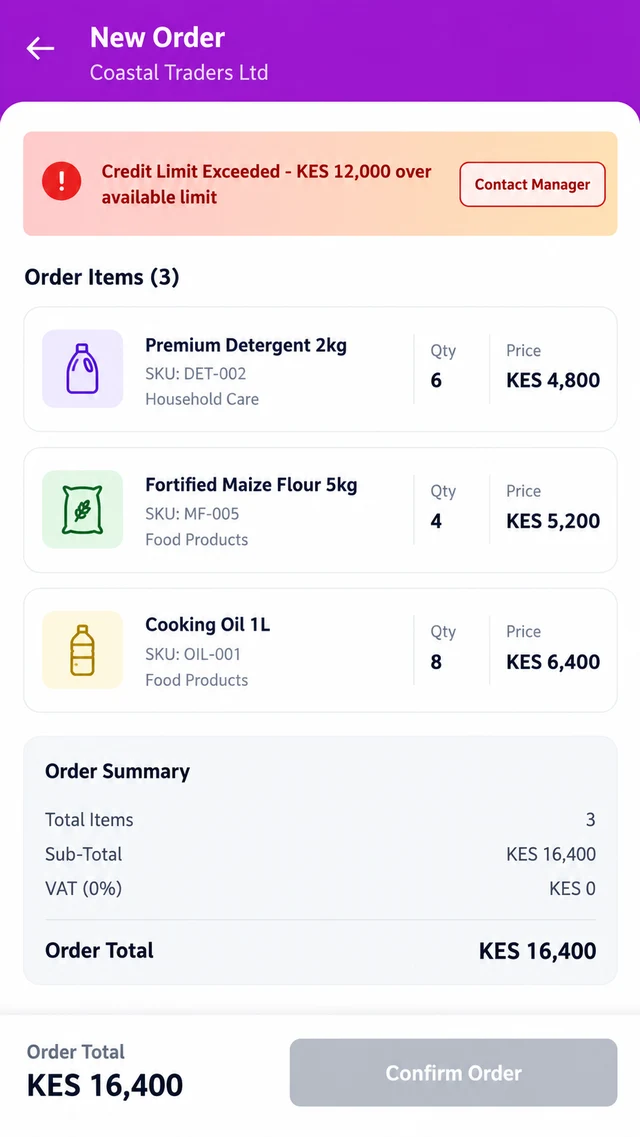
A field rep logging an order for an account already over its limit sees the flag on the same screen, before the order confirms.
That means the conversation with the customer happens before the delivery, not after.
How 1Channel Keeps Credit Decisions in Real Time
1Channel runs credit limits, orders, and collections on one cloud backend.
A limit set in the morning is already enforced on the next order placed from the field, on web or mobile.
Its AI-driven order validation checks credit exposure automatically.
The same assistant can be asked for outstanding balances or DSO by customer in chat, without waiting on a report.
Keep Every Credit Decision Inside the Order Flow
See how the platform's payment and credit management tools enforce limits, track overdue balances, and flag risk in real time, so no order gets confirmed on credit nobody signed off on.
Explore Payment & Credit Management →Common Mistakes to Avoid
- Setting a credit limit once at onboarding and never revisiting it as order volume grows.
- Letting a field rep confirm an order without seeing the account's current outstanding balance.
- Netting an overdue balance into the next invoice instead of resolving it before the next order ships.
- Treating days sales outstanding as a monthly report instead of a number checked before every large order.
- Raising a credit limit without asking why the account went over it in the first place.
None of these is a one-time fix. They're habits that either hold as order volume grows, or quietly stop working the moment nobody's watching.