An accounts clerk at a distributor in Nairobi opens the month's expense file and finds a supplier bill with nothing behind it but a delivery note and a hand-written total. The goods arrived. The payment cleared. For the income-tax return, the expense may as well not have happened.
On the same morning, a rep on a route out to Thika is told the load will not be accepted until the invoice carries the buyer's PIN, spelled correctly, because the wholesaler's accountant has started rejecting anything that does not.
Neither of those is an accounting problem. Both are order-to-invoice problems that surfaced weeks after the moment when they could have been fixed for nothing.
What eTIMS Actually Changed for Distributors
KRA has required electronic tax invoices through eTIMS since January 2024, and the scope is the part that still surprises people: it covers all businesses, including traders and distributors who are not registered for VAT, and it applies regardless of turnover. A wholesaler running on cash and a distributor running a fleet of vans sit inside the same obligation.
The common misreading was that this was a VAT matter and therefore somebody else's problem. It is an invoicing matter. What changes in practice is the status of the document: an invoice is no longer something you produce for your own records, but a record whose validity is determined outside your business, against a standard you do not set.
One caveat before anything else. This article describes the general shape of the obligation, not your position. Rules change, and how they apply depends on facts a blog cannot know. Confirm what applies to you with a tax adviser or directly with KRA before you change a single process. This is a piece about operations, not tax advice.
The 2026 Change That Raised the Stakes
From 1 January 2026, KRA validates the income and expenses declared in income-tax returns against eTIMS data. The sentence is short and its consequences are not.
The return is no longer a self-contained declaration tested only if somebody comes looking. It is checked against a separate record of what was invoiced, and where the two disagree, the return is what gives way. An expense without a valid eTIMS invoice behind it is non-deductible — not queried, not adjusted after a conversation, simply not allowed.
The penalties attached to invoicing failures are material, but they are not the interesting part, because a business whose process is right never meets them. The realistic cost is duller and larger: a year of genuine, paid-for expenditure that cannot be deducted because the paperwork behind it was never valid. And every invoice you issue is somebody else's expense.
Your Invoice Is Somebody Else's Deduction
This shift arrives as commercial pressure rather than regulatory pressure. Customers with formal books — supermarkets, mini-marts, larger wholesalers, agrovets supplying on account — have started policing what they accept, because their own deduction depends on it. A supplier who cannot produce a valid invoice promptly, with the buyer's details right, stops being convenient. Nobody sends a letter; the orders thin out, and the reason given is price or service.
The informal layer behaves differently, but not indefinitely. A duka or a kiosk buying for cash may never ask. The same owner, two years into a second outlet and a bank facility, will ask — and will ask for history. Records you did not keep are not retrievable later at any price.
What Makes an Invoice Valid
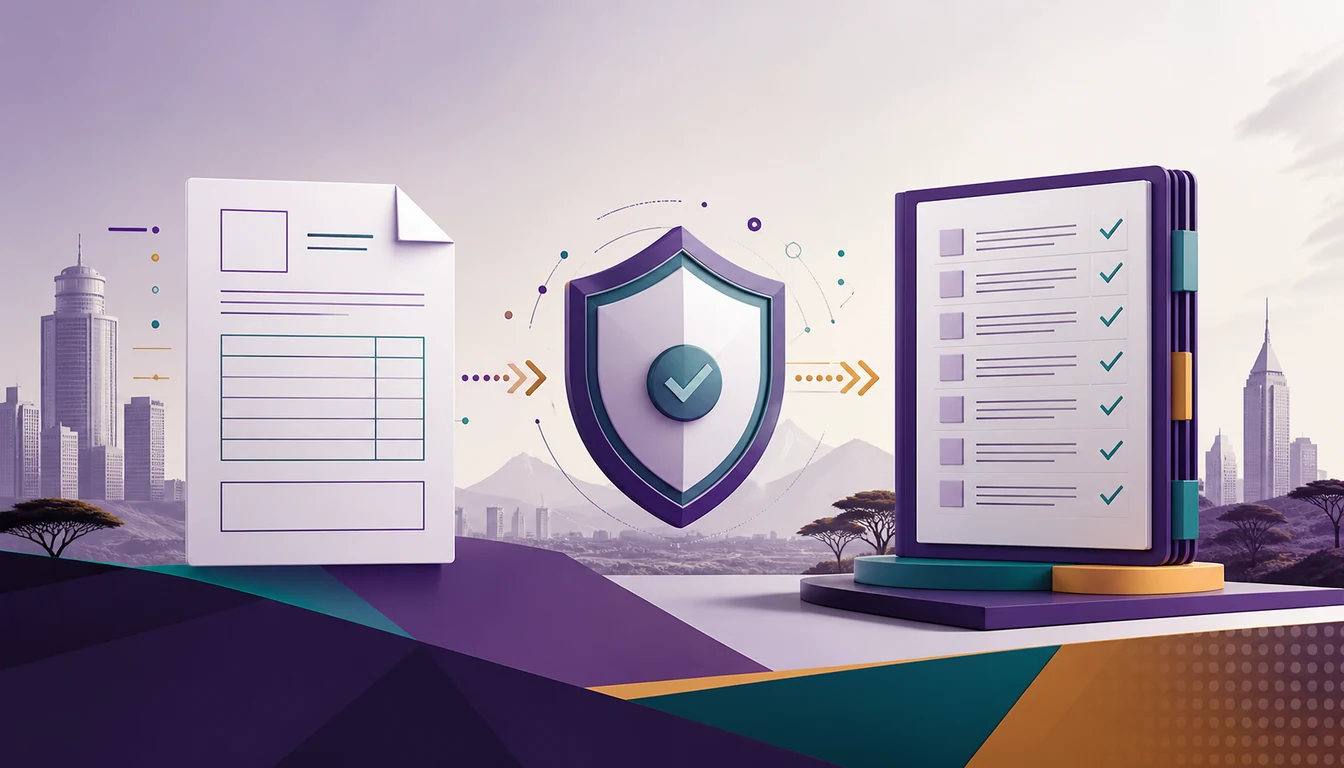
A valid tax invoice is generated through eTIMS at the time of the supply, describes a real transaction accurately, identifies the buyer correctly — including the buyer's PIN where the buyer needs the document for their own return — and can be retrieved afterwards when somebody asks.
Each of those has an operational shadow. "At the time of the supply" rules out reconstruction. "Accurately" means the quantities on the invoice are the quantities that came off the van, not the ones on the load sheet. "Correctly" means the outlet master has to be right before the sale, not after.
What this article will not do is publish a field list, an invoice-number format or a set of onboarding steps. That specification belongs to KRA, it is applied differently to different taxpayers, and it moves. Take the current requirement from KRA or your adviser, and treat any blog offering a definitive checklist — including this one — as background reading rather than authority.
The Buyer PIN on a Duka Route
The buyer PIN is where the theory meets the route, and it is messier than any policy document suggests. A duka owner may not have one. A kiosk operator may have one on a card in a drawer at home. A wholesaler may trade under a name that does not match the name the PIN was issued against.
The failure mode is predictable. A rep at a counter, with a queue behind him, keys a PIN in from memory. One digit moves. The problem surfaces at the far end of the year, when the customer's deduction is refused. The fix is to move the PIN out of the invoice moment altogether and into outlet onboarding, where it can be captured once and checked.
- Capture the PIN when the outlet is first surveyed and added, not when the first order is raised.
- Store it against the outlet record, so no rep ever types it again on a later visit.
- Record the registered name alongside the trading name, because the two often differ and the invoice needs the right one.
- Flag outlets with no PIN, so selling to them is a decision taken knowingly rather than a gap discovered later.
Credit Notes, Returns and the Reverse Flow
Returns are not an exception in FMCG distribution but a weekly event: damages, short deliveries, near-expiry stock swapped out, the wrong variant loaded. Each reverses part of an invoice already issued.
The reversal has to exist as its own document, referencing the original, issued the same way the invoice was. What it cannot be is an adjustment netted off the next invoice, or a line written on a delivery sheet and honoured by handshake. Netting off is where the audit trail dies: the invoice says one thing, the money received says another, and the reconciliation lives in one person's head until that person leaves.
On van sales the discipline is tighter still, because the goods come back on the same vehicle that sold them. A return not raised against a specific invoice line when the stock is loaded back on will be raised against nothing at all.
A Thursday Between Nairobi and Thika
A van pulls out of a distributor's yard in Nairobi at twenty to seven with a load sheet printed the night before. The beat runs an agrovet on the way out of town, a string of dukas and kiosks along the road towards Thika, and finishes at an open-air market where two wholesalers supply most of the surrounding outlets.
By half past eleven the day has produced four documentation events. The agrovet takes less than it ordered because the shelf still holds last cycle's stock. A duka pays KSh 14,200 into the till on M-Pesa and wants a receipt on the spot. A kiosk returns two crushed units from the previous delivery. A wholesaler asks for an invoice in his registered name with his PIN on it, and mentions that the last one carried the trading name instead.
On a paper route all four go into a book, and each becomes somebody's problem later: a discrepancy to chase, a statement line with no invoice attached, a promise, and a correction that may not survive the trip back to the office.
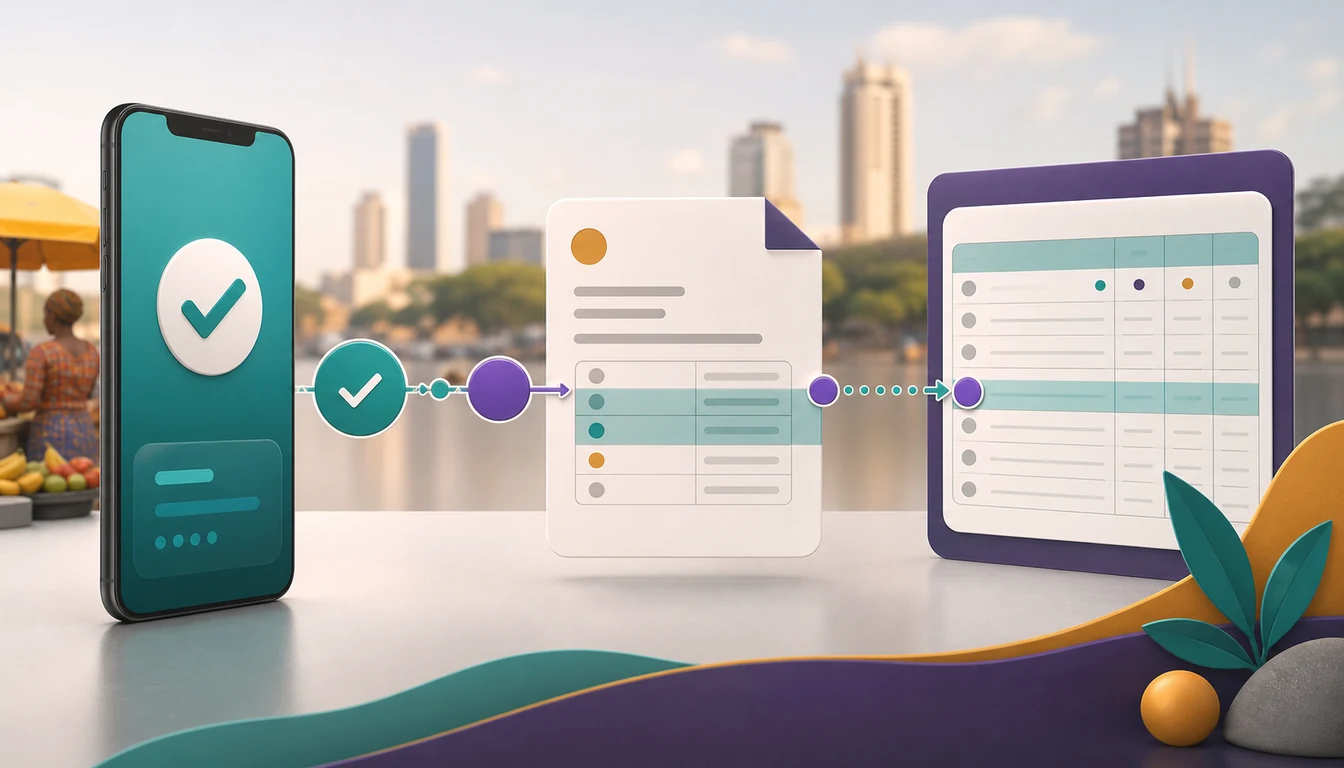
Captured on the handset as it happens, the shape is different. The delivery is confirmed at the quantity actually handed over, so the invoice is raised for what left the van. The M-Pesa reference is attached to the invoice at the counter. The two units are a credit note against the line they came from. The name correction updates the outlet master once, for everybody. Nothing about the selling changed — only the record.
Why Month End Is the Wrong Place for This
Most distributors struggling with eTIMS are not struggling because the requirement is unclear, but because the work sits at the wrong point in the month.
A month-end scramble asks somebody in the office to reconstruct weeks of transactions from delivery notes, route books and memory. Details that were never written down get filled in by inference. Missing PINs get guessed or left blank. Quantities get taken from what was dispatched rather than what was delivered, because the dispatch number is the one on paper. Worse, reconstruction produces documents describing what the ledger needs rather than what happened, because the person is working backwards from a total.
The cost of correcting a record rises steeply with distance from the event. At the counter a wrong PIN costs seconds; at month end, an afternoon; after the return is filed, considerably more.
Building the Discipline Into Order-to-Invoice
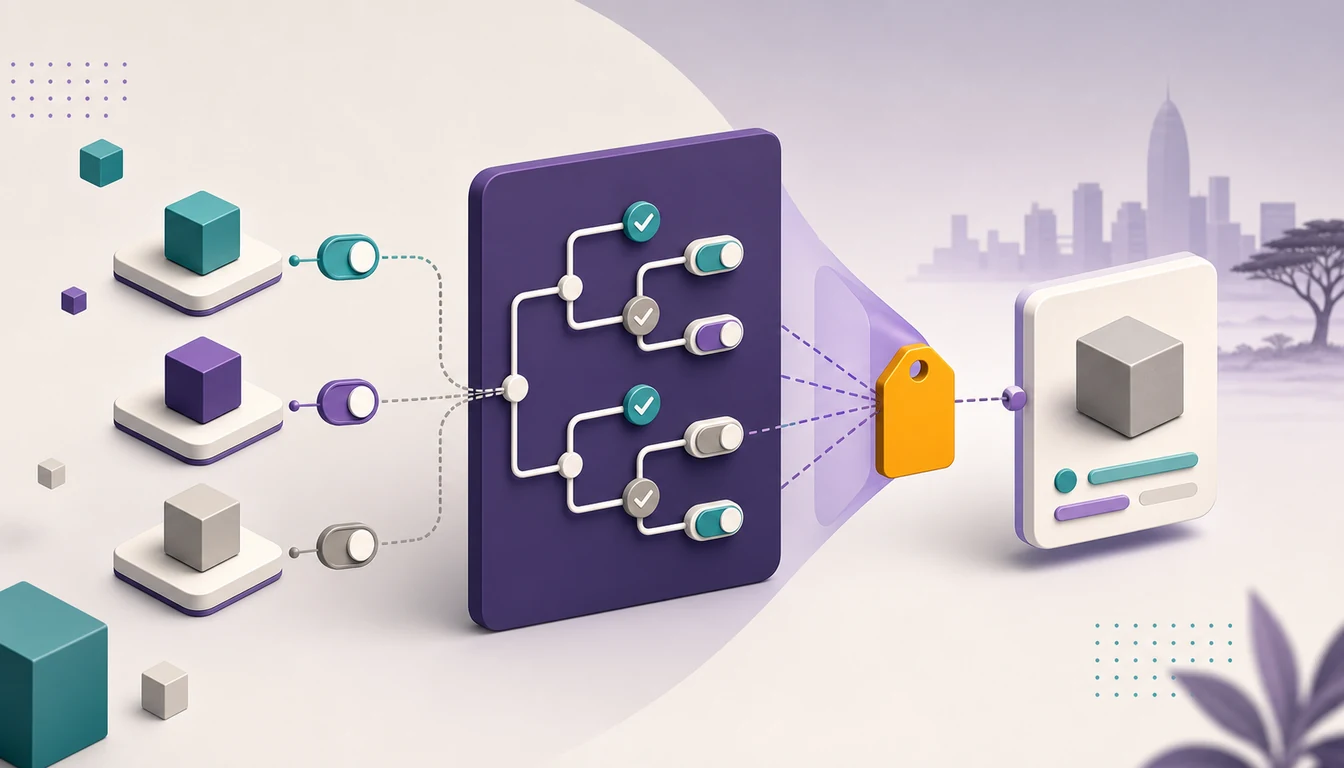
The structural fix is to stop treating the invoice as a document somebody creates and start treating it as a by-product of an order captured properly in the first place. If the order is right, the invoice is right, and nobody has to be diligent at month end. That means a chain where each step inherits from the one before it.
- The order is captured against a verified outlet record, so buyer identity and PIN come from the master rather than a rep's memory.
- Prices, units and tax treatment come from the product catalogue, so two reps selling the same SKU produce the same document.
- Delivery is confirmed at actual quantities, with shortages and damages recorded at handover.
- The invoice is raised from the confirmed delivery rather than the original order, so it describes the goods that changed hands.
- Returns are raised as credit notes referencing the invoice line they reverse.
- The collection is recorded against the invoice it settles.
Coverage complicates this without excusing it. Plenty of Kenyan routes run through areas with thin mobile data, and power interruptions can take a distributor's own office systems down for part of a day. That argues for capture that works offline on an ordinary Android handset and syncs when the connection returns, so the record is made while the facts are still true. It does not argue for a paper fallback that quietly becomes the primary process.
Matching M-Pesa Receipts to the Invoices They Pay
M-Pesa is how money moves in Kenyan trade, not an alternative to it. For invoicing discipline that is mostly good news — every payment leaves a reference — and one specific headache. The reference identifies the payment, not the invoice. A till or paybill statement is a list of amounts and phone numbers; the invoices are somewhere else. Matching them is manual work that grows with route count, and it is the job most often abandoned halfway.
The remedy is the same as everywhere else here: capture the link at the moment it is obvious. When a duka owner pays at the counter, the rep is looking at both the invoice and the confirmation message. Part-payments and duka credit make this more important, not less — where an outlet pays half now and half on the next visit, an unlinked payment makes the outstanding balance a matter of opinion.
Where These Programmes Go Wrong
Distributors who have had a hard time with this rarely had a hard time for exotic reasons. The same few mistakes recur.
- Treating it as a finance project. The invoice is created by facts established in the field, so a programme designed inside the accounts office is always reconstructing somebody else's work.
- Bolting on a second application. If invoicing lives in one tool and order capture in another, reps do double entry, and double entry decays into single entry within a month — the easier one.
- Never cleaning the outlet master. Wrong PINs and registered names at source are inherited by every downstream document at scale.
- Leaving credit notes manual. Returns are the highest-frequency exception in distribution and the one most often left to a spreadsheet, which is exactly where audit trails break.
- Believing compliance is a purchase. The obligation sits on the business, not on its software. Tools can make the right behaviour the easy behaviour; they cannot assume the duty.
One more is worth saying plainly, because it costs money. Be sceptical of any vendor that describes itself as KRA-certified, approved or accredited, and verify such claims with KRA before they influence a purchase. A system can help you meet an obligation without being endorsed by the authority that sets it.
How 1Channel Supports eTIMS-Aligned Invoicing
1Channel is not certified, approved or accredited by KRA, and it does not file or transmit anything to KRA on your behalf. What it does is put distributor management and field sales on one offline-first platform, so the order, the delivery, the invoice, the return and the collection are stages of a single record rather than five documents reconciled afterwards. The information a valid invoice needs is established in the field.
For invoicing and order-to-cash specifically, the platform lets a distributor:
- Hold an outlet master carrying trading name, registered name, location and buyer PIN, captured at onboarding and corrected centrally.
- Capture orders against that master on entry-level Android handsets, offline where coverage is thin.
- Confirm deliveries at actual quantities, recording shortages, damages and refusals at handover.
- Support eTIMS-aligned invoicing raised from the confirmed delivery, so the document describes the goods that changed hands.
- Raise credit notes against the specific invoice line a return reverses, rather than netting adjustments into a later document.
- Record M-Pesa till and paybill references against the invoice they settle, including part-payments.
- Retain a searchable history of orders, deliveries, invoices, credit notes and collections, with role-based access and audit trails aligned to Data Protection Act, 2019 obligations.
The claim is deliberately narrow: the platform helps you produce and keep records that align with your obligations. Whether your business is meeting them is a question for your tax adviser and for KRA.
Key Takeaways
eTIMS is not a reporting exercise bolted onto the end of the month. It is a set of facts that have to be right at the counter, on the day, in order to be right at all. A few principles carry most of the value.
- The scope is wider than most people assume. The requirement covers all businesses, including traders and distributors who are not registered for VAT, and it applies regardless of turnover.
- Validation changed the arithmetic in 2026. Returns are now checked against eTIMS data, and an expense without a valid invoice behind it is non-deductible rather than merely questionable.
- Get the buyer PIN at onboarding, never at the counter. A PIN typed under pressure with a queue waiting is a data-entry error with tax consequences at both ends of the transaction.
- Reverse properly or not at all. Returns need credit notes that reference the original invoice; netting adjustments into the next document is where the audit trail quietly stops existing.
- Put the discipline in the flow, not in the month end. Reconstruction produces documents that describe what the ledger needs rather than what happened, and it gets more expensive the longer it is left.
Get those right and compliance stops being an event that happens in the last week of the month; it becomes a property of how orders are taken. Confirm the specifics for your own business with a tax adviser or with KRA — the details are theirs to set and yours to meet.