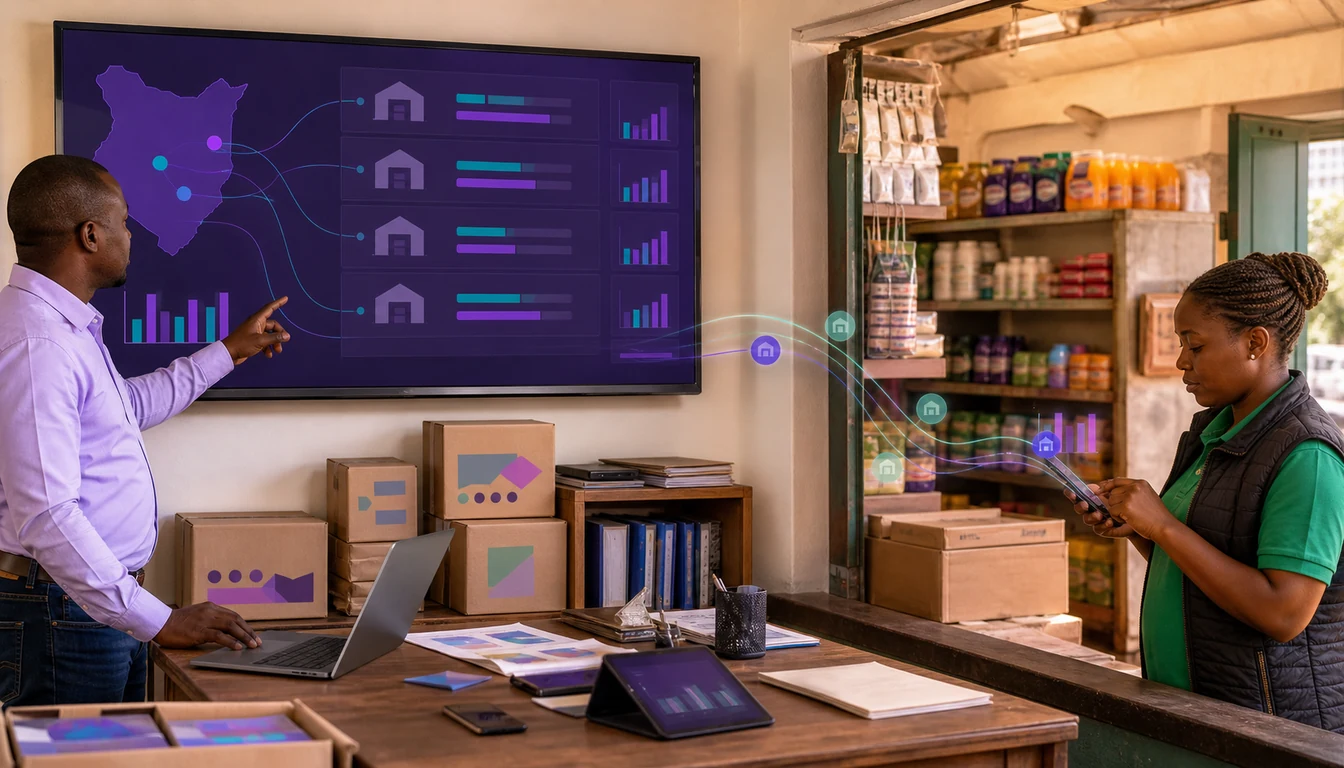
A farmer walks into an agrovet carrying a leaf. Not a shopping list, not a product name, just a leaf with something wrong on the underside of it. The person behind the counter turns it over, asks what else is in the field, asks what was applied last time, and only then reaches for a shelf.
That is the channel in miniature. The sale did not begin with a brand, it began with a problem, and the counter diagnosed it. Whatever leaves the shop was chosen by the shopkeeper rather than asked for by name.
For a distributor that changes how the outlet has to be served. An agrovet is not a duka that happens to sell farm goods, and it is not a small supermarket. It is a technical counter with a seasonal cash cycle, dated stock, and a customer buying on next season's income.

What an Agrovet Stocks and Who It Serves
An agrovet is Kenya's agricultural inputs retailer. Crop and livestock sit under one roof, handled by the same counter, which is why the outlet has no clean equivalent in the other markets 1Channel serves. The shelf mix is broadly recognisable:
- Seed, in pack sizes running from a single plot up to a full field.
- Fertiliser and soil amendments, usually stacked rather than shelved.
- Crop protection products, kept behind or above the counter rather than in open reach.
- Veterinary medicines, vaccines and animal health consumables, some needing cool storage.
- Animal feed and mineral supplements.
- Sprayers, protective clothing, hand tools and the small hardware a farm gets through.
The customer base is as mixed. Smallholders buy one season's requirement in the smallest viable pack. Commercial growers buy in bulk and negotiate. Livestock keepers come for treatment and feed on a rhythm unconnected to planting. Smaller stockists further from the tarmac buy here to resell, so the outlet is part retailer and part wholesaler depending on the week.
Location follows the farm, not the population: market towns and trading centres on routes farmers already travel. A distributor's agrovet beat and its duka beat rarely overlap neatly even in the same district.
Why an Agrovet Is Not a Duka or a Supermarket
In a duka or a kiosk the shopper usually knows the brand before entering, and execution means availability, price and visibility. In a supermarket the shelf is negotiated centrally and the field team makes the agreed layout true on the day.
Neither fits an agrovet. Facings barely matter when most of the range is behind the counter or stacked on the floor. The basket is lumpy and intermittent rather than weekly. The products are not interchangeable, and a wrong recommendation does not cost the buyer a small amount of money, it costs a season. Some stock is dated, some has storage conditions attached, and a return is not a straightforward swap.
So the agrovet call is longer, less frequent, and about different things: stock condition and dating, credit position, whether the counter still knows the range, and what the coming season looks like. A questionnaire built for a four minute duka visit produces clean data that measures nothing.
The Season Is the Demand Plan
Demand at an agrovet does not sit flat across the year. It follows planting. Seed and fertiliser move ahead of and into land preparation. Crop protection moves once the crop is up and a problem appears. Animal health is steadier but has its own peaks. When the rains arrive earlier or later than expected the whole curve moves with them, and it moves differently in different parts of the country.
Two things follow. Forecasting an agrovet from last month's offtake is close to useless; the useful comparison is the same point in the previous cycle, read against what is physically sitting in the outlet now. And the cost of a stock-out is asymmetric: a farmer who cannot buy today does not come back next month. The money goes to the agrovet down the road, or the input is skipped and the season planned around its absence.
No article should hand you a planting calendar, and this one will not. What travels is the discipline underneath: a per-outlet history deep enough to see the previous cycle, a live view of stock at the outlet rather than the depot, and a plan the field can revise when the season moves.
Advice-Led Selling at the Counter
Because the buyer often arrives with a symptom rather than a product, the recommendation decides the sale. For a brand owner used to influencing the shopper, that means the influence has to land one step earlier, on the counter.
Which makes field training a distribution activity, not a marketing one. Reps have to explain what a product is for, how it is used and stored, what protective equipment goes with it, and what the counter should ask a farmer first, at a level the shopkeeper can repeat convincingly the following week. Kenyan field forces work in English and Kiswahili and often a third community language, so the same content usually has to exist more than once.
What qualifications, registrations or approvals counter staff and the outlet must hold is a matter for the relevant regulator, and requirements change. Confirm the current position with your regulator and your own advisers before designing a programme around it. Whatever the rules, the operational need is unglamorous: a record of who at each outlet was trained, on what, and when. Counter staff turn over, and the person recommending your range this season is frequently not the one briefed at launch.
Credit That Waits for the Harvest
Agricultural inputs are bought before the income that pays for them exists. That mismatch shapes credit at every layer: the distributor extends terms to the agrovet, and the agrovet very often extends its own arrangement to the farmer, settled after harvest.
Exposure therefore builds through the planting window and clears afterwards. Ageing looks alarming at precisely the moment it is normal, and a rigid thirty day term set in a head office fights the crop cycle rather than managing it. The answer is not looser credit; it is credit deliberately set, visible in KSh at the point of order, and reviewed against where the outlet actually is in its season.
Settlement adds friction. Money moves on M-Pesa by default: till and paybill receipts arriving as several partial payments against one invoice, sometimes from a number that is not the one on the account, alongside PesaLink and bank transfers. Matching those receipts to invoices decides whether the credit limit on the screen means anything. The rep should see the outstanding position and available limit before writing the order, not discover it when the order is rejected at the depot.
Batch and Expiry on Agricultural Inputs
Much of what an agrovet sells is dated goods. Seed has viability. Treatments and animal health products carry expiry. Storage decides whether the date on the pack still means anything by the time it reaches a farm, and a carton left in the sun by the shop door is a quality problem no system will see unless somebody is looking for it.
Batch discipline is the mechanism. Batch number, manufacturing date and expiry captured at goods receipt, carried through every transfer and dispatch, and visible to the rep standing in the outlet rather than only to the warehouse. Earliest-expiry-first allocation on short-dated lines, so the system rather than the loader decides what ships. Near-expiry thresholds, so at-risk stock is transferred, promoted or claimed while it still has value.
Seasonality sharpens the stakes. A line that misses its window waits for the next cycle, not for next month, and may not survive the gap. And there is the question nobody wants to answer from memory: if a batch has to be pulled, which outlets received it, in what quantity, on which delivery? That should be a report, not an investigation.
Counterfeits and the Standards Question
Counterfeit and substandard inputs are a recognised concern in Kenyan agricultural trade, and the damage lands on the party least able to absorb it. A farmer who applies a fake product sees a failed crop or an untreated animal, and reasonably blames the genuine brand whose name was on the pack.
KEBS, the Kenya Bureau of Standards, is the country's standards body, and standards and enforcement sit with the authorities rather than with any software supplier. What a distributor controls is narrower but genuinely useful: traceability. Knowing which pack, from which batch, went to which outlet on which route, and being able to demonstrate it, is the difference between a contained problem and an open-ended one.
Around that sit the field measures. Keep an accurate list of who is actually an authorised stockist, because a channel with vague boundaries is easy to slip product into. Where a brand runs coded packs, scan them at delivery rather than only at dispatch. Train reps to notice suspect packaging, and give them a way to report it that captures the outlet, the batch and a photograph. A verbal mention in a Monday meeting is not evidence.
A Morning at an Agrovet Near Eldoret
Picture a rep arriving early at an agrovet on the edge of Eldoret, because the counter is busiest before the day's work starts. Three customers are ahead of him: one buying feed, one describing a sick animal, one asking what to plant.
While he waits he does the part of the visit that does not need the owner. He checks the dating on two short-shelf-life lines and finds one closer to its threshold than the depot record suggested. He notices cartons stacked by the door in direct sun. He confirms the last delivery was short, and photographs the line.
When the counter clears, the owner's first question is not about the range. It is her balance, and whether the next consignment will land before the rush. He shows her the outstanding position and available limit on his phone, takes an order weighted towards what the season is about to demand rather than what sold last month, flags the near-expiry line for transfer, and posts last week's M-Pesa till payment against the two invoices it was meant to cover.
On the road to the next town the network drops, and at the shop after that the power is out. Neither costs him anything, because the app queued the visit and synchronised when it could. Rural connectivity is patchy and power interruption is a real feature of operating in Kenya. A field application that needs a live connection will not get used.
The Records the Counter Has to Keep
Two record streams run through an agrovet, and distributors tend to think about only one. The first is tax. KRA has required electronic tax invoices through eTIMS since January 2024, covering all businesses, including traders and distributors who are not VAT-registered, regardless of turnover. From 1 January 2026 KRA validates income and expenses declared in income tax returns against eTIMS data, and an expense without a valid eTIMS invoice behind it is not deductible. The penalties are material, and the amounts are not something a supplier's article should quote: take the current position from KRA or a tax adviser.
The second is sector record-keeping around the inputs themselves: what was received, what was sold and in what quantity, and how dated or restricted stock is handled and stored. These obligations are specific, they change, and they vary by product type. Confirm what applies to your business with your regulator and your own advisers rather than assuming a distributor's system already covers it.
What a distributor can do is make the record a by-product of the transaction. If batch, quantity, outlet and invoice are captured once at the moment of sale or delivery, the file assembles itself. If they are written on paper and re-keyed in an office in the evening, it will be late, incomplete, and wrong in exactly the places somebody will eventually look.
Where Agrovet Programmes Go Wrong
Most failures here are not failures of intent. They come from running an agrovet programme on machinery built for fast-moving consumer goods without noticing the difference.
- Treating the agrovet as another duka on the beat. Same call frequency, same questionnaire, same execution scorecard, applied to an outlet where most of the range never reaches a shelf.
- Flat monthly targets against a seasonal channel. Reps meet the number by pushing stock in at the wrong point in the cycle, and it returns later as expired inventory and a claim.
- Credit set with no view of the crop cycle. Accounts hit their limit in the week the farmer most needs the input, get released by exception over the phone, and the limit quietly stops meaning anything.
- Batch data that stops at the warehouse. Traceability captured at goods receipt and abandoned at delivery, so a recall reaches only as far as the depot gate.
- Training treated as a launch event. The counter turns over and nobody notices, because there is no record of who was trained on what.
- Systems that assume connectivity and power. Forms designed at a desk in Nairobi, used on a route where neither is guaranteed.
The common thread is asking the agrovet to behave like an outlet it is not. Fixing it means designing the visit, the target and the credit rule around the season and the counter rather than around the reporting cycle.
How 1Channel Supports Agri-Input Distribution
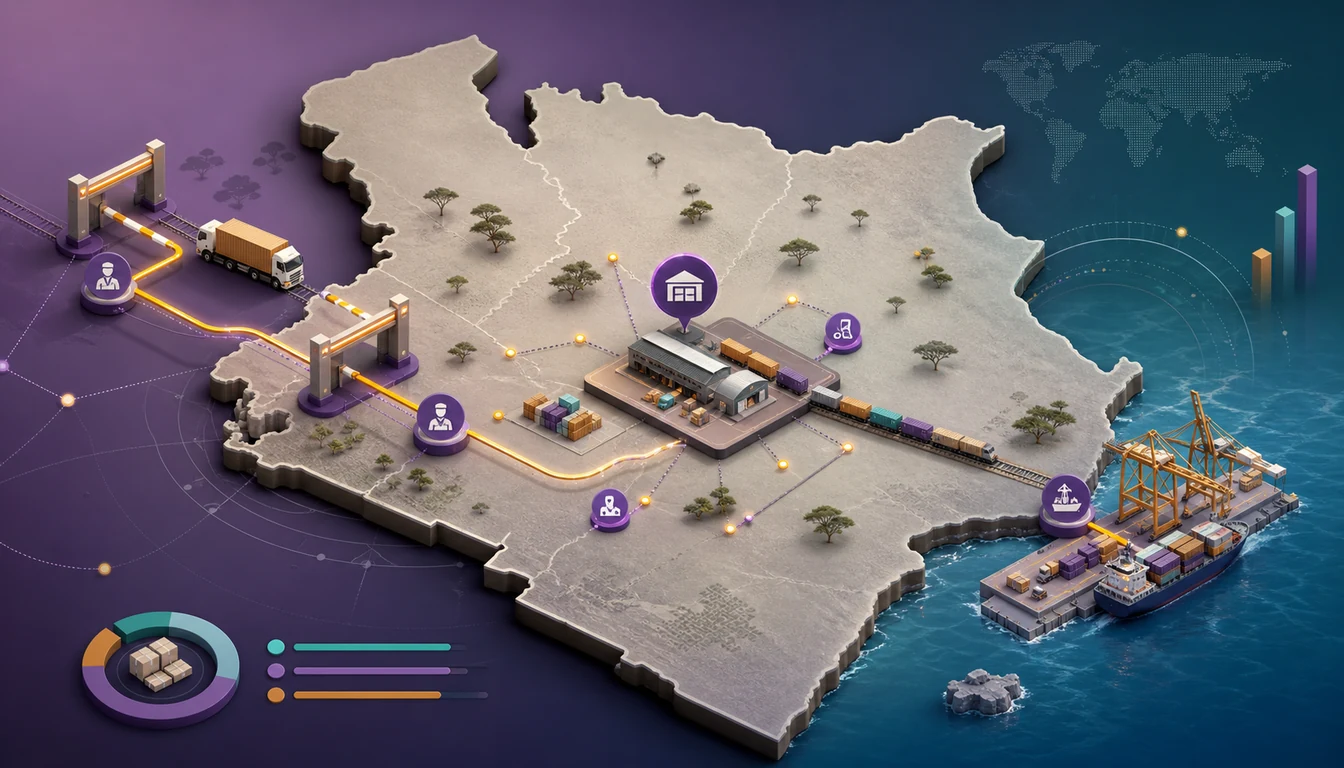
1Channel provides the field and back-office layer a programme like this runs on. Reps work a planned beat with attendance and location-stamped outlet visits, capture orders against the outlet's classification and any applicable scheme, complete configurable in-store task lists, and capture photo proof against a briefed reference. The mobile app works offline and synchronises when connectivity returns.
For dated stock, SKUs can be marked batch, expiry or serial tracked, with shelf life driving the expiry calculation. Batch numbers and manufacturing and expiry dates are captured at goods receipt and carried through transfers and dispatch, with earliest-expiry-first, first-in-first-out, last-in-first-out or manual allocation set per SKU or platform-wide, configurable near-expiry alerts, and stock traceability and stock ageing reporting. Field users see batch and expiry at the point of sale, not only in the warehouse.
On the money side there are credit limits per outlet with block, allow or approval routing when exposure is breached, an outstanding and overdue view with ageing buckets, receipt entry that records M-Pesa till, paybill and PesaLink references and maps them to invoices, and credit notes from returns and claims. Product, SKU and price masters, schemes with validity dates, territory and beat planning, workflow approvals and distributor reporting sit alongside it, and field training runs through the sales team LMS.
On compliance, 1Channel is not a certifying or standards body and makes no such claim. The product supports invoicing and record-keeping workflows aligned with eTIMS requirements, and is built to help organisations meet their own obligations under the Data Protection Act, 2019, which matters here because an outlet master built in the field holds names, phone numbers and locations of identifiable people. More detail sits on the capability pages: batch and expiry management, payment and credit management, distributor order management, route planning and sales team LMS, plus the agriculture and agro-chemicals industry page.
Key Takeaways
The agrovet is the most distinctive outlet type in Kenyan distribution and the one most often served with borrowed machinery. It rewards a programme designed around the crop cycle, the counter's knowledge and the date on the pack.
- The counter makes the choice, not the shopper. Influence here is earned through what the shopkeeper knows, which makes field training a distribution activity rather than a marketing one.
- Plan against the cycle, not the month. Compare an outlet to the same point in the previous season and to what is on its floor now, because a flat monthly target in a seasonal channel manufactures expired stock.
- Credit has to follow the harvest. Set the limit deliberately in KSh, make it visible to the rep before the order is written, and reconcile M-Pesa receipts against invoices.
- Batch and expiry must survive the last mile. Capture batch and dates at goods receipt, allocate earliest expiry first on short-dated lines, and answer which outlet received which batch as a report.
- Traceability is the counterfeit defence you control. Standards and enforcement sit with KEBS and the authorities; knowing which pack went where, and giving reps a structured way to report suspect stock, belongs to the distributor.
None of this needs a different philosophy of distribution. It needs accepting that an agrovet is not a duka, resisting the temptation to reuse the FMCG visit because it is already configured, and confirming the regulatory detail with your regulator and advisers before building on top of it.