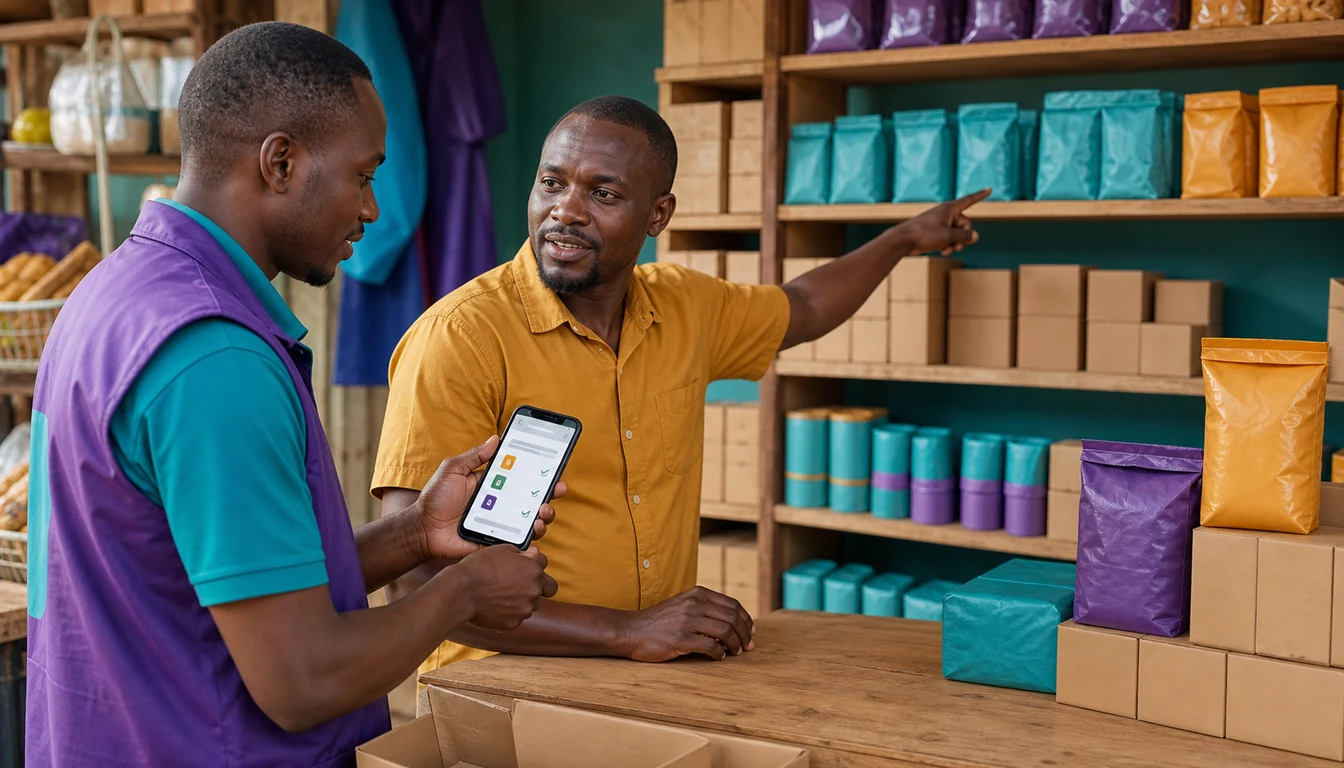
It is mid-morning at a duka on a side street in Nakuru. The shopkeeper has one hand on a carton and half her attention on the rep at the counter. She wants two more cases of the small pack, a box of sachets, and whatever is left of the promotion he mentioned on his last call.
The rep has a phone and about a minute before a customer walks in and the conversation ends. In that minute he has to know what is in the distributor's warehouse, what the outlet may buy on credit, what the line costs today, and which scheme the order qualifies for.
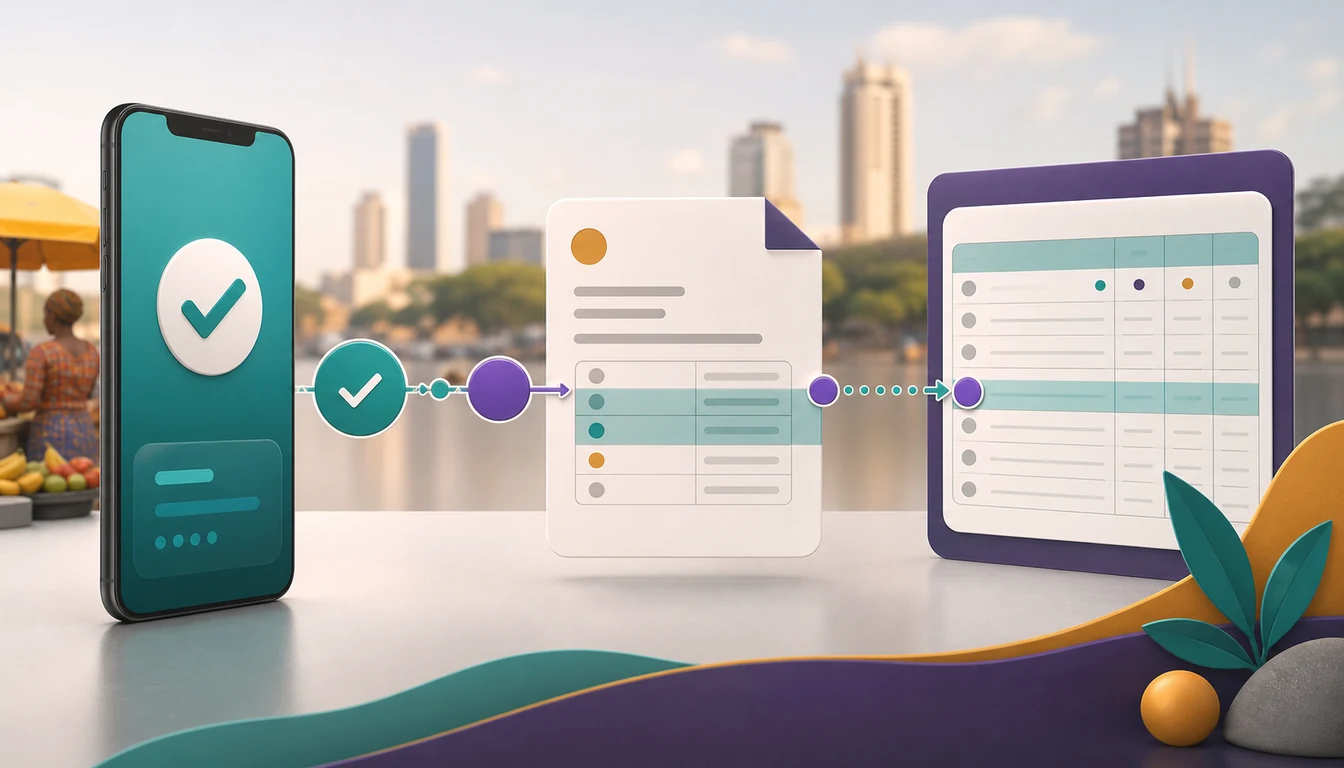
Everything after that minute is the hard part. The order has to travel from a counter with one bar of signal to a system that will price it, pick it and invoice it — without being retyped, without being lost, and without arriving twice.
Between the Counter and the Warehouse
In most field operations the order does not travel as data. It travels as a note on a pad, a voice call to the distributor's office in the afternoon, a photograph of a handwritten list. Each hop is a place where a pack size changes, a quantity is misread, or a price that lapsed a fortnight ago is applied again.
The damage does not show at the counter. It shows at delivery, when a duka receives cases it did not ask for, or an agrovet is billed at a rate the rep never quoted. By then the argument is with a driver who cannot resolve it.
Capturing the order on the phone moves the point where errors are caught to the one moment when the shopkeeper is standing there and can settle them.
Ordering Against a Live Catalogue and Price Master
An order line is only as good as the catalogue it was chosen from. The phone needs the current list of what is sellable — active SKUs, pack configurations, case sizes, and the lines that have been delisted or temporarily blocked — not a version that was accurate when the app was installed.
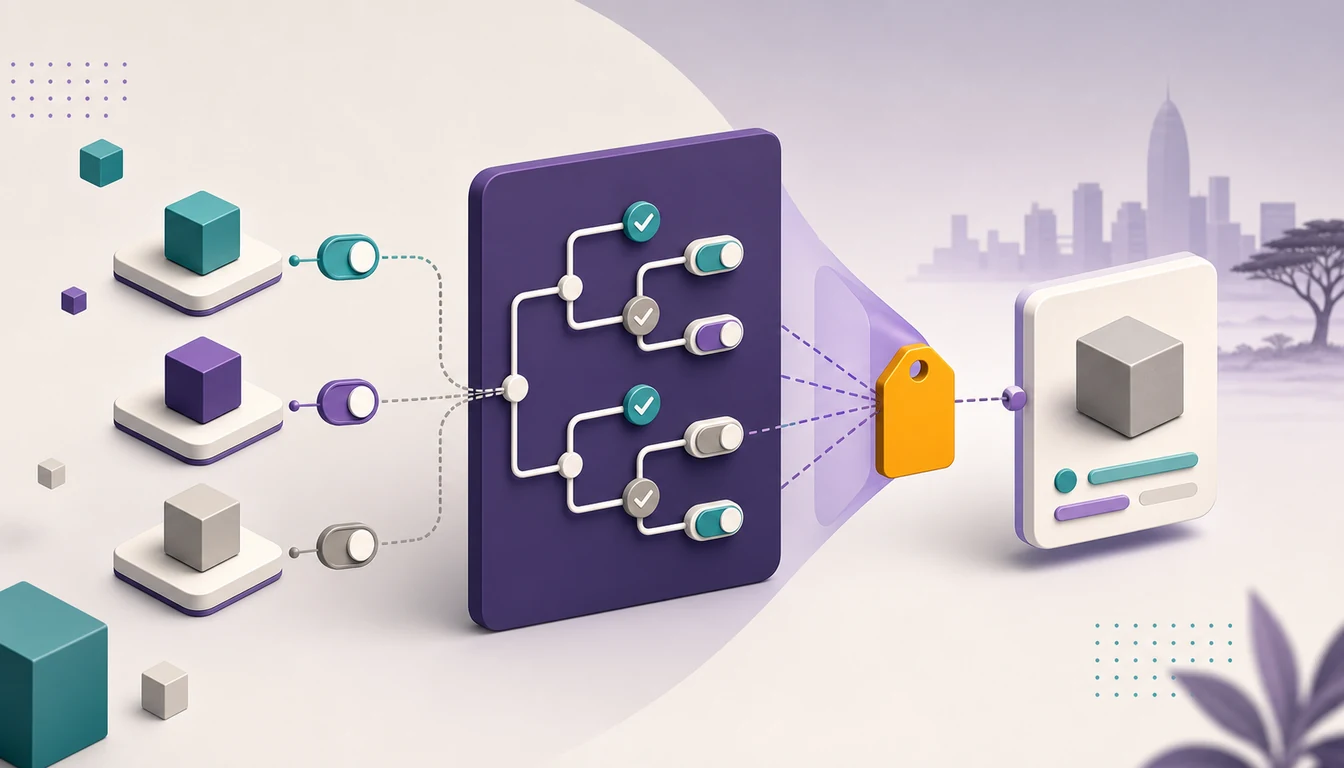
Price is the harder half. Kenyan distributors rarely run one price for everyone. A wholesaler buys differently from a duka, a supermarket buys differently again, and regional variation is real once you are working a route out of Kisumu or Eldoret rather than Nairobi. The price master has to resolve the right figure in KSh for this outlet, on this date, in this channel — and show it, rather than let the rep estimate.
Tax treatment belongs in the same master. VAT-inclusive and VAT-exclusive lines behave differently, and a rep quoting one while the system bills the other is a dispute waiting to happen. Resolve the KES price list, the tax flags and the unit of measure centrally, and the rep holds none of it in his head.
Stock and Credit Checks at the Point of Order
Two questions decide whether an order is real: can it be supplied, and should it be supplied to this outlet.
The first is stock. If the rep can see available quantity while the line is entered, he can offer a substitute at the counter instead of promising a case that will not arrive.
The second is credit, and in Kenya it is rarely simple. Duka and kiosk accounts carry running balances, and money arrives as M-Pesa till and paybill receipts that may not yet be matched to the invoices they were meant to settle. An outlet can look over its KSh credit limit on paper while having paid two days ago. The rep needs the real position before he agrees to load more onto it.
- Available stock at the serving depot or distributor, by SKU and pack.
- Outstanding balance and ageing for the outlet.
- Payments captured but not yet reconciled, shown separately so they are not double-counted.
- The credit ceiling, plus a clear rule on who may override it and how that override is recorded.
Schemes That Apply Themselves
Trade schemes are where manual order-taking breaks down fastest. Quantity slabs, free goods, combination deals across two lines, value discounts, launch offers running three weeks — a rep working a full beat cannot hold the current set in memory, and would apply it inconsistently if he could.
Define schemes once, centrally, with their eligibility rules and validity dates, and let the app evaluate them as the order is built. When the shopkeeper adds the sixth case and the slab changes, the app should apply it and say so on screen.
Visibility matters as much as accuracy. If a scheme fires silently, the shopkeeper suspects she was short-changed. If the app names the scheme and shows free goods as their own lines, that conversation is finished before the van is loaded.
Confirmation the Outlet Can Hold
An order the shopkeeper cannot see is an order she can dispute. The confirmation need not be elaborate — lines, quantities, the price in KSh, the scheme applied, the expected delivery window and the rep's name — but it has to exist and it has to reach her.
How it reaches her depends on the outlet: a supermarket buyer wants it in an inbox, a duka owner an SMS to a +254 number or a printed slip. What matters is that both sides see the same list before the goods move.
Confirmation does quiet work inside the business too. It timestamps the commitment and turns "the shop says it never ordered this" into a lookup.
Capture That Completes Without a Signal
Mobile coverage across Kenya is good in the towns and thins on the way between them. A rep working outward from Machakos, or along stretches off the Northern Corridor, will lose data for parts of the day — inside a concrete-walled wholesaler, in a basement storeroom, in an open-air market where everyone is on the same congested cell.
Power is the second reason, and it is a real one here. Kenya experienced a nationwide blackout in 2026, and electricity remains expensive enough that many small outlets and some distributor premises do not run backup through an interruption. A router that is down takes the shop's Wi-Fi with it.
The practical consequence is a design rule: no step in taking an order may require a round trip to a server. The catalogue, the price master, the customer master, the credit position as last known and the scheme definitions all have to be resident on the device. The order is priced, validated, confirmed and saved locally. Sync happens afterwards; the rep does not wait for it.
This is not a claim that the grid is unreliable day to day. It is that an app which stalls whenever the connection drops will be abandoned — and reps who abandon it go back to the notepad.
Syncing Later Without Duplicating the Order
Offline capture is the easy half. Getting the queue back into the system exactly once is where these apps are judged.
The failure is familiar. A rep taps submit, the connection drops mid-request, he is unsure whether it went through, so he taps again. Or the app reconnects at the end of the route and replays a queue it had already partly sent. The office sees two identical orders for the same duka, and both get picked.
- The device generates the order identifier, not the server, so a retry carries the same ID and the server can recognise it.
- Submission is idempotent — a second arrival of a known ID returns the original result instead of creating a new order.
- The queue survives everything: app restart, a flat battery, a forced update, a phone handed over at shift end.
- Sync state is visible — pending, sent, accepted or rejected — so nobody re-enters an order out of doubt.
- Rejections come back with a reason. If the credit position or a price changed while the rep was offline, the order is revalidated on arrival and he is told what happened.
That last point is most often skipped. An order captured offline was priced against the catalogue the device held at the time; revalidation on receipt keeps offline capture honest, and a clear message back keeps the rep trusting the queue.
Questionnaires and Document Capture on the Same Visit
The rep is already at the counter, so the marginal cost of collecting a little more is small — provided it is genuinely a little.
Questionnaires ride alongside the order: a shelf-availability check, competitor pricing on two or three lines, whether the branded cooler is stocked and switched on, whether last cycle's point-of-sale material is still up. Short, structured, answerable in seconds — and far more useful attached to a specific visit than arriving as a monthly summary.
Document capture covers the paperwork that otherwise never leaves the shop. Onboarding a new stockist means a photograph of the shopfront, the trading licence and the KRA PIN certificate. Deliveries mean a signed note; claims mean a photograph of damaged stock. All of it queues and syncs the way an order does — with one caveat: images are heavy, so compress on the device, upload resumably, and never let a photograph block the order behind it.
A Morning on a Nakuru Route
The rep starts in Nakuru town with a full sync over Wi-Fi at the distributor's premises — catalogue, prices, credit positions, the current scheme set. His first four calls are in town: a mini-mart, two dukas and a wholesaler. Orders sync as he leaves each outlet.
He then works outward along the A104 towards Naivasha, and the picture changes. An agrovet on the roadside has no usable data; the shop beside it is running on a generator after an interruption that morning. He takes both orders anyway. The catalogue is on the phone, prices resolve, the agrovet's credit ceiling is the one he synced at eight, and the scheme on the fertiliser line applies itself. Each shopkeeper gets an SMS confirmation queued for sending, and both orders show as pending.
Two calls later he stops at a petrol-station forecourt with a decent connection. The queue drains: five orders, three questionnaires, a licence photograph for a new kiosk he onboarded, and the two confirmations go out. One order comes back flagged — the duka settled an invoice by M-Pesa an hour earlier, so the credit warning no longer applies. He sees it before the next call.
Nothing dramatic happened. That is the point.
Where the Order Meets eTIMS and Data Protection
The order is not the invoice, but it is what the invoice is built from, and Kenya's invoicing rules have become unforgiving. The Kenya Revenue Authority has required electronic tax invoices through eTIMS since January 2024, covering businesses that are not VAT-registered as well as those that are. From 1 January 2026, KRA validates income and expenses declared in income-tax returns against eTIMS data, and an expense without a valid eTIMS invoice behind it is not deductible.
That raises the cost of a sloppy order. One booked against the wrong customer record, at a stale price, or with a scheme applied by hand afterwards produces an invoice that has to be amended. Clean capture at the counter is the cheapest form of invoice hygiene available.
The same visit also collects personal data: a shopkeeper's name, a +254 number, photographs, identity and licence documents. The Data Protection Act, 2019 and the Office of the Data Protection Commissioner set expectations about purpose, retention and access. In practice: collect only the fields the process needs, be clear with the outlet about why, protect what sits on the device between syncs, and delete records once there is no reason to hold them.
Where These Programmes Go Wrong
Most mobile order-capture rollouts fail for reasons that have little to do with the software's feature list.
- Offline is treated as an edge case. Specified late, built last, tested in an office with full coverage — then it meets a route where it is the normal condition.
- The catalogue goes stale. New SKUs and revised prices need a release or a reinstall, and within a month the app is quoting figures nobody honours.
- Schemes live outside the app. Maintained in a spreadsheet and applied by hand at billing, so the rep and the invoice disagree by design.
- The form grows. Every function adds two questions until reps start entering orders in the vehicle from memory — the notepad again, with extra steps.
- Sync is invisible. Without a clear pending or sent state, reps re-submit out of anxiety, duplicates appear, and the office concludes the app is unreliable.
- The measure is order count. Managers watch how many orders were entered rather than how many were delivered in full at the price quoted.
Every one is a design or governance decision rather than a technical limit — fixable before a single order is taken.
How 1Channel Supports Mobile Order Capture
1Channel provides field sales and distributor management software for taking orders on a mobile device at the outlet. Order entry runs against a centrally maintained catalogue and price master, so the rep sees the applicable price for that customer and channel.
Stock availability and the outlet's credit position can be surfaced at the point of order, and trade schemes are configured centrally and applied automatically as lines are added, with the applied scheme shown on the order. Confirmations can be issued to the outlet, and the captured order passed to distributor and ERP systems so downstream invoicing — including invoicing that must meet eTIMS requirements — works from the record the rep created at the counter.
The application is built to operate without a connection. Orders, questionnaire responses, photographs and documents are captured and completed on the device and synchronised when connectivity returns, with queued submissions handled so a retried or replayed order is not booked twice. Surveys, image capture and document upload run on the same sync path as the order.
On compliance the position is deliberately plain: 1Channel makes no accreditation claims in Kenya. The product is designed to support eTIMS-aligned invoicing downstream and to help organisations meet their obligations under the Data Protection Act, 2019 — the obligations themselves remain the customer's.
Key Takeaways
Mobile order capture succeeds or fails on a narrow set of decisions, most of them made before the first rep is trained.
- Catch errors at the counter, not at delivery. A live catalogue, a resolved price in KSh, real stock and a real credit position let the rep and the shopkeeper settle problems while both are standing there.
- Offline capture is the normal case in Kenya, not the exception. Patchy coverage between towns and genuine power interruption — the country saw a nationwide blackout in 2026, and tariffs remain high — mean no step in taking an order can depend on a live connection.
- Exactly-once sync is the real requirement. Device-generated order IDs, idempotent submission, a durable queue, visible sync state and server-side revalidation stop a dropped connection becoming a duplicate delivery.
- Schemes belong in the app, not in a spreadsheet. Automatic application at entry, shown on screen and on the confirmation, removes the largest single source of invoice disputes with dukas and wholesalers.
- Clean capture is now a tax matter. With KRA validating declared income and expenses against eTIMS data, an order booked against the wrong customer or a stale price creates an invoice problem that is expensive to unwind.
None of this requires a large programme. It requires deciding that the order is finished when the shopkeeper agrees to it — not when the network happens to cooperate — and building backwards from there.