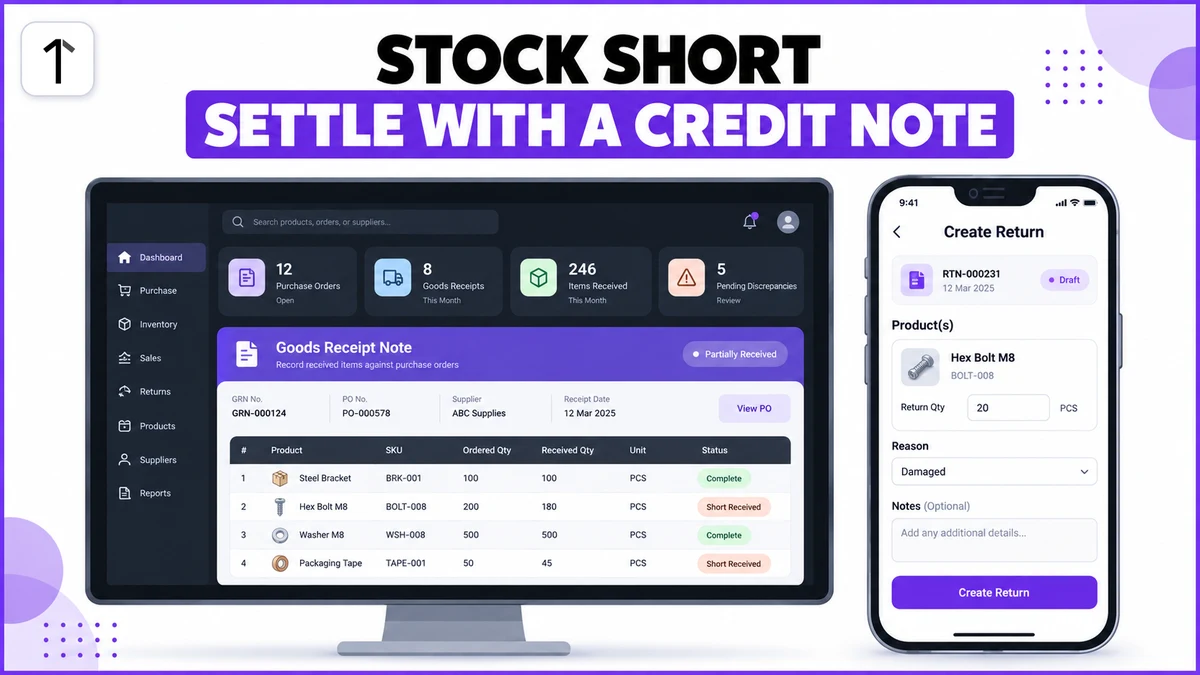
A truck pulls up at a distributor's warehouse with 500 cartons on the manifest, and only 480 roll off the tailgate.
Across Nigeria, that twenty-carton gap between what left the factory and what actually reaches the warehouse floor gets treated as a rounding error more often than it should.
Getting this wrong hits hardest in categories that move high volumes through many hands: FMCG, pharma, building materials, and consumer durables.
This post covers how a proper Goods Receipt Note catches a shortfall the moment stock arrives, when a credit note closes it faster than a physical return, and what changes once a return has to clear another tier of approval first.
Where the Count Actually Breaks
Most shortfalls get discovered the same way. A warehouse clerk signs for a delivery, counts the cartons later, and finds fewer than the invoice says were dispatched.
What happens next usually runs through a phone call to the sales office, a photo of the pallet sent over chat, and a verbal promise to sort it out on the next delivery.
Adeyemi Distribution Ltd, a distributor warehouse outside Lagos, ordered 500 cartons of Sachet Water 500ml from its manufacturer last quarter. Only 480 arrived.
Without a written record tying the shortfall to that specific delivery, the twenty missing cartons sat as an unresolved argument between the warehouse and the sales office for three weeks before anyone agreed on a number.
A shortfall that isn't logged against the actual delivery doesn't just cost twenty cartons. It costs the time spent re-litigating whose count was right.
Recording the Shortfall as a GRN, Not a Phone Call
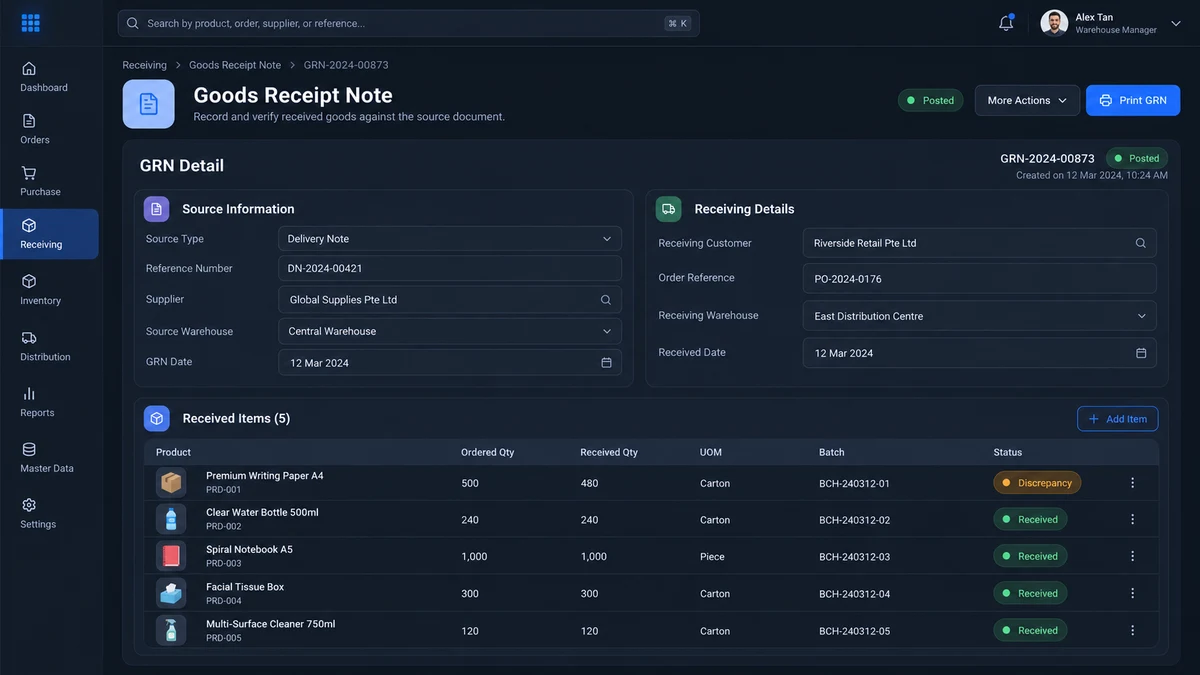
A Goods Receipt Note records what a warehouse actually accepted against an incoming delivery, not what the invoice claims was sent.
It carries the source information (supplier, source warehouse, delivery reference), the receiving details (warehouse, order reference, received date), and a line-by-line items table showing Ordered Qty against Received Qty for every SKU, along with batch and status.
When the received quantity falls short, the system doesn't wait for someone to arrange a physical return of stock that was never actually sent. The difference is settled through a credit note instead, tied to the same GRN record and the same batch.
| What Happens | Settled by Phone Call | Settled by GRN and Credit Note |
|---|---|---|
| Record of the gap | A verbal note or a photo sent over chat | Ordered Qty vs Received Qty on the delivery record |
| Who agrees on the number | Warehouse and sales office, separately | Both sides reading the same GRN |
| How it's resolved | A promise adjusted on the next delivery | A credit note issued against that batch |
| Audit trail | None | Reference number, batch, and GRN date |
When It's Damage, Not a Shortfall
A shortfall and a damaged-goods return aren't the same problem, and treating them the same way loses the detail that matters.
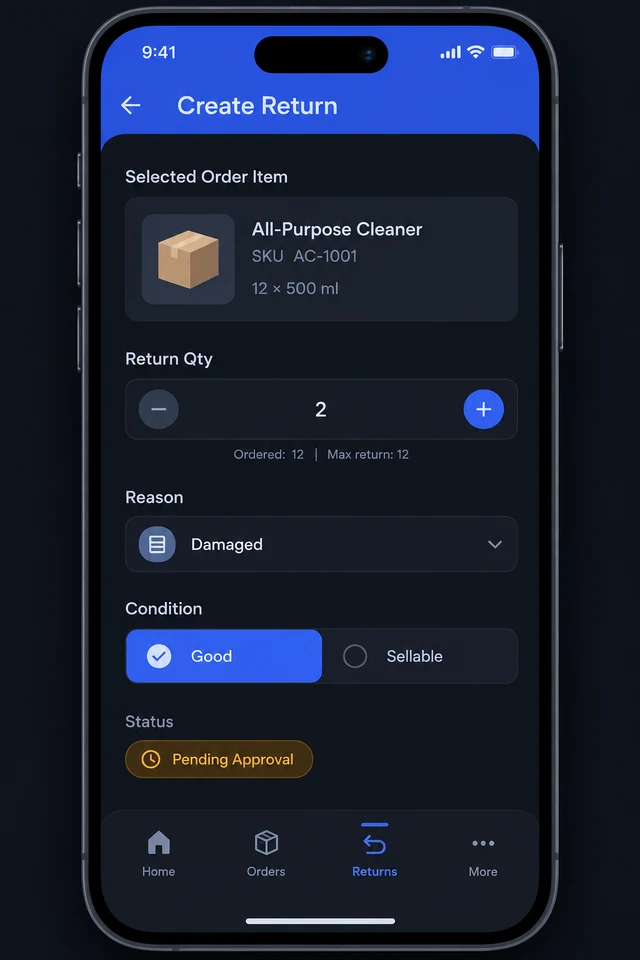
A return starts from a specific order, not a blanket complaint. The warehouse selects the line items, a Return Qty up to what was actually delivered, a Reason such as Damaged, and whether the stock's Condition is still sellable.
Bello Trading Co., a depot in Kano, logged a damaged-carton return on a shipment of Seasoning Cubes 4g Carton after a pallet arrived crushed in transit.
Because Bello sits a tier below its super stockist, the return needed that super stockist's approval before the credit note could post, the same chain of accountability that applies to any order moving through it.
That approval step isn't friction for its own sake. It's what stops a return from becoming a credit note nobody upstream actually agreed to.
How 1Channel Settles Shortfalls Without the Back-and-Forth
On 1Channel's distributor order management, a short receipt and a damaged-goods return live in the same workflow as the order itself, not a separate spreadsheet someone reconciles at month-end.
A GRN discrepancy routes straight to a credit note against the right batch, and a return still clears whichever tier of approval the distribution hierarchy requires before it posts. Neither one depends on a phone call being remembered correctly three weeks later.
Give Shortfalls and Returns One System of Record
See how GRN discrepancies, returns, and credit notes run through a distributor's own order flow instead of a side conversation.
Explore Distributor Order Management →Common Mistakes to Avoid
- Settling a short receipt with a phone call or a chat photo instead of a GRN tied to that specific delivery.
- Processing a shortfall as a full physical return when the stock in question was never actually dispatched in the first place.
- Letting a credit note post before the required tier has approved it, especially on a sub-distributor's return.
- Recording "damaged" and "short-received" under the same generic note, which loses which one actually happened.
- Treating a return as closed once it's logged, without the super stockist or next tier up actually confirming it.
Note: Software screens may vary based on your business structure and configured workflows.