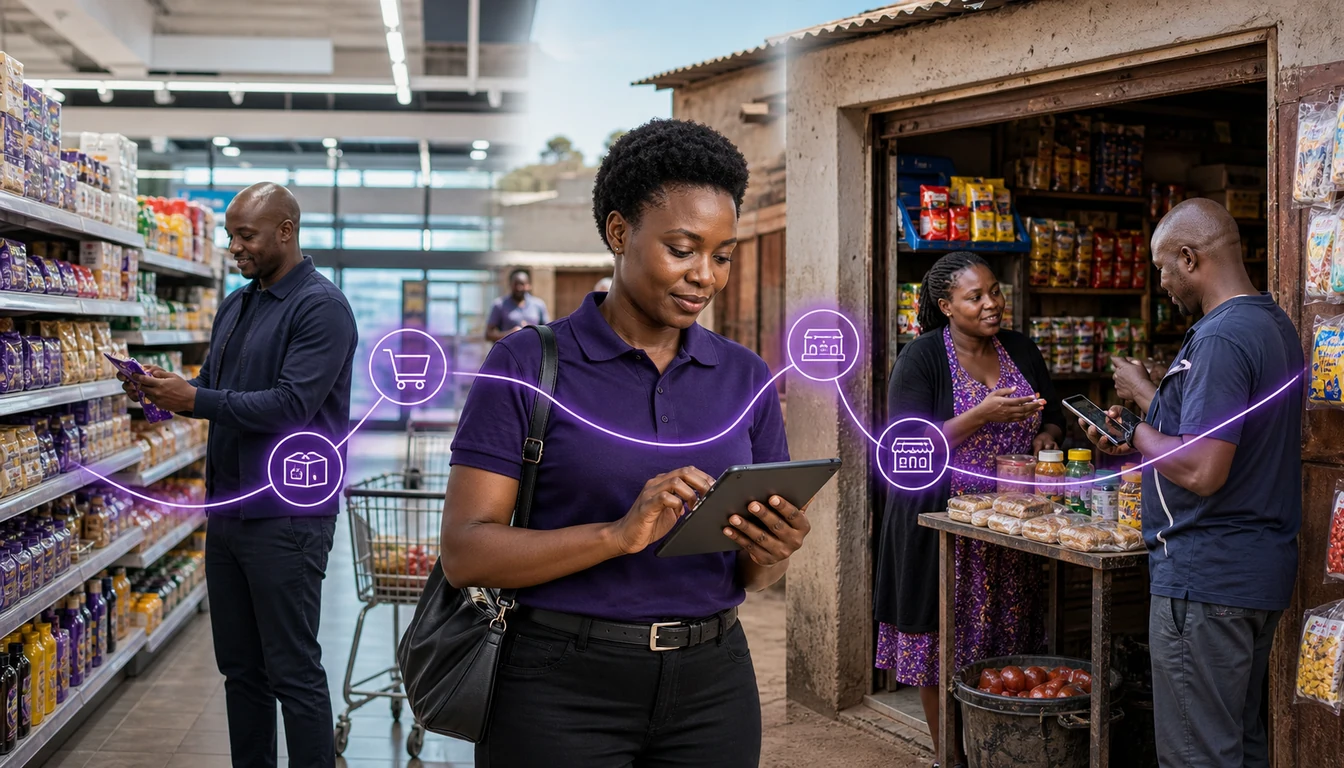
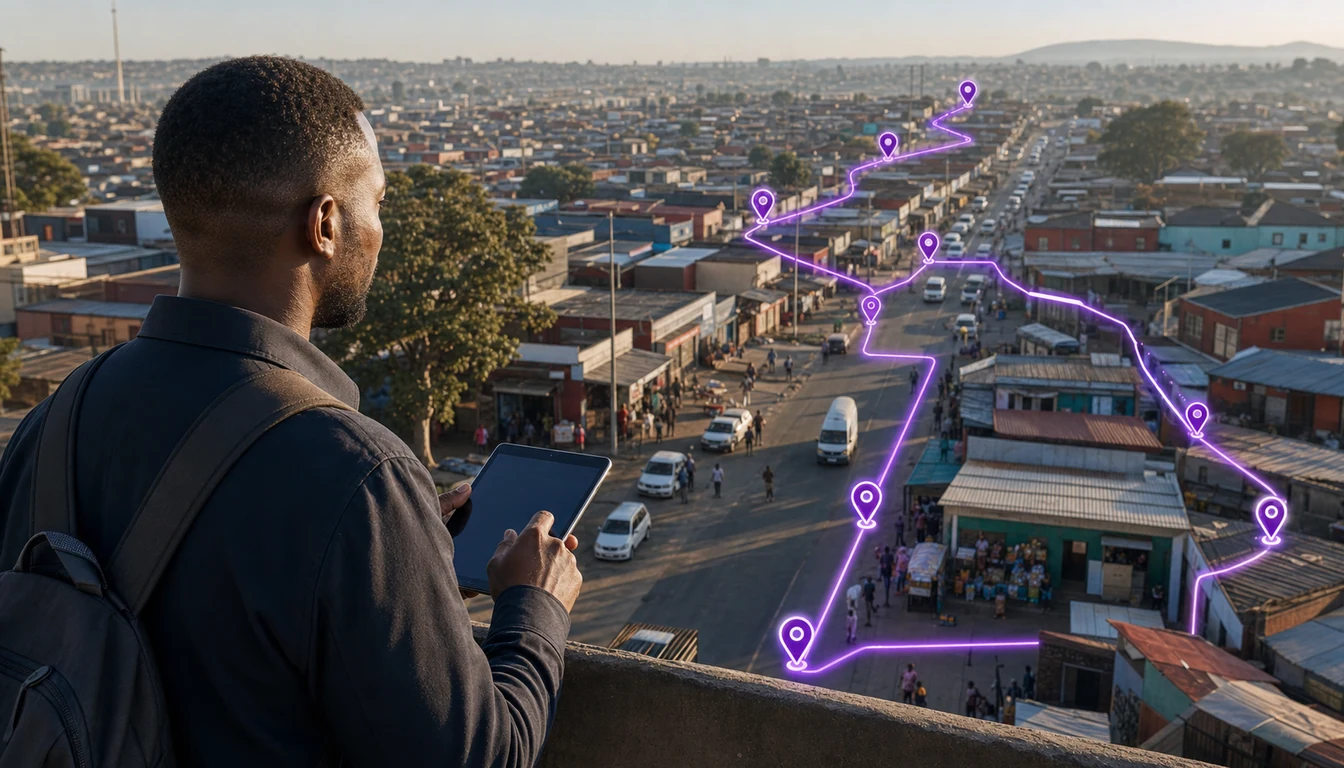
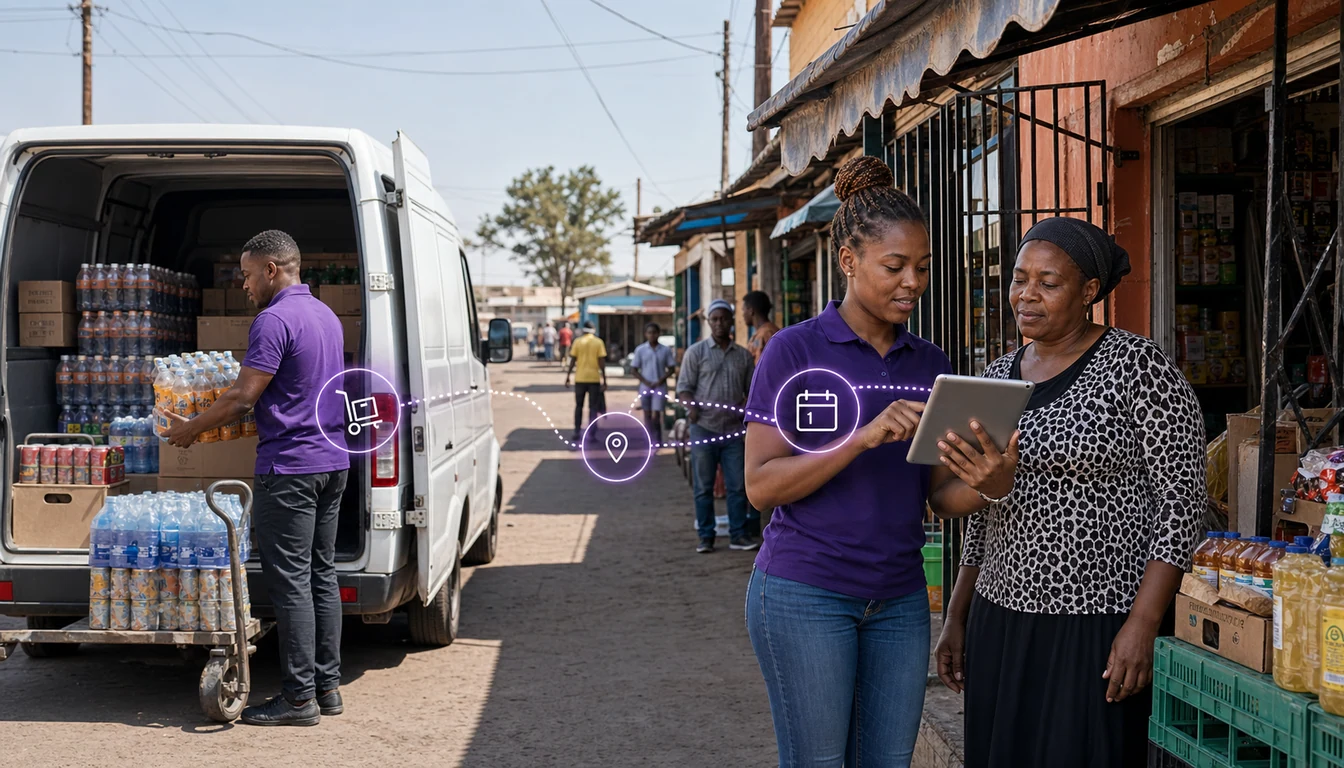
Ask a rep who works the traders around Warwick Junction in Durban, the stalls at the Bree taxi rank in Johannesburg, or a morning of tuck-shop calls out in rural Limpopo, and you get the same answer every time. The order will not wait for a signal.
An independent wholesaler is ready to buy, two shop owners are waiting behind him, and the handset in the rep's hand is showing one bar that flickers out every few seconds. The nearest tower is far enough away that walking outside changes nothing at all.
A field sales app that only functions on a clean connection stops being a tool in that moment and becomes a liability. This piece sets out what offline-first actually has to mean for a South African brand serving national chains and township trade off one field team.
Why Offline-First Is Not Optional in South African Trade
South Africa sells through two channels at the same time. National chains and modern trade carry a large share of the volume, while spaza shops, tuck shops, taverns, forecourts and independent stores are reached through cash-and-carry outlets and independent wholesalers before stock ever reaches a shelf. One field team is usually asked to cover both.
The township side of that mix is dense, cash-first and multilingual. The rural side is thinly spread over long distances. Two things shape almost every day in the field:
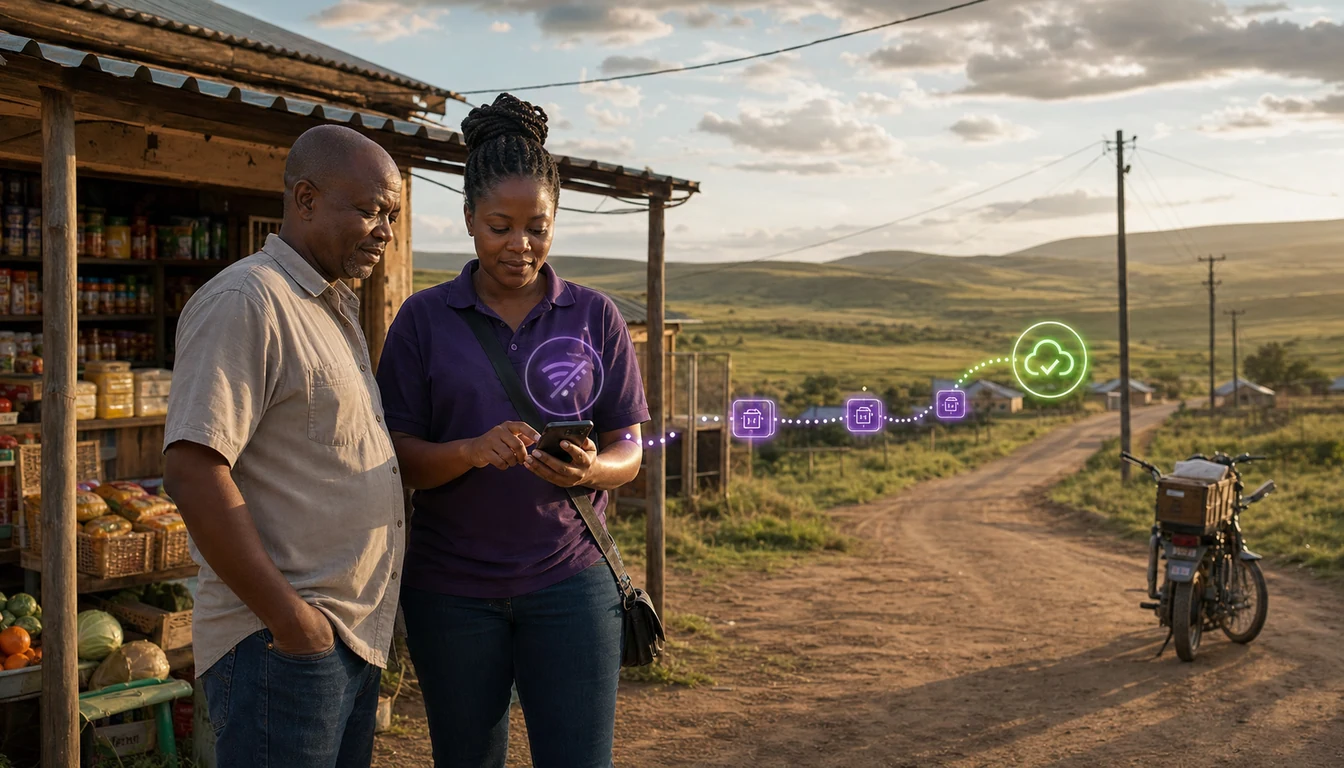
- Coverage that thins out quickly. A connection that feels solid in Sandton or the Cape Town CBD falls away on a farm road in the Eastern Cape, in a pocket deep inside a township block, or behind the steel and concrete of a cash-and-carry warehouse.
- Data that has to be rationed. Mobile data carries a real cost here, and software that pushes every single tap to the server the moment it happens eats through a bundle before lunch. Capturing on the device and syncing once is cheaper as well as more dependable.
An offline-first app treats the connection as a bonus rather than a precondition. Every action is written to the handset first and held in a local queue. The moment a usable signal appears, even for a few seconds, that queue moves to the cloud in the background without the rep doing anything about it.
There is an easy way to test any vendor's claim. Halfway through the demonstration, put the handset into flight mode and ask them to book an order and register a new outlet. If anything stalls, spins or refuses outright, you are looking at online-first software with an offline label on the box, and it will quietly cost you orders every week.
A Route Day That Survives a Dead Signal
Here is what a full day looks like when the software was designed around a rep in a bakkie on the N1 rather than an analyst on fibre in a head-office boardroom.
Start of day: attendance and route load
- Clock in with a geo-stamped selfie as soon as the rep reaches the territory, written to the device whether or not there is a connection, and uploaded afterwards so nobody has to argue about who was where and at what time.
- Cache the whole route overnight. The day's outlets, rand price lists, running promotions and distributor stock positions should already sit on the handset before the rep leaves home, so the route opens instantly on a dead connection.
- Sequence outlets by distance and landmark, not by street name. Where street addressing is inconsistent, navigation has to run on GPS pins and plain descriptions such as "third container past the taxi rank" or "blue gate opposite the clinic".
At the counter: capture it now, not later
- Take the order at the counter against cached stock and that outlet's credit limit, so the rep never promises a line the warehouse cannot actually ship.
- Record how it was paid at the moment it is paid: cash, card, instant EFT or PayShap. Reconciling a week later is only possible if somebody captured how each shop settled.
- Hand over a PDF order the owner keeps, generated offline on the handset, so both sides are holding the same record before any cash moves.
- Register new outlets on the spot, pinning a newly opened spaza shop, tavern or independent store by GPS and landmark without a form travelling back to the office first.
A team working this way keeps trading through the entire dead stretch, then lets the handset push the whole day up in one pass once it reaches coverage again. Nothing is re-keyed on a Friday afternoon and nothing is lost because the signal never came back.
What to Measure When the Data Arrives Late
When numbers land in bursts as handsets reconnect, you have to read them with the field in mind. The measures worth watching in an offline-first operation tell you something about coverage and something about the quality of the data itself.
| Measure | What it actually tells you |
|---|---|
| Sync lag per rep | The distance between the moment an order was captured and the moment it reached the server. A rep whose day only lands at six in the evening may genuinely be on a dead route, or may be arranging timestamps to suit. |
| Route adherence and strike rate | How many planned outlets were reached, and how many of those calls turned into an order. GPS check-ins against a landmark pin keep this honest where street addressing is inconsistent. |
| Primary against secondary sales | What left the plant for the distributor set against what reps actually sold down to retailers, so stock sitting still in a warehouse in Gqeberha or Polokwane surfaces early. |
| Collections by payment method | As township trade moves from pure cash towards card, instant EFT and PayShap, tracking collections against each method shows exactly where the delays and the leakage sit. |
Getting every rep to capture the same things in the same way is the whole point of sales force automation: one route standard, attendance validated by location, and offline order capture that turns a scattered day into something you can measure.
The Handsets and the Languages You Actually Have
Offline-first is not purely a networking question. It is about the whole field environment being rougher than any boardroom demonstration allows for. Two things catch out teams who get the sync engine right and then forget everything around it.
The handset reality
Your reps are not carrying the newest flagship handsets. Assume entry-level Android phones with limited storage, ordinary batteries and screens that wash out in bright sun on a pavement in Mitchells Plain or on a gravel road in the Free State.
The app has to stay small, cache without swallowing the storage, and remain usable in battery-saver mode. Anything that flattens the phone by midday has already failed the second half of the route.
The language reality on the route
South African field teams are genuinely multilingual. A rep can move between English, isiZulu, isiXhosa, Afrikaans and Sesotho across a single morning of calls, pitching in whichever language the shop owner is most comfortable using.
Training material and in-app prompts should not assume one language carries everywhere. Building that in at onboarding cuts mistakes at the point of capture, and the point of capture is where offline data quality is won or lost.
Five Mistakes That Undo the Whole Thing
Plenty of teams buy exactly the right platform and then quietly undo it. These are the five worth watching for:
- Treating offline as a mode you switch on. Where offline is a fallback bolted onto online-first software, you get lost records and conflicts the moment two versions of an order try to reconcile. Offline has to be the ordinary path, not the emergency one.
- Leaving conflicts to chance. A rep edits an outlet on the road while an administrator edits the same record in the portal. Without a stated rule about which version wins, your master data decays quietly and nobody notices for months.
- Trusting a timestamp on its own. An order stamped nine in the morning but uploaded that evening from a point well off the planned route is telling you something. Pair the time with a location and the question answers itself.
- Forgetting what the shop owner needs. In cash-first trade, an owner wants something in hand before parting with money. A PDF order produced offline is what closes the sale at the counter.
- Assuming prices hold still. As rand price lists move and promotion terms change, cached prices have to refresh on every single sync, or a rep will confidently quote a number that expired last week.
Where regulation reaches your data, whether that is personal information under POPIA and the Information Regulator or the product records that matter to SAHPRA and SABS in pharma and packaged goods, clean geo-validated capture works in your favour. You end up with a defensible trail instead of notes scattered across personal handsets.
How 1Channel Keeps South African Field Teams Selling Offline
Running an offline-first operation across South African territory means attendance, order capture and outlet creation all have to keep working in the dead stretches between towers. 1Channel holds those activities in one connected platform designed around exactly that.
The Cloud AI Mobile DMS App is built for entry-level Android handsets and for conditions no boardroom pilot ever reproduces. A rep carries on regardless of the connection, and the handset pushes everything upward the moment a bar returns.
The platform gives a South African field team:
- Attendance stamped with GPS and captured on the handset itself
- Route plans built on landmarks and distance where street addressing is inconsistent
- Orders taken offline against cached stock positions and rand credit limits
- PDF orders the shop owner keeps before any money changes hands
- New spaza shops, taverns and independent stores registered by GPS pin
- Payment method tracked across cash, card, instant EFT and PayShap
Keep Selling Where the Signal Runs Out
See how the Cloud AI Mobile DMS App lets a South African rep mark GPS attendance, work the day's route, capture orders with no connection at all, share a PDF order and register a new outlet on the spot, all from an entry-level Android handset.
Explore the Mobile DMS App →What to Take Away
The network decides where it will reach and when, and it does not consult your route plan before deciding. The teams that keep selling are the ones who built the day around the worst moment on it rather than the best.
- Design for the worst moment. No signal, a tired battery and an owner who will not wait should be the baseline your workflow assumes, not an exception it handles badly.
- Make offline the default. Attendance, order capture and outlet registration all have to work on the handset first and sync afterwards, never the other way round.
- Pair every timestamp with a location. Geo-validated capture keeps the field honest and leaves you a trail you can defend.
- Build for the handsets and languages you have. A light app on an entry-level phone and onboarding in the rep's own language protect data quality where it is created.
Design the day around that worst moment, and every better moment on the route looks after itself.