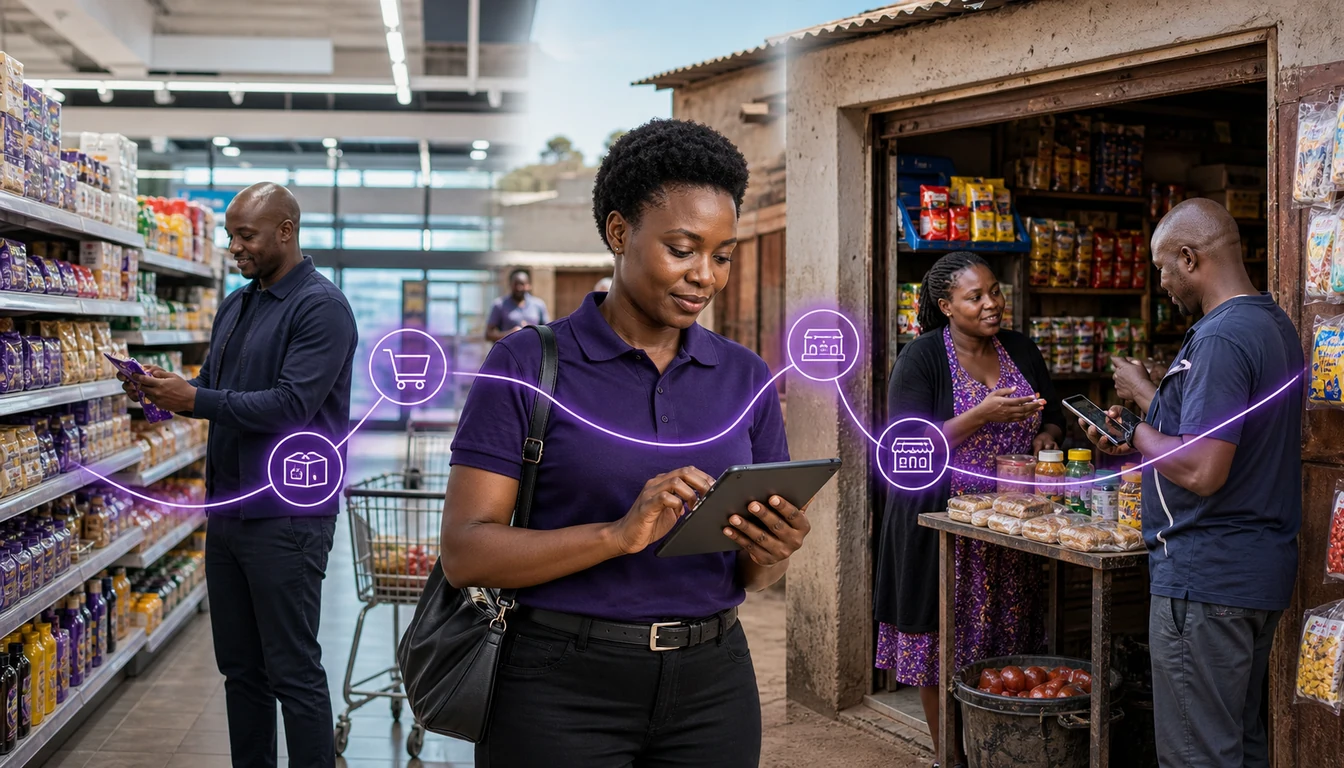
Ask a national sales manager who pushes FMCG volume through the trading lanes of Warwick Junction, the spaza shops of Soweto and a modern-trade account in Gauteng how the brand really reaches the shelf, and it narrows to one recurring question. Does the rep sell straight off a vehicle, or capture the order now and deliver it later?
That is the van sales versus pre-sales call, and it is not a scheduling detail. It sets how much working capital sits in the channel, how your distributors are structured, and how quickly an empty shelf gets noticed.
South Africa is unusual in that both halves of the trade genuinely matter. National chains and a deep formal independent tier sit alongside a very large township trade of spaza shops, tuck shops, taverns and forecourts, reached through cash-and-carry, independent wholesalers and direct distributor delivery. One field team is usually expected to cover the lot. This guide works through both models in South African terms so you can decide where each one earns its place.
What Each Model Actually Looks Like on a Route
Both terms describe the same moment: the secondary sale between your distributor and the outlet owner. Both are widely used across South African trade, and most established brands end up running some blend of the two rather than one or the other.
Van sales: load the vehicle and sell off it
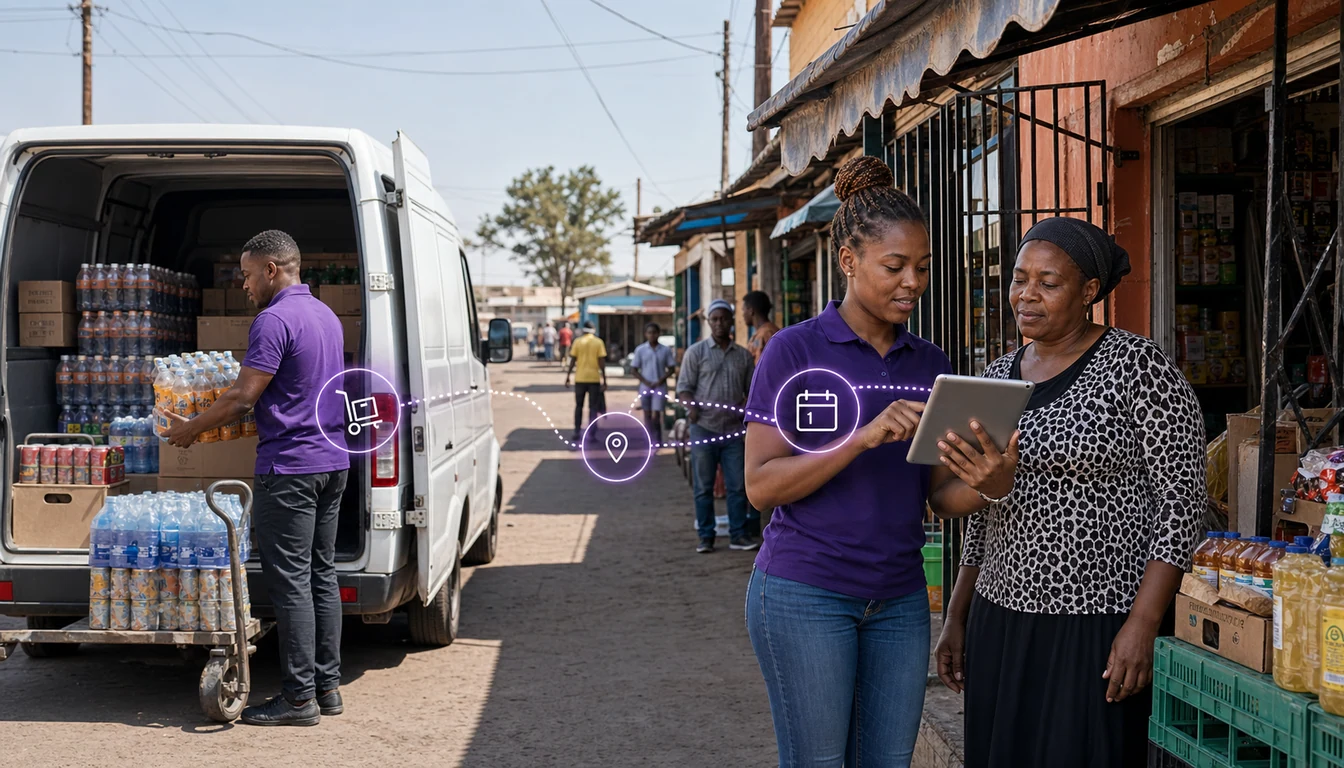
The rep pulls out of the distributor warehouse each morning with a loaded vehicle and works a fixed route through a township, a suburb or a stretch of forecourts. Stock moves straight off the vehicle.
The owner sees the product, takes what she wants, settles there and then, and the cases come off the vehicle on the spot. Selling and delivery are a single event. It is the natural fit for the lines a spaza owner in Tembisa or Mitchells Plain expects to replace the same day she runs dry.
Pre-sales: take the order, deliver afterwards
Here the two jobs separate. A pre-sales rep walks the outlet, checks what is on the shelf, captures the order on a handset, and moves to the next door carrying nothing at all.
Orders are pooled at the distributor and a delivery vehicle drops the stock, usually the following day. Selling is no longer tied to carrying inventory. A single rep reaches far more outlets in a day, and the distributor loads against orders that already exist instead of against a forecast.
The Two Models Side by Side
Before the trade-offs, here is how the two compare on the handful of factors that usually settle the argument in South African trade.
| Factor | Van Sales | Pre-Sales |
|---|---|---|
| Payment | Cash, card or instant EFT at the counter | Usually short credit ahead of delivery |
| Best route type | Scattered spaza shops and forecourts | Tight taxi-rank and high-street clusters |
| Outlets per rep per day | Fewer, the loaded vehicle sets the pace | More, the rep travels light |
| Product fit | Bulky, fast-moving, a narrow range | Wide assortment, uneven order sizes |
| Main risk | Stock coming back unsold at day-end | Receivables and ageing balances |
The Trade-Offs That Decide It in South Africa
On paper this reads as a logistics preference. In practice four South African realities settle which model earns its place in a given territory.
Cash, credit and how retailers actually pay
Van sales is essentially a cash-and-carry motion. It suits a trade where owners still settle in cash at the counter and, increasingly, by card, instant EFT or PayShap the moment the sale is agreed.
Money settles at the counter, so collection risk stays low and the cash cycle is short. Pre-sales normally carries short credit, because the outlet commits before the stock arrives. As rand price lists move and distributor liquidity tightens, that exposure needs a firm limit per outlet and disciplined follow-up on every open balance.
Route density and trading geography
- Tight clusters: Around a busy interchange such as the Bree taxi rank in the Johannesburg CBD, or through the market lanes of Warwick Junction in Durban, a loaded vehicle becomes a liability. Congestion, narrow access and nowhere to park slow it right down, while pre-sales reps on foot work many more doors an hour.
- Spread-out routes: Across scattered spaza shops, tuck shops and forecourts on the outskirts of Polokwane or Gqeberha, van sales earns its keep. The rep is already driving between outlets, so carrying stock and closing on the spot removes an entire second trip.
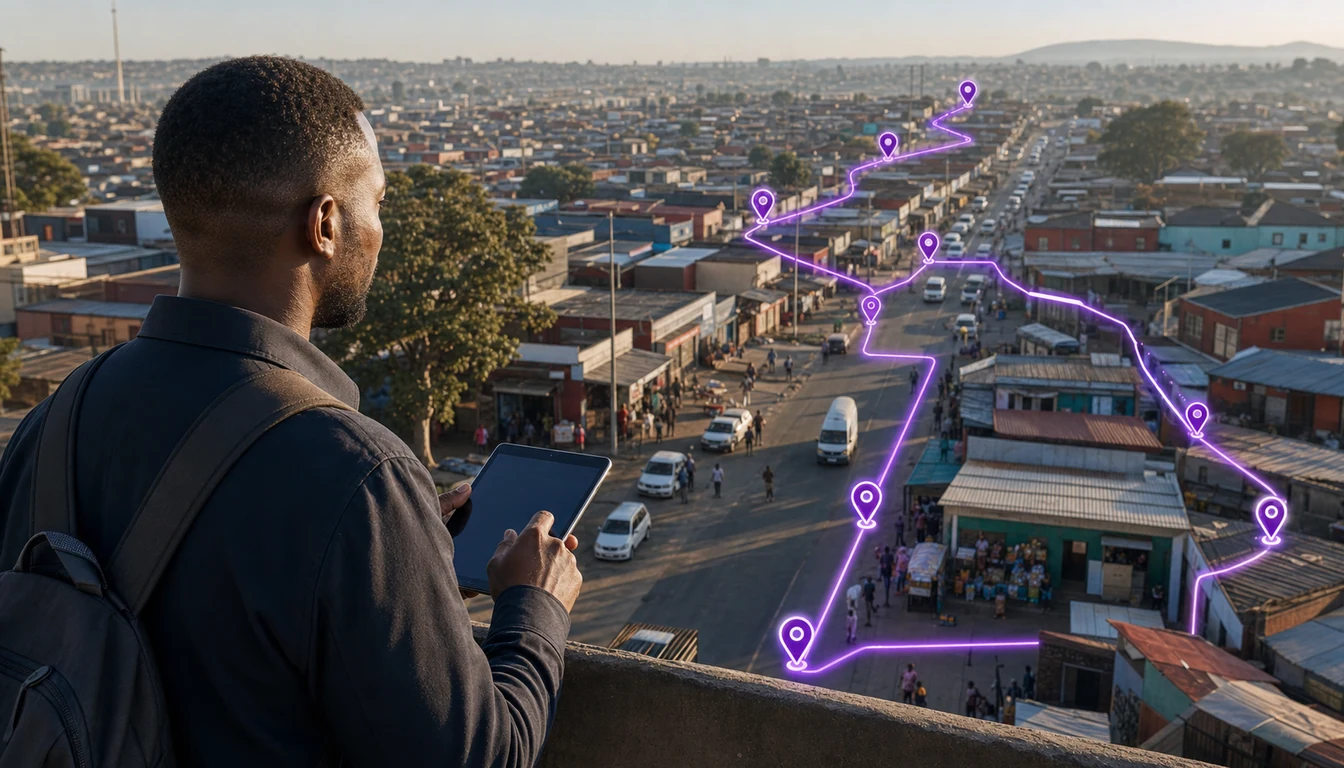
- Finding the door: Plenty of outlets sit where street addressing is inconsistent, so both models lean on GPS and landmark-based outlet mapping rather than a postal address. Whichever model you run, the outlet gets pinned once and every rep after that uses the same pin.
What you are actually carrying
Bulky, low-value, high-frequency lines such as soft drinks, maize meal, snacks and airtime or data vouchers favour van sales. The owner wants the stock in the shop now, and a dedicated delivery run for one small order rarely pays for itself.
Higher-value, slower-moving or broader ranges favour pre-sales. A rep can sell the whole catalogue without every SKU riding on the vehicle, and the delivery truck then carries only what was genuinely ordered.
Coverage, data cost and offline-first working
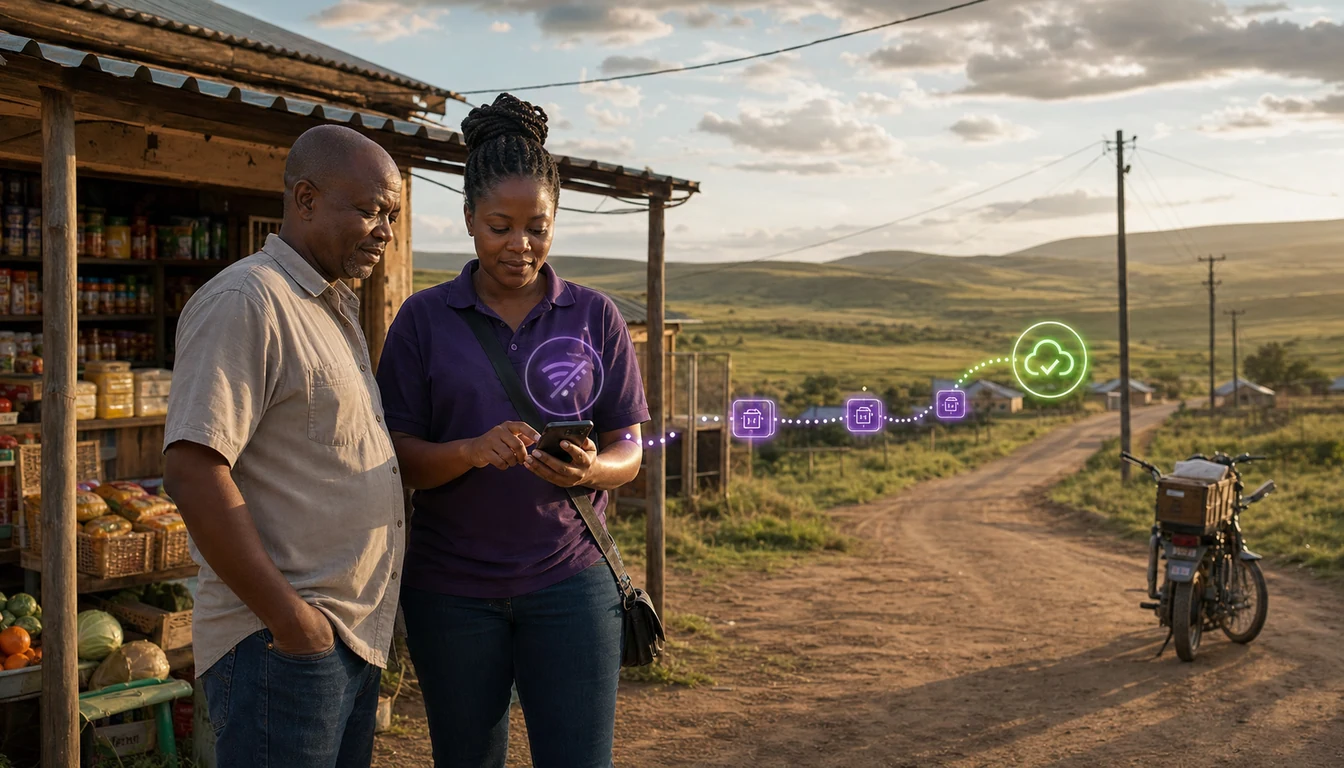
Whichever model you pick, a good number of South African routes will not hand your reps a usable signal all day. Coverage thins out on rural roads between towns, and it drops into dead pockets inside dense township blocks and inside large market buildings. Mobile data is not cheap enough to burn on repeated retries either.
So the app in the rep's hand has to record orders, stock counts and payments offline and sync once the connection returns. A pre-sales order that cannot be captured for want of signal is simply a lost order, and a van sale that never gets logged stays invisible to the distributor until the rep is back at the warehouse.
Matching the Model to the Territory
Rather than declaring one model for the whole business, map it to the territory and the channel. A workable way to frame the choice:
- Lean van sales when outlets are spread out, the range is narrow and fast-moving, owners expect same-day replacement, and payment lands at the counter in cash, on card or by instant EFT.
- Lean pre-sales when outlets are packed close together, the assortment is wide, order sizes swing about, and you want the most productive calls per rep per day with delivery loaded against orders that are already confirmed.
- Run both across most real South African territories: van sales on the top fast-movers and pre-sales on the long tail, or van sales through the outlying suburbs and pre-sales inside the congested trading core.
The call is far easier to defend when it rests on measurement instead of habit. Work through these before you fix a model into a territory:
- Work out the average drop size per outlet under each model.
- Count the productive calls one rep genuinely completes in a day.
- Weigh the cost of a delivery run against the value it is carrying.
- Check how much stock comes back on the vehicle at the end of the day.
What to track once the model is set
- Coverage and strike rate: how many planned outlets on the beat were genuinely entered, and how many of those bought something.
- Lines and volume per productive call: whether reps are selling the whole range or only the three easy SKUs.
- Vehicle returns and fill rate: under van sales, what comes back unsold; under pre-sales, how much of each order the delivery run actually satisfied.
- Sell-in against sell-through: what the distributor bought in versus what genuinely moved to outlets, so loaded stock is never read as demand.
- Collections and credit ageing: under pre-sales above all, how fast open balances are actually cleared.
Where South African Brands Get Caught Out
Both models fail in fairly predictable ways once they are run on paper, memory and goodwill. These are the ones that keep coming back.
Visits that were never actually made
When visits are self-reported, a beat can read as fully worked while several outlets were never entered at all. Geotagged, time-stamped visits checked against a pinned outlet location close that gap, and they count just as much for a van rep as for a pre-sales rep.
Reading sell-in as though it were sell-through
A distributor placing a large primary order does not mean the product reached a single shelf. Brands watching dispatch alone get caught out when stock sits in the warehouse or drifts sideways into someone else's territory. Capturing the secondary sale at the outlet visit is what turns loaded stock into a real market signal.
Credit that nobody is holding
Pre-sales without a firm limit per outlet quietly stacks up receivables that go unremarked until a distributor's working capital is stuck in the channel. Set the limit, enforce it at order entry, and age balances every week.
Assuming the field team works in one language
Your field force works across South Africa's official languages, and a team in Umlazi or Mdantsane will not adopt a workflow written only in the register of a Johannesburg head office. App prompts and training that reach reps in the language they genuinely sell in get used; the rest quietly get worked around.
How 1Channel Supports Both Models in South Africa
Both van sales and pre-sales live or die on clean field data. 1Channel's Cloud AI Sales Force Automation software is built for the way South African distribution actually runs, across national chains, independent wholesale and township trade alike, so the model you pick becomes a lever you can pull rather than a habit you inherited.
It works offline-first on entry-level Android handsets, holds orders and payments when coverage drops on a rural route or inside a dense block, and syncs the moment the connection comes back.
From a single platform, the software lets you:
- Run van sales and pre-sales alongside each other, matched territory by territory.
- Capture geotagged, time-stamped visits against outlets pinned where street addressing is inconsistent.
- Record the secondary sale at the outlet itself, not only the primary dispatch.
- Hold a credit limit per outlet at order entry and age open balances weekly.
- Plan beats and read field analytics on coverage, strike rate and vehicle returns.
Run Both Models on a Single Platform
See how 1Channel's Sales Force Automation software handles offline-first van sales and pre-sales, geotagged outlet visits, secondary-sales capture, beat planning and field analytics across South African distribution.
Explore Sales Force Automation →Key Takeaways
There is no universal winner between van sales and pre-sales in South Africa. What decides it is the fit between the model, the territory, the product and the way outlet owners settle.
- Van sales suits fast-moving lines, scattered routes and payment taken at the counter.
- Pre-sales suits tight trading clusters, wide ranges and coverage at scale, as long as credit is held on a short leash.
- A blend of the two fits most real territories, with the split drawn along product and geography.
- Let the numbers draw the line instead of habit, using drop size, coverage, delivery cost and vehicle returns.
- Either way you rely on offline-first field data, honest secondary-sales capture and coverage you can verify.