A field sales representative visits a retail store, completes a merchandising task, captures a shelf photo, and submits it. The activity appears complete.
But when the supervisor reviews the image, the problem becomes clear: the photo is blurry, the promotional display is partly outside the frame, or the products cannot be identified properly.
By then, the representative may already be visiting another outlet.
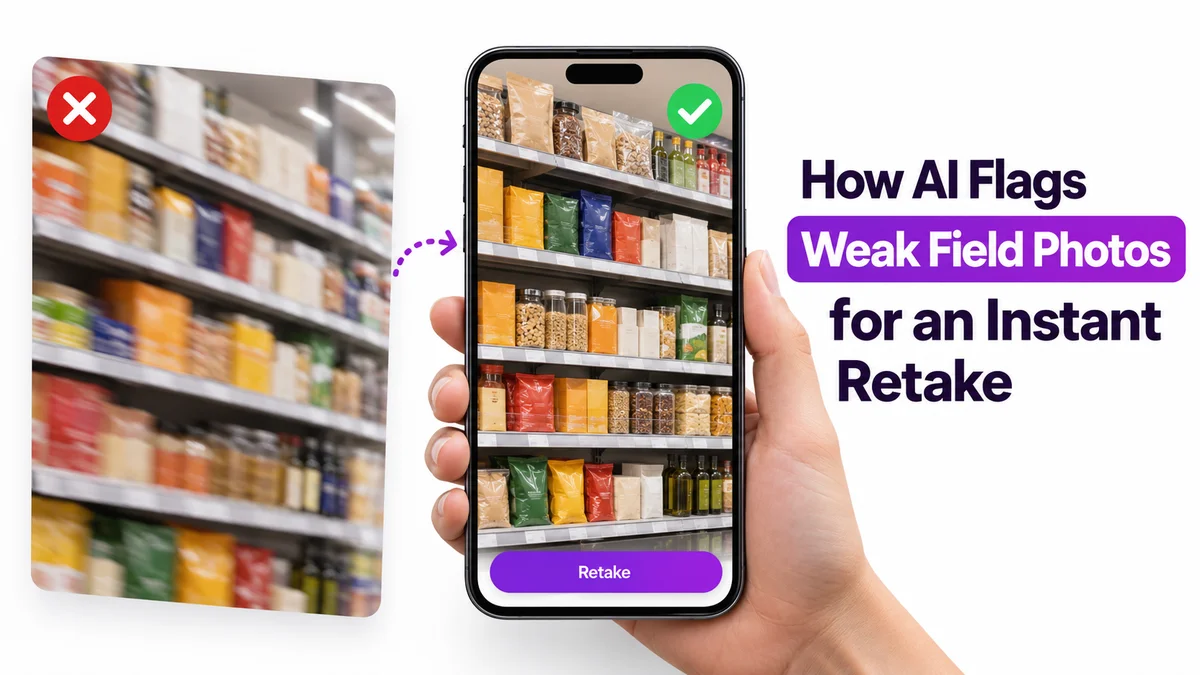
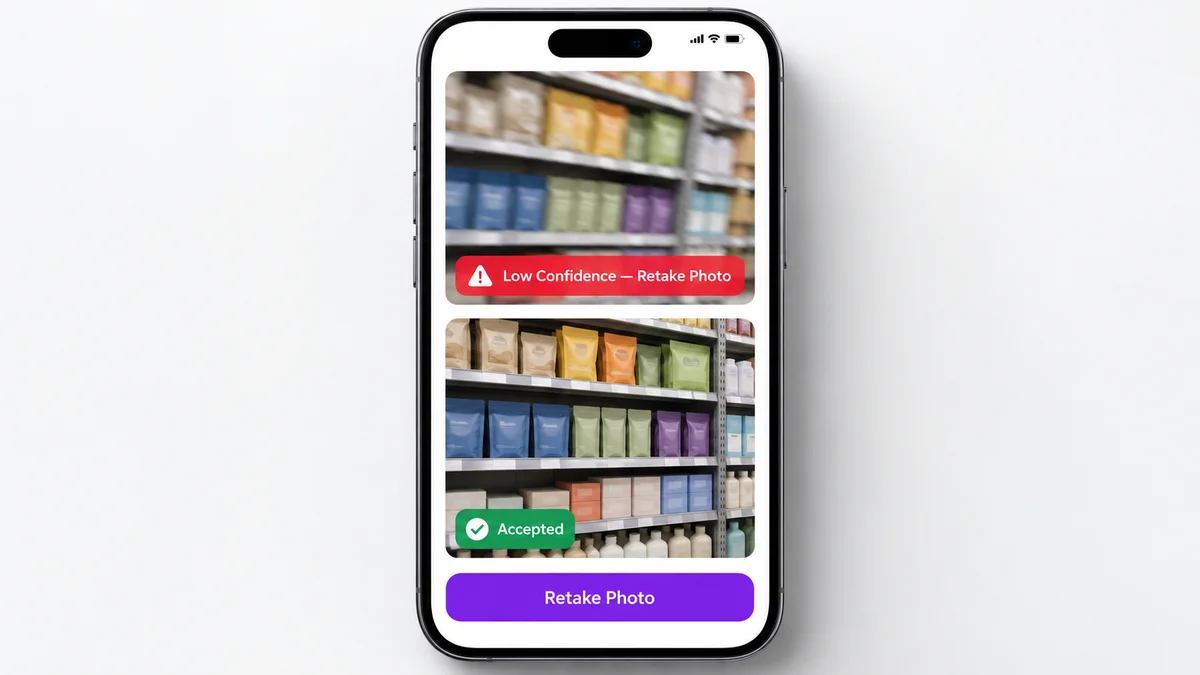
AI image recognition changes this process by identifying weak field photos while the representative is still at the store. Instead of waiting for a manual audit, the system can flag a low-confidence image and prompt an immediate retake.
This makes photo-based retail audits more reliable and reduces the need for repeated follow-ups.
Why Weak Field Photos Are a Problem
Field photographs are an important part of retail execution. Companies use them to verify shelf visibility, promotional material placement, product facings, and campaign execution.
However, photographs do not always provide usable evidence.
Common problems include poor lighting, blurry images, incomplete shelf coverage, obstructed displays, and incorrect camera angles.
For example, a representative may photograph a promotional standee, but only half of it appears in the image. The activity may have been completed correctly, yet the photograph cannot reliably establish compliance.
Traditional audit processes often discover these problems after submission, when a supervisor reviews the evidence.
This creates avoidable delays and may require another store visit.
How AI Identifies Weak Photos During a Store Visit
AI-powered image recognition uses computer vision to examine submitted photographs and determine whether they provide sufficient information for the required retail audit.
In 1Channel's Image Recognition workflow, field representatives follow guided photo instructions and receive retake prompts when the AI cannot confidently evaluate a submitted image.
The process works in five steps.
Step 1: Guided photo capture
The representative opens the relevant store task in the mobile application. The system displays the required photo angles and reference guidelines.
For shelf visibility, these may include center, left, and right wall photographs, with close and long shots as required.
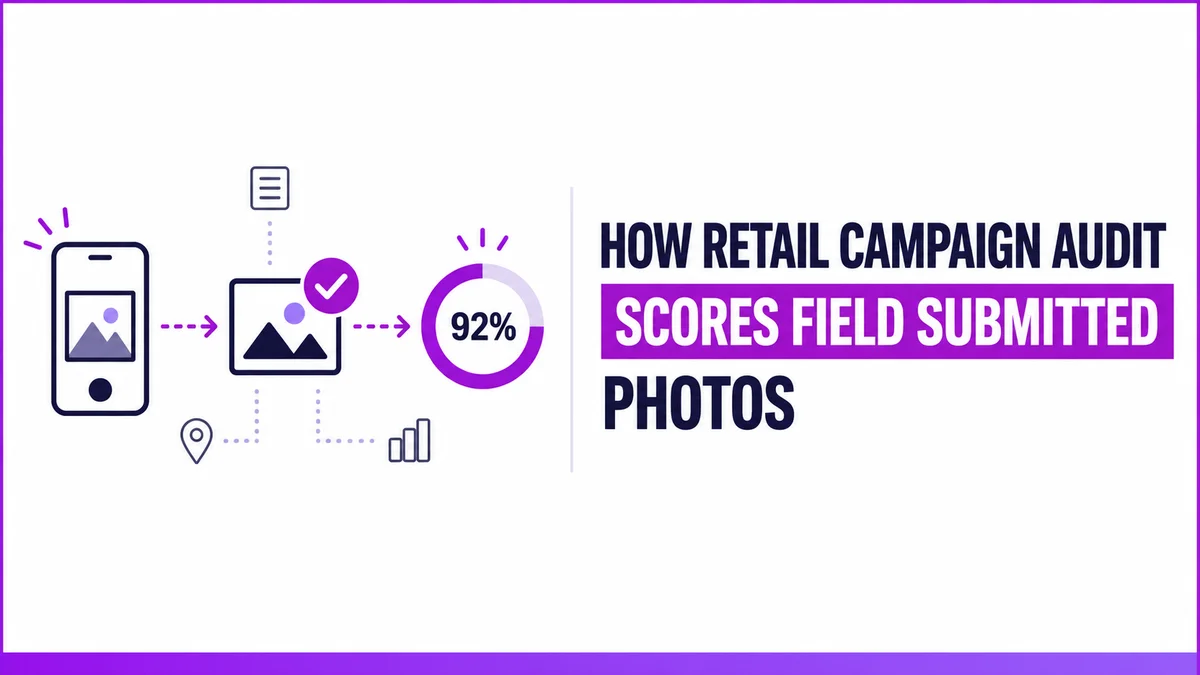
Step 2: AI evaluates the photograph
Computer vision processes the submitted image and checks whether it can reliably identify the relevant shelf or promotional display. Where applicable, it also compares detected products or display elements with the configured requirements.
Step 3: A low-confidence image is flagged
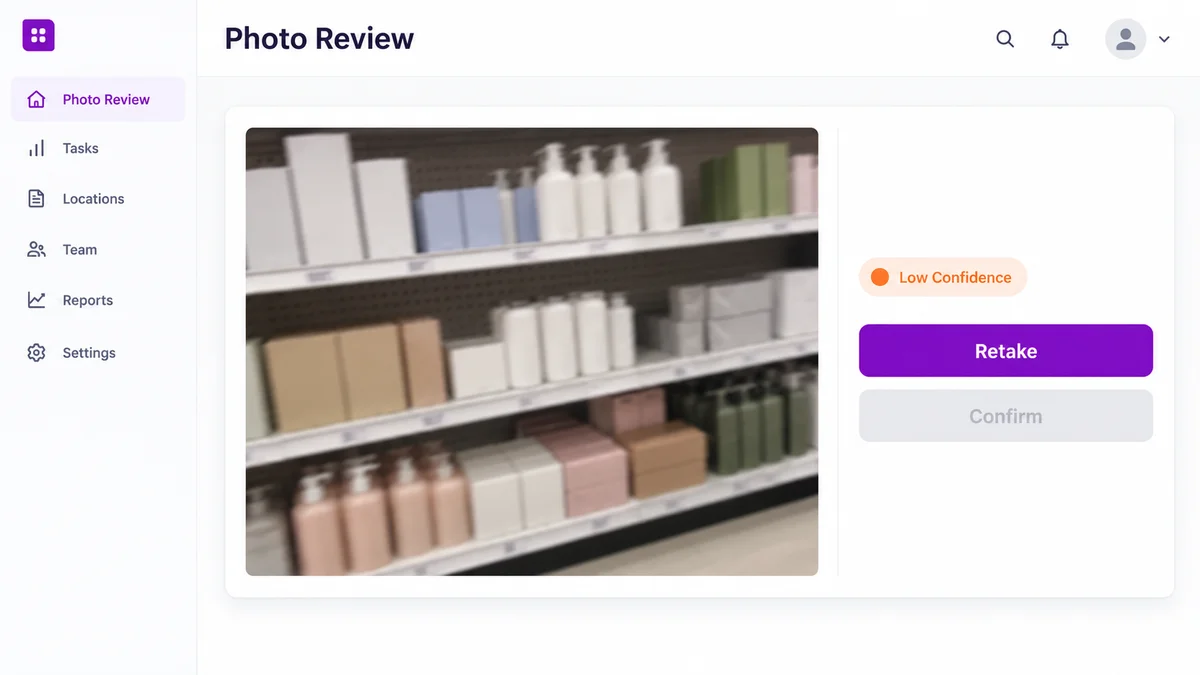
If the AI cannot confidently evaluate the photograph, the app prompts the representative to capture another image instead of treating the weak photo as satisfactory evidence.
Step 4: The representative retakes the photo
The representative can immediately improve the angle, lighting, or framing and submit a clearer photograph while still at the outlet.
Step 5: The audit proceeds with verified evidence
Once the photo passes the required verification, the task can be completed and the audit information becomes available for reporting.
Where AI Photo Validation Helps Retail Teams
AI-based photo validation is especially useful for field activities that depend on visual evidence.
1. Shelf Visibility and Product Facings
A representative may need to capture several shelf photographs to verify product availability and visibility.
AI image recognition can compare visible product facings with configured shelf norms, helping identify missing or insufficient facings.
If a submitted photograph cannot be interpreted confidently, the representative can retake it immediately.
2. POSM and Promotional Campaign Verification
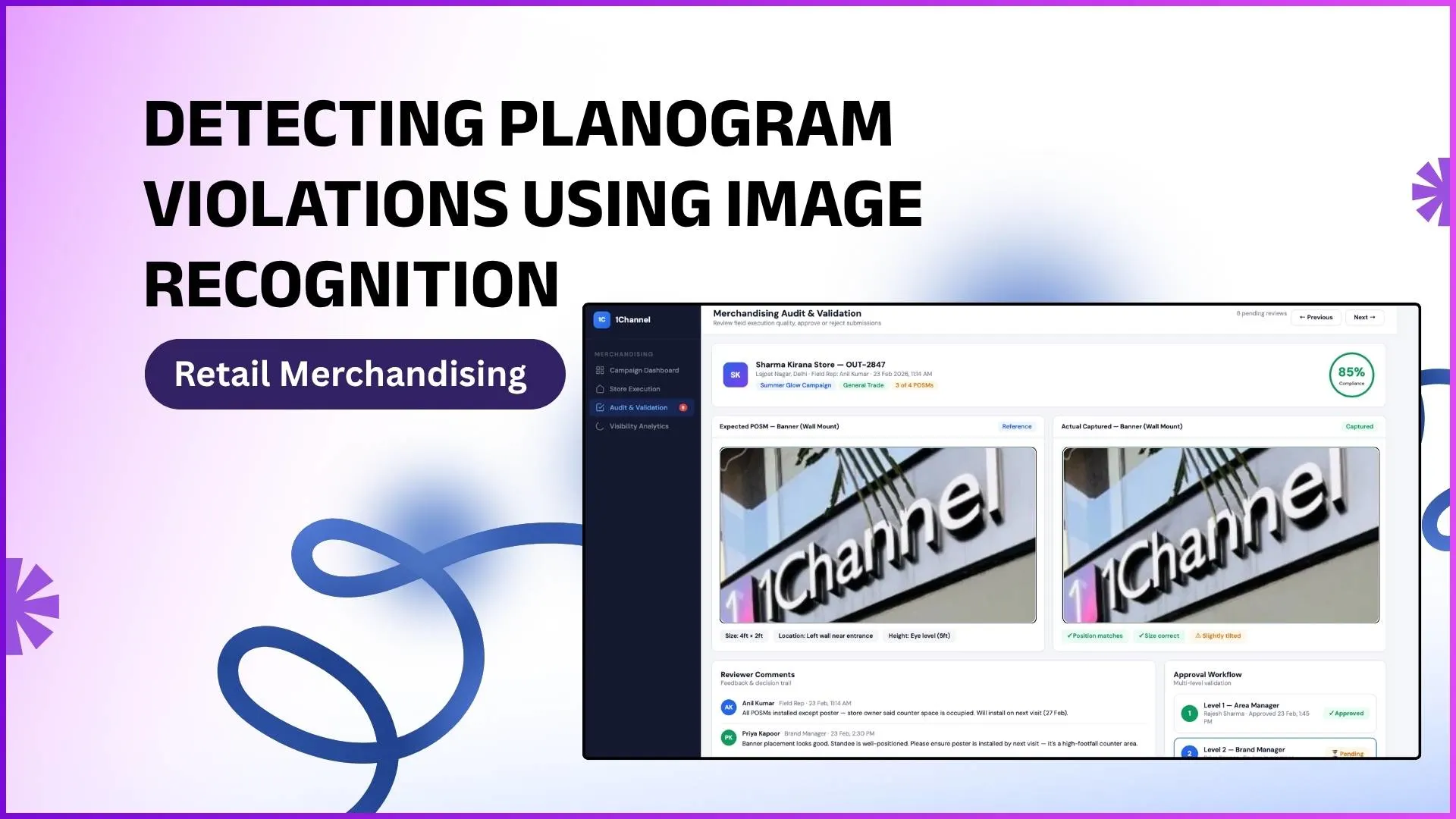
Retail merchandising teams frequently photograph banners, posters, standees, shelf strips, and other point-of-sale materials (POSM).
The system can compare these photographs against a defined "Picture of Success" guideline.
For example, if a campaign requires a promotional poster to be visible, AI can help evaluate the captured display against the approved reference.
A photograph that does not provide sufficient visual evidence can trigger a retake.
3. Store Audits and Merchandising Compliance
Some retail audits require multiple photographs covering different areas of an outlet.
Guided image capture helps representatives follow the required sequence, while AI validation helps prevent low-confidence images from passing through without review.
This improves the usefulness of the evidence available to supervisors and merchandising managers.
Instant Retakes vs Traditional Photo Audits
| Traditional photo audit | AI-assisted photo audit |
|---|---|
| Photos are reviewed after submission | Images can be evaluated during the visit |
| Weak photographs may remain unnoticed | Low-confidence images trigger prompts |
| Supervisors request corrections later | Representatives can retake photos immediately |
| Evidence quality depends heavily on manual review | Automated checks support more consistent validation |
| Repeated follow-ups may be necessary | Problems can be addressed before leaving the outlet |
The main advantage is not simply faster photo checking. It is the ability to resolve an evidence-quality problem at the point of capture.
How AI Photo Validation Improves Retail Execution
Reliable photo evidence supports better retail decisions. When field teams submit clearer, verifiable photographs, managers have more dependable information about campaign execution and shelf conditions.
AI-assisted validation can help organizations:
- Reduce repeated store visits caused by unusable photographs.
- Improve audit consistency by evaluating images against defined requirements.
- Reduce manual review effort for basic photo-quality issues.
- Strengthen campaign verification with clearer photographic evidence.
- Improve reporting reliability by reducing low-confidence submissions.
AI is not a replacement for every supervisory audit. More complex merchandising exceptions and compliance decisions may still require human review.
Its immediate value is identifying evidence that cannot be assessed confidently before it enters the review process.
Why Choose 1Channel for AI-Powered Photo Validation?
1Channel Retail Merchandising Software integrates AI image recognition into its field execution workflows. Through its mobile application, representatives can access store-specific tasks, review approved display guidelines, capture required photographs, and receive immediate prompts when submitted images are unsuitable for reliable evaluation. The solution also supports shelf-facing analysis, promotional activation checks, and comparison against configured display standards.
Explore 1Channel Retail Merchandising Software →By connecting photo capture, AI validation, and retail execution reporting, 1Channel helps organizations improve the quality of field evidence without depending entirely on delayed manual checks.
Frequently Asked Questions
1. How does AI identify a weak field photo?
AI image recognition evaluates whether a submitted photograph contains enough usable visual information to complete the required analysis. When confidence is too low, the system can prompt a retake.
2. Can AI request an immediate photo retake?
Yes. In 1Channel's AI image recognition workflow, low-confidence photographs can trigger an immediate retake prompt while the representative is still at the store.
3. Can AI validate POSM photographs?
Yes. Computer vision can help assess promotional displays such as posters and standees against configured campaign guidelines and reference images.
4. Does AI eliminate manual retail audits?
Not entirely. AI reduces the need for manual checking of routine visual evidence, while supervisors can continue reviewing more complex compliance issues.
5. How does AI photo validation benefit field sales teams?
It helps representatives correct weak photographs during the same visit, reducing unnecessary follow-ups and improving the reliability of submitted evidence.
Note: Software screens may vary based on your business structure and configured workflows.