In many store repair programmes in India, the first firm number a brand sees is the vendor's bill. By then the crew has visited, the work is done and the money is spent.
That order is backwards for consumer durables and FMCG brands with branded fixtures in many outlets. Mobile retail teams and VM agencies face the same problem.
A costed recce puts the price in front of the approver before anyone is sent. Here is how it works in VisiMax, 1Channel's app for retail maintenance, visual merchandising and store audits.
What a Costed Recce Covers
Every recce starts with a ticket, raised by the rep in store, the brand team on the portal or the brand's own system. Audit findings can raise one automatically.
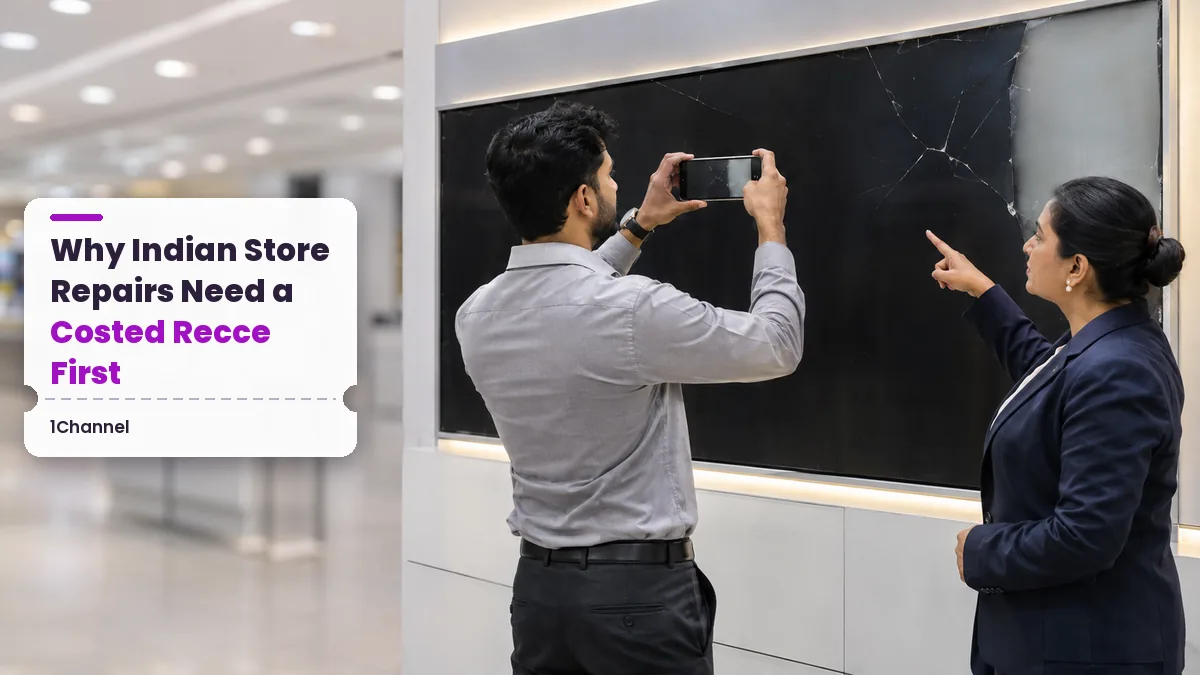
A recce is a site survey of the fixture that needs work. A costed recce turns that survey into a priced job.
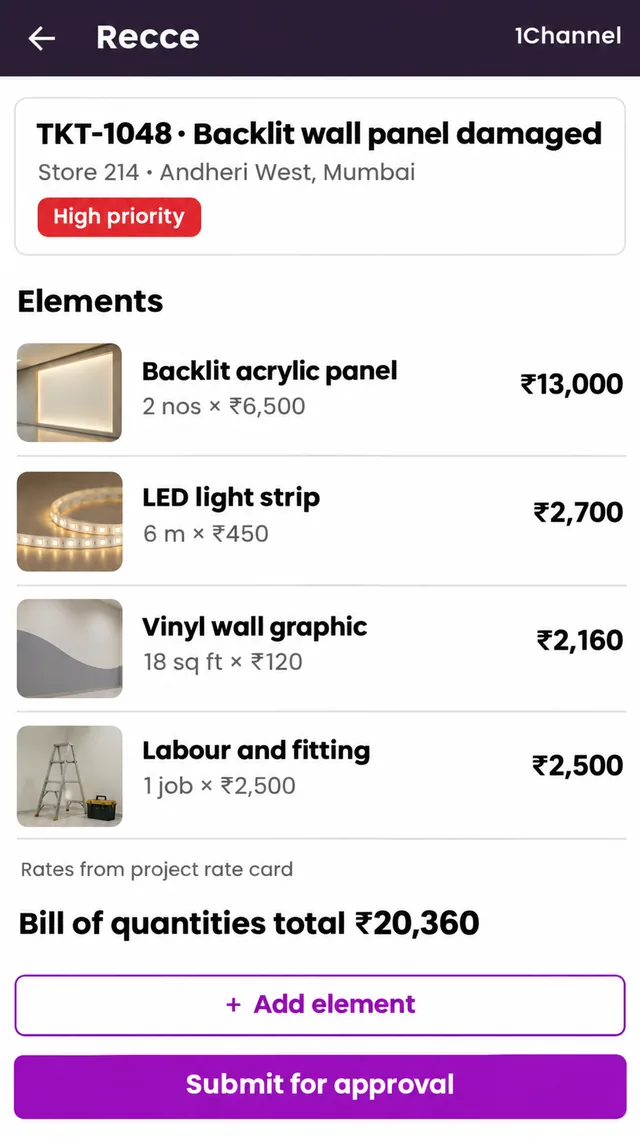
The surveyor picks each element type, enters the quantity and applies the rate card for that element. The result is a bill of quantities, with photos attached to back it up.
Why the Cost Comes Before the Crew
Once a crew is on site, the spend is effectively committed. Arguing over a bill after the work is done is far harder than questioning a quote before it.
VisiMax puts it simply: costed before it's approved, approved before it's spent. Nobody is sent to execute until the costed recce has been approved.
Two Approvals, Two Different Questions
The ticket is approved first. That approval answers one question: should this issue be fixed at all?
The costed recce is approved again. That answers a different one: are the scope and the price right?
Each gate can have its own approval levels, set per project. At the recce stage, an approver can approve, reject or send it back.
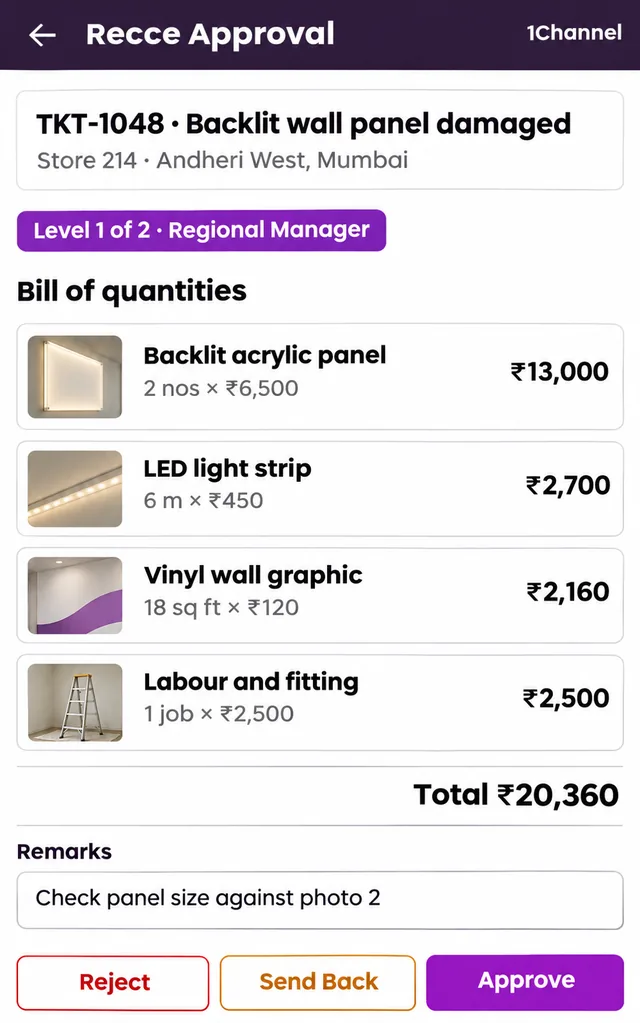
Approvals land in one inbox, on the portal or the app.
Approve the Cost Before the Crew Moves
VisiMax takes every in-store issue from ticket to costed recce, approval, execution with photo proof and quality check, on one app and one portal.
Explore VisiMax →Rate Cards Make Quotes Comparable
When every surveyor prices from the same rate card, the same element costs the same in every store.
That moves the review to quantities. An approver can check them against the photos instead of haggling over rates.
The Approved Recce Becomes the Job
Execution comes after the recce is approved. The rep or vendor crew records before and after photos, the location, and material drawn from the rep's own inventory.
It's all captured on the phone, even offline, and synced later.
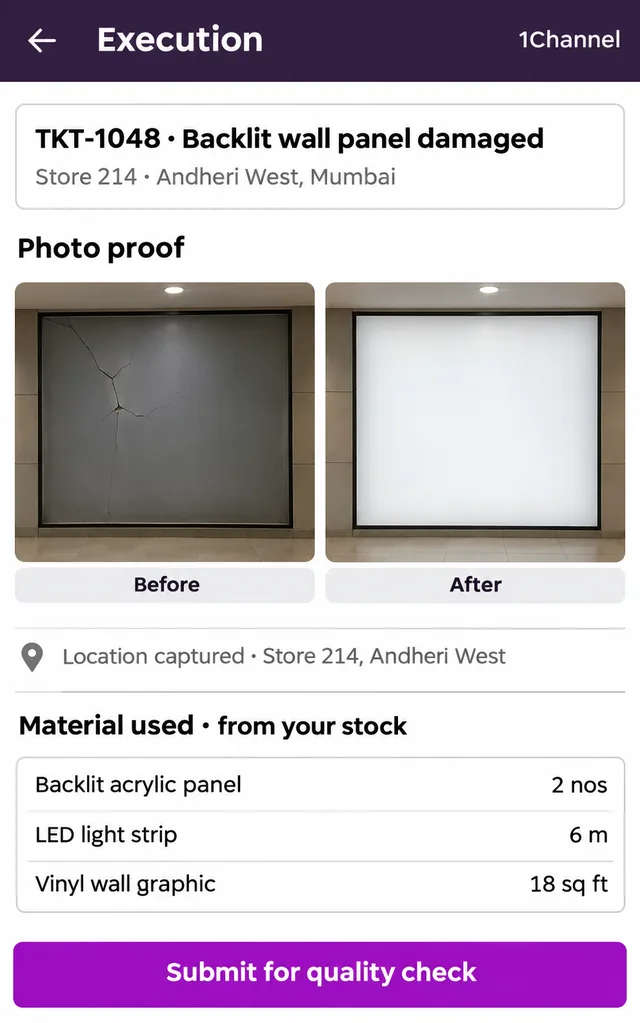
Outside vendors work in the same flow, with their own logins and assignments. A quality check then passes, fails or sends the work back before the ticket can close.
Where Every Rupee and Every Day Went
A ticket moves through seven stages: raised, approved, recce costed, recce approved, execution, quality check and closed.
Each stage has an owner, a clock and a record, so a brand can see where every rupee and every day went.
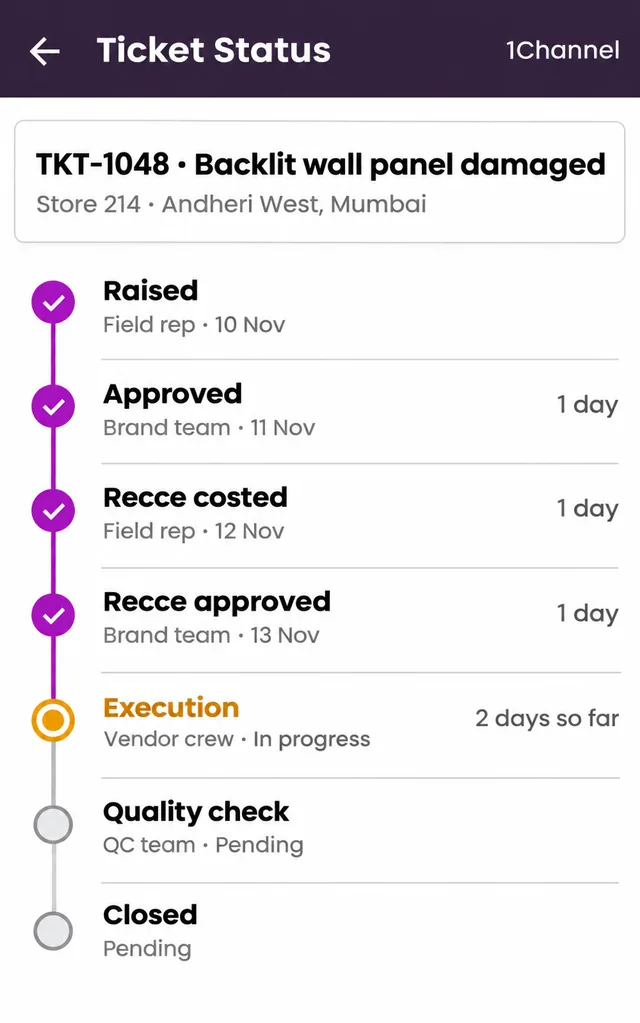
TAT and status reports sit on the portal and the app, among 19 ready reports.
Keep Every Store on One Standard
1Channel's retail merchandising software brings campaigns, POSM, store audits and visibility tracking into one place.
Explore 1Channel's Retail Merchandising Software →With and Without a Costed Recce
| Without a costed recce | With a costed recce | |
|---|---|---|
| When the cost is known | After the work is done | Before anyone is sent |
| What the approver sees | A final bill | A bill of quantities with photos |
| How rates are set | Quote by quote | One rate card per element |
| Proof of work | Varies by vendor | Before and after photos, location, material used |
| When the ticket closes | When the vendor says it's done | After a quality check |
Frequently Asked Questions
1. What is a recce in store maintenance?
A site survey of the fixture or area that needs work, done before the repair is approved. A costed recce also prices the job.
2. What goes into a bill of quantities?
Each element type, its quantity and its rate from the rate card, with photos to support the quantities.
3. Can outside vendors work on the same ticket?
Yes. Vendors get their own logins and assignments, and their crews work on the same ticket as the field team.
Note: Software screens may vary based on your business structure and configured workflows.