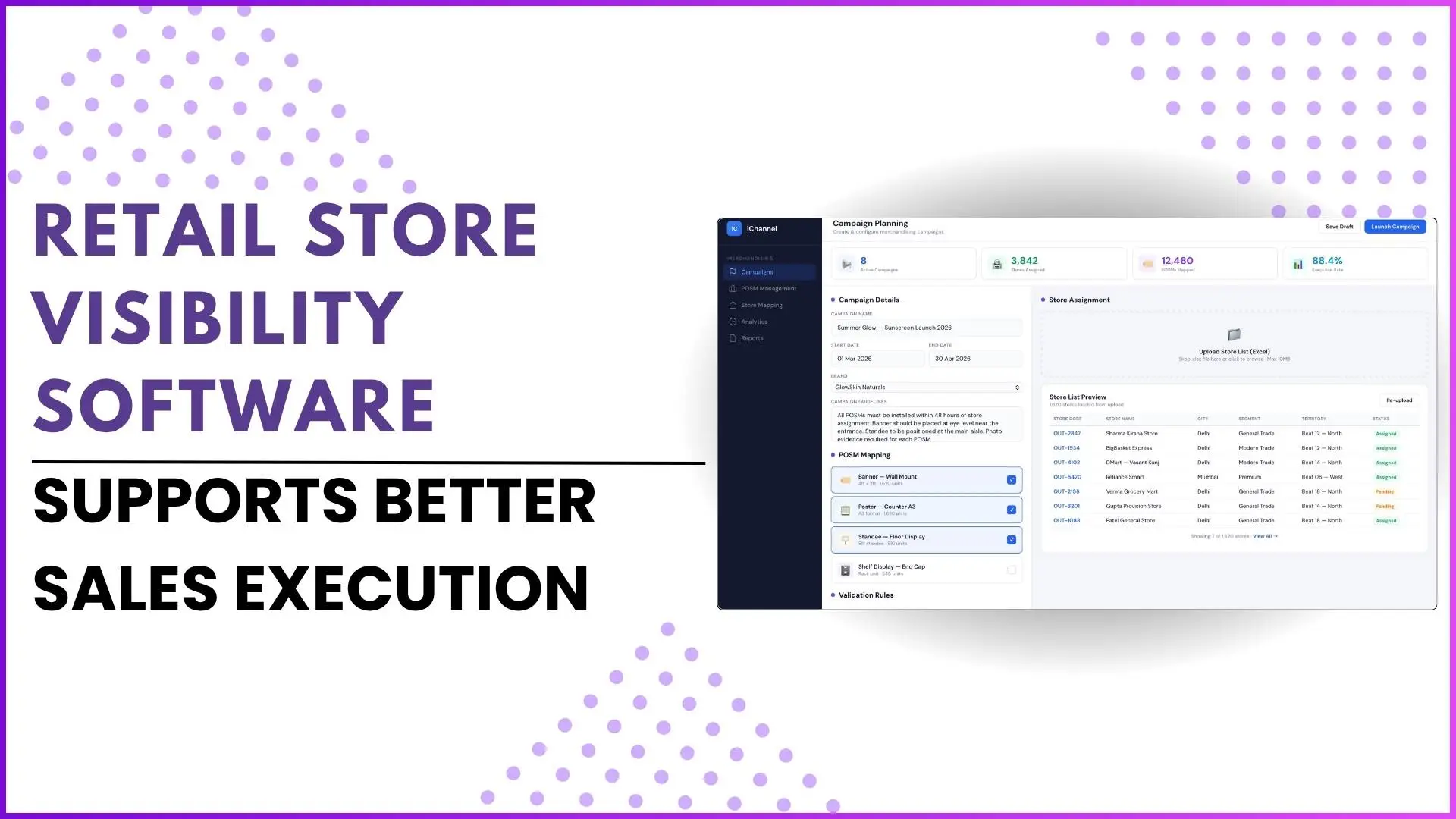
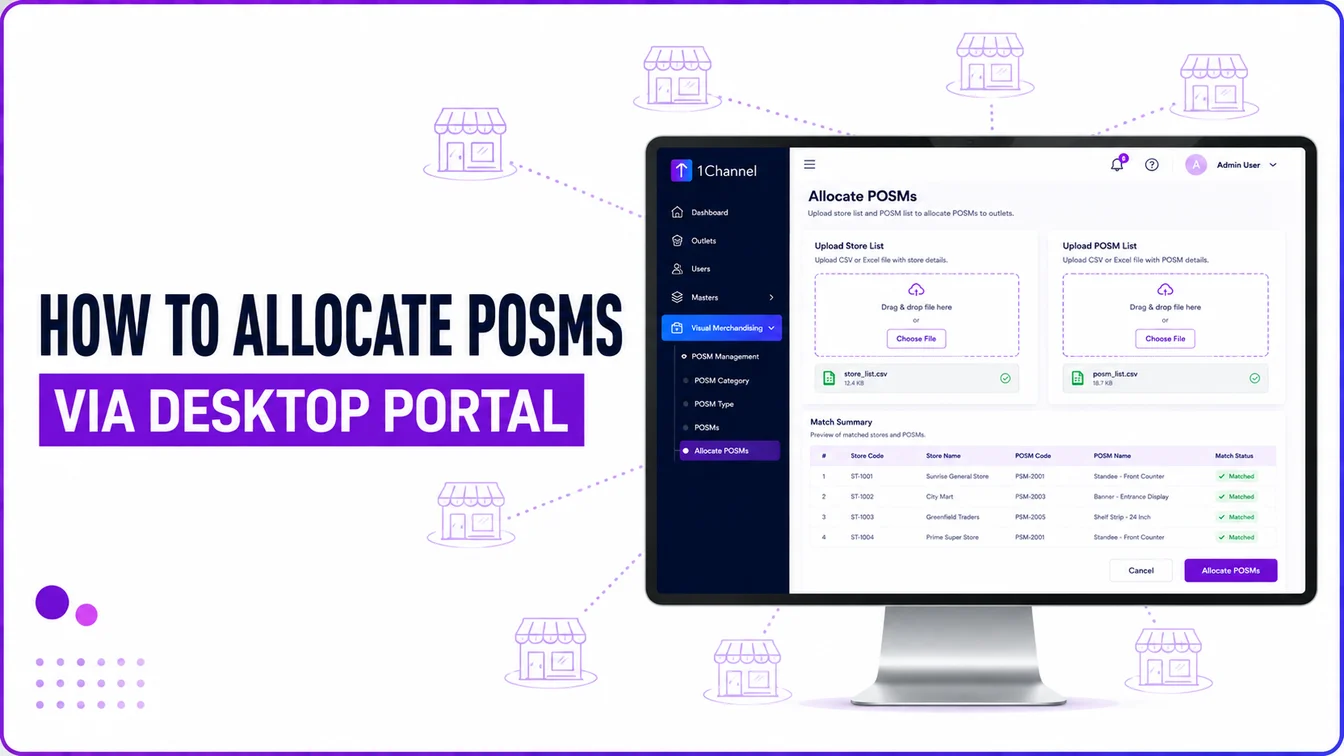
The Real Measure of Retail Execution Starts After Delivery
For FMCG brands running networks of 1,000+ stores, distribution numbers tell a clear story: how many invoices were raised, how many stores were billed, how much stock moved through the pipeline. What those numbers cannot tell a brand is whether a shopper standing in front of the shelf can actually see the product.
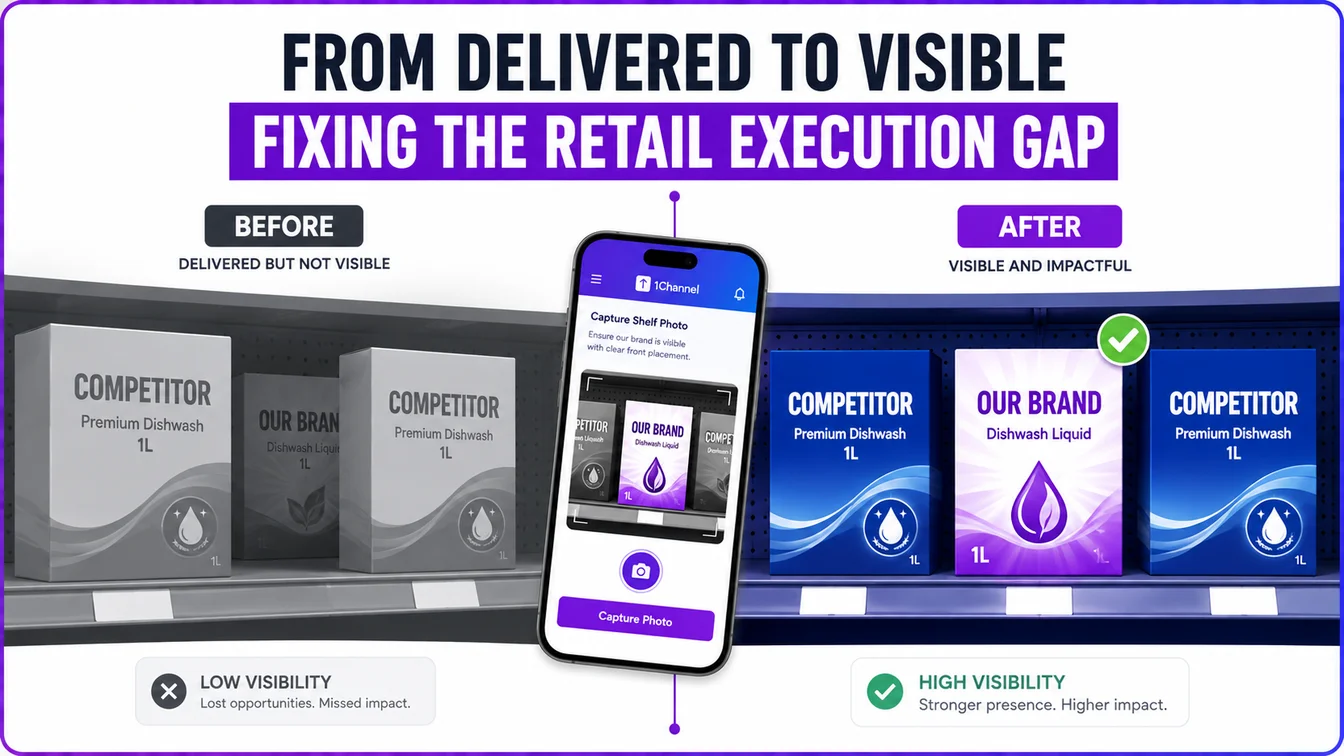
A product can be billed, delivered, and still end up hidden behind a competitor, sitting on the wrong shelf, missing its POSM entirely, or simply out of sight. That gap, between what distribution reports and what the shelf actually shows, is where retail execution either proves its value or quietly fails.
Closing it takes more than delivery data. It takes photo-based execution, validation, visibility tracking, and outlet-level analytics working together.
Four Ways a Delivered Product Goes Unseen
- Hidden behind a competitor's display
- Sitting on the wrong shelf, outside the eye-level zone shoppers actually scan
- Missing its POSM, so there's nothing drawing attention to it at all
- Completely out of sight, with no one aware it never made it to the floor
Each of these looks identical in a distribution report. All four show up as "delivered."
Photo-Based Execution Closes the Blind Spot
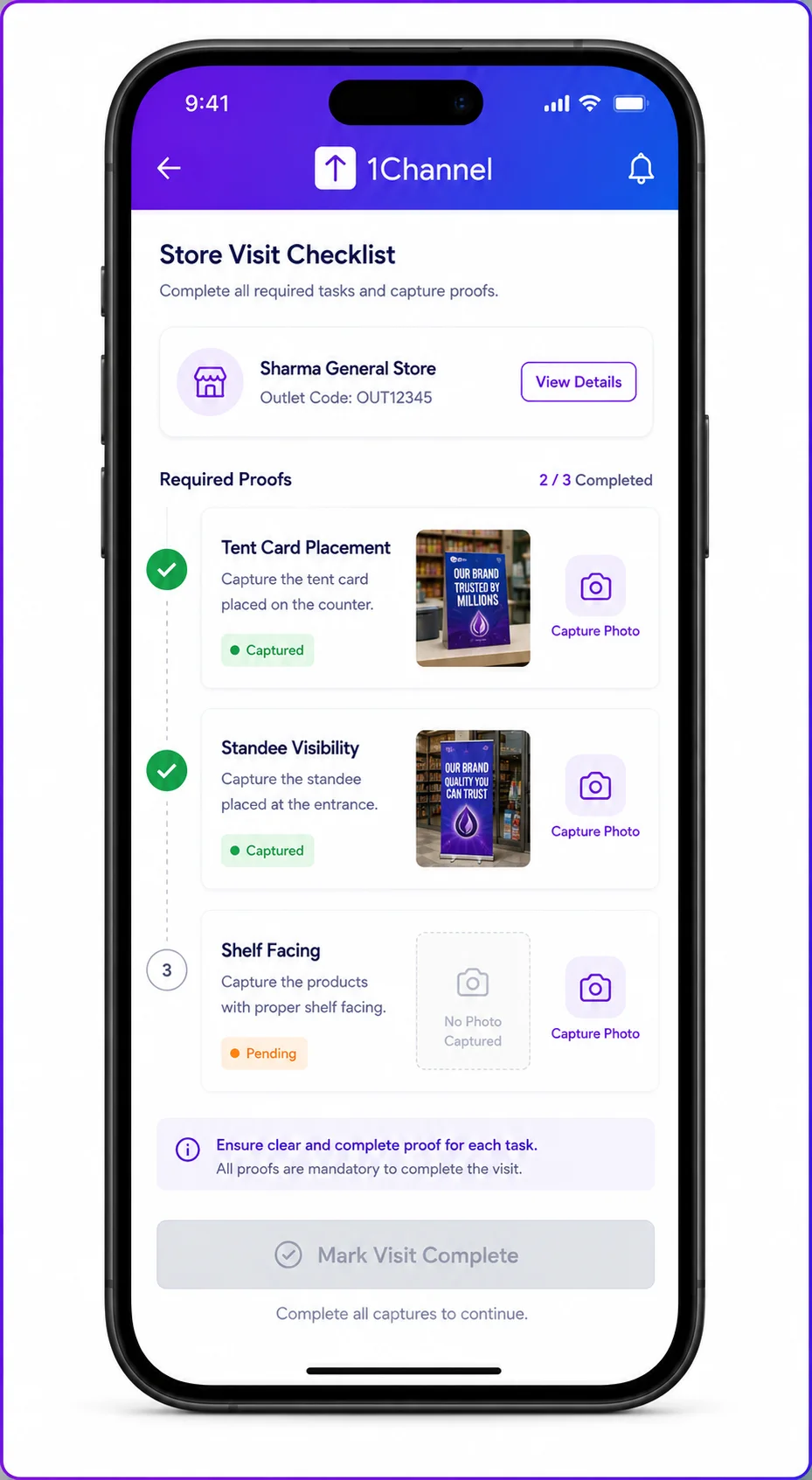
Field teams capture real-time photo proof of what's actually on the shelf, tent cards, standees, facings, before a visit can be marked complete. A visit isn't just logged; it's shown.
Validation Turns Photos Into Proof
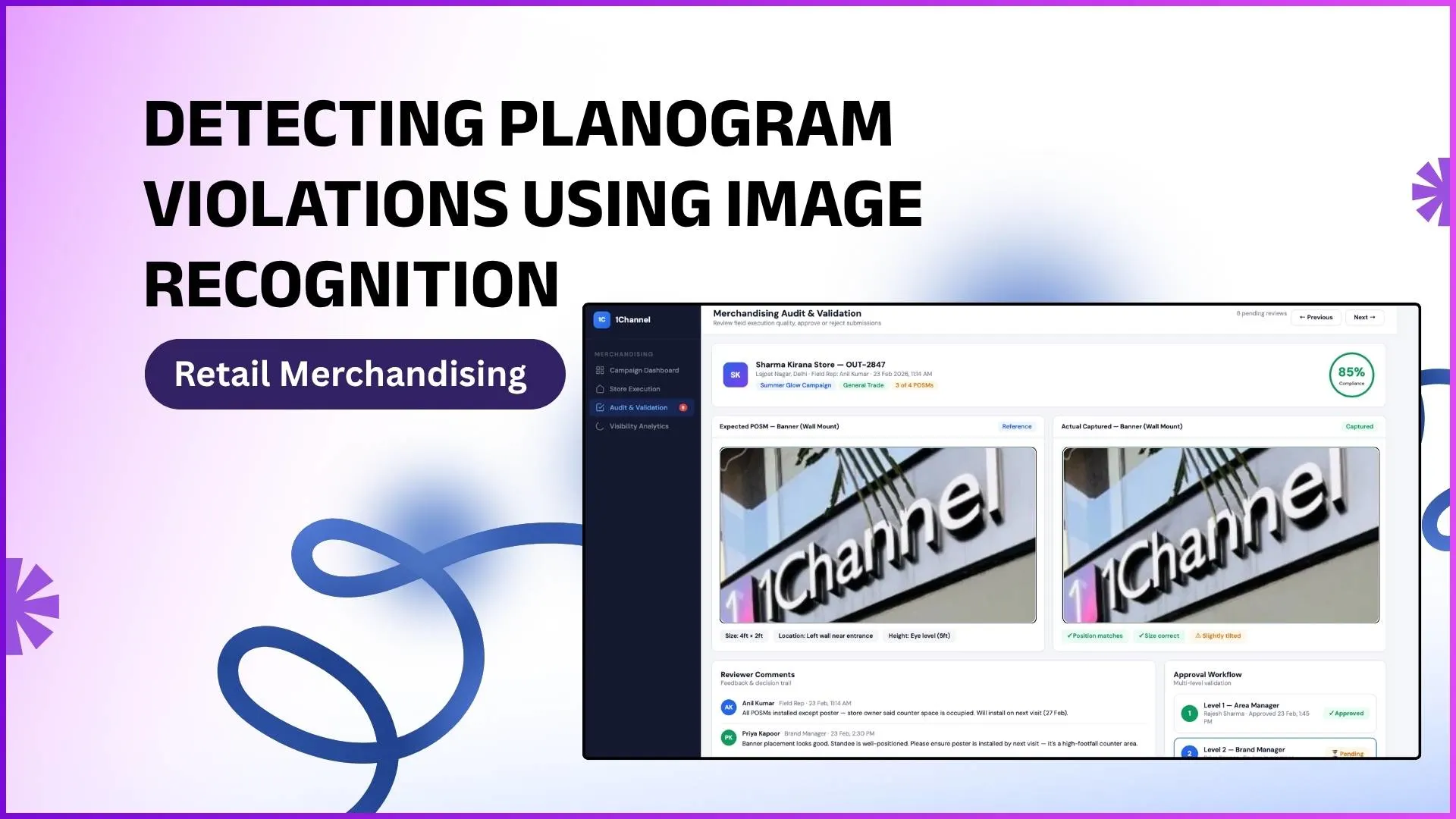
A photo alone doesn't close the gap, it still needs someone to confirm it meets the standard. Multi-level audits check hot-zone placement and facing compliance, while campaign validation rules decide whether a task can even be marked complete without the required POSM in place.
Outlet-Level Analytics Show Where the Gap Actually Is
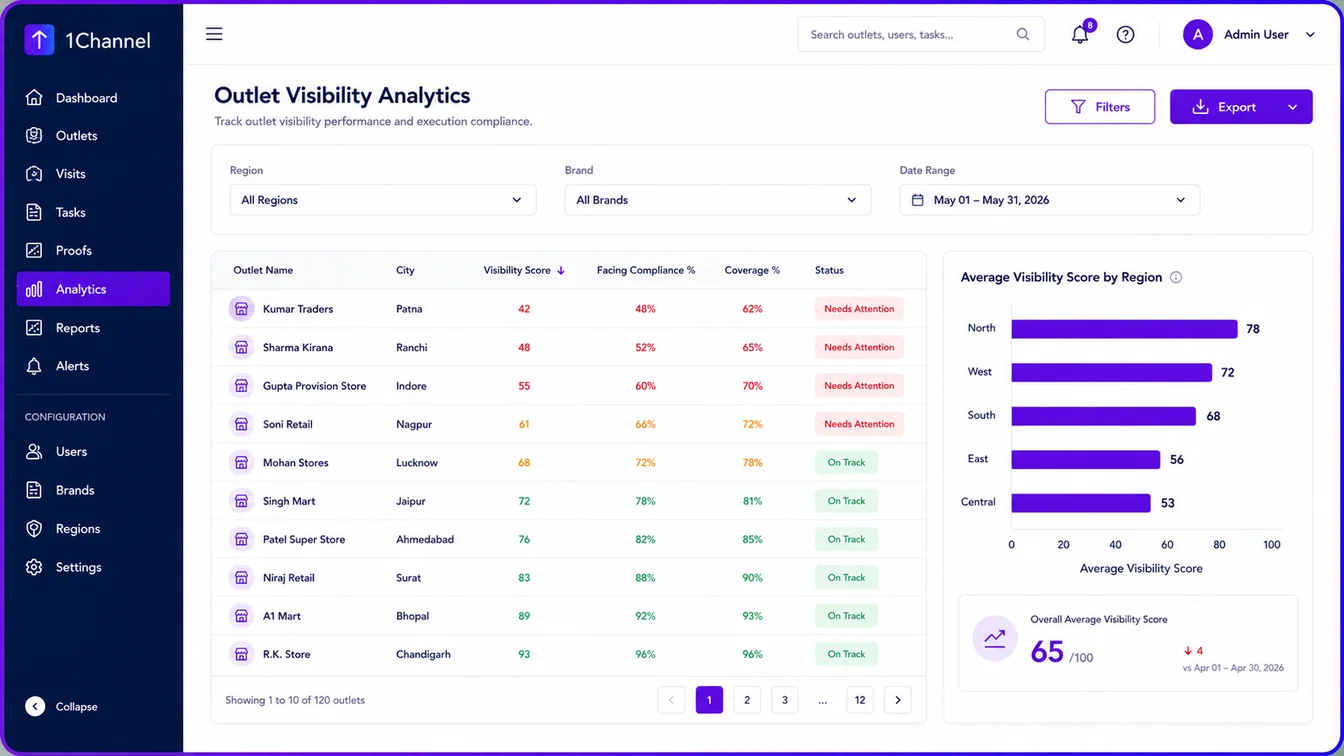
Store-by-store visibility scores, coverage percentages, and facing compliance data turn thousands of individual visits into a map of exactly which outlets are underperforming, and why.
See the Original Announcement on LinkedIn
Read the original post and see how 1Channel frames the distribution-to-visibility gap:
Boosting Retail Execution with 1Channel
Explore 1Channel Visual Merchandising & POSM Management
See how 1Channel's Visual Merchandising and POSM Management software turns photo-based execution, validation, and outlet-level analytics into one connected system.
Explore Visual Merchandising →Conclusion
Delivery answers whether a product left the warehouse. Visibility answers whether it ever reached the shopper. Closing that gap is what turns a distribution report into an accurate picture of retail execution.
FAQs
1. What is retail execution?
Retail execution is the set of practices that confirm a delivered product is actually visible, correctly placed, and properly merchandised at the store level, not just recorded as shipped or billed.
2. What is the difference between distribution and retail execution?
Distribution measures whether a product reached a store. Retail execution measures whether it's actually visible and correctly placed once it's there.
3. How does photo-based execution prove a product is visible?
Field teams capture real-time photos of shelf placement, facings, and POSM before a store visit can be marked complete, creating visual proof rather than a self-reported checkbox.
4. What role do multi-level audits play in closing the visibility gap?
Multi-level audits review captured photos against hot-zone placement and facing compliance standards, confirming a submission actually meets requirements rather than just existing.
5. How do outlet-level analytics help brands find visibility gaps?
Store-by-store coverage and compliance scores highlight exactly which outlets are underperforming, turning individual visit data into an actionable map of where execution is falling short.
Note: Software screens may vary based on your business structure and configured workflows.