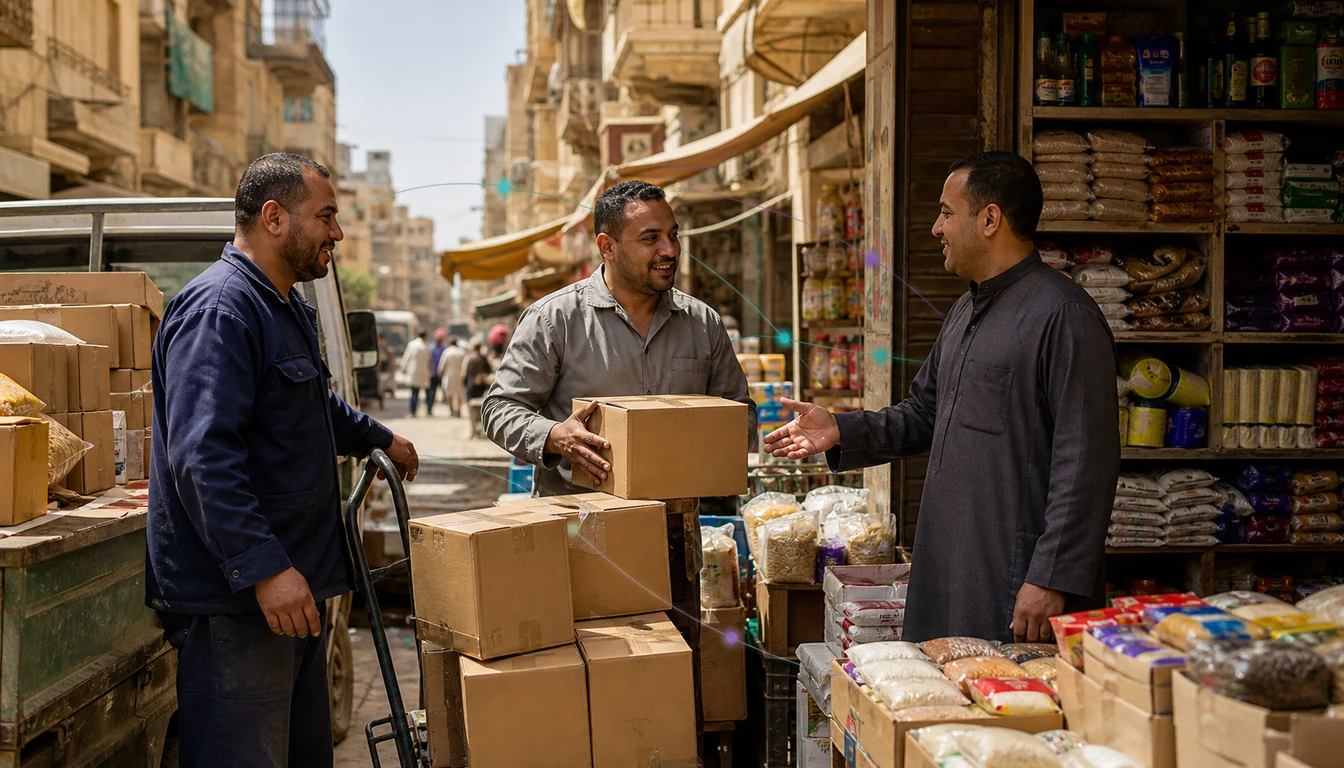
Trade schemes are where a brand's channel budget becomes visible on the shelf across Egyptian distribution, or quietly disappears somewhere between the primary invoice and the baqala counter. A volume rebate that looks airtight in a Cairo spreadsheet still has to survive a journey through distributors, wholesalers and thousands of independent baqalas before it can honestly claim to have moved anything.
That journey looks different depending on which channel the scheme is aimed at. An organised retail chain with a buying team and a listing agreement responds to a different mechanic than a baqala counter in Alexandria or a wholesale stall near Obour City, even when both outlets carry the same stock keeping unit. Treating the two as one audience is the fastest way to spend a scheme budget without moving real volume.
The brands that get a genuine return from trade spend treat the scheme as an operational system with proof built in at every stage, not a seasonal incentive announced once and left to run itself. That means deciding upfront what counts as success, and being able to show it once the cycle closes.
Why Trade Schemes Get Gamed or Leaked Before the Baqala Counter
Most scheme budget in Egyptian distribution is lost, or claimed without earning it, at the same point: primary lifting. A distributor takes delivery of stock under a scheme and claims the rebate the moment the invoice is raised, long before that stock has moved on to a baqala, let alone been sold to a shopper. Sell-in gets confused with sell-through, and that gap between primary and secondary sales is exactly the pattern worth watching closely across Egypt's informal trade.
Once that confusion is allowed, several familiar leaks follow. Free goods promised for restocking a baqala get intercepted by a sub-distributor and resold rather than delivered. A display incentive gets claimed for a shelf set that was never actually built. A seasonal top-up gets paid against an order that was always going to happen, scheme or no scheme.
- One offer for every channel. A mechanic built for a Carrefour or Kazyon listing rarely means anything to a baqala owner working on daily cash, and the reverse is just as true.
- Free goods diverted upstream. Bonus stock meant for a baqala counter is intercepted and resold by a wholesaler before it reaches the shelf.
- Claims settled on trust. A rebate approved on a distributor's word, with no record of the outlet or order behind it, invites padding.
- No link to secondary sales. Nobody can show whether the scheme actually pulled product off the shelf, or just financed stock sitting in a warehouse.
The Scheme Types That Cover Egyptian Distribution
Egypt's distribution mix, with informal trade carrying most of the grocery volume while organised retail keeps growing alongside it, means no single scheme mechanic covers the whole channel. Four types tend to do most of the work, each suited to a different link in the chain.
Volume-based slabs for distributors and wholesalers
Tiered rebates in EGP, structured so a distributor earns progressively more as lifting crosses set thresholds, reward rotation without touching the shelf price the shopper sees. They work best for distributors and larger wholesale accounts, the same tier covered in more depth in a look at digitising wholesalers across the baqala network, where volume genuinely is the lever that matters.
The risk with slabs is timing. If the rebate is worked out by hand at the end of a cycle, disputes follow, and a partner who cannot see what they have earned soon stops trusting the next offer.
Free goods and bonus packs at the baqala counter
A bonus carton or an extra unit on a case is the most trusted mechanic at the baqala tier because the value is physical and immediate. There is no invoice to query and no payout to wait on, which is why bonus packs still do most of the work of moving volume through the informal network.
Seasonal and occasion-linked offers
Ramadan, Eid and the back-to-school period each produce genuine demand spikes across Egyptian retail, and a scheme timed to load stock ahead of one of those windows behaves very differently from the same offer run in a quiet month. Building the promotional calendar around Egypt's own occasions, rather than a generic schedule, is what makes seasonal spend land.
Display and visibility incentives for organised retail
For a supermarket or hypermarket chain, a scheme built around shelf position, an end-of-aisle display or a confirmed facing count matters more than a rebate. The mechanic only holds up if the display can be verified against a photo tied to the outlet and the date, rather than taken on the retailer's word.
Designing a Scheme Around Real Secondary Sales
The design choice that separates a scheme that works from one that leaks is where the payout trigger sits. Trigger it on lifting alone and the brand is funding warehouse stock. Trigger it on a verified outlet order, a baqala visit that actually happened, a case that actually left the shelf, and the payout tracks something closer to real demand.
In practice that means eligibility rules that reference the outlet and the order, not just the distributor account. A rep working a beat across Giza or a rural stretch of the Delta needs the scheme logic to run at the point of order, checking the outlet against a real location and a real transaction history, so a claim cannot be built on an outlet that does not exist or an order that never happened.
It also means segmenting the offer by channel deliberately rather than by convenience. A national brand running one scheme through supermarkets and hypermarkets and a separate, simpler mechanic through the baqala network is not duplicating effort, it is matching the mechanic to how each partner actually earns and spends. A closer look at choosing a distribution management system for Egyptian FMCG brands covers the wider case for this kind of channel segmentation. Some brands also pair the scheme with a retailer loyalty programme that rewards a baqala for consistent stocking across cycles, rather than a single promotional window.
Payout and Redemption Across Egypt's Multi-Rail Payment Landscape
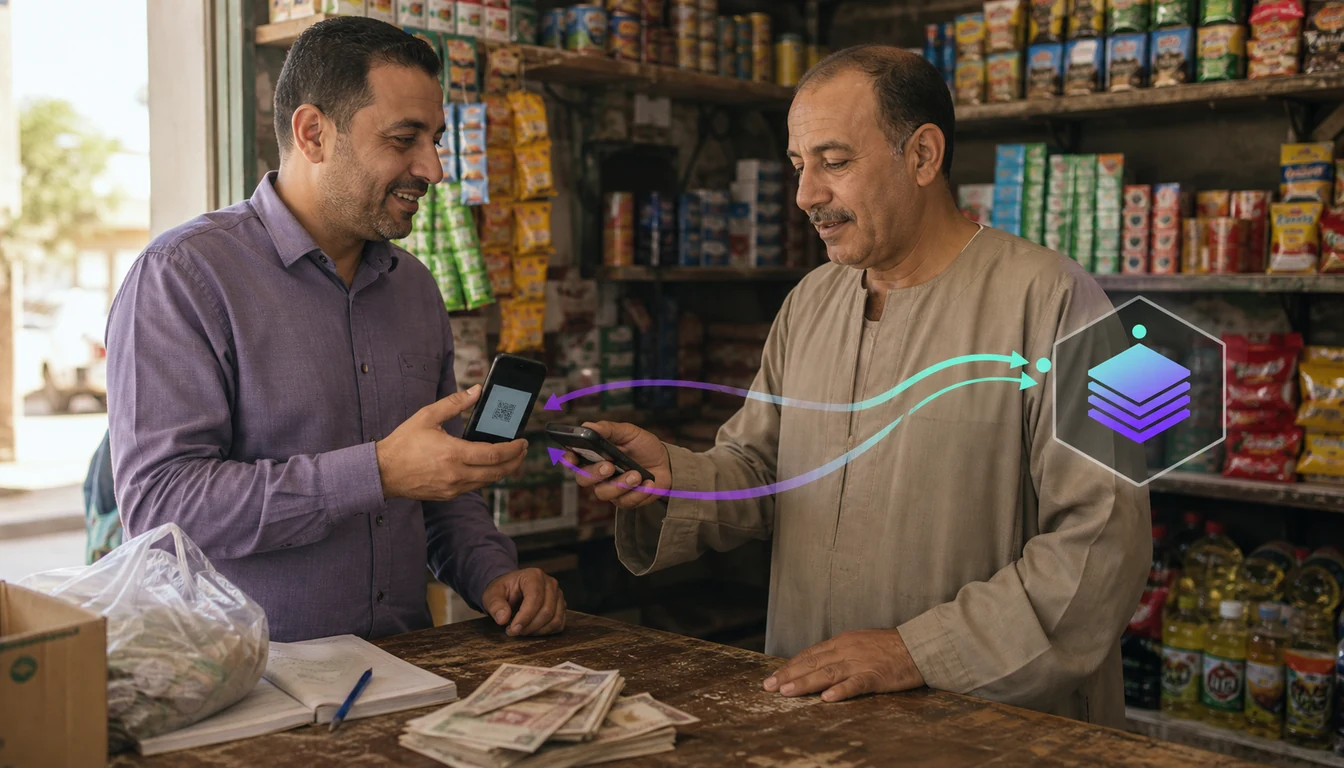
Egypt does not have one dominant settlement rail the way some markets do, and a scheme's payout mechanics have to account for that rather than assume it. Cash still moves most of the value at the baqala tier, while InstaPay, Fawry, Meeza and telco wallets such as Vodafone Cash and Orange Cash are all growing as ways distributors and retailers get paid, the same multi-rail picture covered in more detail in a look at order-to-cash for Egyptian distributors.
A scheme that only settles through one of those rails will exclude part of the network it is meant to reach. Building in bank transfer, a Fawry reference, an InstaPay transfer or a wallet payout as parallel options, each logged with a traceable reference number, means the redemption step does not become the reason a well-designed scheme fails to land.
The record keeping matters beyond the payout itself. With the ETA e-invoicing and e-receipt system in force and continuing to widen across more of the trade, a scheme's credit notes and settlement records need to sit inside the same documentation trail as the rest of the order-to-cash cycle, not off to one side in a spreadsheet.
Controlling Leakage and Proving the Scheme Worked
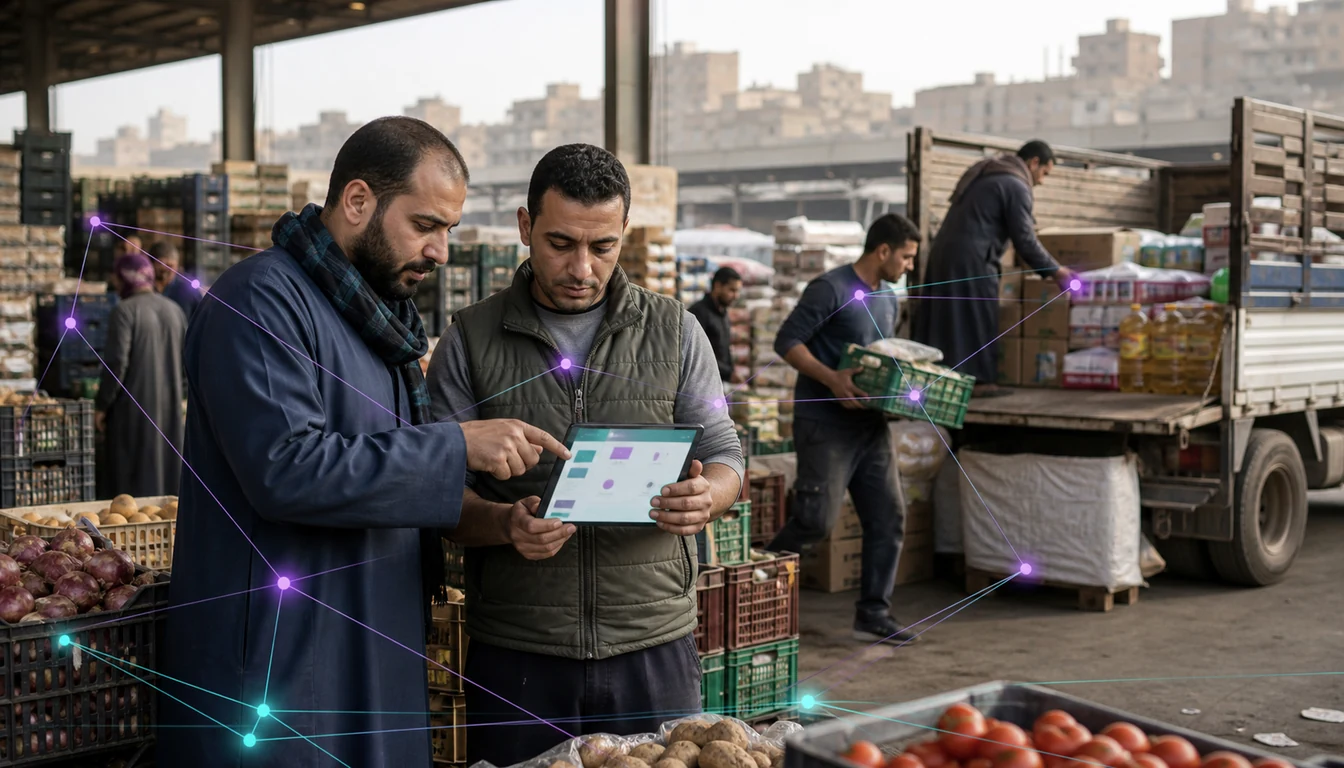
Once the design and the payout rails are right, the remaining discipline is measurement. Running the next cycle on memory of the last one, rather than on numbers, means the loudest distributor keeps getting funded and the stock keeping units that never actually moved keep getting another chance.
- Sell-through against sell-in. Track whether lifted stock is actually reaching baqala counters and shoppers, not just leaving the distributor's warehouse.
- Spend against lift by governorate and cycle. Compare what a push around Alexandria cost against the volume it produced, and do the same for Cairo, Giza and beyond.
- Claim-to-settlement time. A partner who waits weeks to get paid loses confidence in the next scheme before it even launches.
- Verified display and order evidence. Keep photo and location proof against every display or free-goods claim, so an audit does not come down to someone's memory of a visit.
Feeding those numbers back into the next negotiation, whether that is a plan agreed with an organised retail buyer or a slab review with a key distributor, is what turns trade spend from a recurring cost into a lever that can actually be tuned.
How 1Channel Helps Run Trade Schemes Across Egyptian Distribution
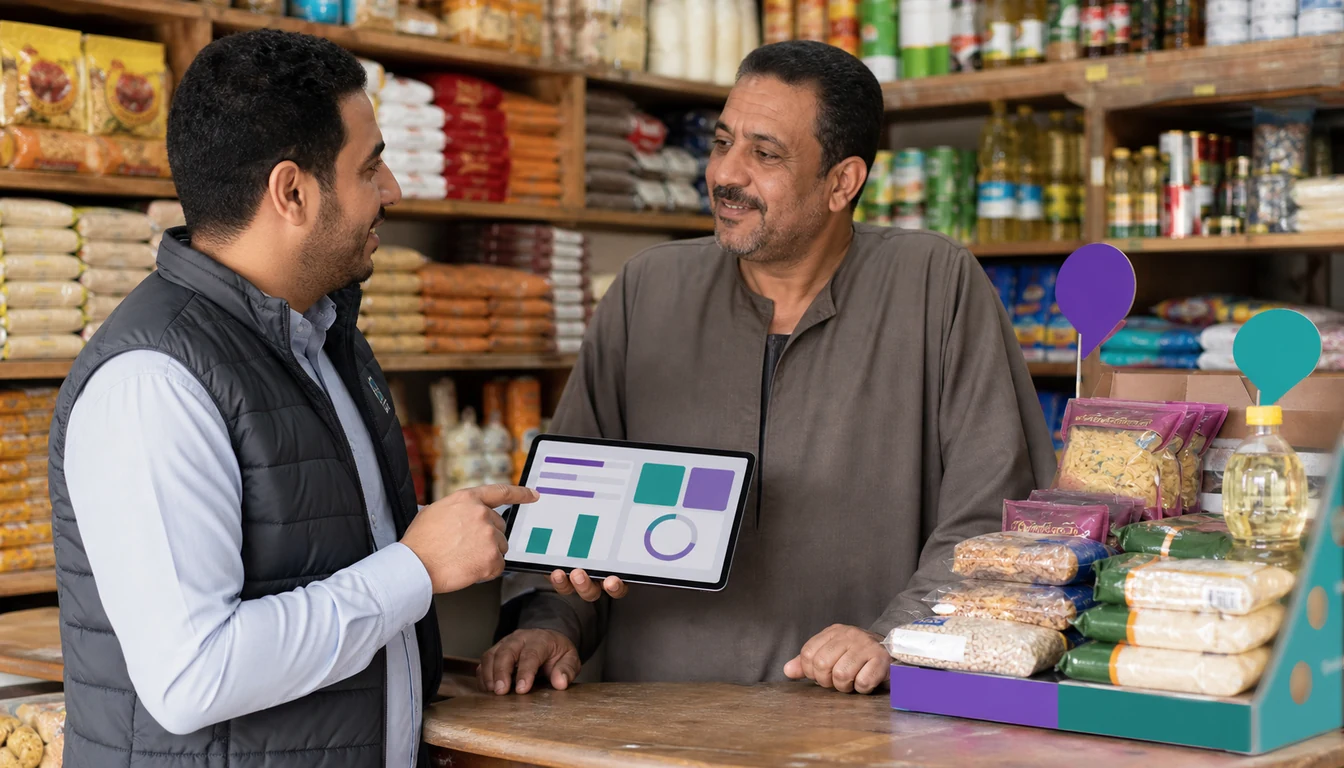
Designing a scheme, defining eligibility, calculating the claim and settling the payout are usually scattered across spreadsheets, messaging apps and a distributor's memory. 1Channel's trade promotion management software keeps that whole cycle, from the offer definition through to final settlement, inside one system built for exactly the kind of mixed informal and organised retail network Egyptian distribution runs on.
Because the scheme logic runs on the device a rep carries into a baqala, the calculation does not depend on a live connection in Upper Egypt or a quieter Delta governorate any more than it does in central Cairo.
- Build volume slabs, free-goods offers and display incentives by channel, and allocate EGP budgets by governorate or route.
- Auto-calculate every claim at the point of order, offline where connectivity is patchy, with the eligible outlet and order attached.
- Verify display and visibility claims with photo evidence tied to outlet, date and location.
- Settle partners by bank transfer, Fawry, InstaPay or wallet, with every payout logged against a traceable reference.
- Track sell-through, wasted spend and claim-to-settlement time by stock keeping unit, governorate and cycle.
Run Egyptian Trade Schemes That Pay for Real Sell-Through
See how the trade promotion management platform lets Egyptian brands design schemes by channel, calculate claims at the point of order, and settle partners across InstaPay, Fawry, Meeza or wallet, all with a traceable audit trail.
Explore Trade Promotion Management →Key Takeaways
- Design by channel, not once for everyone. A mechanic built for organised retail rarely moves anything at a baqala counter, and the reverse holds too.
- Trigger payout on verified secondary sales. Settling a scheme at primary lifting alone funds warehouse stock, not real demand.
- Match the mechanic to the link in the chain. Bonus packs and free goods win trust at the baqala tier, while slabs and display incentives suit distributors and organised retail.
- Build for Egypt's actual payment mix. A scheme that only settles through one rail excludes part of the network, so plan for cash, InstaPay, Fawry, Meeza and wallets together.
- Log every claim against a real outlet and order. That evidence is what keeps a scheme auditable and keeps the e-invoicing trail intact.
- Measure sell-through and claim-to-settlement time every cycle. Negotiate the next budget on numbers, not on how loud the last distributor was.