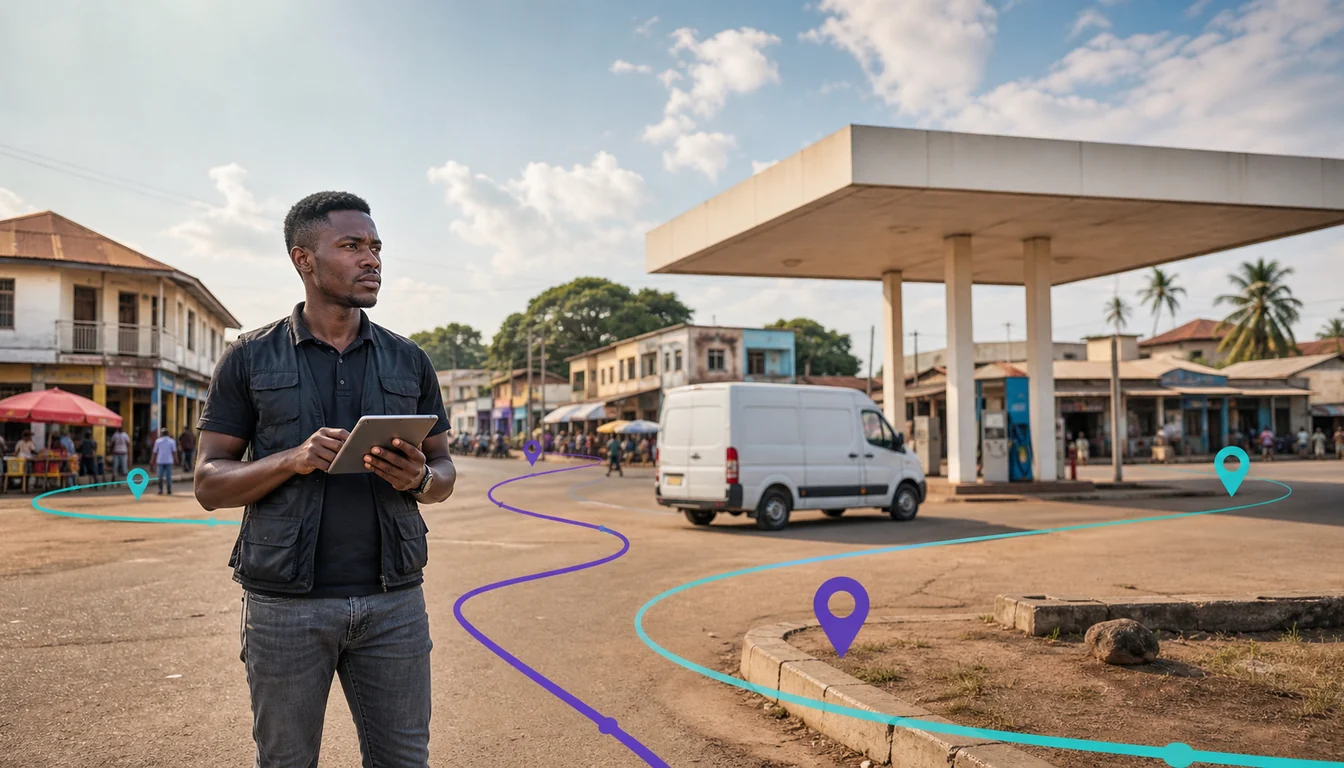
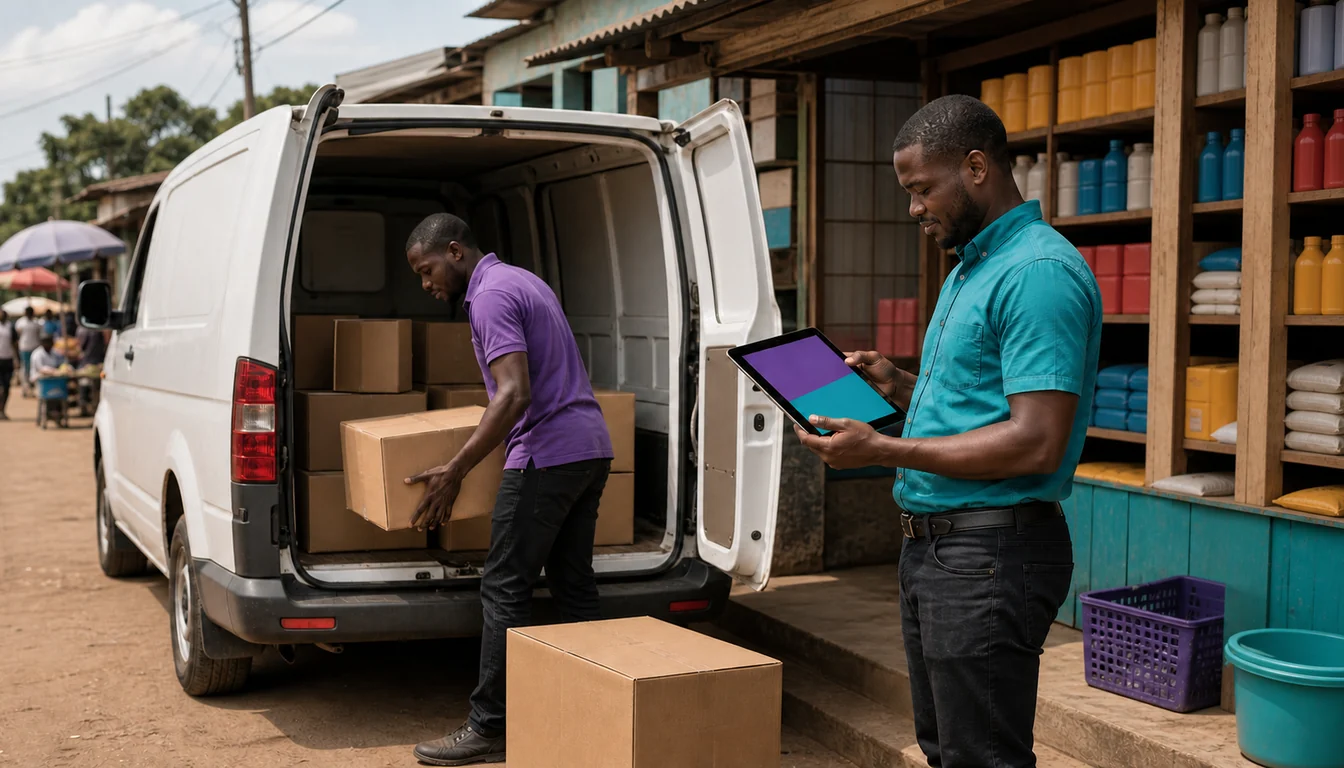
Ghana hands distribution teams an advantage that most markets in the region do not have. English is the official language, and every order form, price list, invoice and management report is written in it from end to end. That advantage is real, and it stops at the counter. The conversation that actually closes a sale at a provision shop in Kumasi, at a kiosk beside a lorry station, or at a market stall in Tamale is far more likely to happen in Twi, Ga, Ewe or Dagbani. A field force that reports in one language and sells in several is the norm here, and it changes what good training has to look like.

English Runs the Paperwork, Local Languages Run the Sale
Twi, as the practical lingua franca of Akan-speaking areas, carries an enormous share of trade conversation across the south and the middle belt. Ga is the language of much of the Accra trading core, Ewe covers the Volta and Oti areas, and Dagbani, Dagaare and Hausa are what a representative will hear across the northern regions and in Zongo communities. None of that is a problem for the system of record. It is a problem for teaching.
The distinction matters because it decides where translation effort goes. Documentation, reporting formats, product specifications and compliance material stay in English, which keeps a national field force on one version of the truth and keeps records aligned with what the Ghana Revenue Authority expects from an E-VAT invoicing trail. What needs to travel across languages is coaching content: the objection-handling script, the way a scheme is explained to a shop owner, the words used to ask a market stall trader for an overdue balance without losing the relationship. Those are spoken assets, and they are learned by imitation more than by reading.
In practice that means the most valuable training artefacts in Ghana are short recorded demonstrations rather than long written manuals. A two-minute clip of an experienced representative pitching a new pack size in Twi teaches more than a slide deck, and it can be re-recorded in Ga, Ewe or Dagbani by a supervisor who already works that territory. The written module underneath it stays in English so that the assessment, the audit trail and the score are consistent nationally.
Turnover Is the Real Training Problem
Field sales roles in Ghanaian FMCG turn over quickly, especially at the entry tier where a representative is walking a dense urban beat of provision shops, kiosks, container shops and table-top sellers. Every departure takes route knowledge with it, and the replacement inherits an outlet list they have never visited, a set of retailers who have never met them, and a scheme calendar they were not around for.
The instinct is to run a classroom induction, which fails on arithmetic more than on quality. If a new starter has to wait for the next batch of trainees before they can be inducted, the territory sits half-covered for weeks. Continuous onboarding is the only model that survives real turnover: a fixed onboarding path assigned automatically the day a representative is created in the system, worked through on their own device, with the supervisor coaching on the beat rather than in a room.
A workable Ghanaian onboarding path usually runs in this order:
- Day one to three. The device, the outlet master, the beat, and how to open and close a working day. Nothing about selling yet.
- Week one. The product range in English, with the pronunciation and framing of each category rehearsed in the language the territory actually trades in.
- Week two. Order capture, stock checks, and what to do when the device is out of signal, which is a live scenario on rural and northern beats rather than a hypothetical one.
- Week three. Collections. Cash, mobile money, and the reconciliation discipline that keeps a day's takings matching a day's orders.
- Week four. Schemes, credit rules and the escalation path to the Sales Supervisor.
Coverage design and onboarding are the same conversation, because a new representative's first month is spent learning a route that was drawn by someone else. Teams that document the beat properly, as covered in our guide to beat planning across Ghana when the address is a landmark, shorten the handover dramatically. A geo-tagged outlet master with a landmark note attached to each stop is training material in its own right.
You Do Not Employ Most of the People You Need to Train
This is the structural fact that makes field training genuinely hard in Ghana, and it is the one most training plans quietly ignore. Under the key distributor model, the KD employs the selling team. The distributor sales representatives walking the beat, the van sales representatives, and often the merchandisers are on the distributor's payroll, hired locally, paid locally and managed locally. The brand employs the layer above: the Sales Supervisor and the Area Sales Manager.
So a brand that wants consistent execution across 16 regions is trying to train a workforce it does not employ, cannot discipline directly, and does not always know the size of. Pretending otherwise produces training plans that never reach the people doing the selling.
What the brand can control
The brand controls the content, the standard and the record. It can define what a compliant call looks like, publish the module, set the pass mark, and hold the evidence that a named individual completed it on a given date. It also controls its own supervisory layer completely, which is the leverage point: a Sales Supervisor who has been trained to coach, rather than only to check numbers, multiplies across every distributor team they touch.
What has to be negotiated with the key distributor
Access and time have to be agreed. A distributor will not release a full team for a day of training during a festive build-up, and should not be asked to. What works is making training a term of the distributor agreement in a way that costs the KD very little: modules delivered on the representative's own device, completed in short blocks, with the brand funding the airtime or data cost rather than the distributor's selling hours. Giving the distributor visibility of its own team's completion and scores through a distributor portal turns the requirement into something the KD can manage rather than something imposed on it.
Short Modules Built for a Beat, Not a Classroom
Training that assumes a stable connection will be completed by the Accra and Tema teams and skipped by everyone else. Coverage is broadly usable across the southern urban belt, but it thins for real across the Savannah, North East, Upper East, Upper West, Oti and Bono East regions, and on rural cocoa and agro routes. A representative on a northern beat will lose signal several times a day, and a training module that stalls halfway through is a module that never gets finished.
The design rules that follow are unglamorous and they work. Keep modules under five minutes so one can be completed between two outlets or while waiting at a depot. Download content ahead of the route rather than streaming it. Let progress and answers queue on the device and sync when the signal returns, the same behaviour that makes offline-capable field sales on rural routes workable at all. Keep video light enough that it downloads on a shared data allowance, and always pair it with an audio-only or text fallback.
Scheduling matters as much as format. A module pushed at nine in the morning competes with selling time and loses. Slotting learning into the natural gaps in a working day, and tying it to what the representative is about to do rather than to a calendar quarter, is what lifts completion rates. When training sits alongside the day's plan inside field activity management, a supervisor can see completion and coverage on the same screen instead of chasing two separate reports.
Assessment and Certification Before a Representative Is Trusted
Completion is not competence. The point of assessment is not a score for its own sake, it is a gate: certain actions should not be available to a representative who has not demonstrated they understand them.
Two gates are worth enforcing in Ghana specifically. The first is schemes. A trade scheme that is explained wrongly at the counter costs more than the scheme was ever worth, because the retailer expects a benefit that will not arrive, and the claim lands in a dispute weeks later. A representative should pass an assessment on the current scheme structure before they can offer it, and the rules themselves should live in a system rather than in a briefing note, which is what sales scheme management is for.
The second is credit and collections. Releasing stock against a distributor's credit limit, or accepting a part payment, calls for judgement that a two-week-old starter does not yet have. Ghana's collections mix makes this more demanding than it looks: mobile money through MTN MoMo, Telecel Cash and AT Money is the dominant rail and settles across networks through GhIPSS, GhQR is accepted at a growing number of counters, and cash is still entirely normal at the table-top and market stall tier. A representative has to reconcile all three against the day's orders without a supervisor standing over them. Certifying that skill before granting it, a theme we cover further in our piece on managing distributor credit and collections in cedis, prevents the losses that are hardest to recover.
Certification should also expire. A pass earned eighteen months ago on a product range that has since changed is not evidence of anything, and re-certification on a fixed cycle keeps the record honest.
Refresher Training Tied to a Launch or a Season
The strongest refresher training is not scheduled, it is triggered. Two triggers matter most.
A new launch is the obvious one. A new SKU, a new pack size or a repositioned brand needs the pitch rebuilt, not just the price list updated, and the window is short. Getting a two-minute demonstration in Twi, Ga, Ewe and Dagbani onto every device in the week before the launch, with a short assessment attached, is the difference between a launch that is sold and one that is merely stocked.
Seasonality is the second. Ghanaian FMCG peaks around Christmas and Easter, with Homowo, Odwira and Akwasidae shaping trade in Ga and Akan areas and Damba and Eid doing the same in the north. Each peak comes with its own scheme structure, its own pack configuration and its own stocking behaviour, and each is preceded by a hiring push that puts inexperienced people on the beat at the busiest moment of the year. Harmattan from December adds a further wrinkle on northern routes, where travel times stretch and call frequency has to be re-planned. Refresher content pushed three to four weeks ahead of each of these moments lands while there is still time to act on it.
How 1Channel Helps Train a Multilingual Field Force in Ghana
1Channel treats training as part of field operations rather than as a separate human resources exercise. Learning content, assessments and certification records sit alongside the beat plan, the outlet master and the day's orders, so a supervisor sees who is trained and who is covering their route in the same place.
For a Ghanaian brand working through key distributors across 16 regions and their MMDAs, that means:
- Role-based learning paths assigned automatically when a Field Sales Representative, Van Sales Representative, Merchandiser or distributor sales representative is created, so onboarding starts on day one instead of at the next intake.
- Short mobile modules that work without a live connection, downloaded ahead of the route and synced when signal returns, which is what makes training realistic on Upper West, Savannah and Oti beats as well as in Accra and Kumasi.
- Multi-format coaching content so a written module in English can carry recorded demonstrations in the languages a territory actually trades in, without changing the underlying assessment or the record.
- Assessment gates on schemes and credit, so a representative can only offer a running scheme or act on a credit decision once they have passed the relevant check.
- Distributor-level visibility, giving each key distributor completion and score reporting for its own team while the brand keeps the national standard and the audit trail.
- Certification with expiry and re-certification cycles, tied to launches and to the Christmas, Easter and northern festival peaks rather than to an arbitrary calendar.
Train Every Beat, in Every Region
See how 1Channel's sales team LMS delivers short mobile modules, assessments and certification to field teams you employ and to the ones your key distributors do.
Explore Sales Team LMS →Key Takeaways
Training a Ghanaian field force is less about translating a manual and more about accepting who does the selling, in which language, and under whose payroll.
- English is the record, not the conversation. Keep documentation, assessments and reporting in English, and put the coaching content into Twi, Ga, Ewe, Dagbani, Dagaare and Hausa where the territory calls for it.
- Onboarding has to be continuous. Turnover at the entry tier is high enough that batch inductions leave territories uncovered, so assign the learning path the day a representative is created.
- The brand rarely employs the seller. The key distributor pays the selling team while the brand pays the Sales Supervisor and Area Sales Manager, so training reaches the beat through the supervisory layer and through terms the KD can live with.
- Design for thin coverage. Modules under five minutes, downloaded ahead of the route and synced later, are the only format that finishes on northern and rural beats.
- Certify before you trust. Gate scheme offers and credit decisions behind a passed assessment, and let certification expire so the record stays meaningful.
- Trigger refreshers, do not schedule them. Tie them to launches and to the Christmas, Easter, Homowo, Odwira and Damba peaks, when new starters are on the beat and the stakes are highest.
A field force that is trained this way costs less to replace, sells schemes correctly the first time, and gives a brand something it otherwise struggles to obtain in a key distributor market: a defensible record of who was taught what, and when.