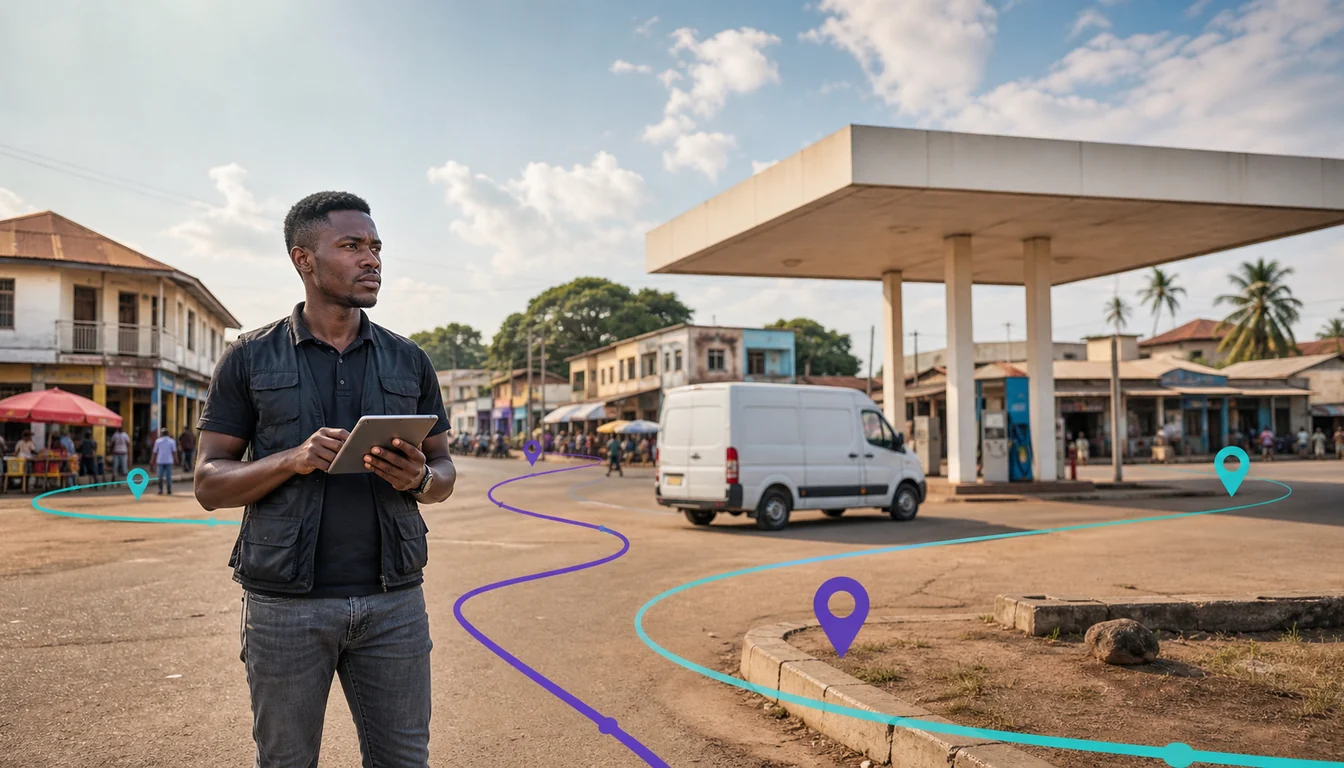
Van sales and pre-selling are often argued about as though one of them is modern and the other is a holdover. In Ghana neither claim survives contact with the trade. Both models are running profitably today, frequently inside the same key distributor, and the right choice follows from what you sell, who buys it, how they pay and how far apart the calls sit. This is a decision guide rather than a case for one model.
What Each Model Actually Commits You To
Before comparing them, it is worth being precise about what each route model is, because the operational commitments are very different even though the sales call can look similar from the pavement.
Van sales: selling from stock on the vehicle
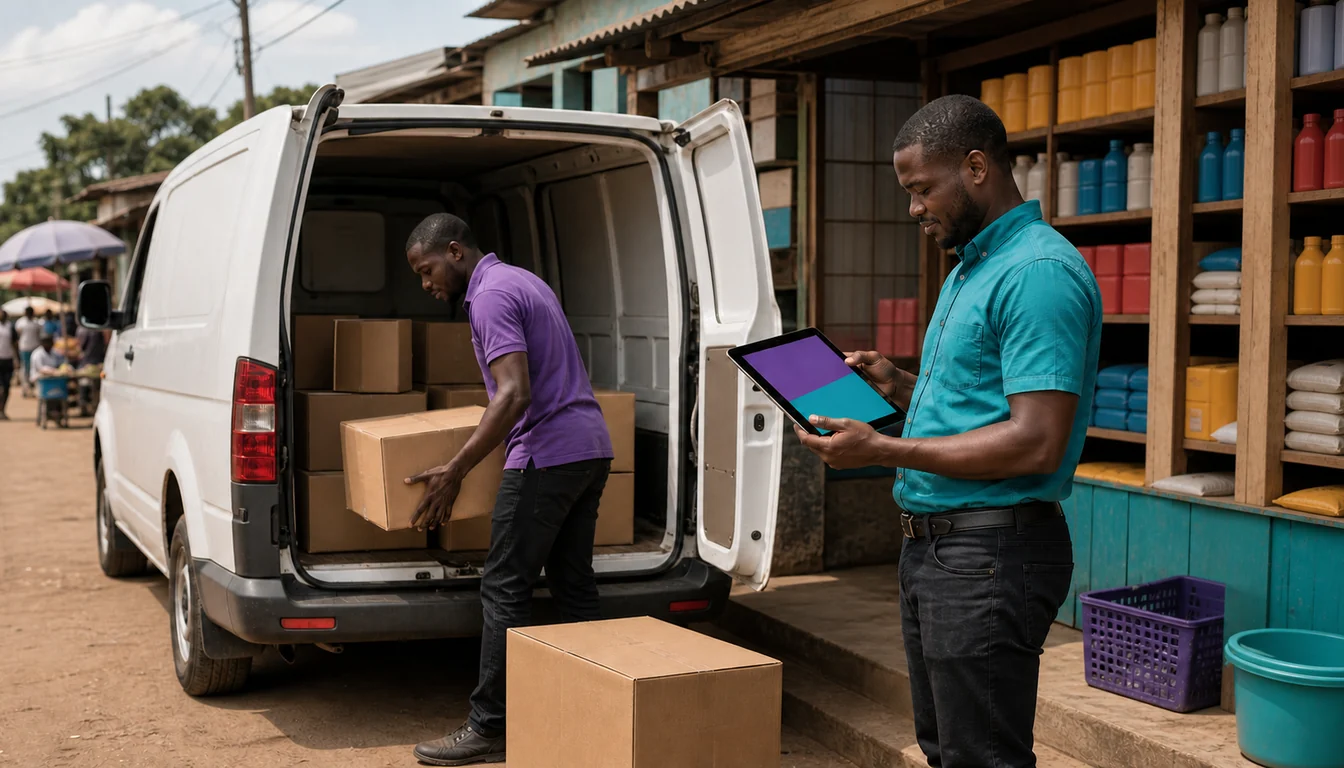
A Van Sales Representative loads an agreed assortment at the key distributor's warehouse, drives a fixed beat, and sells and delivers in the same visit. The outlet chooses from what is physically on the vehicle, takes the goods immediately, and settles on the spot in cash or over mobile money. The invoice, the delivery and the collection all happen in one stop. What that commits you to is a van's worth of working capital moving around a territory every day, a load plan that has to guess demand before the first call, and a reconciliation at the end of every trip that must account for every case loaded.
Pre-selling: order today, deliver tomorrow
A Field Sales Representative or distributor sales representative walks the beat with a device and no stock, books orders against the full catalogue, and the key distributor picks, invoices and delivers on a later run, usually the next day. Selling and delivery are separated, which means the assortment on offer is the whole warehouse rather than the whole van. What that commits you to is a delivery operation: pick lists, load sequencing, a delivery window the outlet will actually accept, and a fill rate that determines whether the retailer trusts the next order they place.
Where Van Sales Earns Its Keep in Ghana
Van sales suits high-frequency, fast-moving categories sold in small quantities to outlets with almost no storage. That describes a very large share of Ghanaian traditional trade. A provision shop on a busy junction, a metal kiosk, a container shop and a table-top seller all buy little and buy often, because shelf space and cash both run out quickly. Asking any of them to place an order today and wait until tomorrow means asking them to be out of stock for a day, which they will simply solve by buying from the wholesaler down the road.
The density argument matters just as much as the category. On a tight urban beat across Accra, Tema or the trading streets around Kumasi, a van completes a high call count in a day, and every sale converts to delivered volume and collected value immediately. There is no second journey and no order that quietly disappears between booking and delivery. For beverages, sachet and bottled water, snacks, confectionery and other rapid-turn lines, that immediacy is the whole commercial case.
Van sales also handles the payment reality of the smallest tier cleanly. Cash is still genuinely present at market stalls and table-top pitches, and mobile money over MTN MoMo, Telecel Cash and AT Money is dominant everywhere else, settling between wallets and bank accounts in seconds through GhIPSS. Both rails work at the point of handover, so the money and the goods move together.
Where Pre-Selling Is the Stronger Model
Pre-selling wins wherever assortment breadth, credit or distance is the binding constraint. A van carries a few dozen lines. A key distributor's warehouse carries the whole portfolio, including slow movers, larger pack formats, new launches and the variants a serious retailer wants. When the conversation at the counter is about range rather than replenishment, selling from a device against the full catalogue produces a materially bigger order than selling from what happens to be behind the driver.
Credit customers effectively require it. Once an outlet buys on terms, the sale needs a limit check, an ageing position and a release decision that belongs in the back office, not in a Van Sales Representative's head at the kerbside. The same is true of modern trade: a supermarket or minimart buying to a purchase order, with agreed pricing and planogram commitments, cannot be served from a van's stock list, and the Key Account Manager handling it is negotiating rather than delivering.
Then there is geography, which in Ghana is decisive. The southern belt is dense and the north is not. On long, thin routes through the Savannah, North East, Upper East, Upper West, Oti and Bono East regions, the distance between outlets is large and the drop size is small. A loaded van running those beats spends most of its day carrying stock it will not sell, and it ties up working capital while doing so. Pre-selling the route and consolidating deliveries into a scheduled run, often weekly rather than daily, is usually the cheaper answer. Where those territories are being designed in the first place, the reasoning is set out in more detail in our guide to territory and coverage planning across Ghana's 16 regions.
The Hybrid Most Ghanaian Operations Actually Run
In practice very few Ghanaian distributors are purely one or the other. The common shape is a hybrid: van sales on the dense, high-frequency urban beats and on the fast-moving core lines, and pre-selling for wider assortment, for credit accounts, for modern trade and for outstation routes into the Municipal and District Assemblies further from the depot. Some operations run both against the same outlet, with a van covering the weekly top-up and a pre-sell call handling the monthly range order.
The hybrid is the right answer commercially and a genuine hazard administratively. Two route models mean two ways of pricing, two ways of applying a scheme and two ways of counting a call, and if they run on separate systems you end up with the same outlet appearing twice in the master under slightly different names. The fix is a single outlet master with geo-tagged locations, one territory design and one set of price and scheme rules, with the route model as an attribute of the journey plan rather than a separate universe. Both models should be planned from the same route planning system, so coverage, frequency and productivity are measured on one scale.
What Each Model Demands Day to Day
The models fail in different places, and each has a daily discipline that cannot be skipped without the numbers drifting.
Van stock reconciliation at the close of every trip
A van is a moving warehouse, so it needs a warehouse's controls. Opening load, sales by invoice, returns, damages, free goods issued under a scheme and closing stock have to balance before the vehicle is signed off, every day, not weekly. On paper this is reconciled late and disputes are unwinnable, because nobody can reconstruct what was actually on the vehicle at nine in the morning. Digital load-out against a counted opening stock, with the closing count captured at the depot gate, turns a monthly argument into a five-minute check. Distributors that treat the van as a stock location inside their inventory system, rather than as an untracked gap between the warehouse and the shop, find the shrinkage quickly.
Cash and mobile money settlement per trip
Van sales collects value all day, which means the settlement has to be per trip and per representative, not per week. Every invoice needs a payment mode against it, wallet references captured where the outlet pays digitally, and the cash declared at the depot matched to the cash invoices. The Electronic Transfer Levy that once sat on wallet transfers was repealed in April 2025, so the cost of collecting digitally is no longer a reason for anyone to insist on holding cash, which removes the last respectable excuse for an unreconciled cash bag. Pre-selling shifts collection to the delivery run or to a separate credit process, so the control point moves to the delivery note and the receipt against it. Either way, the mechanics of matching collections across wallets, bank and cash are covered in our piece on order-to-cash with mobile money and cash.
Delivery scheduling and vehicle utilisation for pre-sell
Pre-selling only works if the delivery arrives. That makes fill rate, delivery window adherence and vehicle utilisation the numbers that decide whether the model holds. Orders have to be cut off early enough for the warehouse to pick and load, deliveries sequenced so the vehicle is not crossing the same district twice, and outstation runs consolidated so a truck goes north full rather than half empty. Utilisation planning gets harder at the peaks, when Christmas and Easter demand collides with limited vehicles, and on northern routes during harmattan from December when travel time is less predictable. Depots also plan around unplanned local outages, which is a practical reason to keep picking and invoicing usable on devices rather than only on a desktop.
The Leakage Risks Are Not the Same
Both models leak, but not in the same direction, and controls designed for one will not catch the other.
Van sales concentrates risk on the vehicle. The recurring patterns are stock sold off-invoice and the value never banked, discounts given below the approved price to move a load before the day ends, scheme goods issued to outlets that never qualified, stock written off as damaged that was in fact sold, and cash held over from one day into the next. Every one of these is invisible without a same-day reconciliation and a price and scheme rule the representative cannot override at the counter.
Pre-selling concentrates risk on the gap between the order and the delivery: orders booked from outside the outlet without a real visit, quantities inflated at booking and quietly trimmed at delivery, short deliveries signed for by whoever happened to be present, returns used to reverse volume pushed to hit a target, and credit extended informally at the counter and regularised afterwards. The controls are geo-stamped and time-stamped visits, delivery confirmation captured against the order line rather than the invoice total, and a hard credit check before release rather than after. An order booked against a distributor order management system that prices, checks credit and confirms availability at the point of capture removes most of that surface area.
Both Models Have to Work Where the Signal Thins
Whichever model you choose, it has to keep working on the beats where connectivity is not dependable. Coverage across the southern urban belt is broadly good, but it genuinely thins on northern and rural routes and on agricultural beats, and 5G is still nascent. A representative on a route through the Upper West or the Savannah region will lose signal during the day, and a van sales invoice or a pre-sell order that cannot be raised at that moment is a sale that does not happen.
The requirement is the same in both cases: capture the full transaction on the device, hold it locally, and sync when the connection returns, with sequence and pricing preserved so nothing is duplicated or repriced on upload. For van sales that includes the invoice and the collection; for pre-selling it includes the order, the outlet survey and any photographs taken at the call. The practical detail is set out in our article on offline-capable field sales for northern and rural routes.
How 1Channel Helps You Choose and Run a Route Model
1Channel supports van sales, pre-selling and the hybrid on the same platform, with one outlet master, one territory design and one set of pricing and scheme rules, so the route model becomes a setting on the journey plan rather than a separate system to reconcile. That makes it possible to test a model on part of a territory and compare it honestly against the rest.
For Ghanaian distributors running both models across traditional and modern trade, the platform provides:
- Van load-out, in-van stock tracking and end-of-trip reconciliation, with returns, damages and scheme issues accounted for before the vehicle is signed off.
- Pre-sell order capture against the full catalogue, with pricing, scheme eligibility, credit limits and stock availability checked at the point of order rather than after it.
- Collections in GHS across mobile money and cash, captured per invoice and per trip, with wallet references held against the receipt for reconciliation.
- Delivery scheduling, load sequencing and vehicle utilisation reporting for pre-sell runs, including consolidated outstation deliveries into distant Municipal and District Assemblies.
- Offline capture of invoices, orders, surveys and photographs on northern and rural beats, syncing in order when the connection returns.
- Records that line up with what a distributor's finance team needs, including the invoice detail required under the GRA's E-VAT regime, which already applies to every VAT-registered business.
- Coverage, productivity and drop-size reporting by route model, so the choice between van sales and pre-selling can be made on measured territory performance instead of habit.
Run Van Sales and Pre-Selling on One Platform
See how 1Channel's sales force automation handles both route models across Ghana's traditional and modern trade, with one outlet master and one set of rules.
Explore Sales Force Automation →Key Takeaways
The route model question is an economics question, and the answer usually differs by territory rather than by company.
- Van sales suits density and frequency. Fast-moving lines sold in small quantities to provision shops, kiosks, container shops and table-top sellers on tight urban beats are best served by selling and delivering in one visit.
- Pre-selling suits breadth, credit and distance. Full-catalogue selling, credit accounts, modern trade and long, thin northern routes all argue against carrying stock that will not be sold.
- The hybrid is normal, but only on one master. Running both models is the right commercial answer as long as outlets, territories, pricing and schemes live in a single system.
- Each model has a non-negotiable daily discipline. Van sales lives or dies on end-of-trip stock and settlement reconciliation; pre-selling lives or dies on fill rate, delivery windows and vehicle utilisation.
- The leakage risks differ. Van sales leaks through off-invoice sales, unapproved discounts and unbanked cash; pre-selling leaks through unvisited orders, short deliveries, returns abuse and informal credit.
- Both models must work offline. Coverage thins on northern, rural and agricultural beats, so invoices, orders and evidence have to be captured on the device and synced later.
Rather than committing the whole business to one model, most distributors are better served by classifying territories against outlet density, drop size, category velocity and payment terms, then applying the model each territory earns. Reviewing that classification once a year, and again before a peak trading season, keeps the route structure matched to how the trade is actually buying.