A field auditor scores facing, hot zone and togetherness at an outlet, then moves on. A second auditor, elsewhere in the queue, redoes the same audit.
Neither auditor knows about the other. This post covers how that blind recheck works, what happens when their counts disagree, and how the outcome becomes a quality score.
This audit model shows up most in FMCG, Cosmetics and Consumer Durables merchandising programmes, and in wider Retail and Modern Trade execution work.
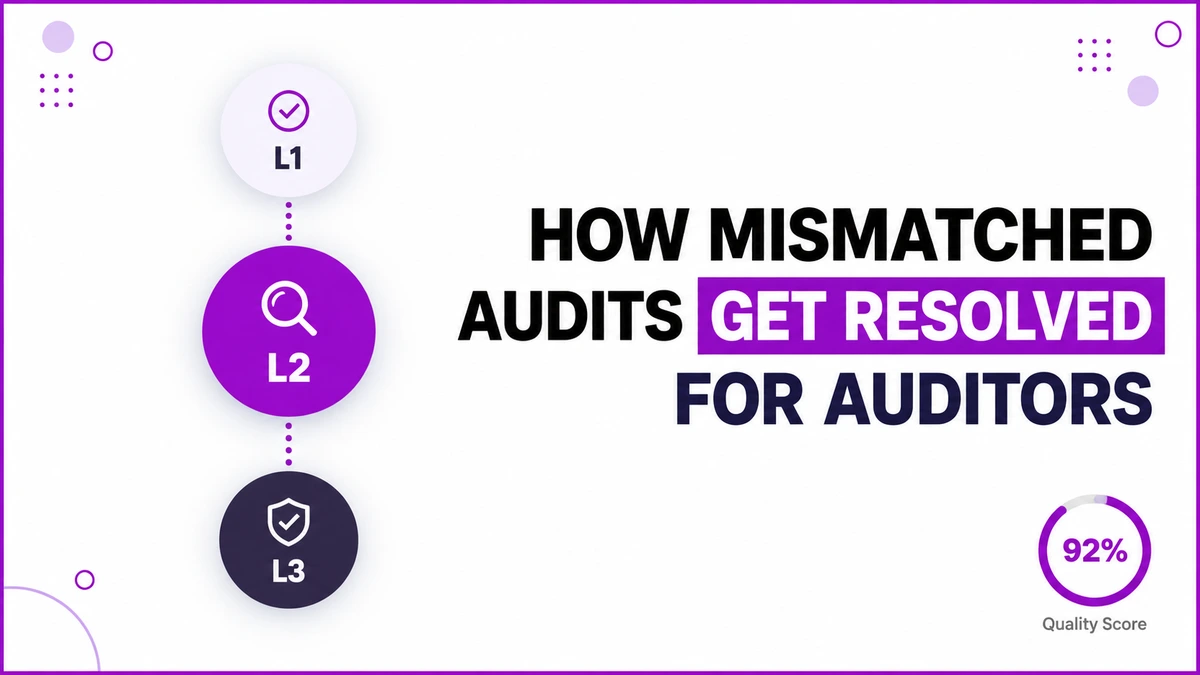
Three Tiers, One Audit
Every Appealing Visibility audit can pass through up to three tiers, each one accountable to the one before it.
| Tier | Who performs it | What happens |
|---|---|---|
| L1 | The first auditor to visit the outlet | Records Facing, Hot Zone and Togetherness for every SKU on shelf |
| L2 | A different auditor, assigned automatically | Blind-repeats the same audit with no knowledge of the original result |
| L3 | A supervisor | Independently re-audits only when L1 and L2 disagree |
L1 and L2 never see each other's numbers before submitting their own. Only a mismatch pulls a supervisor in.
How an L2 Assignment Reaches an Auditor
Once an auditor clears their own L1 quota, the system starts routing L2 rechecks to them automatically. No one chooses which auditor gets which recheck.
Assignment is random and reciprocal. Auditor A's work can return to Auditor B for L2, and Auditor B's work can just as easily land on Auditor A's queue.
What Each Parameter Is Worth
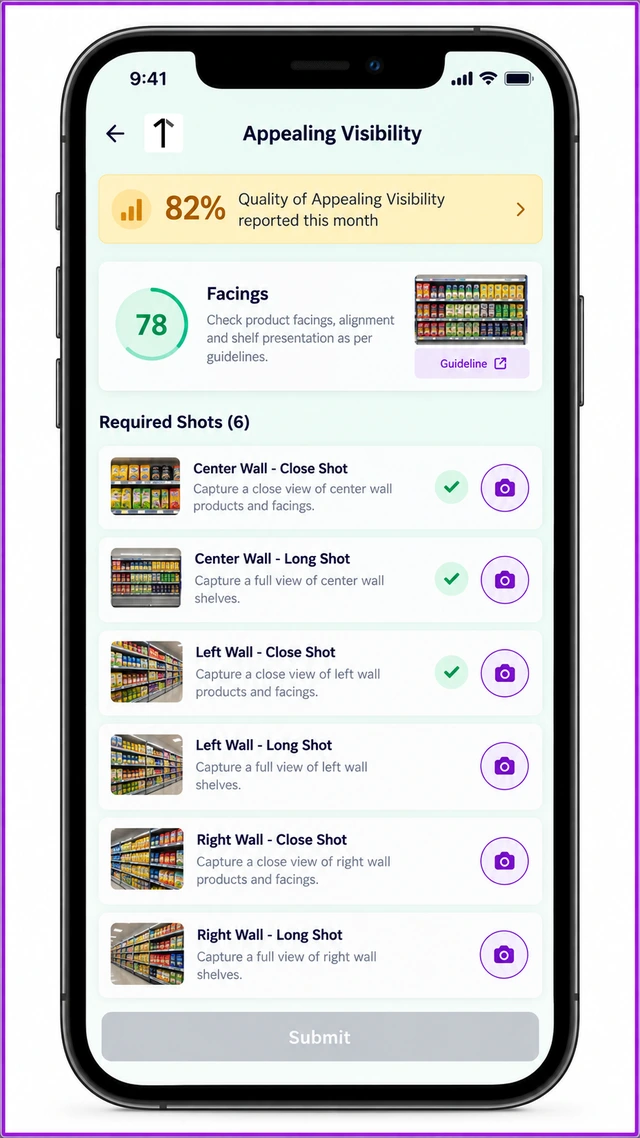
Every SKU on shelf is scored against three parameters, and each one carries a different weight in the final index.
| Parameter | What it checks | Weight |
|---|---|---|
| Facing | Full-size bottles visible on shelf at or above the outlet's norm | 50% |
| Togetherness | Whether every SKU in a brand family sits in the correct left-to-right order | 40% |
| Hot Zone | Whether the SKU sits within the 3 to 6 foot eye-level shelf band | 10% |
Each parameter is scored pass or fail per SKU, so two auditors checking the same shelf should land on the same three numbers.
When the Two Audits Match
At one outlet, both L1 and L2 record the same result: Facing passes, Hot Zone passes, Togetherness fails for one SKU out of sequence.
The audit closes at L2. No supervisor time is spent on a result both auditors already agree on.
When the Two Audits Disagree
At a second outlet, L1 records three units facing for a SKU with a norm of two, a pass. L2 counts two units, a fail.
The mismatch routes the audit to a supervisor, who independently recounts the same shelf and settles which of the two auditors was right.
The Score Every Auditor Carries
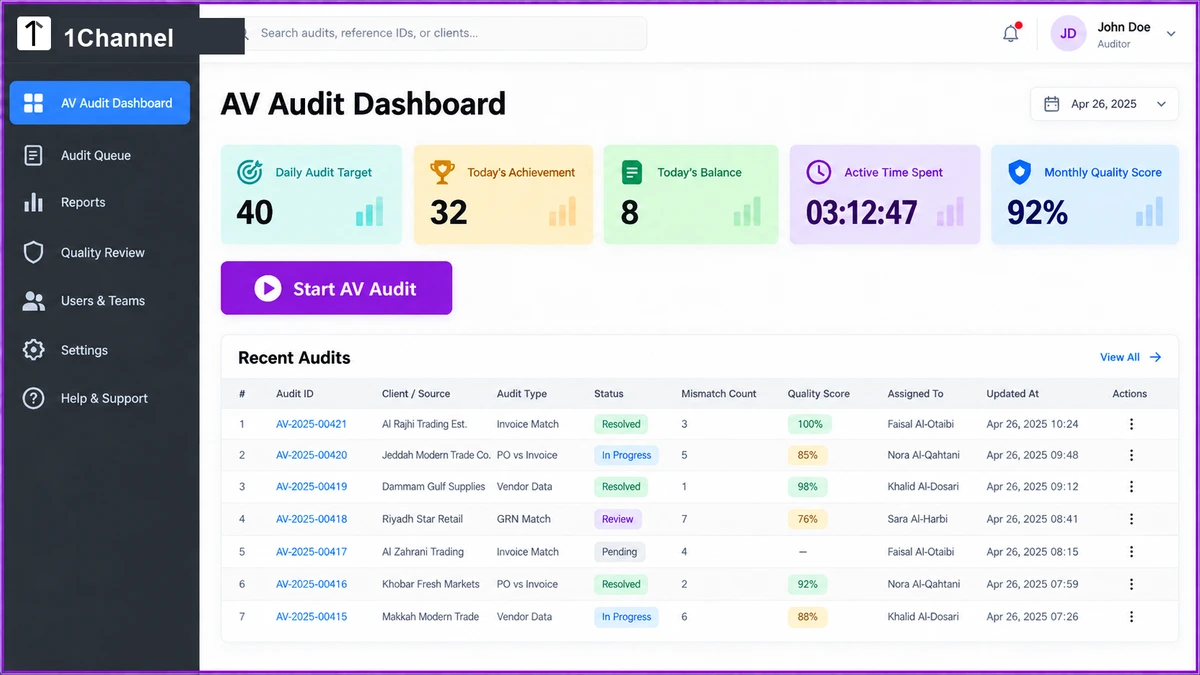
A Monthly Quality Score tracks how often an auditor's own numbers were later proven wrong at L3.
A score of 92% means 8% of that auditor's audits were flagged incorrect once a supervisor settled the mismatch.
The score resets each month and sits on the same AV Audit Dashboard the auditor already checks for their daily target.
How 1Channel Keeps the Recheck Honest
1Channel runs the L1, L2 and L3 assignment automatically, so no supervisor has to manually pick who rechecks whom.
Every score and mismatch stays tied to the same outlet data captured in the mobile app auditors already use for their visits.
Automate the Recheck Behind Every Shelf Audit
See how 1Channel assigns, tracks and scores every Appealing Visibility audit on one cloud platform built for Saudi retail-execution teams.
Explore Retail Execution Software →When to Escalate an Audit to L3
- Facing, Hot Zone or Togetherness disagree between L1 and L2 for the same SKU.
- The disagreement isn't explained by a photo taken at a different time of day.
- A supervisor has bandwidth inside the roughly four to five day review window.
- The outlet's quality history already shows repeated mismatches worth a closer look.
Note: Software screens may vary based on your business structure and configured workflows.