Since 4 November 2026, diesel has been about R1.10 to R1.20 a litre cheaper at the pump, while petrol has moved by just one cent.
That cut is temporary. It shrinks in December and ends on 5 January 2027.
That is just as South Africa's festive trading winds down and delivery fleets start the new year.
The timing matters most for teams moving stock in FMCG, logistics and field services, building materials and agriculture.
This post covers what changed at the pump and why the relief sets up a cost jump in January.
It also shows how tighter route planning keeps kilometres from eating the margin once the levy comes back.
What Changed at the Pump on 4 November
In his Medium Term Budget Policy Statement on 21 October, Finance Minister Enoch Godongwana announced a temporary cut to the general fuel levy.
Treasury puts its cost at about R10 billion in foregone revenue.
| Period | Diesel levy cut | Petrol levy cut |
|---|---|---|
| 4 November to 1 December 2026 | R3.00 per litre | R1.50 per litre |
| Then until 5 January 2027 | R1.50 per litre | R1.00 per litre |
The pump did not fall by the full amount. The Department of Mineral and Petroleum Resources set November prices on 3 November.
Most of the relief went into covering higher crude prices and a weaker rand, and the slate levy rose by 48.18 cents to 135.84 cents a litre.
The net result was a diesel cut of 109.82 to 119.82 cents a litre, and a one-cent cut for petrol.
Why the Relief Turns Into a January Cost Jump
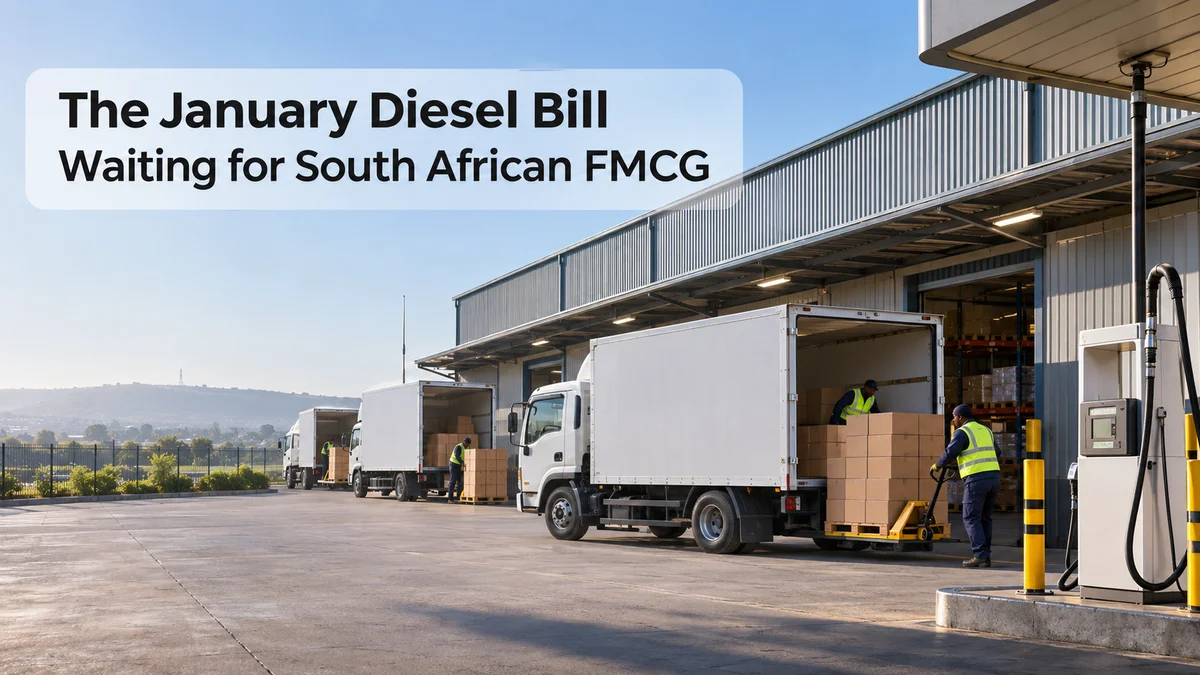
Delivery trucks run on diesel, so fleets get the biggest saving in exactly the weeks they run the most kilometres, ahead of Black Friday and through December.
Then the relief steps down twice. Half of the diesel cut disappears in December, and the rest goes on 5 January.
That happens before any monthly change in the international price is even counted.
Delivery charges, drop sizes and route plans set in November, on discounted diesel, will look too generous by January.
Reps in petrol cars feel it differently, since their running cost barely changed.
Companies that reimburse at the SARS rate of R4.95 per kilometre pay the same whatever the pump does.
How 1Channel Keeps Kilometres in Check
1Channel's route planning software builds beat plans by territory and records every visit with a GPS-tagged check-in.
Its visit productivity reports show the distance between stops for each rep, every day.
Its AI journey planner turns straight-line distance into realistic road travel time and keeps routes inside each rep's working hours.
When visits will not fit, the planner flags them in a shortfall report instead of quietly dropping them.
That makes the cost of a beat visible before the levy returns, so routes can be tightened while volumes are still high.
Plan Routes That Still Pay When Fuel Costs Return
See how 1Channel plans beats, measures distance between stops and flags routes that do not fit the working day.
Explore Route Planning Software →What This Looks Like in Practice
A Durban beverage distributor. It runs six diesel trucks, each burning about 66 litres a day across 22 delivery days, close to 8,700 litres a month.
At the full R3.00 cut, the levy saves it about R26,100 in November. In December the saving halves to roughly R13,100, and from 5 January it is gone.
Its operations head reprices delivery on that January baseline now, not on November's pump price.
A Gauteng snacks brand with 14 reps. Each rep drives about 180 kilometres a day, which costs R891 a day at the SARS rate of R4.95 per kilometre.
Visit productivity reports show about 25 kilometres a day of backtracking per rep. Cutting it saves roughly R2,700 per rep a month, or about R38,100 across the team.
Source: South African Government, Department of Mineral and Petroleum Resources