Cloud Software Built for Logistics & Field Services Companies in Vietnam
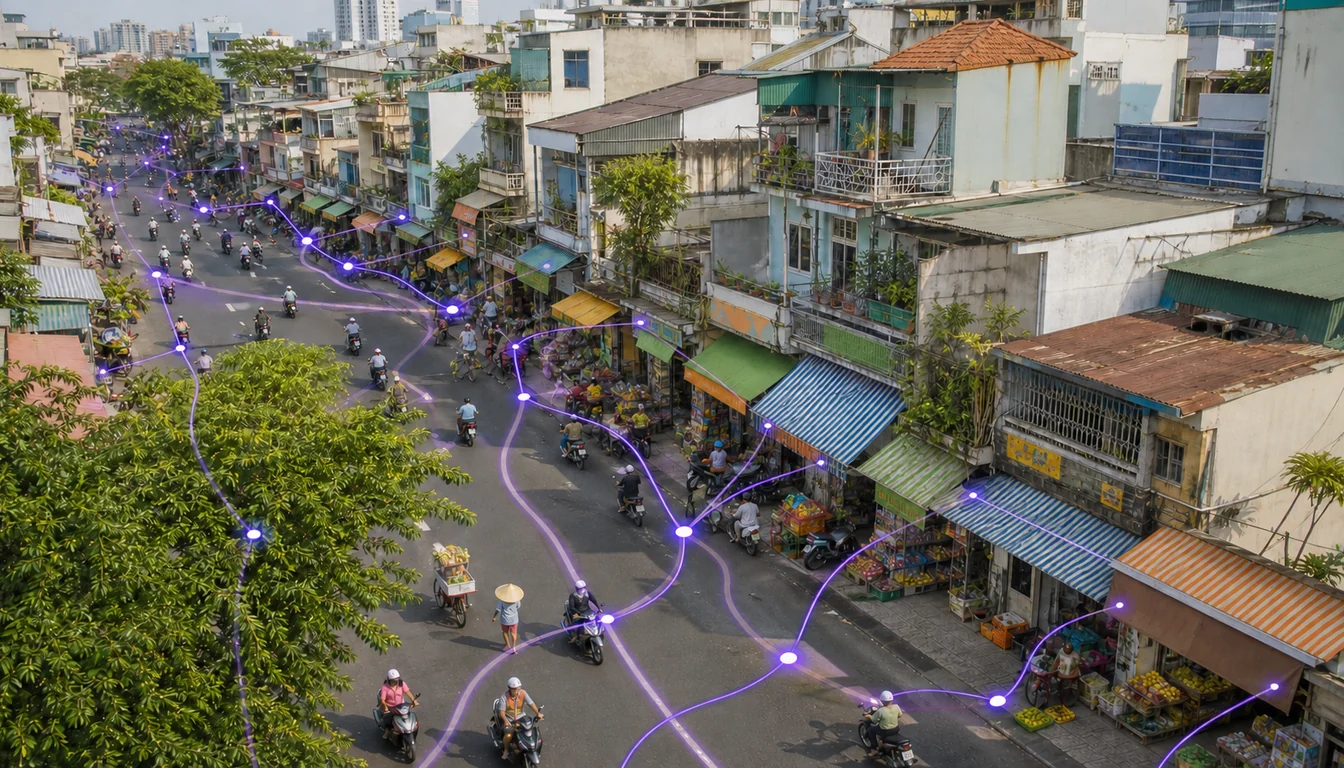
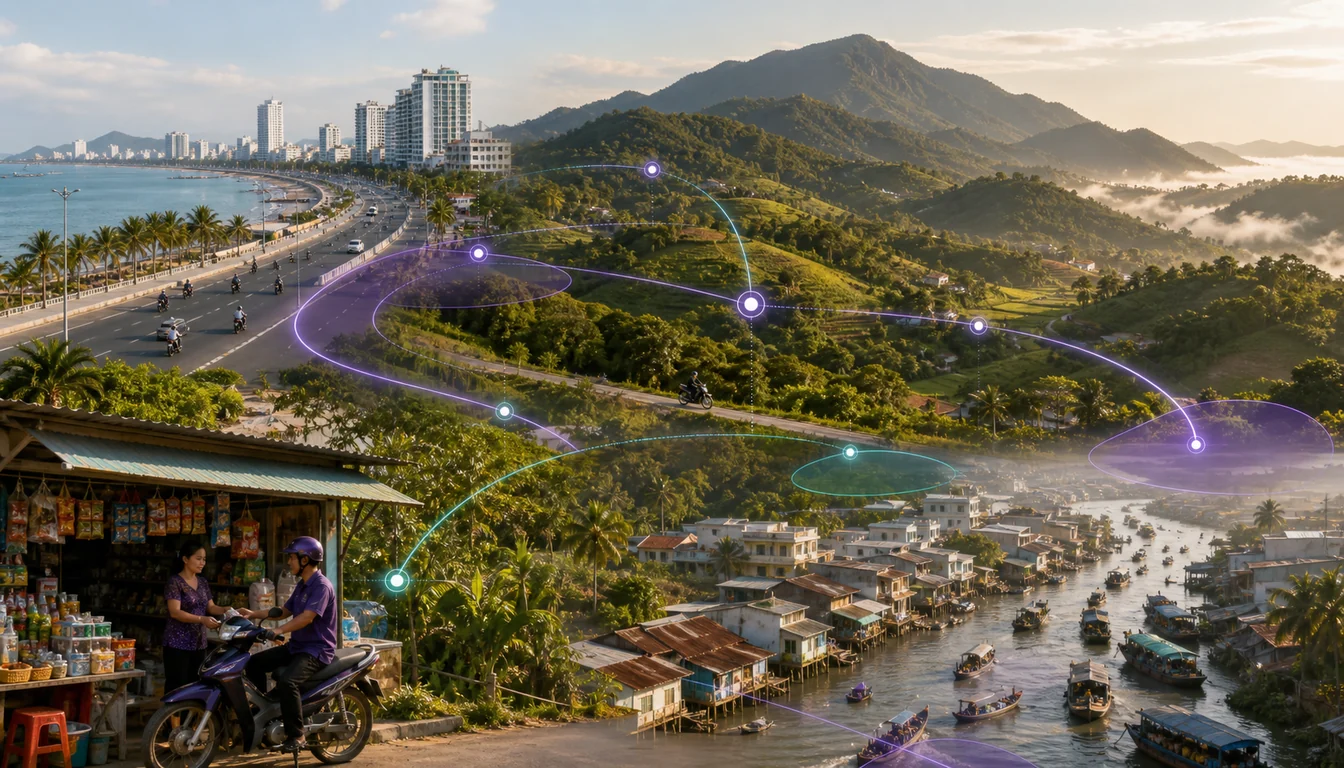
Courier, 3PL, last-mile, cold-chain, and field service brands in Vietnam run SFA, DMS, loyalty, and LMS from a single cloud backend here. The same platform handles a dense delivery round in Hanoi or Ho Chi Minh City and a long provincial leg out through the Mekong Delta or the Central Highlands.
Why Vietnamese Logistics and Field Service Brands Need a Purpose-Built System
Picture a single day: a courier round through Hanoi, a truck moving inland from the Hai Phong or Cai Mep-Thi Vai gateway, a cold-chain run for a pharma order, a motorbike dispatch queue, a field engineer's site visit. Right now every one of those still gets coordinated by phone call, messaging app, paper manifest, or a spreadsheet nobody else can see. The gap between what happened and what ops knows about is a full working day, sometimes more.
Nobody Can Confirm the Route Actually Happened
Without GPS attendance or a selfie check-in, a supervisor is taking it on faith that a rider covered the assigned drops or that an engineer showed up at a job site in Da Nang, Can Tho, or Hai Phong.
Dispatch Still Runs on Voice Notes
A dispatcher assigning work by phone has no live read on which rider is already overloaded, which skill set a job actually needs, or how much room is left on a given vehicle. By the time an SLA clock has slipped in city traffic, the control desk is usually the last to know.
The Dashboard Learns About a Breach Last
A proof-of-delivery slip or a first-time-fix note can sit unreported for days before it reaches a report. On a B2B contract with penalty tiers, that lag is exactly how exposure builds quietly while the numbers on screen still look fine.
Gateway-to-Depot Movement Goes Dark Mid-Journey
A shipment entering at Hai Phong in the north or Cai Mep-Thi Vai in the south passes through a city sortation hub on its way to a provincial depot somewhere across the Centre or the Mekong Delta, and that whole middle stretch can take several days with almost no visibility. A backed-up depot or a stuck return sits invisible until someone finally asks about it.
Every Partner Keeps Its Own Records
A franchise hub tracks its own numbers. So does a 3PL partner, a gig rider, and a contract engineer, each on a different tool. There is no single scorecard that lines up SLA performance, service quality, and VND settlement across all of them.
Certification Gaps Only Surface After an Incident
Defensive driving, cold-chain handling, hazardous-goods segregation, electrical safety: these are the certifications that are supposed to stand between a job and an accident. Without a gate checking them at assignment time, an uncertified driver or engineer can pick up the job anyway, and the certification problem only becomes visible once something has already gone wrong.
Apps that Run the System
Cloud Apps Powering Daily Field and Hub Work
Drivers, dispatch riders, field engineers, dispatchers, and franchise partners work from two Android and iOS apps that plug straight into the same cloud backend behind the admin portal.
1Channel SFA & DMS
Google Play
1Channel SFA & DMS
Apple App Store
1Channel CRM
Google Play
1Channel CRM
Apple App Store
Logistics Solutions in Detail
Explore Each Logistics Module in Depth
Each module gets its own dedicated page, written for what a Vietnamese courier, 3PL, cold-chain, last-mile, or field service team actually needs from it.
Sales Force Automation for Vietnamese Logistics and Field Service Teams
Field ops here need one thing above all: a system that treats a Hanoi delivery round and a Central Highlands service call as the same kind of job, just planned differently. That's what the cloud SFA platform does, pulling B2B freight sales calls, daily run schedules, skill-matched engineer dispatch, and a dispatcher console into one place, with results rolling up by hub, route, and SLA tier.
Driver and Rider Runs: drops sequenced in order, VND collection logged against cash-on-delivery or VietQR, and photo plus signature proof captured at the point of delivery
Field Engineer Dispatch: jobs matched to the right skill set, an ETA sent ahead to the customer, parts picked in advance, and first-time-fix results captured on close
Dispatcher Console: a live map, alerts as a job drifts toward SLA risk, one-click re-allocation, and overtime sign-off in the same screen
SLA Stage Capture: every step from job creation through acknowledgement, en-route, on-site, and closure gets its own timestamp
1Voice AI Assistant: type "hub SLA today" or "missed on-site jobs" and get an answer immediately, while the same AI layer sequences drops behind the scenes across both dense city rounds and spread-out provincial routes
Distributor Management for Multi-Hub Logistics Distribution
Between a gateway and a recipient's door, a shipment in Vietnam typically passes through a sortation hub, then a provincial depot somewhere in the Centre, the Central Highlands, or the Mekong Delta, before the last-mile leg even starts. The DMS keeps that whole chain, starting at Hai Phong or Cai Mep-Thi Vai, on one system, adding parcel tracking, return handling, cold-chain logs, and VND contract-pricing automation for B2B accounts along the way.
Gateway-to-Depot Flow: a full lineage record from port gateway to sortation hub to provincial depot to last-mile rider, tracked across long north-south corridors
Parcel and Inventory Tracking: location and status visible in real time for parcels, spares, returns, and consumables alike
Cold-Chain Compliance: IoT temperature readings, breach alerts, and audit logs built for DAV- and VFA-registered pharma and dairy loads on long-haul corridors
RTO and Reverse Logistics: return-to-origin workflow, damaged-parcel claims, return-pickup scheduling, and credit notes handled in the same flow
Contract Pricing: B2B rate cards priced in VND, volume slabs, automated fuel surcharges, and SLA penalty calculations
Loyalty and Incentive Programs for the Logistics Distribution Network
Riders, drivers, field engineers, hub crews, and franchise partners all earn against the same set of rules in the cloud loyalty programme. Slabs calculate what each person is owed, engineers pick up quality bonuses on top, and VND lands in a bank account or an e-wallet such as MoMo, ZaloPay, or VNPAY without anyone chasing a payout manually.
Rider and Driver Volume Incentives: daily and weekly slabs calculated on deliveries made, COD collected, and stops hit on time, paid straight to bank or e-wallet
Field Engineer Quality Bonuses: first-time-fix rate, customer rating, and a zero-callback record combine into a monthly bonus figure
Franchise Partner Tiers: partners move through Silver, Gold, and Platinum as SLA compliance and volume climb, with billing settled in VND at each tier
SMS and App Comms: scheme updates, tier-change notifications, and hub-wide campaigns go out automatically, with Tết-season payout timing flagged well before the peak hits
Training and LMS for Logistics and Field Service Teams
Certification status is what actually gates a dispatch assignment, so the cloud LMS gives drivers, dispatch riders, field engineers, dispatchers, and hub supervisors a training path built around exactly that: defensive driving, cold-chain SOPs, engineer safety, and dispatcher onboarding, broken into short video and quiz modules a rider can finish between routes.
Driver and Rider Safety: defensive driving, hazmat handling, safe handling of COD cash, motorbike safety, refreshed every quarter
Cold-Chain and Hazmat Certs: temperature SOPs, hazardous-goods segregation, and what to do on a breach, built for DAV- and VFA-registered pharma, dairy, and food runs
Field Engineer Installation and Safety Training: in-app videos covering install steps, electrical safety, PPE, and customer-site conduct, each closing with a quiz
Dispatcher and Hub Crew Onboarding: control-room workflows, exception handling, and escalation paths taught before someone takes the console solo
A few short reads worth a coffee break: how beat planning holds up on dense tạp hóa routes, and what territory coverage looks like now that Vietnam runs 34 provinces.
Why 1Channel Fits Logistics and Field Services in Vietnam
A rundown of why courier, 3PL, cold-chain, last-mile, and field service brands in Vietnam pick this platform in particular.
One Connected Logistics Platform
Driver SFA, the dispatcher console, multi-hub DMS, partner and rider loyalty, and workforce LMS all run on the same cloud, so field activity, hub status, partner performance, and training records never fall out of sync with each other.
Configurable for Multi-Mode Operations
A courier operation, a B2B freight desk, a 3PL, a gig-rider pool, a bench of contract engineers, in-house drivers, franchise hubs: none of these run the same way, and each one gets a workflow and an SLA structure built for how it actually operates.
AI Where It Helps Logistics
Drop sequencing across a dense city round or a spread-out provincial route, selfie attendance checks, early flags on jobs drifting toward SLA risk, and plain-language answers to questions about hub or route performance: that's where the AI layer actually earns its place, not everywhere at once.
Built for Tết-Season Delivery Surges
Route plans and driver allocations scale up ahead of Tết, when delivery volume peaks and the north and south build stock on different clocks. Dispatchers see the surge coming in the same dashboard they use the rest of the year.
SLA-Aware Operations Engine
Every contract's priority tier, escalation path, response target, fuel surcharge, and penalty formula lives inside the same automation layer, so risk shows up on the ops screen before a breach does, not after.
ERP, TMS, and WMS Integration
Whatever a business already runs on the back end, be it a TMS, a WMS, an ERP, bank-transfer rails, e-wallets like MoMo, ZaloPay, and VNPAY, or a B2B customer order portal, REST APIs and SFTP tie it into the same data flow.
Quick Go-Live
Nothing forces a full-suite launch on day one. Bring driver SFA or rider loyalty online first, layer DMS and LMS in when the team is ready, and none of it interrupts the operations rhythm or an active B2B SLA.
White-Labelled Apps
The driver, rider, engineer, dispatcher, partner, and customer apps go live on Google Play and the App Store carrying your own brand, not ours.
Ready to Bring Driver, Rider, Engineer, and Multi-Hub Ops Onto One Cloud?
The 1Channel team can size a Vietnam rollout, SFA, DMS, loyalty, and LMS, with AI and automation built in from the start, to match your fleet and hub network.
What ties SFA, DMS, loyalty, and LMS together for a logistics business in Vietnam?▼
One data layer underneath all four. Activity that SFA captures from riders, drivers, and field engineers feeds straight into DMS, which follows parcels from the Hai Phong and Cai Mep-Thi Vai gateways to provincial depots. That same activity data drives loyalty payouts to a bank account or an e-wallet such as MoMo, ZaloPay, or VNPAY, while LMS checks certification status before allowing a dispatch. It all surfaces through a single admin portal with unified dashboards.
Can drivers, dispatch riders, field engineers, and dispatchers really share one SFA platform?▼
Yes, because the app changes shape depending on who is logged in. A dispatch rider sees sequenced drops with cash, VietQR, and COD collection logs, plus photo and signature capture at delivery. A field engineer sees skill-matched jobs with an ETA field and a first-time-fix result to log. A dispatcher sees a live map, SLA alerts, and re-allocation controls instead. One cloud app underneath, a different screen for every role.
How does the DMS keep multiple hubs visible at once?▼
A parcel entering at Hai Phong in the north or Cai Mep-Thi Vai in the south is tracked with full lineage the whole way through: a city sortation hub, a provincial depot somewhere in the Centre, the Central Highlands, or the Mekong Delta, and finally the last-mile rider and recipient. Primary, secondary, and last-mile legs each report on their own, so ops can pinpoint exactly which depot is backed up or where a return has gone stuck.
What keeps a cold-chain pharma or dairy run compliant?▼
IoT sensors log temperature at three points, pack, transit, and delivery, and the moment a reading crosses a breach threshold, the driver, dispatcher, and recipient are all alerted at once. Every log carries a timestamp, GPS location, and recovery time, which is what makes the record audit-grade for DAV- and VFA-registered pharma consignments and dairy loads on long north-south corridors.
What does the dispatcher control room actually show for SLA tracking?▼
Every B2B contract's priority, response, resolution, and penalty tiers get loaded in, and the console marks each job on-track, at-risk, or breached from there. When a job tips toward at-risk, a dispatcher can re-allocate it to the nearest available crew before it actually breaches, and routing already factors in fuel-cost pressure on the long north-south corridor runs. By end of day, SLA performance rolls up automatically by customer, hub, and route.
How do incentive payouts reach riders, drivers, and field engineers?▼
SFA data on delivery volume, COD collected, first-time-fix rate, and customer rating flows straight into the loyalty engine, where slab rules turn it into an earnings figure without anyone doing the maths by hand. On the configured cycle, VND settles directly to a bank account or an e-wallet such as MoMo, ZaloPay, or VNPAY, and every payout leaves a full audit trail, handled in a way that aligns with the Law on Personal Data Protection (Law No. 91/2025/QH15).
What stops an uncertified driver or engineer from taking a job?▼
Every job type carries its own certification requirement, whether that is cold-chain handling, hazardous-goods segregation, electrical safety, or defensive driving, and the LMS keeps status on each of those feeding straight into SFA. If someone without the right cert tries to accept a job, the system simply blocks it. Renewal reminders go out ahead of expiry, and the underlying training itself runs as short, structured video and quiz modules built around each individual role.
Can one routing model handle both a dense city round and a scattered provincial territory?▼
Not with a single model, so the system does not try to force one. A dense round in Hanoi or Ho Chi Minh City gets sequenced around stop density and traffic windows, while a provincial or Mekong Delta route is planned around wider spacing between stops and longer drive legs instead. Riders, drivers, and engineers each pull the plan built for their own territory, and both versions still feed back into the same live map.
Where exactly does AI sit inside the day-to-day logistics workflow?▼
It sequences drops, using GPS and stop-density mapping to plan a dense city round and a dispersed provincial route differently, checks selfie attendance for authenticity, and flags an SLA-risk job before it actually breaches. Ask 1Voice something like 'show top three depots by first-time-fix this week' and it answers in plain language. Underneath all of that, automation quietly runs the incentive maths, the certification gating, and exception escalation.
Does the same cloud platform work outside logistics and field services?▼
It does. The same backend also runs FMCG, CPG, food and beverage, dairy, home care, retail and modern trade, pharma and healthcare, consumer durables, cosmetics, automotive spares, building materials, agriculture, and banking and financial services, each configured to fit that industry rather than logistics.