Share of Shelf Insights & Resources
Expert perspectives on shelf-share measurement, competitive tracking, and retail merchandising AI
1Channel's Share of Shelf uses AI shelf analytics and computer vision for retail to turn a few shelf photos into a clear read on your brand's shelf visibility against every competitor on the same shelf.
Reps capture a few shelf photos per visit; AI share of shelf software counts every facing and calculates your brand's percentage automatically.
The same computer vision for retail that reads your SKUs also recognizes competitor SKUs on the shelf, so the number reflects true brand visibility, not a one-sided estimate.
Retail shelf analytics also checks which SKUs meet your defined minimum stock list and reports MSL adherence in the same view as shelf share.
Every result rolls into existing store audit and merchandising analytics reporting, for one connected view of retail intelligence.
Expert perspectives on shelf-share measurement, competitive tracking, and retail merchandising AI
From a few shelf photos to a complete competitive scorecard, screen by screen.
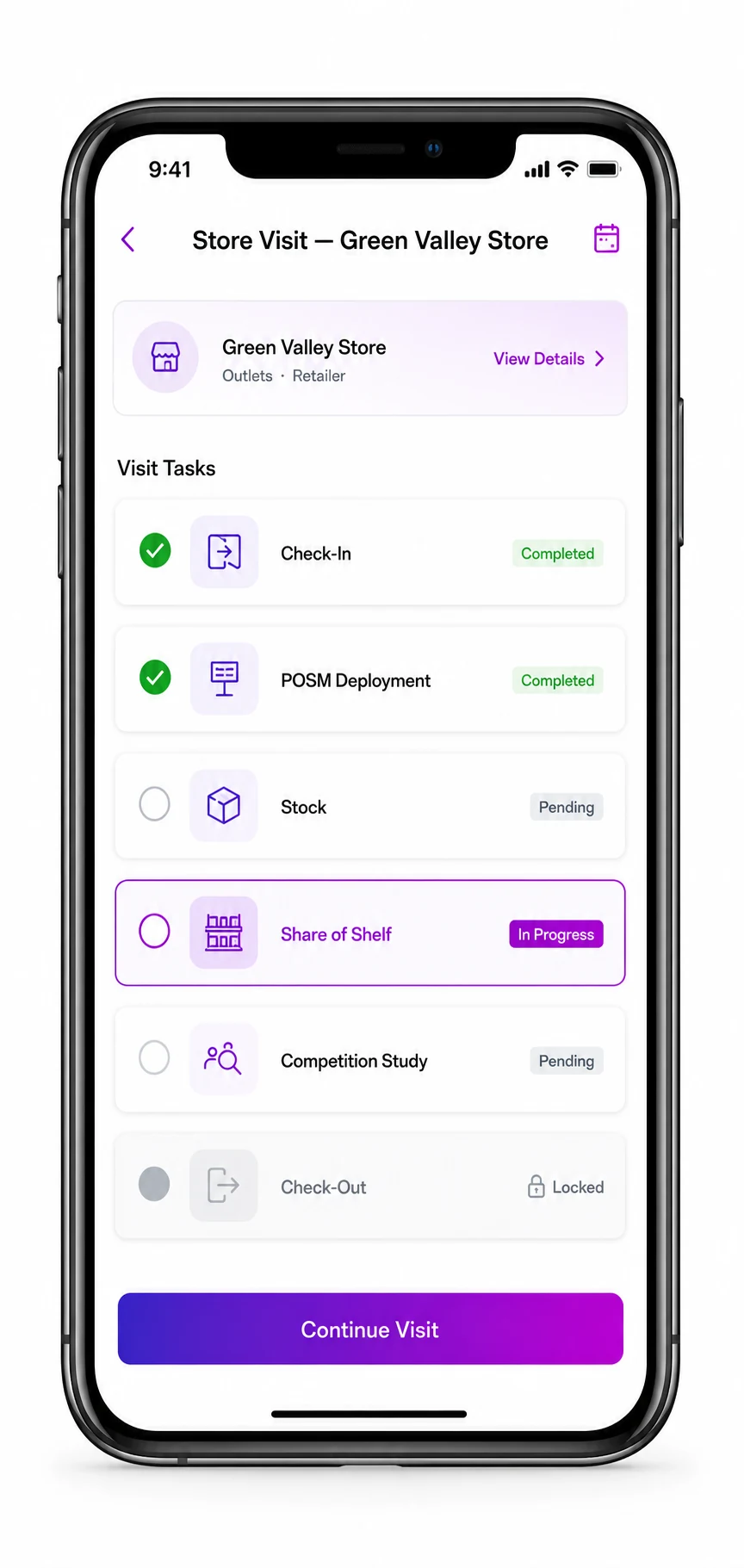
Share of Shelf sits as its own task alongside check-in, stock, and competition study, so shelf intelligence gets captured on every visit instead of needing a separate audit trip.
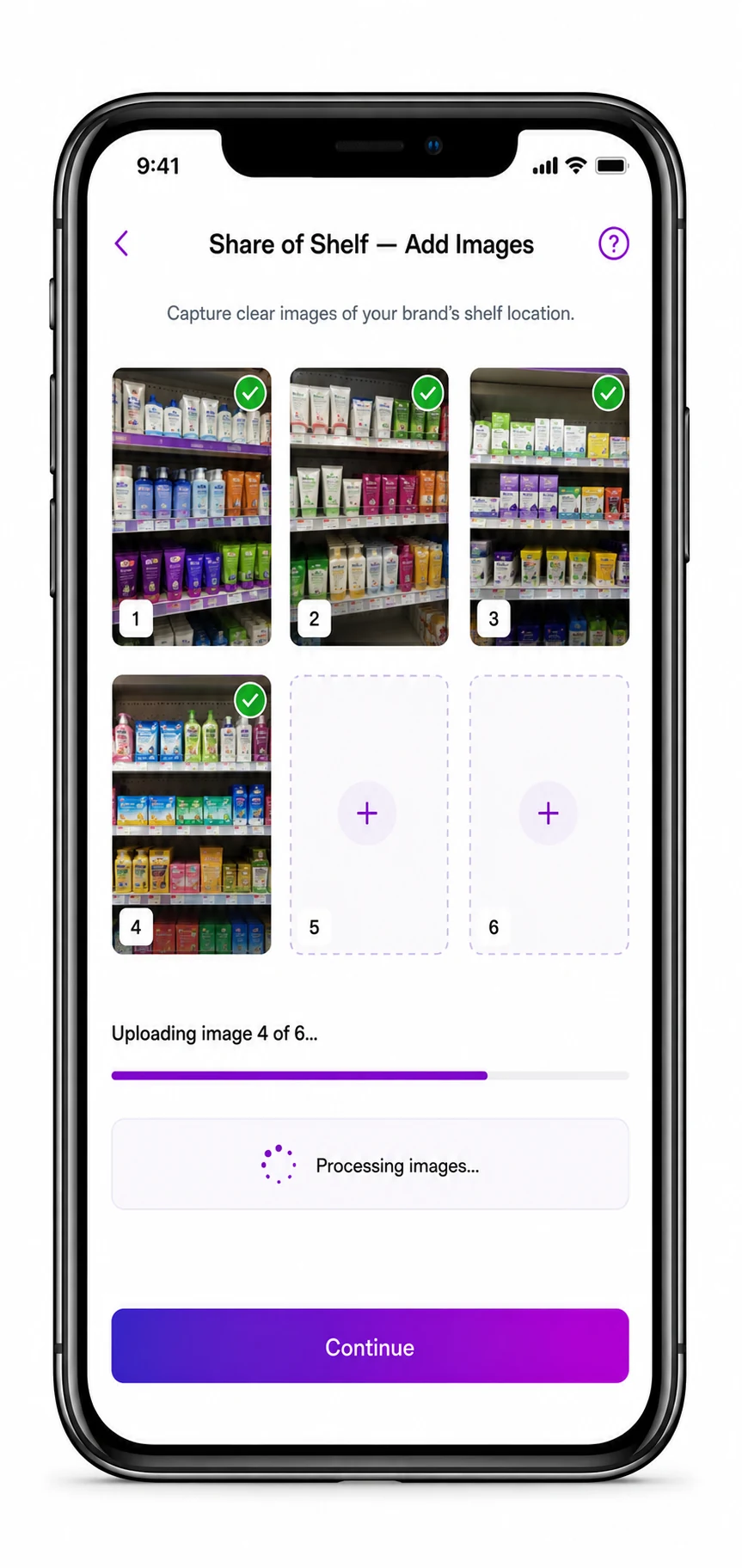
The rep captures a handful of shelf photos, not a single frame, giving the AI shelf monitoring software enough coverage to count every facing across the full display accurately.
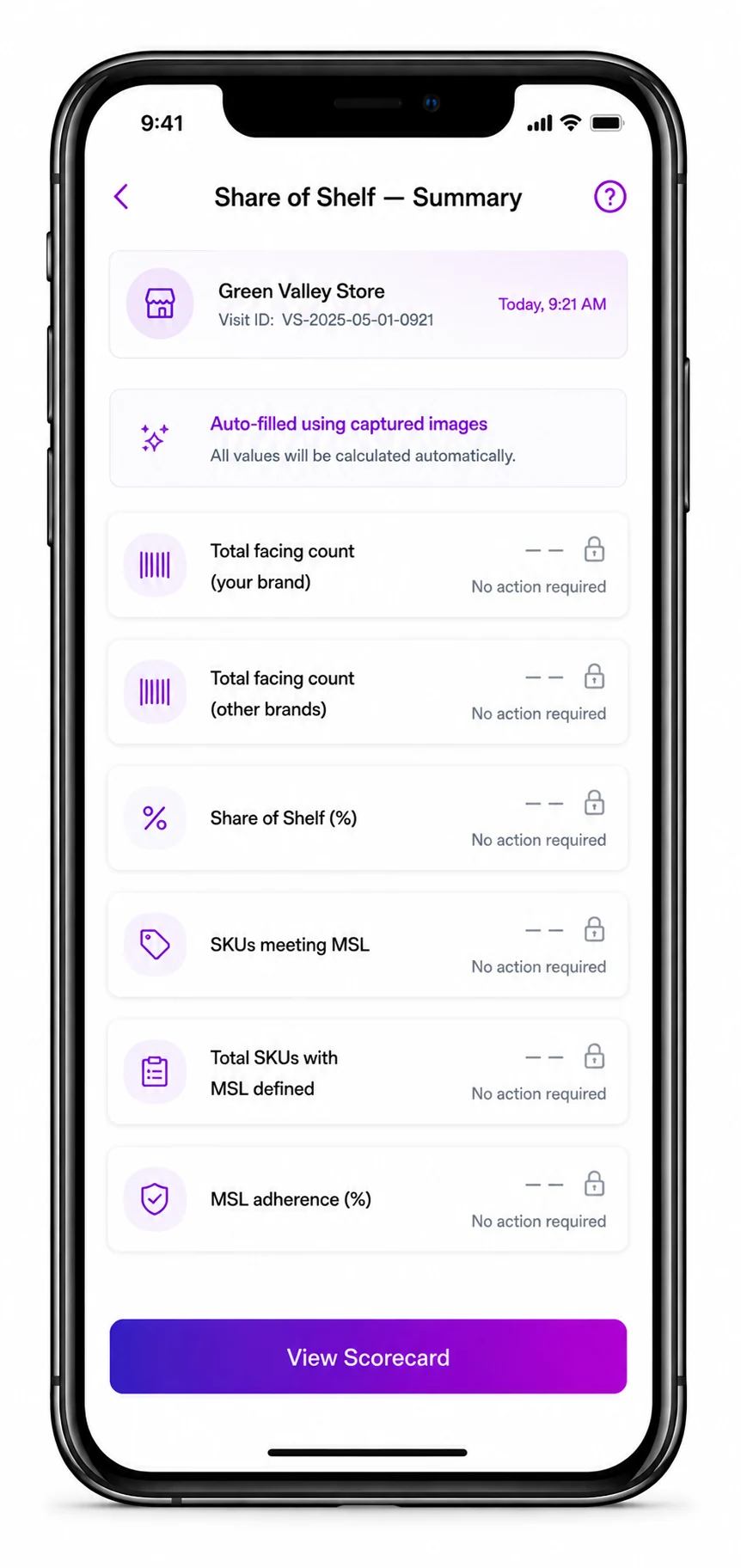
Facing counts, shelf share percentage, and MSL adherence are all marked "no action required" on the form, meaning shelf analytics computes them and the rep never types a number.
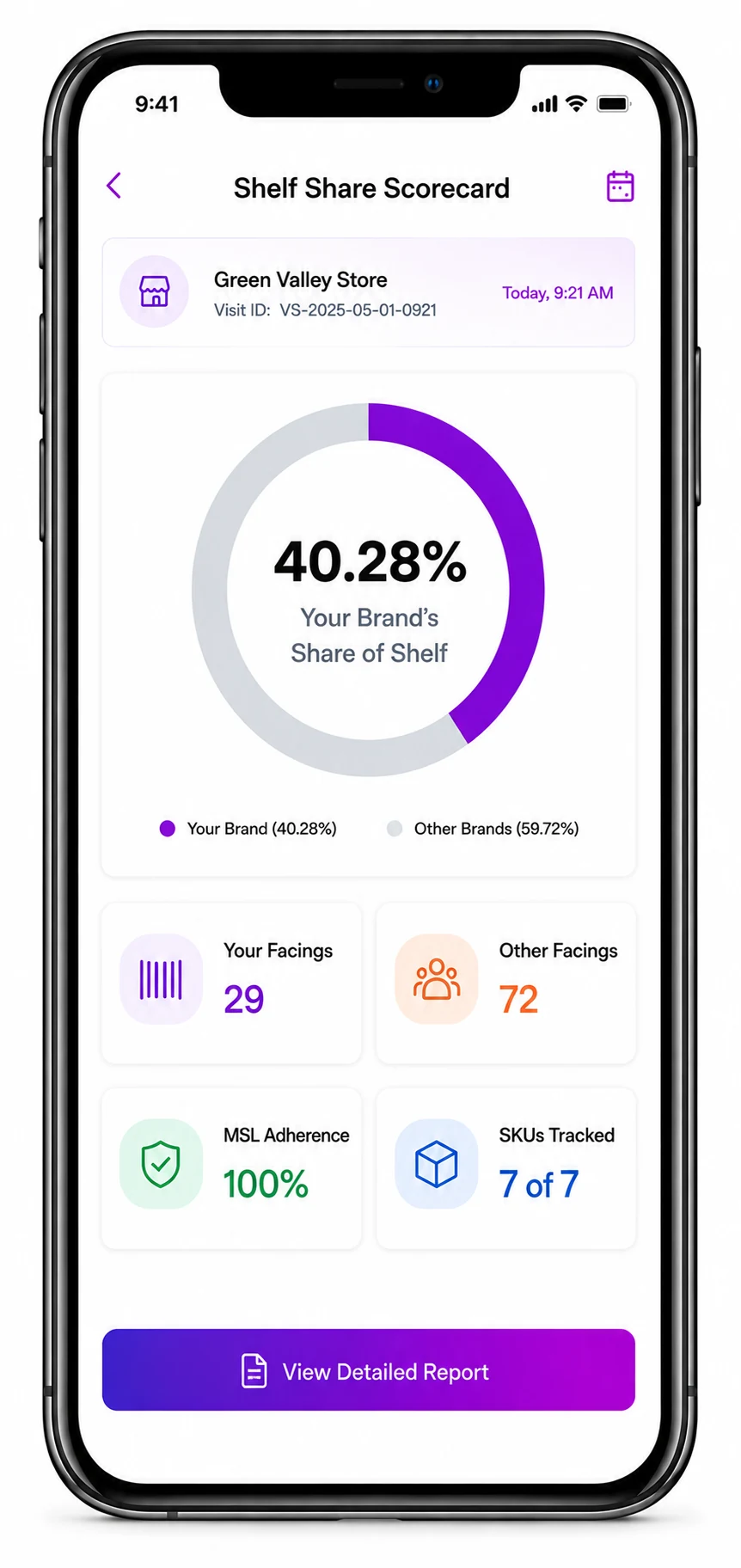
The finished record shows facing counts for your brand and every competing brand on shelf, the resulting share of shelf percentage, and how many SKUs met the defined MSL.
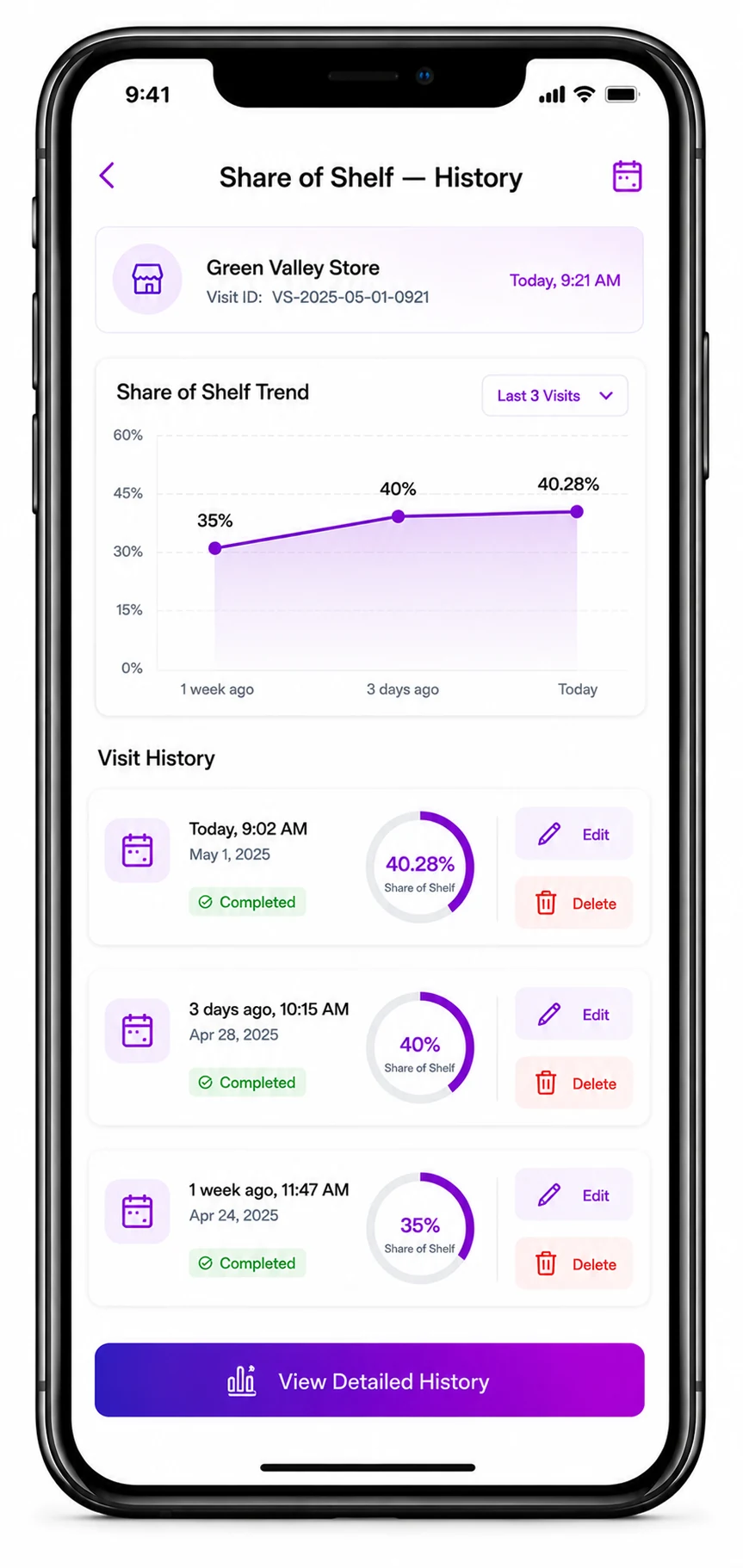
Past submissions stay attached to the outlet with a timestamp, so a business can revisit, correct, or compare shelf intelligence across visits instead of losing each audit to a single report.
The same AI capabilities are built into every core 1Channel module.
AI share of shelf reads photos a rep already captures during a store visit and calculates how much shelf space your brand holds, without anyone counting facings by hand. A manual audit depends on who's counting and how carefully; this gives every outlet the same consistent measurement.
The rep captures a handful of shelf photos covering the full display, and shelf analytics identifies every product facing across them, tallies your brand's count against everyone else's, and expresses it as a percentage, no spreadsheet or tape measure involved.
Both. Because the underlying computer vision for retail reads every product on the shelf, not just your own SKUs, the resulting number reflects your brand's visibility relative to actual competitors on that shelf, not a self-reported estimate.
MSL, or minimum stock list, is the set of SKUs a store is expected to always carry. Shelf compliance checks how many of those SKUs are actually present in the same photos used for share of shelf, so a business sees visibility and stock discipline in one connected view.
Capturing several shelf angles instead of one photo gives the shelf monitoring software enough coverage to count facings accurately even on a dense, multi-brand display, rather than guessing from a single partial frame.
Yes. Every visit's result is timestamped and stored against the outlet, so retail shelf intelligence builds into a history a business can review by store, category, or region to see whether shelf presence is trending up or down.