The year 2025 marked a strong AI revolution, and 2026 is expected to focus more on sales performance and scalable sales training for field teams. As businesses grow, keeping employees engaged during training becomes a real challenge. To maintain interest and ensure consistent learning, companies must introduce smarter and more engaging training methods.
This is where the best gamification LMS becomes extremely effective. By combining structured learning with game-like elements, a gamification LMS helps sales teams stay engaged, motivated, and consistent throughout their learning journey.
In an LMS for Sales Teams, gamification is not about playing games for fun. It is about using levels, quizzes, badges, certificates, progress tracking, and achievements to create an active learning environment where employees participate, complete training, and continuously improve.
What Is a Gamification LMS?
A gamification LMS is a learning management system that uses gamified elements to encourage learning participation. Instead of passive content consumption, employees interact with quizzes, unlock levels, earn badges, receive certificates, and track their progress through dashboards.
In sales training, this approach works especially well because sales teams are performance-driven and respond positively to measurable goals, rewards, and recognition.
Why Sales Teams Need a Gamification LMS?
Sales teams operate in fast-paced environments where time, motivation, and focus are critical. Traditional LMS platforms often struggle to keep sales employees engaged for long durations.
A gamification LMS solves this problem by:
- Increasing participation in training programs
- Encouraging completion of modules and sessions
- Creating healthy competition among employees
- Making learning continuous instead of one-time
For field sales, channel partners, and retail staff, gamified learning feels less like training and more like achievement-based growth.
Core Gamification Features in an LMS for Sales Teams
A well-designed gamification LMS combines multiple features working together. In an LMS for Sales Teams, these features are deeply integrated across modules, sessions, quizzes, levels, and analytics.
Gamified Quizzes
Quizzes play a central role in gamification. Admins can create and assign quizzes directly from the LMS, define the passing percentage, select negative marking options, and set conditions such as maximum attempts and time limits.
There are two types of quizzes:
- Standard quizzes where each question has four options and results are calculated after quiz completion
- Gamified quizzes where questions are embedded inside images and interactive cards, creating a more engaging experience
Quizzes can be assigned to specific employees, uploaded in bulk, or assigned level-wise. This makes quizzes one of the most powerful tools in a best gamification LMS.
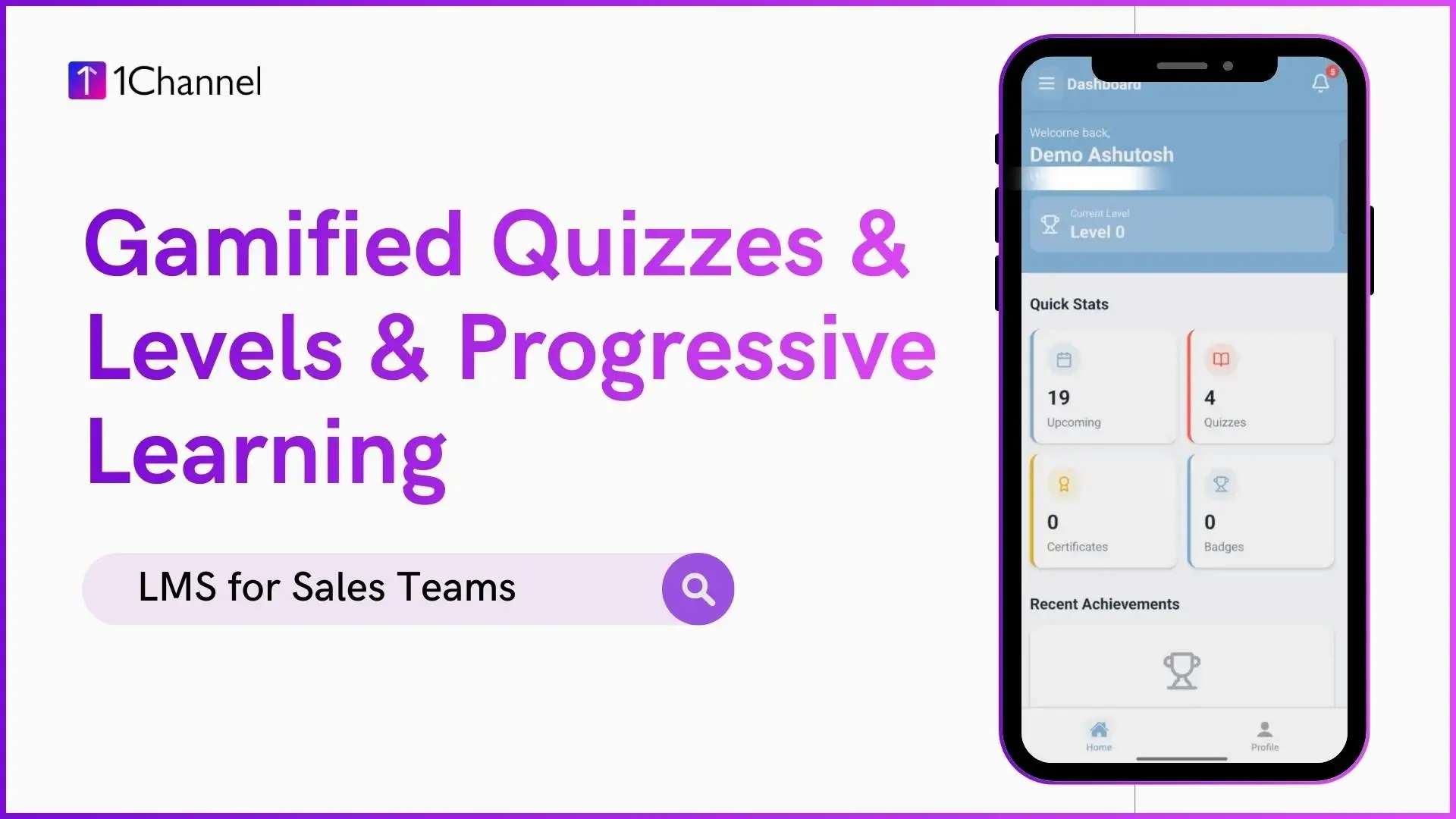
Levels & Progressive Learning
The level-based system is a core gamification element. Admins can create multiple levels, starting from Level 0 to any required level, and define promotion criteria such as:
- Certificates received (percentage-based)
- Tenure (in days)
- Average productivity units
Employees must complete all defined criteria to unlock the next level. As soon as a level is unlocked, new modules and new sessions automatically become visible. This creates a clear sense of progression and achievement.
Badges & Certificates
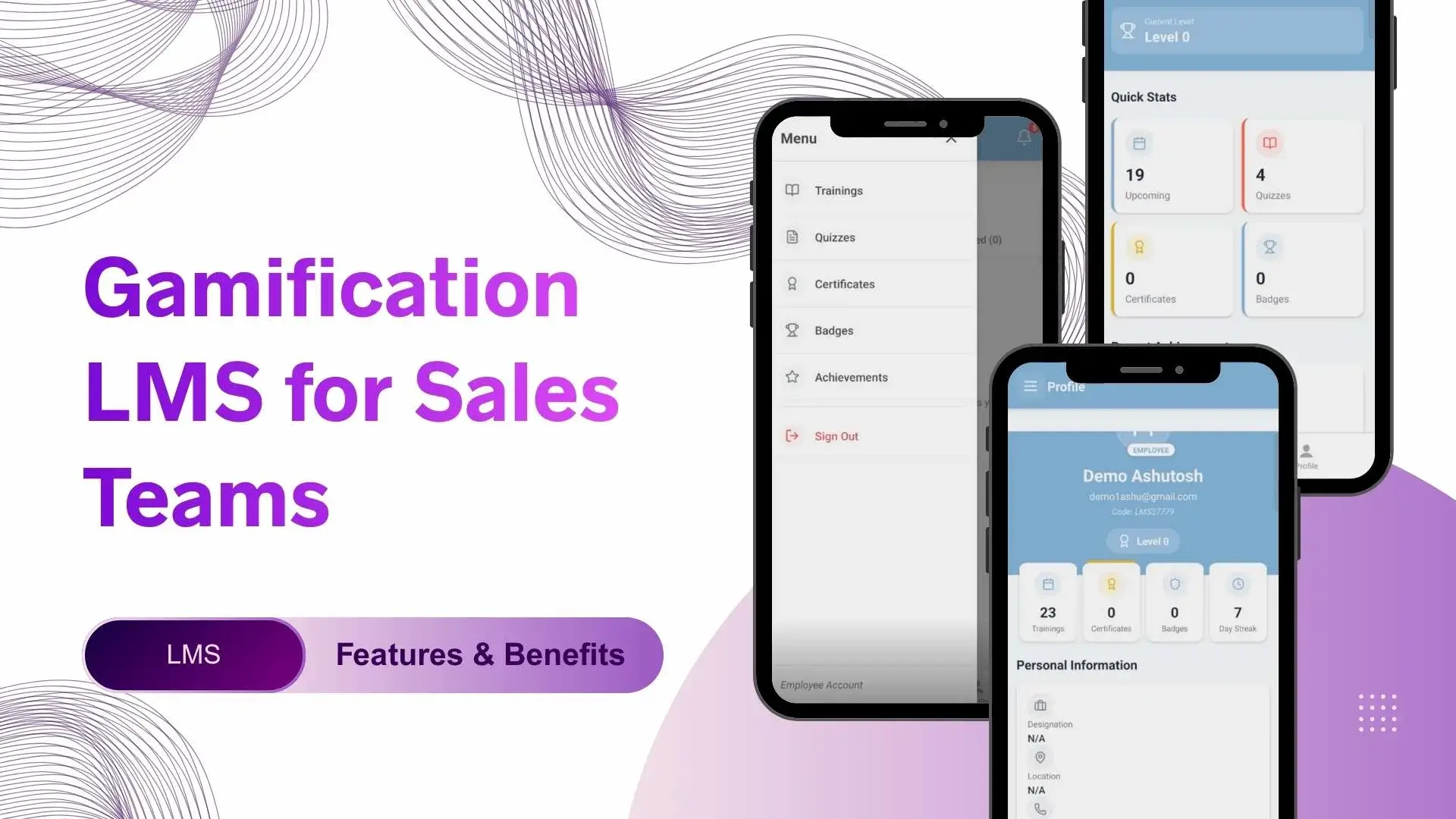
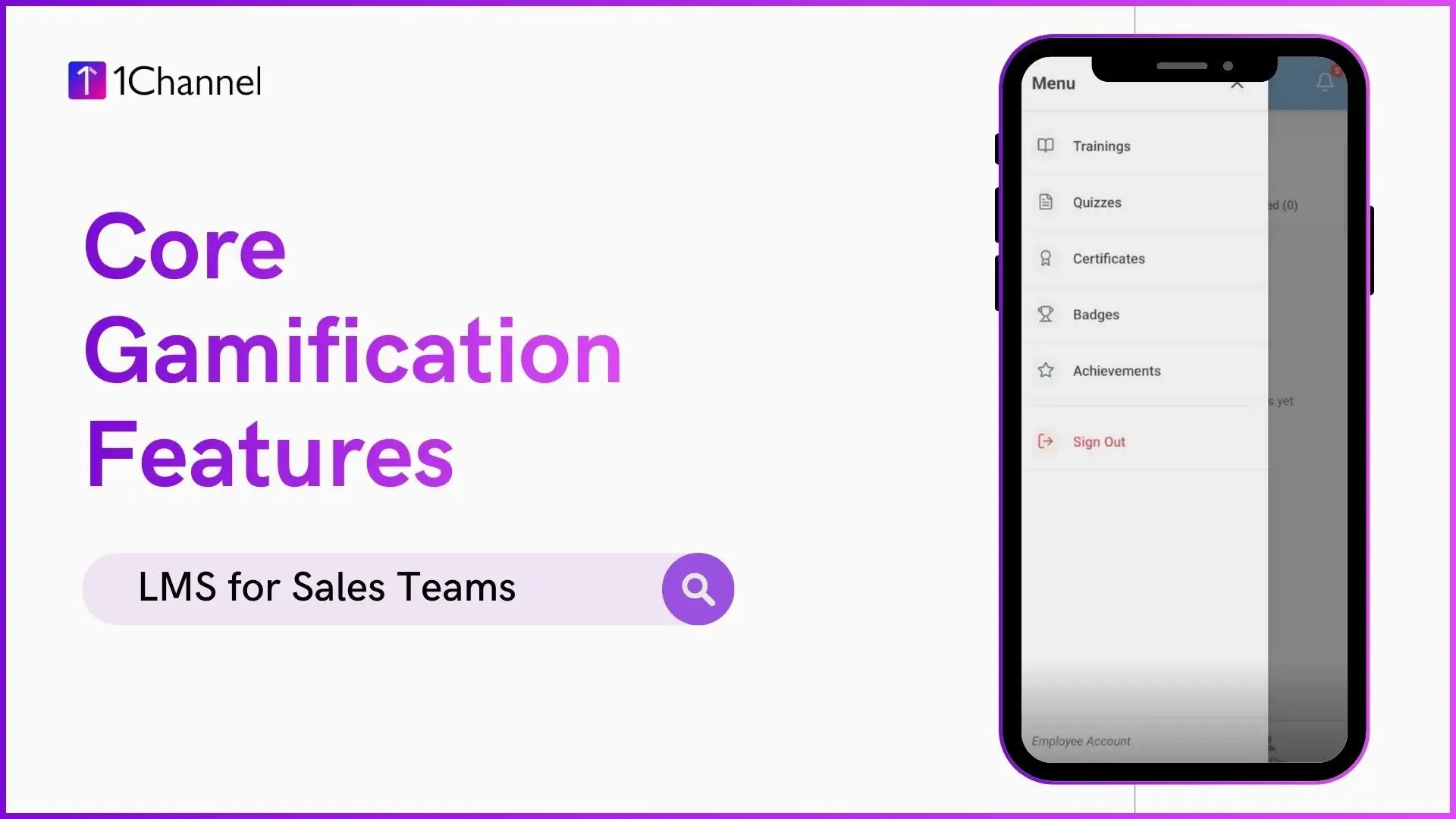
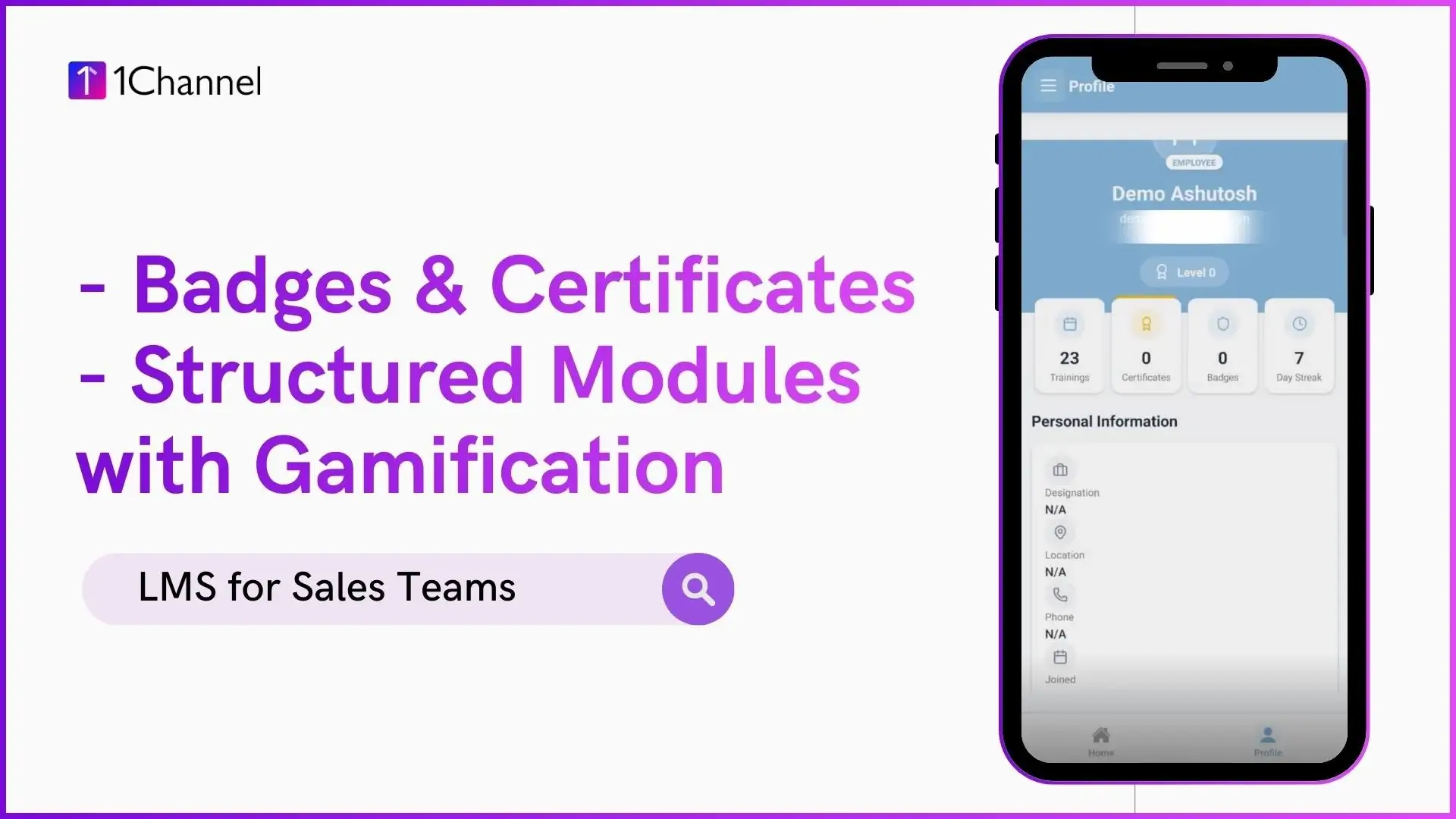
Badges and certificates are issued to employees upon completion of quizzes, modules, or entire levels. These achievements are visible in the employee mobile application and profile section.
By rewarding effort and consistency, badges and certificates help create a motivating environment where employees feel recognized for their learning progress.
Structured Modules with Gamification
Modules act as structured learning units under defined categories such as Product Skills, Selling Skills, or Behavioural Skills. Each module can be mapped to a specific level, ensuring that employees see only the content relevant to their current stage.
This level-based module visibility strengthens gamification by preventing information overload and encouraging employees to move forward step by step.
Multiple Session Types for Flexible Learning
Gamification works best when combined with flexible training formats. The LMS supports four types of sessions:
- Classroom sessions for physical training
- Virtual sessions using meeting links
- In-store sessions with trainer-led attendance and geo-tagging
- E-learning sessions using PDFs, images, and embedded video links
E-learning sessions can include completion criteria, such as marking attendance only after an employee spends a defined time on the content. This adds accountability and engagement to self-paced learning.
Gamification LMS for Field & Channel Sales Teams
Field sales teams and channel partners benefit significantly from a gamification LMS because learning happens directly through the mobile application.
Employees receive:
- Notifications for quizzes, sessions, and achievements
- Easy access to learning content from their app login
- Real-time updates on progress, badges, and certificates
Trainers also have a dedicated interface to manage attendance, conduct in-store sessions, and track assigned sessions, making the system practical for real-world sales environments.
Analytics & Dashboards That Strengthen Gamification
Gamification becomes more effective when performance is visible. The LMS dashboard and analytics section provide clear insights such as:
- Quiz pass rate and average score
- Module completion rate
- Attendance rate
- Level-wise performance analysis
- Certificates issued and achievements earned
These insights help admins track learning effectiveness and continuously improve training strategies.
What Makes the Best Gamification LMS for Sales Teams?
The best gamification LMS is not defined by flashy design alone. It combines usability, structure, and measurable outcomes.
Key characteristics include:
- Role-based access for Admins, Trainers, and Employees
- Level-based learning paths
- Gamified quizzes and assessments
- Badges and certificates for recognition
- Real-time analytics and reporting
- Mobile app support for employees and trainers
When these elements work together, gamification becomes a driver of performance rather than just an engagement feature.
Gamification LMS vs Traditional LMS
Unlike traditional LMS platforms that focus only on content delivery, a gamification LMS focuses on participation, motivation, and progression. Employees are encouraged to complete learning activities because they can clearly see what they achieve at every step.
This shift from passive learning to active engagement makes gamification especially effective for sales teams.
Explore Learning Management System
Transform your sales team training with 1Channel's comprehensive gamification LMS. Boost engagement with quizzes, levels, badges, certificates, and powerful analytics.
Explore Learning Management System →Final Thoughts
For modern sales organizations, learning cannot be static. A gamification LMS for Sales Teams creates a structured, motivating, and measurable learning environment where employees continuously improve their skills.
By combining quizzes, levels, modules, badges, certificates, and analytics, gamification transforms sales training into an experience that employees want to participate in making it a strong foundation for building high-performing sales teams.