Fraud in incentive and loyalty programs often occurs when reward claims cannot be verified properly. If the system cannot confirm whether a purchase, product, or activity is genuine, multiple people may claim the same reward or submit invalid entries.
Secure QR validation solves this problem by linking every reward action to a unique, authenticated code. When implemented correctly, it ensures that rewards are given only for genuine product usage or verified transactions.
This blog explains how secure QR validation works, how it prevents fraud, and how organizations use it to maintain trust in loyalty programs.
Understanding QR-Based Validation in Loyalty Programs
In QR-based loyalty programs, a unique QR code is generated for a specific product or SKU. These codes are printed and attached to products before they are distributed to the market.
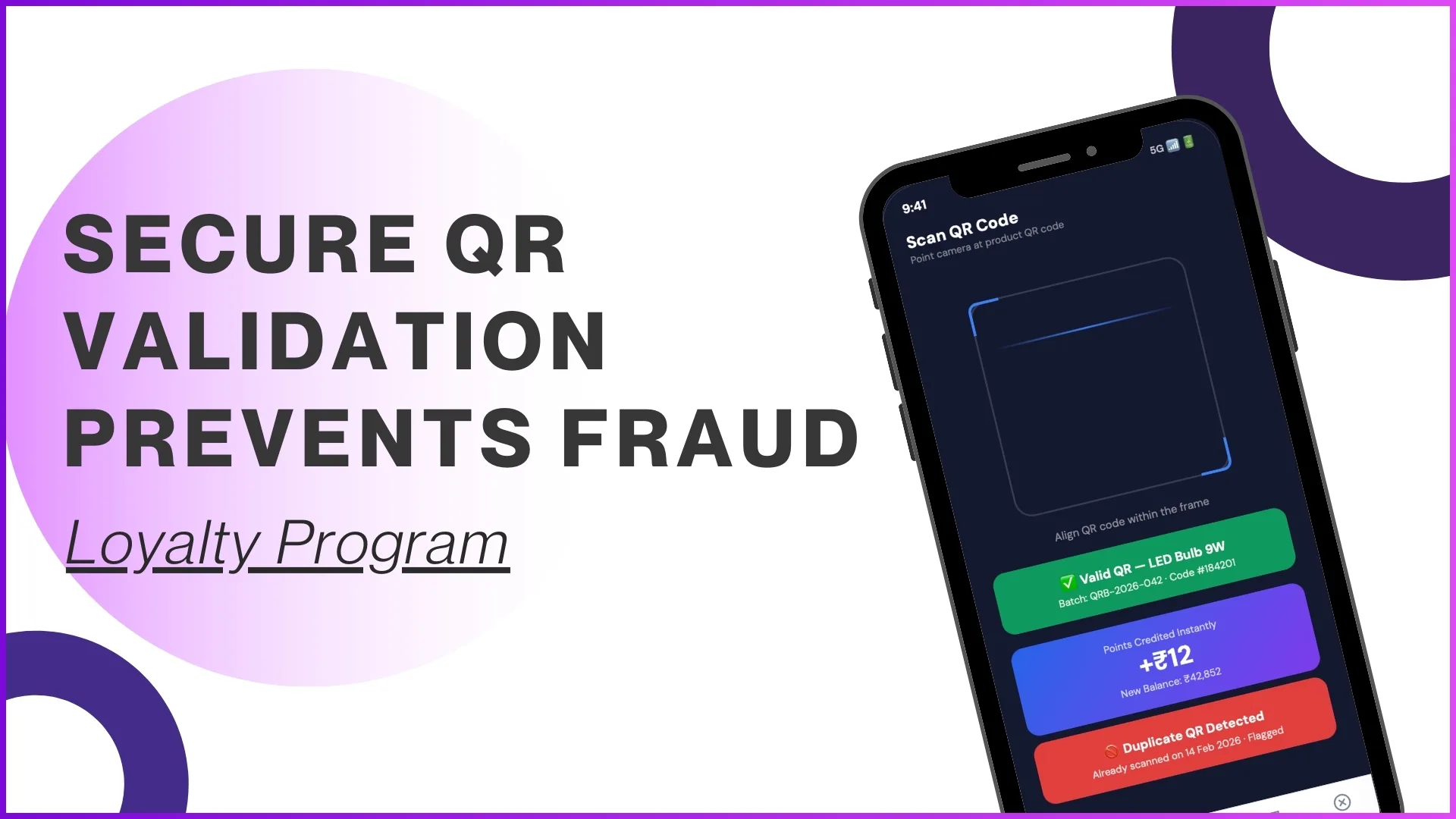
When the product reaches the end user or influencer, they can scan the QR code using the program's mobile application to claim rewards or points.
The system then validates the code before awarding points.
Example
In one implementation, QR codes are generated at the backend and attached to products before dispatch from the warehouse. When plumbers purchase or install the product, they scan the QR code through the application to earn loyalty points.
The validation process ensures that the code is legitimate and eligible for reward allocation.
Build Secure QR-Based Loyalty Programs
1Channel's QR Code Loyalty Program enables unique code generation, duplicate scan prevention, and real-time validation. Protect your rewards from fraud while ensuring accurate point allocation.
Explore QR Code Loyalty Program →The Two-Level Validation That Stops Fraud
Secure QR validation usually works through multiple authentication layers. This prevents common fraud attempts such as duplicate scanning, fake entries, or reward manipulation.
1. QR Code Authenticity Check
The first step is verifying whether the scanned code actually exists in the system.
When a user scans a QR code, the platform checks:
- Whether the code was generated by the system
- Whether it is linked to a valid product or SKU
- Whether it is eligible for reward allocation
If the QR code does not match the database, the system rejects the request.
Example
Suppose a plumber scans a QR code attached to a product. The system checks the backend database to confirm that the code was generated for that specific product. Only after this verification are points allocated.
This prevents fake QR codes or manually generated entries from entering the system.
2. Duplicate Scan Prevention
Another major fraud risk is when multiple users try to scan the same QR code to claim rewards repeatedly.
Secure QR validation eliminates this risk by allowing each code to be scanned only once.
Example
If a QR code has already been scanned by one user, the system blocks any future attempts to scan that same code again.
This ensures that the reward associated with that product is granted to only one eligible participant.
Product-Level Reward Control
Secure QR validation also allows organizations to control rewards at the product level. Each QR code can be mapped to a specific product SKU and assigned a predefined number of reward points.
This helps maintain transparency and prevents reward misuse.
Example
A company may define the following reward structure in the backend:
- Product A → 100 points
- Product B → 200 points
When a user scans the QR code attached to the product, the system automatically allocates the correct reward based on the SKU configuration.
Because this mapping is configured in the backend, users cannot manipulate the reward amount.
Backend Tracking Creates a Complete Audit Trail
Every QR scan generates a transaction that is stored in the system. This creates a transparent audit trail for all reward allocations.
Participants can view their point history in their account statement, while administrators can monitor transactions through backend reports and dashboards.
Example
When a QR scan is completed successfully:
- The system records the date of the scan
- Points are credited to the user's account
- The transaction appears in the user's point statement
Users can see both credited and redeemed points in their account history.
This level of transparency makes it difficult for fraudulent activities to go unnoticed.
Linking QR Validation With Mobile Authentication
QR validation becomes even more secure when combined with authenticated user access.
Users must log in to the application using their registered mobile number and OTP verification before scanning any code.
This ensures that:
- Every scan is tied to a verified user
- Rewards cannot be claimed anonymously
- Fraudulent accounts are easier to identify
By linking QR scans to verified identities, the system creates accountability for every transaction.
Fraud Prevention in Real-World Scenarios
Secure QR validation addresses multiple types of fraud that commonly occur in loyalty programs.
Duplicate Reward Claims
Since every QR code can be scanned only once, duplicate claims are automatically blocked.
Fake Product Claims
If a user attempts to scan a QR code that does not exist in the system, it fails authentication.
Manipulated Reward Values
Because reward values are defined in the backend for each product SKU, users cannot alter the number of points they receive.
OTP-based login ensures that only registered participants can scan codes and claim rewards.
Together, these layers create a controlled and secure ecosystem for incentive programs.
How Platforms Like 1Channel Loyalty Enable Secure QR Validation
Modern loyalty platforms make it easier for businesses to implement secure QR validation without complex manual processes.
Solutions like 1Channel Loyalty allow organizations to:
- Generate unique QR codes for products
- Map QR codes to specific SKUs and reward points
- Validate scans instantly within a mobile application
- Prevent duplicate scans automatically
- Track every transaction through backend dashboards
These capabilities help brands run influencer and channel loyalty programs with greater transparency, reducing fraud risks while maintaining accurate reward distribution.
Secure Your Loyalty Programs from Fraud
1Channel's Loyalty Management Software powers fraud-proof QR validation with unique code generation, duplicate prevention, product-level controls, and comprehensive audit trails. Build trust with partners and influencers.
Explore Loyalty Management Software →Conclusion
Fraud can significantly impact loyalty and incentive programs if reward claims are not properly verified. Secure QR validation solves this challenge by combining product-level authentication, duplicate scan prevention, backend tracking, and user verification.
By ensuring that each QR code is genuine, unique, and tied to a verified user, organizations can maintain fairness in reward allocation while protecting their programs from misuse.
As loyalty ecosystems continue to grow, secure QR validation will remain one of the most reliable methods for preventing fraud and ensuring trust between brands and their partners.