QR code–based reward systems are one of the most effective ways to drive engagement in loyalty programs. They directly connect product usage with incentives, making participation simple for users like plumbers, retailers, or influencers.
However, one major challenge in such systems is duplicate QR scans where the same code is scanned multiple times to unfairly earn rewards. Preventing this is critical to maintaining program integrity, controlling costs, and ensuring fair participation.
This blog explains how loyalty apps prevent duplicate QR scans, based entirely on real system workflows, along with practical examples.
How QR Code Scanning Works in Loyalty Apps
In a typical loyalty program:
- QR codes are generated at the backend
- Each code is mapped to a specific product or SKU
- Codes are printed and placed on products before dispatch
- End users (e.g., plumbers) scan the QR code via the app
- Points are credited instantly after validation
Example
A brand distributes water pumps with QR codes:
- Product A → 100 points per scan
- Product B → 200 points per scan
A plumber installs Product A and scans its QR code through the app → 100 points credited
Transform Product Engagement with QR-Based Loyalty
1Channel QR Code Loyalty Program enables brands to reward end-users instantly through product QR scanning with built-in validation, one-time scan enforcement, and real-time point crediting for secure and fraud-resistant engagement.
Explore QR Code Loyalty Program →The Problem: Duplicate QR Scans
Without proper controls, users could:
- Scan the same QR code multiple times
- Share QR images with others
- Attempt to reuse already scanned codes
This leads to:
- Fraudulent point earnings
- Increased reward liability
- Loss of trust in the program
Core Mechanisms to Prevent Duplicate QR Scans
Loyalty platforms use a multi-layer validation approach to ensure each QR code is used only once.
1. QR Code Authentication (Validity Check)
The first step is verifying whether the scanned QR code is genuine and system-generated.
- The system checks if the QR code exists in the database
- Only pre-generated and mapped codes are accepted
Example
A plumber scans a QR code:
- If the code matches a valid entry → proceeds
- If the code is fake or not in the system → rejected instantly
2. One-Time Scan Enforcement
The most critical rule:
Each QR code can be scanned only once
- Once a code is successfully scanned, it is marked as used
- Any future attempts to scan the same code are blocked
Example
- Plumber A scans QR Code #123 → gets 100 points
- Plumber B tries scanning the same code → rejected
This ensures no duplicate rewards are issued.
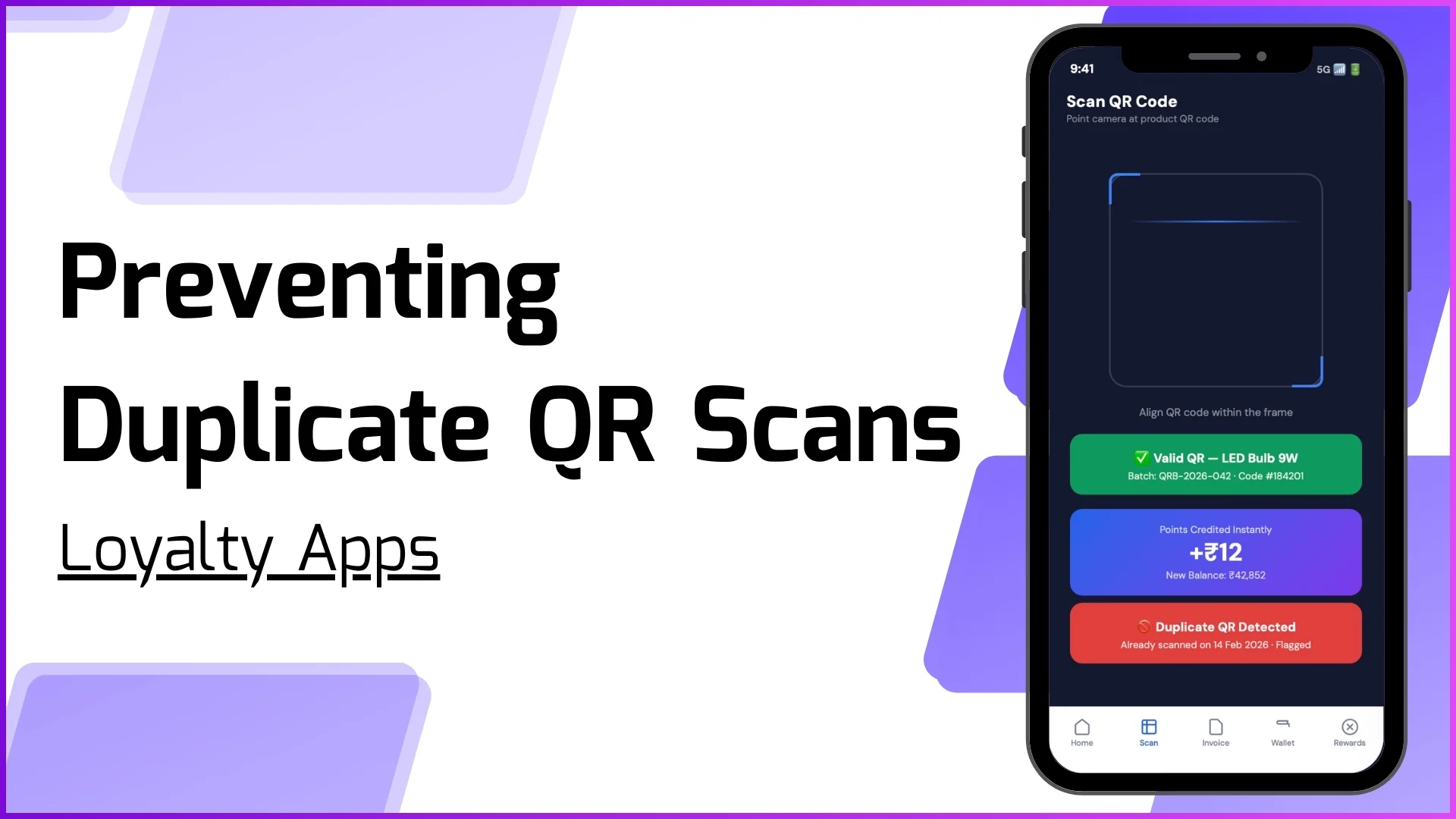
3. Real-Time Validation During Scan
The system performs checks immediately when the scan happens:
- Is the QR code valid?
- Has it already been scanned?
Only if both conditions pass:
- Points are credited instantly
Example
While scanning:
- Valid + Not used → ✅ Points credited
- Valid + Already used → ❌ Scan rejected
4. Backend Tracking of Each QR Code
Every QR code is tracked with:
- Assigned product/SKU
- Associated reward points
- Scan status (used/unused)
This centralized tracking ensures complete visibility and control.
Example
QR Code #456:
- Product: Ceiling Fan
- Points: 150
- Status: Used
If scanned again → system checks status → blocks duplication
5. SKU-Based Reward Logic
Each QR code is linked to a specific product category or SKU.
This ensures:
- Accurate reward allocation
- No manipulation across product types
Example
- QR from premium product → 200 points
- QR from standard product → 100 points
Even if users try to reuse codes, points are not reissued
Why Preventing Duplicate Scans Matters
1. Ensures Fair Participation: Every user earns rewards based only on genuine activity.
2. Protects Program Budget: Prevents over-distribution of incentives due to fraud.
3. Maintains Trust: Users trust the system when rewards are transparent and controlled.
4. Improves Data Accuracy: Accurate tracking of product movement and user engagement.
Combining QR Scans with Other Validation Methods
To strengthen control, QR-based systems are often used alongside:
- Invoice-based validation (with approval workflows)
- Sales data integrations from external systems
- User authentication via OTP login
Example
A program may allow:
- QR scan for instant rewards
- Invoice submission for high-value purchases
This layered approach reduces misuse further.
Real-World Flow: End-to-End Example
1. Brand generates QR codes for products
2. Codes are pasted before dispatch
3. Product reaches retailer
4. Plumber installs product
5. Plumber scans QR via app
6. System validates:
- Code is valid
- Code is unused
7. Points are credited instantly
8. Code status updated to "used"
Any further scan attempts → automatically blocked
1Channel Loyalty for Preventing Duplicate QR Scans
Platforms like 1Channel enable businesses to implement robust QR-based loyalty systems with built-in validations such as one-time scan enforcement, backend tracking, and real-time authentication.
This ensures secure, scalable, and fraud-resistant incentive programs across industries.
Build Secure QR-Based Loyalty Programs
1Channel Loyalty Management Software delivers comprehensive QR code validation with one-time scan enforcement, real-time backend tracking, SKU-based reward logic, and fraud prevention mechanisms to ensure secure and scalable loyalty programs.
Explore Loyalty Management Software →FAQs
1. Can a QR code be scanned multiple times?
No. Each QR code is designed for one-time use only. Once scanned, it becomes invalid for future scans.
2. What happens if someone tries to scan an already used QR code?
The system immediately rejects the scan and no points are awarded.
3. How does the system know a QR code is genuine?
All valid QR codes are pre-generated and stored in the backend. The system verifies each scan against this database.
4. Are points credited instantly after scanning?
Yes, if the QR code passes all validations, points are credited instantly.
Even if shared, only the first successful scan is rewarded. All subsequent attempts are blocked.
6. Is qr scanning the only way to earn points?
No. Loyalty apps may also use:
- Sales data integration
- Invoice-based submissions
- Manual or automated workflows
Conclusion
Preventing duplicate QR scans is essential for running a successful loyalty program. By combining real-time validation, one-time scan rules, and backend tracking, loyalty platforms ensure that rewards are distributed fairly and securely.
A well-designed QR system doesn't just drive engagement it builds trust, transparency, and long-term program success.