If a field team's fuel allowance was fixed on the 1st of the month, it can be out of date by the 16th.
In Ghana, the National Petroleum Authority sets fuel price floors in two pricing windows a month, and during 2026 those floors moved both up and down.
That drift hits every team that drives between outlets: pharma and healthcare reps, consumer durables staff, agriculture and agro-chemicals officers, and logistics and field services crews.
Below are three problems a flat allowance creates, each with its fix: one amount for two price windows, claims never checked against distance, and one limit for everyone.

Problem: One Allowance Covers Two Price Windows
A monthly allowance assumes one fuel price for the whole month. When the floor rises on the 16th, reps cover the gap. When it falls, the company overpays.
A rep who runs short may skip the farthest outlets, so the cost shows up in coverage as well as in the budget.
The fix: treat fuel as its own expense head and allow more than one claim a month, so each rep files one fuel claim per pricing window.
Both are settings in 1Channel's Expense Management: named expense heads, and a switch that lets users submit multiple claims for the month.
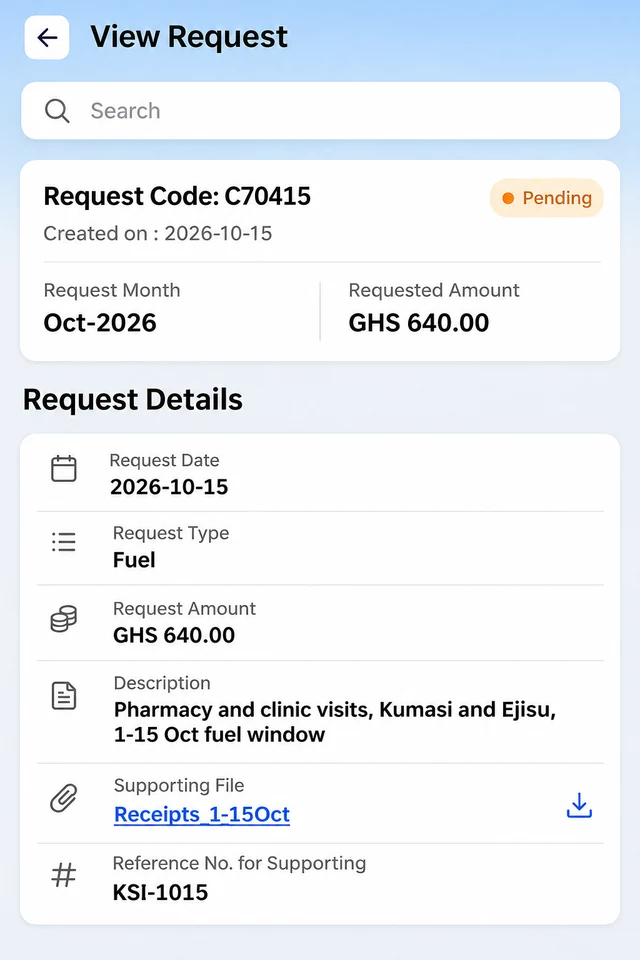
Worked example: a medical rep for a pharma distributor in Kumasi covers pharmacies and clinics across the Ashanti Region.
On 15 October she files a fuel claim of GHS 640 for the first window, with receipts attached as supporting files. On 31 October she files the second.
Her manager reviews each claim against the window it covers, not against a figure set weeks earlier.
Problem: Claims Nobody Checks Against Distance
A fuel claim on its own is just a number. Without the distance behind it, a manager can only approve it or argue about it.
The fix: read each claim next to the distance the rep actually covered. The User Activity Report shows distance travelled per day.
The Distance between stores report goes further, showing the distance from one store to the next for every visit in a day.
Worked example: an agro-chemicals field officer in Tamale claims GHS 910 for the first half of October.
The User Activity Report shows far fewer kilometres than that amount would buy, so the area manager asks him to recheck it before approving.
Because pending claims are set as editable, he corrects the amount the same day, and the revised claim goes through without a dispute after payout.
| Problem | Setting in 1Channel | What the Approver Sees |
|---|---|---|
| Two price windows in one month | A fuel expense head, with multiple claims per month allowed | One claim per window, each with its own date and amount |
| Claims with no distance behind them | User Activity Report and Distance between stores | Kilometres per day and per visit beside the claim |
| One limit for every role and city | Claim policies by role, with limits by grade and city | Only the claim types a rep's policy allows |
| Mistakes found at review | Editing of claims in Pending status | A corrected claim before approval, not a dispute after |
Problem: The Same Limit for Every Role and City
A rep working central Accra and one covering rural routes around Tamale do not burn the same fuel. One limit overpays the first and underpays the second.
The fix: set claim policies by role, with limits by grade and city. Each user sees and claims only the types their own policy allows.
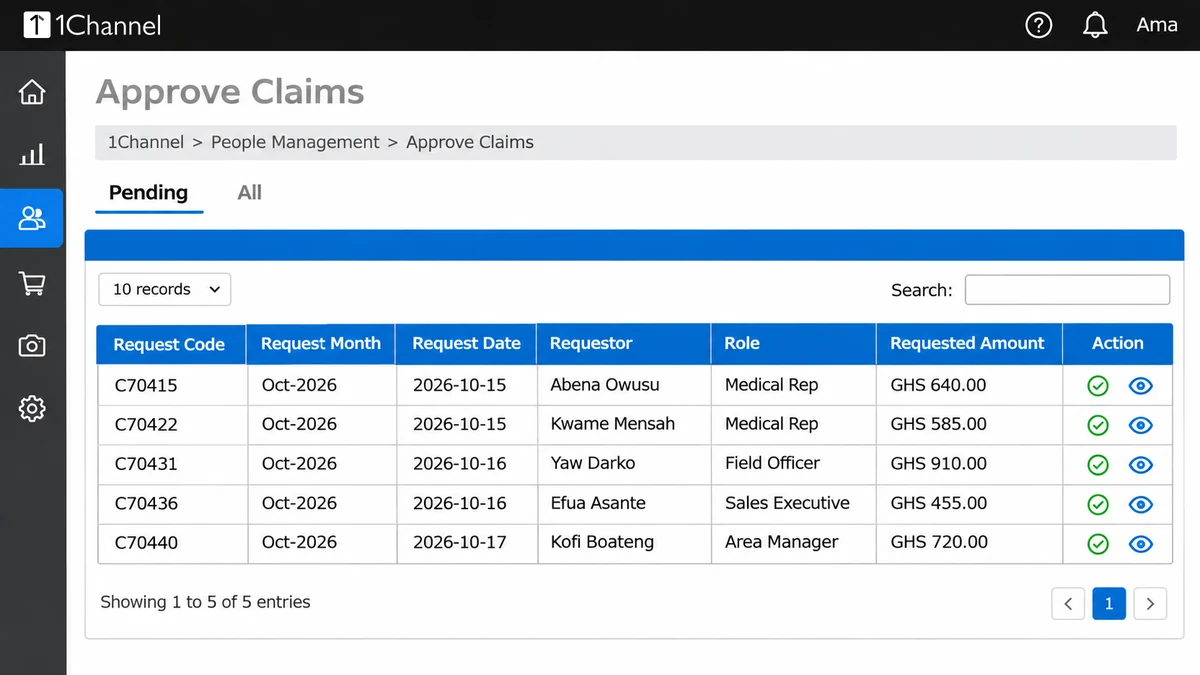
Approval sits with the reporting head in the Approve Claims queue. Its Pending and All tabs list each request code, month, date, requestor, role and amount.
How 1Channel Keeps Fuel Claims in Step with the Pump
1Channel's field sales app keeps claims, distance and approvals in one place, so finance can see what was claimed next to what was driven.
Expense heads, claim policies and editing rules follow each company's own policy, so a price change at the pump becomes a routine claim rather than an argument.
Pay Fuel Claims on Distance, Not Guesswork
See how expense heads, claim policies and approvals work together for field teams that spend the day on the road.
Explore Expense Management Software →Conclusion
Fuel is one of the few field costs in Ghana that resets twice a month, so a rate fixed once a month will rarely stay right for long.
Splitting claims by pricing window, checking them against distance and setting limits by role turn that moving cost into one finance can actually check.
Note: Software screens may vary based on your business structure and configured workflows.