Cloud Software Built for Logistics & Field Services Companies in Ghana
Haulage out of Tema and Takoradi, transit runs north into the Sahel, depot replenishment through Kumasi and Tamale, last-mile drops at provision shops and kiosks, and engineer call-outs across the 16 regions, all held in one cloud. SFA, DMS, loyalty and LMS sit on a shared backend, and the app keeps working where coverage thins on a northern beat.
What Ghanaian Logistics and Field Service Operators Outgrow First
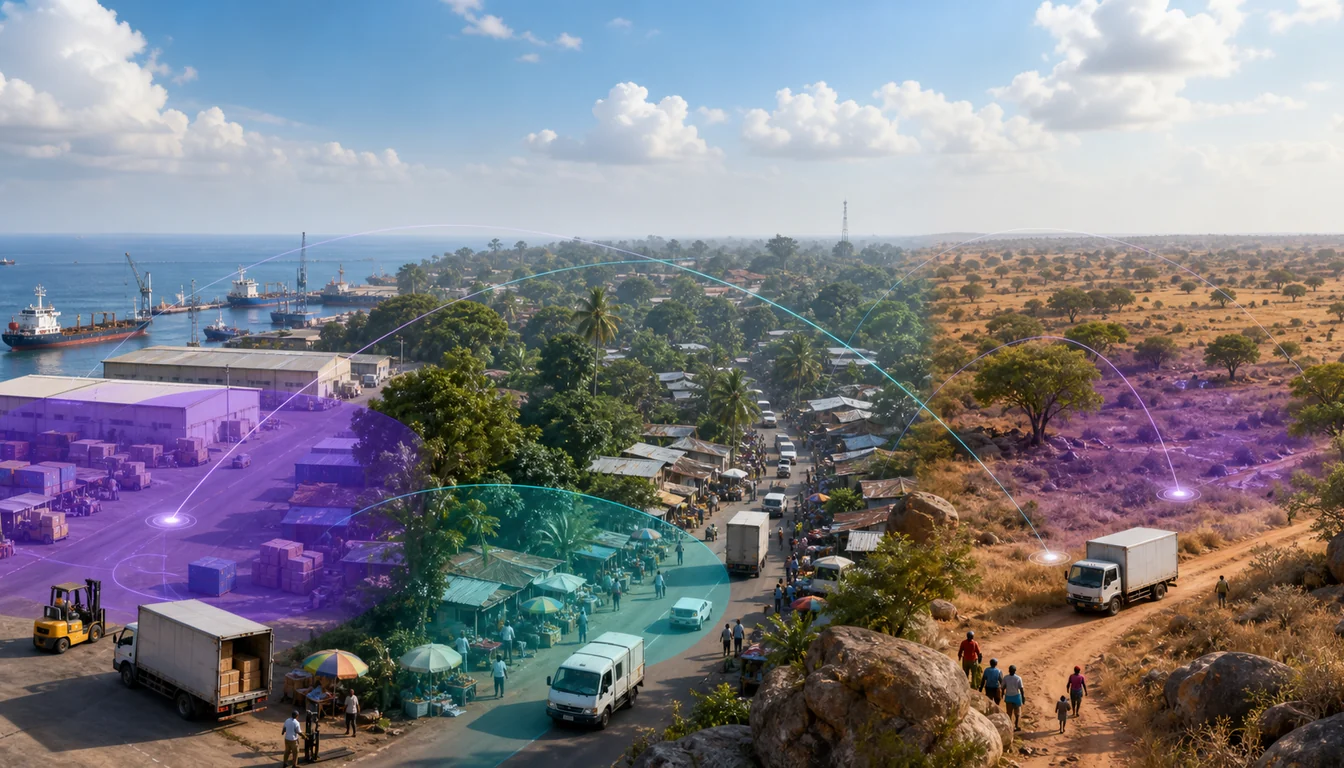
A container clears at Tema or Takoradi. Trucks run it inland to Kumasi, on to Tamale, or north across the corridor towards Burkina Faso, Mali and Niger. Key distributor depots break it down for vans that drop at provision shops, kiosks and container shops, while engineers cover installs and repairs in MMDAs spread over 16 regions. Almost all of that coordination still happens on calls, WhatsApp threads, paper waybills and a spreadsheet that lands the morning after it mattered.
No Proof a Crew Was Ever There
Attendance arrives as a phone call and an assurance. Without a GPS-stamped check-in and a validated selfie, a supervisor in Accra has no way to establish that the Sekondi-Takoradi engineer reached the customer site, or that the van worked its beat to the last stop.
Work Handed Out Without a Live Picture
Runs go out as voice notes. Nobody at the desk can see spare capacity, skill fit or how full a vehicle already is, so a job lands on a crew running two hours behind and the promised window has gone before anyone at head office hears about it.
Service Data That Lands Too Late to Act On
Penalty exposure on a B2B contract builds quietly while delivery slips, service reports and first-time-fix notes travel back by hand. By the time the dashboard confirms a breach, the customer has already logged it.
The Gateway-to-Hinterland Leg Goes Dark
A load leaving the Tema gate for a depot in Kumasi or Tamale, or heading north on the Tema-Ouagadougou corridor, drops out of sight for days. Planners learn about an empty depot or a stranded return only when somebody rings to complain about it.
Every Partner Keeps Its Own Books
Franchise hubs, 3PL partners, contracted motorbike couriers and independent engineers each record work their own way. There is no single scorecard for service quality, and settlement in GHS gets reconciled by hand from sources that disagree.
Certification Sits in a Folder Nobody Opens
Defensive driving, cold-chain handling, hazardous-goods segregation, electrical safety. When nothing checks a certificate before the job is accepted, a lapsed one only surfaces afterwards, through an incident, a rejected consignment or a question about an FDA-regulated load.
Apps that Run the System
The Apps Crews Open Before the First Run
Two flagship apps on Android and iOS, one for field and depot execution and one for customer-facing sales. Both queue work on the handset when a northern route loses signal, and both write to the same cloud backend the admin portal reads.
1Channel SFA & DMS
Google Play
1Channel SFA & DMS
Apple App Store
1Channel CRM
Google Play
1Channel CRM
Apple App Store
Logistics Solutions in Detail
Explore Each Logistics Module in Depth
One page per module, written for Ghanaian haulage, courier, cold-chain, last-mile and field service operations.
Sales Force Automation for Logistics and Field Service Teams in Ghana
A cloud SFA platform built around how a Ghanaian working day actually unfolds. Contract sales calls in the morning, drop sequences ordered by landmark rather than street name, engineer jobs matched to skill and parts, and a control desk watching every service clock. Reporting rolls up by depot, route and service tier, and none of it stalls when a beat in Upper West runs out of coverage.
Control Desk, a live map of every crew, risk flags on jobs approaching their window, reassignment and overtime approval in one view
Drop Sequencing Around Landmarks, ordered stops built from geo-tagged outlets and GhanaPostGPS codes, with cash and mobile money logged against each drop and proof captured on the spot
Engineer Job Cards, skill match, ETA to site, parts picked, and first-time-fix recorded before the crew leaves
Timestamped Service Stages, created, acknowledged, en route, on site and closed, each transition written the moment it happens
1Voice AI Assistant, ask which depot missed its on-site window today and read the answer in plain English, with AI proposing tomorrow's drop order
Distributor Management Across Gateways, Depots and the Last Mile
A cloud DMS that follows a load the whole way. Cleared at Tema or Takoradi, hauled inland to a key distributor depot in Kumasi, Tamale or Ho, broken down for vans, then dropped at provision shops, kiosks and container shops. Returns, temperature records and contract rate cards in GHS sit on the same ledger, and consignments in transit towards Burkina Faso, Mali or Niger keep a lineage of their own.
Contract Pricing, B2B rate cards in GHS, volume slabs, fuel surcharge rules and penalty calculations applied without anyone rebuilding a spreadsheet
Gateway-to-Depot Lineage, every leg from the Tema or Takoradi gate through the regional depot to the crew that made the final drop
Consignment and Stock Tracking, live status for parcels, spares, empties and consumables at each holding point on the route
Cold-Chain Records, IoT temperature capture, breach alerts and audit-ready logs for FDA-regulated pharma and chilled food on long inland runs
Returns and Reverse Flow, return-to-origin, damage claims, scheduled pickups and credit notes handled as one workflow rather than four
Incentives That Reach Drivers, Engineers and Partner Hubs
Earnings a crew can predict are what keep it on the road. Cloud loyalty programs work out what a driver, motorbike courier, engineer, depot crew or partner hub has earned from work already captured in SFA, then settle in GHS to a bank account or a mobile money wallet on MTN MoMo, Telecel Cash or AT Money, interoperable through GhIPSS.
Volume Earnings for Drivers and Couriers, daily and weekly slabs on drops completed, cash and mobile money collected, and stops made inside the promised window
Quality Bonuses for Engineers, first-time-fix, customer rating and callback-free months feed the monthly calculation
Partner Hub Tiers, Silver, Gold and Platinum progression earned on service performance and volume, with partner billing settled in GHS
WhatsApp and SMS Comms, scheme updates, tier changes and depot-wide campaigns sent in English, Twi, Ga, Ewe or Dagbani
Training That Decides Which Jobs a Crew Can Accept
A cloud LMS for drivers, motorbike couriers, engineers, control-desk staff and depot supervisors. Courses play on the phone in English, Twi, Ga, Ewe or Dagbani, certification status flows straight into SFA, and a lapsed certificate quietly withdraws the jobs it covers from what the app will offer.
Road and Load Safety, defensive driving, hazardous-goods handling, cash-in-transit discipline, and refreshers timed for harmattan haze on northern hauls from December
Cold-Chain and Hazard Certification, temperature SOPs, segregation rules and breach response for FDA-regulated pharma, chilled food and dairy
Engineer Installation and Safety Courses, in-app video on installation, electrical safety, PPE and conduct on a customer site, each closed with a quiz
Control-Desk and Depot Onboarding, exception handling, escalation routes and the daily rhythm of the desk, taught before the first shift
Why 1Channel Fits Logistics and Field Services in Ghana
The reasons Ghanaian haulage, courier, cold-chain, last-mile and field service operators end up consolidating onto one platform.
One Connected Logistics Platform
Field execution, the control desk, multi-depot distribution, crew and partner incentives, and training all read and write the same cloud records. Nothing has to be re-keyed from one into another.
Built for More Than One Operating Model
Courier networks, contract haulage, 3PL, in-house drivers, contracted motorbike couriers, independent engineers and partner hubs each get their own workflow, targets and service terms on the same tenant.
AI Where It Helps Logistics
Drop order proposed from landmark-anchored geo-tags instead of street names, selfie attendance validated automatically, jobs flagged as at risk while there is still time to move them, and plain-language questions answered on depot and route performance.
Offline-First Mobile App
Coverage genuinely thins on beats through Savannah, North East, Upper East and Upper West, and on rural agro routes. Crews carry on scanning, capturing proof of delivery and closing jobs on the handset, and the queue uploads itself the moment the network comes back.
SLA-Aware Operations Engine
Response targets, escalation routes, fuel surcharges and penalty calculations are read out of the contract itself, so a job heading for trouble reaches the desk while a crew can still be moved.
ERP, TMS, and WMS Integration
REST APIs and SFTP move data between TMS, WMS and ERP, bank rails and mobile money wallets on MTN MoMo, Telecel Cash and AT Money, and the order portals B2B customers already use.
Quick Go-Live
Take one module first, usually the driver app or the incentive engine, and bring distribution and training in when the operation is ready. Live contracts and depot cadence carry on untouched.
White-Labelled Apps
Driver, courier, engineer, control-desk, partner and customer apps ship under your own brand on Google Play and the App Store.
Ready to Run Gateway, Depot and Doorstep on One Cloud?
Tell the 1Channel team how your fleet, depots and field crews are organised today, and we will scope an SFA, DMS, loyalty and LMS rollout for Ghana around it, with AI and automation included.
How do SFA, DMS, loyalty and LMS fit together for a Ghanaian logistics operator?▼
They are four views of one set of cloud records rather than four systems bolted together. Work logged in the field becomes the movement history for a consignment, the basis for what a crew has earned, and the check on whether that crew was certified to take the job at all. Configuration happens in a single admin portal and the reporting is shared.
Can one platform serve drivers, couriers, field engineers and the control desk at once?▼
Yes, because each role is given its own screens on a shared app. A courier gets an ordered drop list with collection and proof-of-delivery capture. An engineer gets a job card carrying skill match, parts and a first-time-fix field. Control-desk staff get the live map, risk flags and reassignment. Underneath, it is one set of records.
How does the DMS give visibility across gateways, depots and the last mile?▼
Every movement is written as its own leg with its own timestamps. A load cleared at Tema or Takoradi, hauled to a regional depot in Kumasi or Tamale and dropped by a van crew therefore reports at three separate levels rather than one. Operations can see which depot is holding stock it cannot move and where returns have stopped travelling.
How is cold-chain temperature evidence captured on pharma and chilled runs?▼
Sensors read temperature at packing, during transit and at handover. A reading outside the agreed band alerts the driver, the desk and the receiving party while the load can still be recovered. Each log carries the time, the GPS position and how long recovery took, which is the evidence an FDA-regulated pharma consignment or a chilled load needs after a long inland haul.
What does the control desk actually do about service levels?▼
Priority, response, resolution and penalty terms are configured per B2B contract, and the desk renders every open job against them as on track, at risk or already breached. Reassignment to a nearer crew happens from that same view, with fuel cost on long northern hauls weighed into the choice. Day-end reporting rolls the picture up by customer, depot and route.
How are driver, courier and engineer incentives calculated and paid?▼
Earnings are computed from work already captured in SFA: drops completed, collections banked, first-time-fix and customer rating, measured against slab rules set per scheme. Settlement goes out in GHS on the chosen cycle, either to a bank account or to a mobile money wallet on MTN MoMo, Telecel Cash or AT Money. Every payout keeps an audit trail, and personal data collected in the field is handled in line with the Data Protection Act, 2012 (Act 843).
How does certification decide which jobs a crew can accept?▼
Each job type is tagged with the certificates it needs, such as cold-chain handling, hazardous-goods segregation, electrical safety or defensive driving. LMS holds the current status and passes it to SFA, which will not let an uncertified crew take that job type on. Reminders go out ahead of expiry, and the courses themselves run in English, Twi, Ga, Ewe or Dagbani.
How does the offline-first app work where network coverage is thin?▼
Nothing in the daily workflow needs a live connection. Attendance, parcel scans, proof of delivery and job updates are written to the handset and held there, whether the crew is deep inside a traditional market, in a basement car park, or on a route through Savannah or Upper West where coverage genuinely runs out. The queue uploads itself in order once signal returns.
Where does AI make a difference in a logistics operation?▼
In three places where guessing costs money. Drop order is proposed from geo-tagged outlet locations and landmark references, because a GhanaPostGPS code is official but not yet what everybody navigates by. Attendance selfies are validated automatically. Jobs likely to miss their window are surfaced early. 1Voice takes questions in plain English, while automation handles the earnings maths, certificate gating and exception escalation.
Which other industries run on the same cloud platform?▼
The same backend runs FMCG and CPG, food and beverage, dairy, home care, retail and modern trade, pharma and healthcare, consumer durables, cosmetics, automotive spares, building materials, agriculture and agro-chemicals, and banking and financial services. Modules are chosen per industry; what sits underneath them does not change.