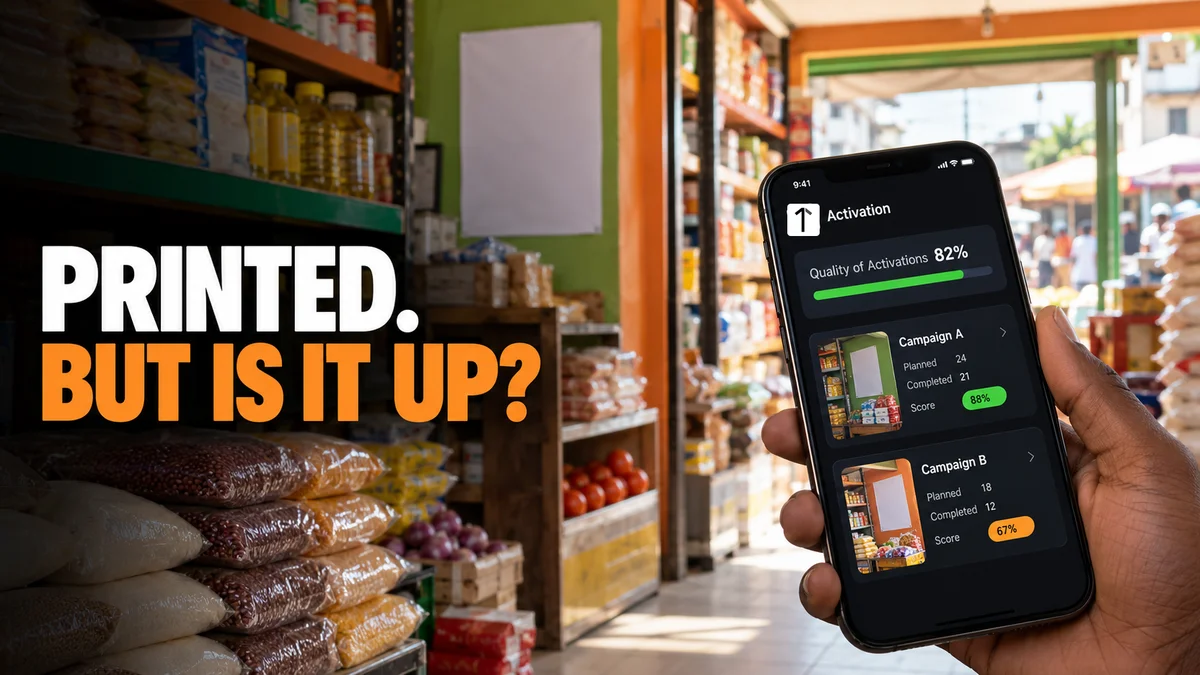
A sales review that marks a brand "present" in nine stores out of ten sounds like good news.
For FMCG, cosmetics and personal care, pharma and consumer durables brands selling throughout Nigeria, being present and holding the shelf are drifting apart.
This post follows one Ibadan supermarket across three visits.
It compares what a tick-box audit records with what an AI share of shelf count adds, then shows how the trend reads over time.
Why "Present" Hides a Shrinking Shelf
Inflation has pushed everyday price points up sharply, and many Nigerian shoppers now reach for cheaper or unbranded alternatives.
Retailers follow the shopper. The lower-priced packs that move get more facings, and the established brand is squeezed into a narrower strip.
A rep with a yes-or-no checklist still ticks "available", so the report stays green while the brand loses ground.
Counting facings by hand does not fix it either. On a crowded shelf, the number depends on who counts and how carefully.
One Ibadan Supermarket, Two Readings
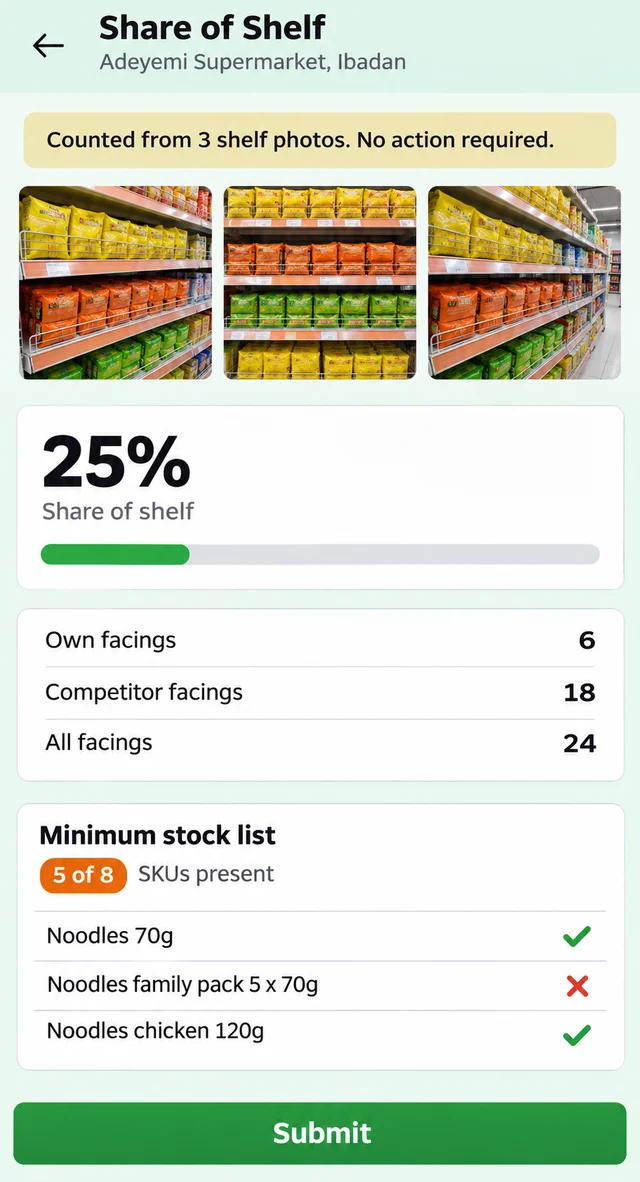
Take a noodle maker that supplies Adeyemi Supermarket in Ibadan, with eight SKUs on its minimum stock list for that store.
On the first visit, the rep's checklist records the brand as available, and the store passes.
The share of shelf task reads the same shelf from the rep's photos.
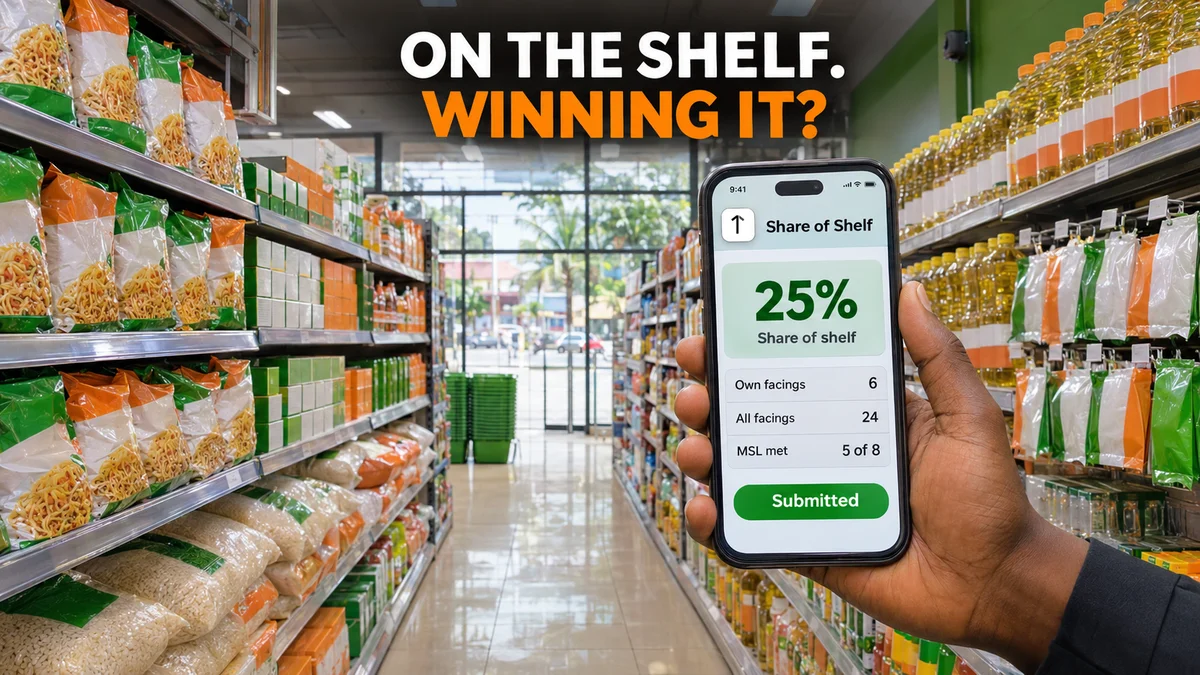
It counts 6 facings for the brand out of 24 on that shelf, a 25% share.
It also finds only 5 of the 8 listed SKUs. The two family packs and one new flavour are missing.
| What the Review Asks | Tick-Box Audit | Share of Shelf Scorecard |
|---|---|---|
| Is the brand on the shelf? | Yes | Yes, 6 facings |
| How many facings do rivals hold? | Not recorded | 18 facings |
| What share does the brand hold? | Not recorded | 25% |
| Are the listed SKUs present? | Not recorded | 5 of 8 |
| Who entered the numbers? | The rep | No one, the AI counted them |
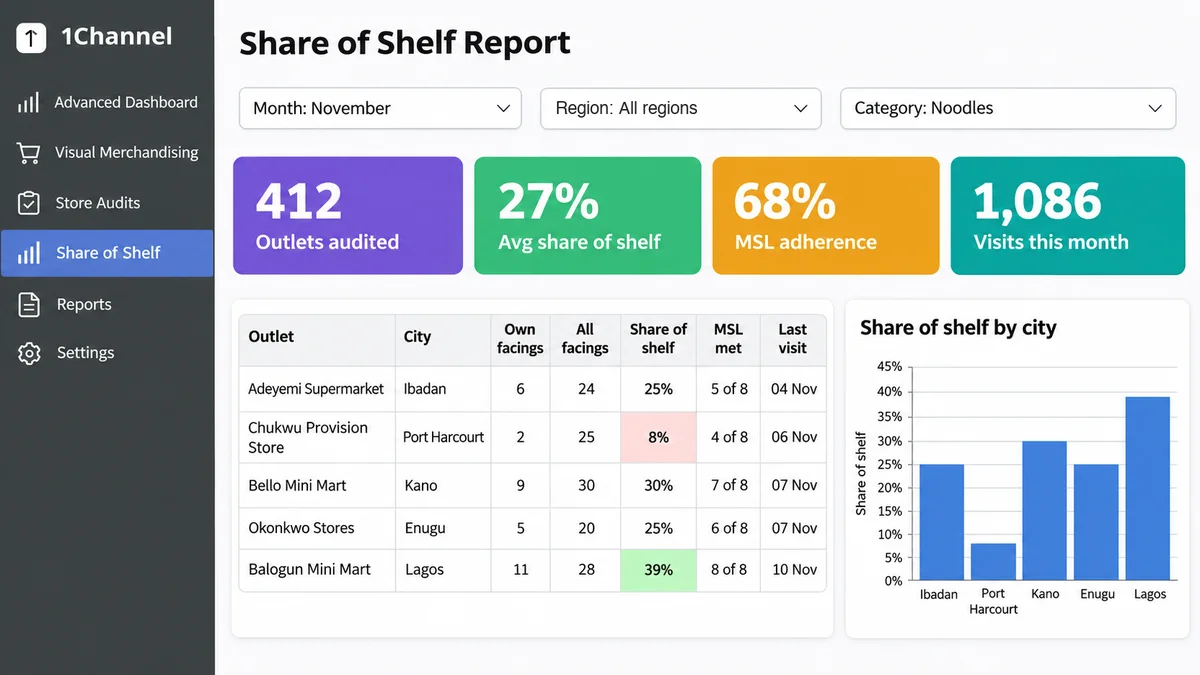
Every result rolls into the store audit reporting, so a manager can review shelf share by store, category or region.
What the Rep Does in the Store
Share of shelf sits as its own task in the store visit, next to check-in, stock and the competition study.
The rep takes several shelf photos from different angles rather than one frame, so the full display is covered.
The AI counts every facing, recognises competitor SKUs on the same shelf and checks the minimum stock list. The rep never types a number.
Where a brand also runs a Perfect Store audit, the AI scores facings, adjacency and eye level for each shelf option.
If a result looks wrong, the rep can select that photo for a retake, or use Challenge AI Findings before submitting.
Three Visits Later
The noodle maker's sales manager now sees a gap, not a green tick.
The distributor restores the family packs, and the rep agrees two more facings at eye level with the store owner.
Each visit's result is saved against the outlet with a timestamp, so the next two visits build a history.
By the third visit, the scorecard shows 8 of 24 facings, a 33% share, with 7 of the 8 listed SKUs present.
Compare that with a provision store in Port Harcourt that passed every availability check for months.
Its photos show 2 facings of the brand among 25 on the shelf, an 8% share, with rows of cheaper packs beside them.
That store goes to the top of the manager's list for a pricing and scheme conversation, not just another delivery.
How 1Channel Turns Shelf Photos Into a Share Score
With 1Channel's store audit tools, share of shelf is captured on the visit a rep already makes, with no separate audit trip.
Facing counts, competitor facings and minimum stock list adherence land in one scorecard per outlet, and build into a history across visits.
Measure Your Share, Not Just Your Presence
Give every rep a share of shelf task, let the AI count facings from the photos, and compare each outlet's shelf from one visit to the next.
Explore Retail Execution Software →Conclusion
Presence tells a sales manager the brand reached the store. Share tells them how much of the shelf a shopper actually sees.
While cheaper rivals keep gaining room on Nigerian shelves, a counted, two-sided score from every visit is a firmer base for the next decision than a tick.
Note: Software screens may vary based on your business structure and configured workflows.