Manufacturers today operate through complex indirect sales ecosystems that include distributors, dealers, resellers, and retailers. Managing these multi-tier channels using manual processes or disconnected systems often leads to inefficiencies, lack of visibility, and poor partner engagement. Channel Sales Automation helps manufacturers streamline channel operations, improve collaboration with partners, and gain real-time insights into sales performance using a centralized digital platform.
This blog explains Channel Sales Automation from a manufacturer's perspective, covering its core components, benefits, challenges, and practical examples—all based entirely on the provided content document.
What Is Channel Sales Automation?
Channel Sales Automation refers to the use of software solutions to manage, monitor, and optimize indirect sales channels. It enables manufacturers to automate partner onboarding, order management, inventory tracking, sales reporting, and incentive programs through a single platform.
Example
A manufacturer supplying products through multiple distributors can use a channel sales automation system to allow distributors to place orders digitally, track shipment status, and access updated pricing without relying on emails or phone calls.
Why Manufacturers Need Channel Sales Automation
Manufacturers face unique challenges when working with indirect sales partners, such as limited visibility into secondary sales, inconsistent data reporting, and difficulty enforcing pricing or promotional strategies. Channel Sales Automation addresses these issues by creating a standardized and transparent sales process across the entire channel network.
Example
Without automation, a manufacturer may receive delayed or incomplete sales reports from distributors. With channel automation, secondary sales data is captured in real time, enabling accurate demand forecasting and production planning.
Explore Distributor Management Software
Manage your distributor network with real-time order tracking, inventory visibility, scheme management, and performance analytics in one platform.
Explore Distributor Management →Key Components of Channel Sales Automation
Partner Management
Channel Sales Automation systems provide tools to onboard, manage, and engage channel partners efficiently. Manufacturers can maintain partner profiles, define roles, and set access permissions within the system.
Example
When a new distributor is appointed, the manufacturer can instantly grant access to product catalogs, price lists, and order modules without manual documentation.
Order and Inventory Management
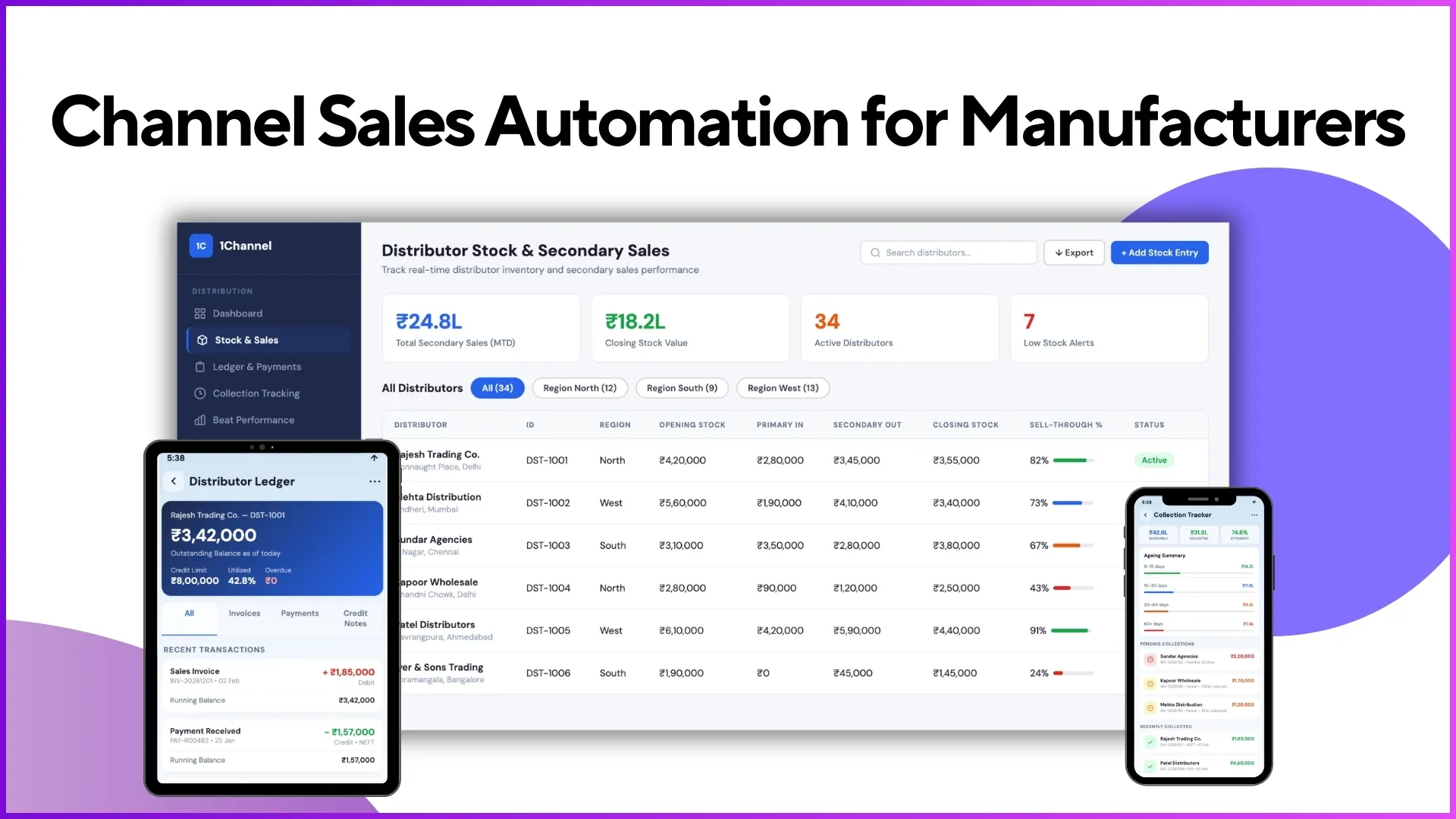
Automation enables manufacturers to track orders and inventory across channel partners in real time. This reduces stock discrepancies and improves order fulfillment accuracy.
Example
If a distributor's inventory falls below a predefined threshold, the system can prompt a replenishment order automatically, preventing stockouts in the market.
Sales Force Automation for Indirect Channels
Sales force automation extends visibility into field-level activities conducted by distributor sales representatives. Manufacturers can monitor beat plans, outlet coverage, and sales execution.
Example
A manufacturer can track whether distributor sales reps are visiting priority retail outlets as planned and ensure brand guidelines are being followed.
Scheme and Incentive Management
Manufacturers often run trade schemes, discounts, and incentive programs to drive channel performance. Channel Sales Automation ensures these schemes are communicated clearly and calculated accurately.
Example
A distributor achieving a predefined sales target can automatically qualify for incentives, which are calculated and reflected in the system without manual intervention.
Analytics and Reporting
Automation provides manufacturers with real-time dashboards and reports that offer insights into sales performance, partner productivity, and market trends.
Example
A manufacturer can analyze region-wise distributor performance and identify underperforming markets that need corrective actions.
Benefits of Channel Sales Automation for Manufacturers
Improved Visibility and Control
Manufacturers gain end-to-end visibility into channel activities, from primary sales to secondary sales and retail execution.
Example
Real-time sales data helps manufacturers adjust pricing or promotional strategies quickly based on market response.
Increased Channel Partner Engagement
Providing partners with self-service tools, transparency, and faster processes strengthens relationships and boosts partner loyalty.
Example
Distributors can independently track order status and incentive eligibility, reducing dependency on manufacturer support teams.
Operational Efficiency
Automation reduces manual data entry, minimizes errors, and shortens sales cycles, leading to faster decision-making.
Example
Instead of reconciling spreadsheets from multiple distributors, manufacturers can rely on a single system-generated report.
Common Challenges Without Channel Sales Automation
Manufacturers relying on manual or fragmented systems often struggle with delayed reporting, poor forecasting, inconsistent partner data, and limited market visibility.
Example
A lack of real-time secondary sales data may cause overproduction or underproduction, directly impacting profitability.
Channel Sales Automation for Scalable Growth
As manufacturers expand into new regions or add more channel partners, manual processes fail to scale. Channel Sales Automation provides a standardized framework that supports growth without increasing operational complexity.
Example
When entering a new market, manufacturers can onboard multiple distributors simultaneously using predefined workflows instead of building processes from scratch.
How 1Channel Supports Channel Sales Automation
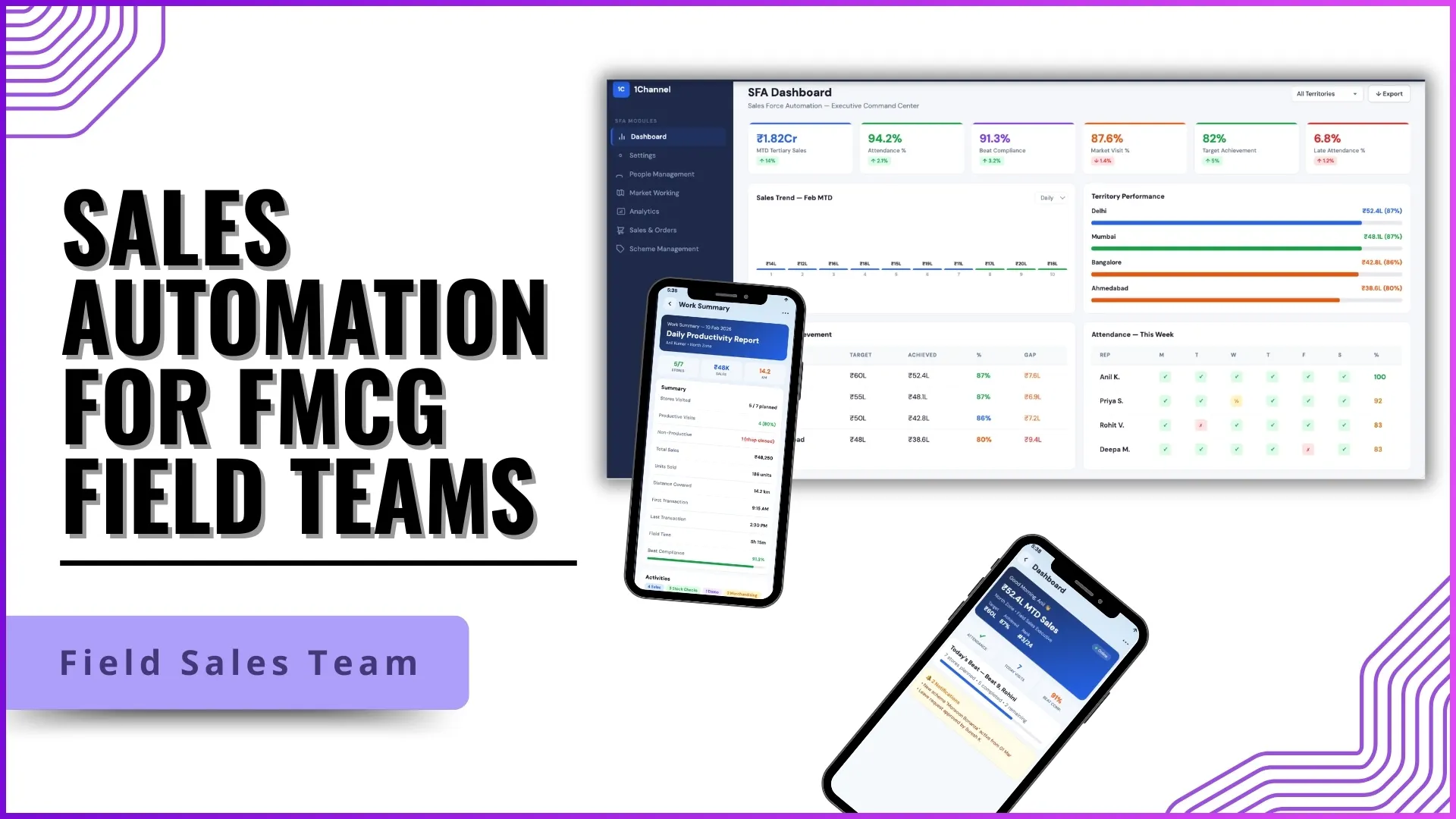
1Channel enables manufacturers to digitize and automate their entire channel ecosystem, including partner management, secondary sales tracking, field force automation, and analytics. By providing a centralized platform, 1Channel helps manufacturers gain real-time visibility, improve partner collaboration, and drive consistent channel performance.
Explore Sales Force Automation
Digitize your channel ecosystem with partner management, secondary sales tracking, field force automation, and real-time analytics in one platform.
Explore SFA Solutions →Conclusion
Channel Sales Automation is no longer optional for manufacturers managing indirect sales networks. It plays a critical role in improving visibility, efficiency, and partner engagement while enabling data-driven decision-making. By automating key channel processes, manufacturers can overcome operational challenges, scale effectively, and build stronger, more profitable channel relationships.